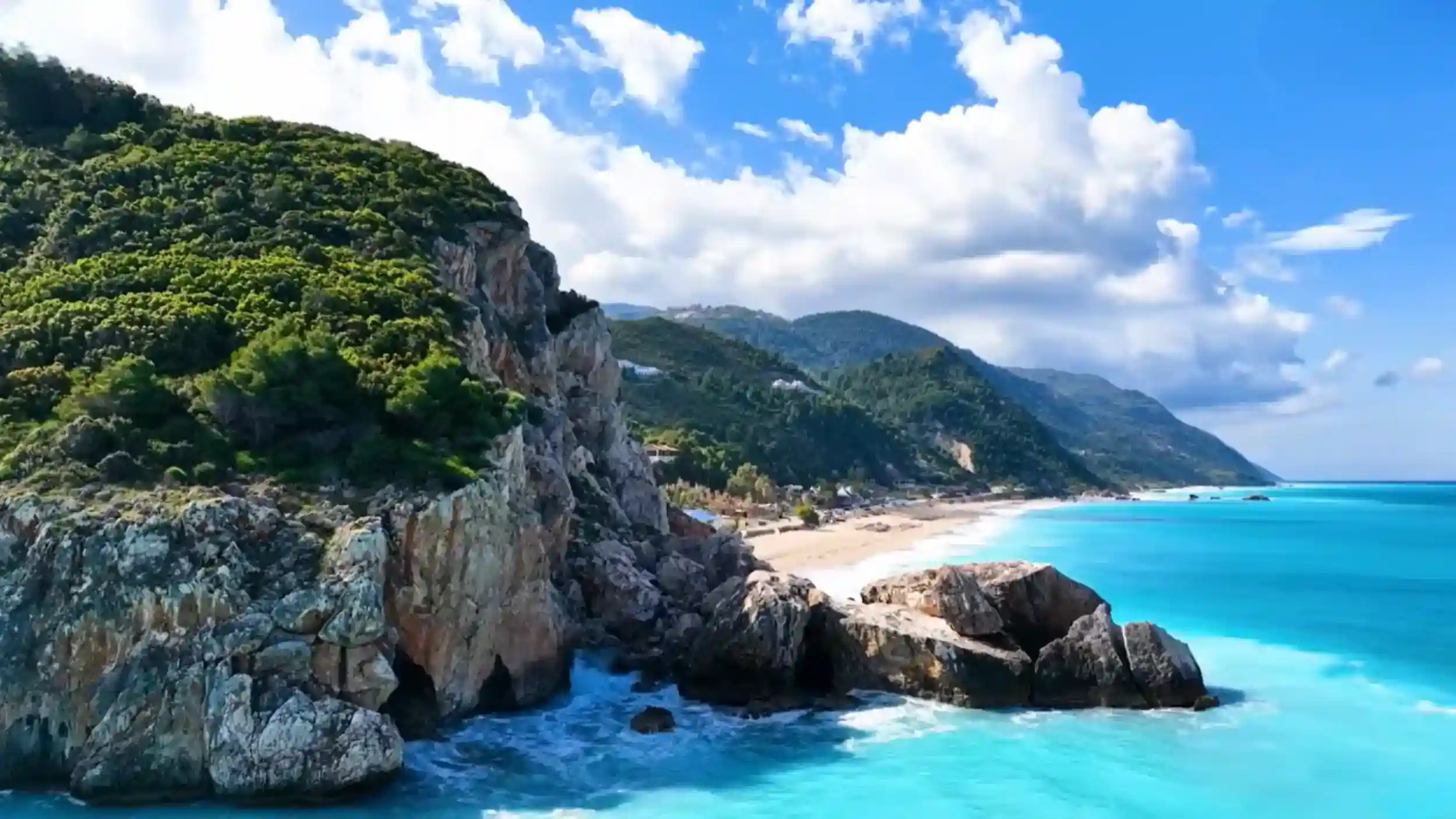
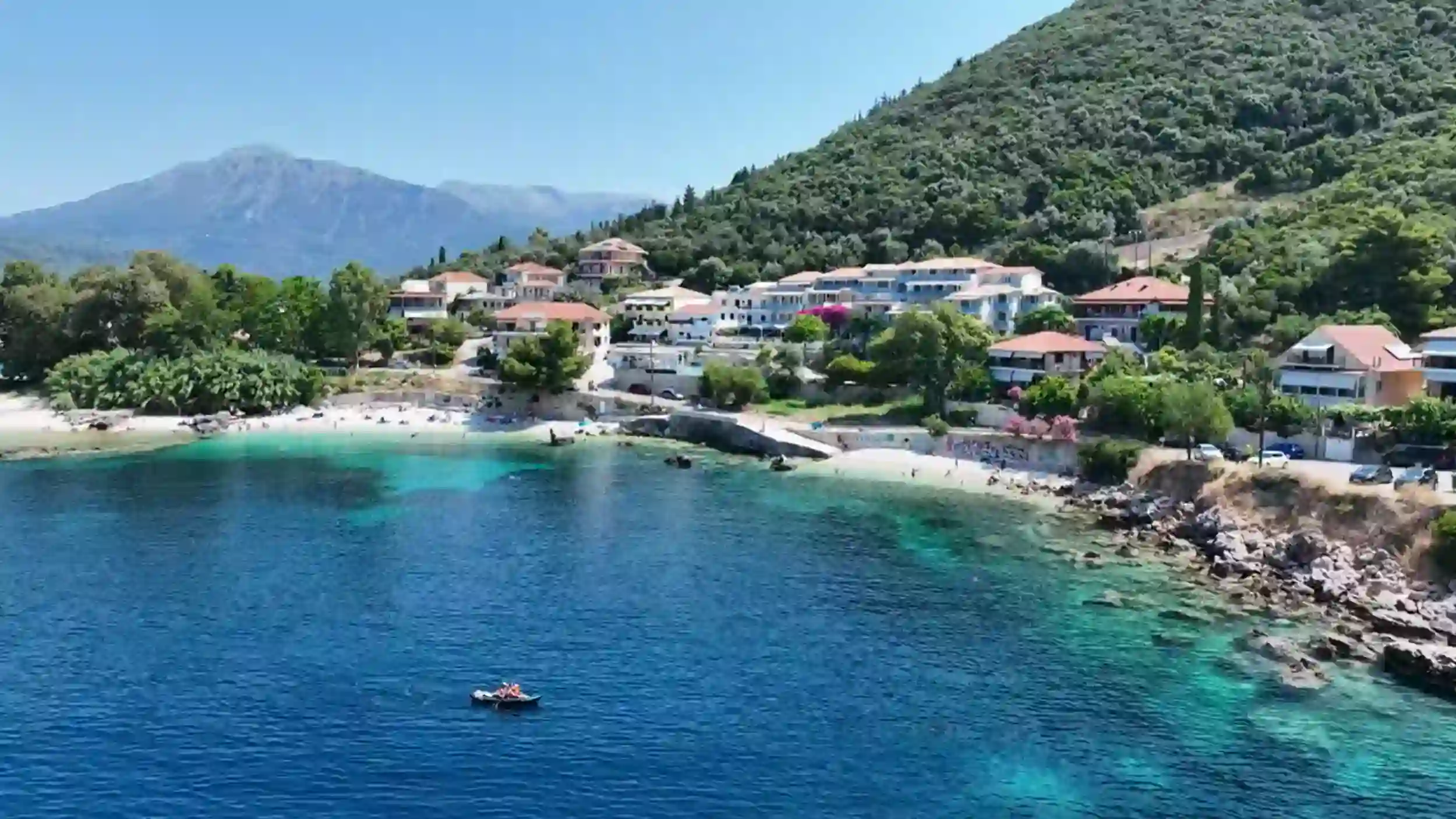
Vasiliki Lefkada is best known for windsurfing, a working harbour and its useful position for exploring the island’s southern and west-coast beaches. The sheltered horseshoe bay is often calm in the morning before the reliable afternoon thermal wind arrives, while nearby Ponti offers a quieter continuation of the beachfront.
We liked that Vasiliki never depended on windsurfing alone. We used calm mornings for swimming, wandered around the harbour after dark and treated the village as a practical base for reaching beaches and cliffs farther west.
🌬️ Why Is Vasiliki Lefkada Known for Windsurfing?
We understood Vasiliki’s reputation as soon as the afternoon began.
The wind was the change we started waiting for each day.
Over breakfast, we could look across an almost placid bay. By early afternoon, the same water had become one of Europe’s best-known windsurfing locations. That transformation affected when we swam, what we watched and even how energetic the village felt.
The Bay Transformed Once the Thermal Wind Arrived
We learned that the mountains surrounding the bay help create the reliable thermal wind locally known as Eric.
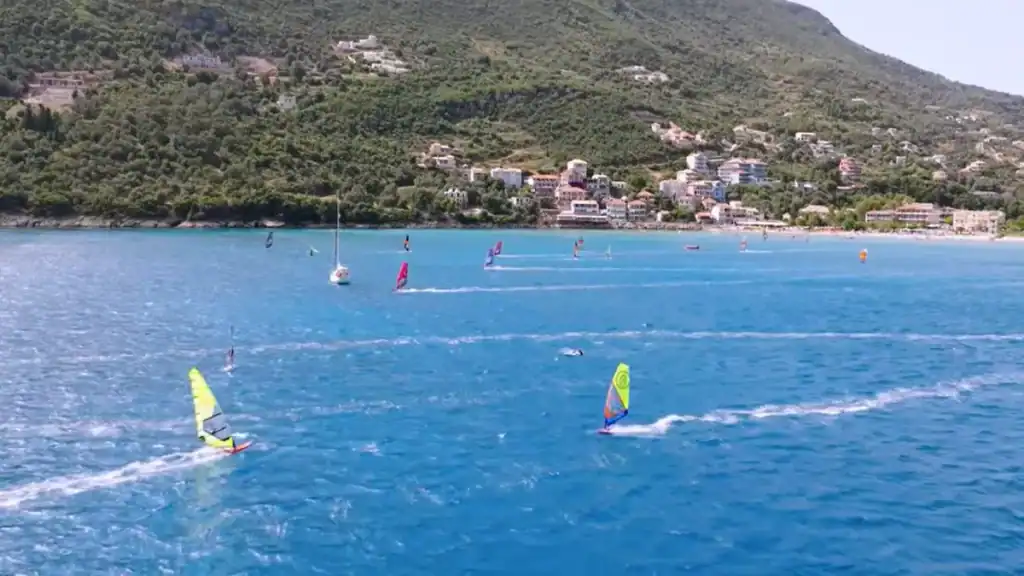
As the land heated up, we watched the breeze strengthen steadily across the water. Soon, windsurfers and wing foilers began taking over the bay. Its consistency made it easy to understand why watersports schools have been established here for decades.
| Time of day | What Vasiliki Lefkada is like |
|---|---|
| 🌅 Morning | Calm water, swimming, paddleboarding and kayaking |
| ☀️ Early afternoon | The thermal wind builds across the bay |
| 🌬️ Afternoon | Windsurfers and wing foilers take over the water |
What we liked was seeing completely different visitors use the same bay at different times of day.
We shared the peaceful morning water with families and swimmers, while experienced watersports enthusiasts seemed to be waiting for the afternoon wind. By then, the character of the bay had changed completely.
Watching dozens of colourful sails cross the turquoise water against the green mountains became one of our defining images of southern Lefkada.
What worked for us: We used the calmer morning hours for swimming, then enjoyed the bay as a spectacle once the wind arrived. That gave us two quite different experiences without going anywhere.
⛵ What Is Vasiliki Lefkada’s Harbour Like?
Vasiliki’s harbour became the social heart of the village for us.
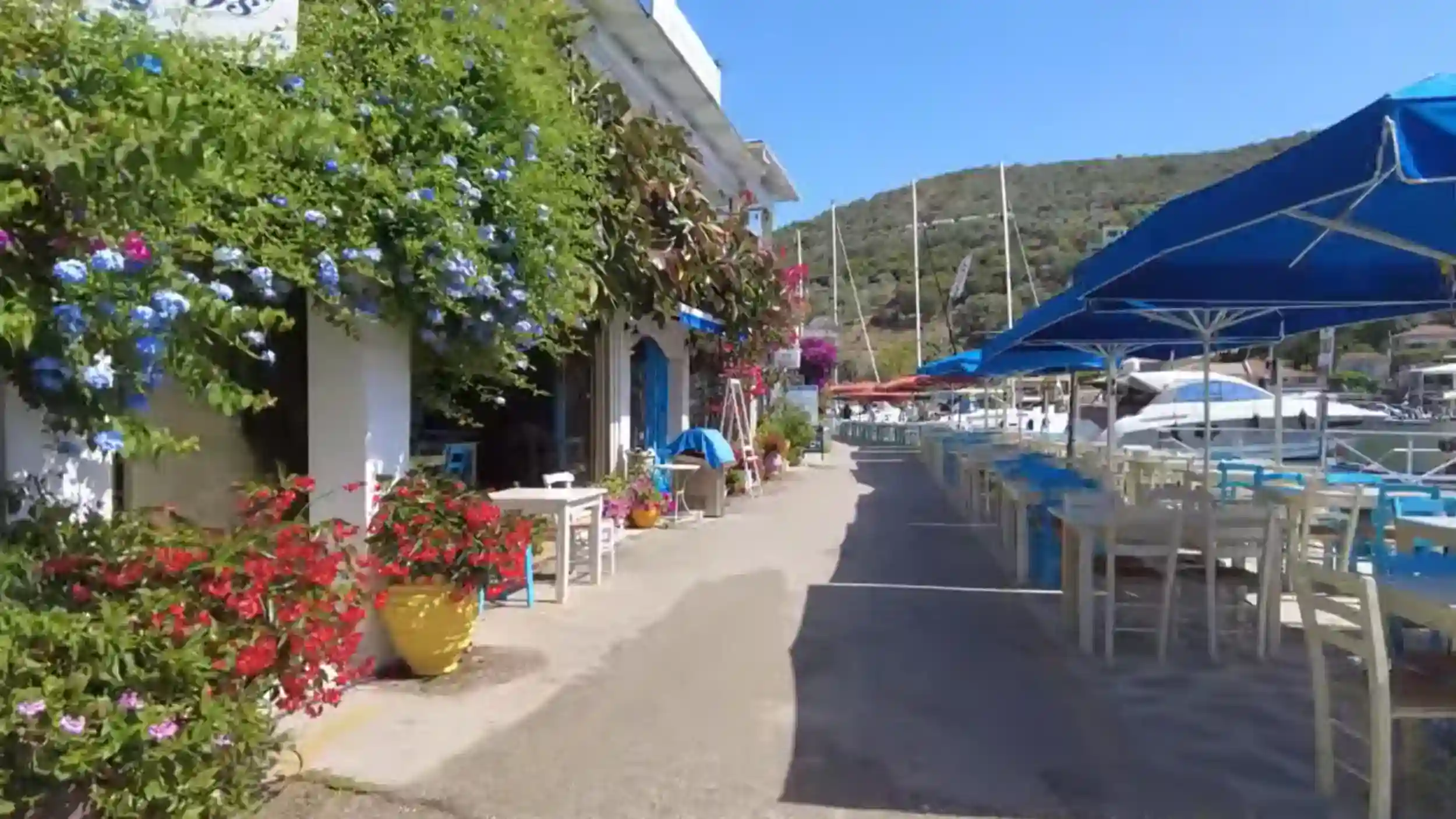
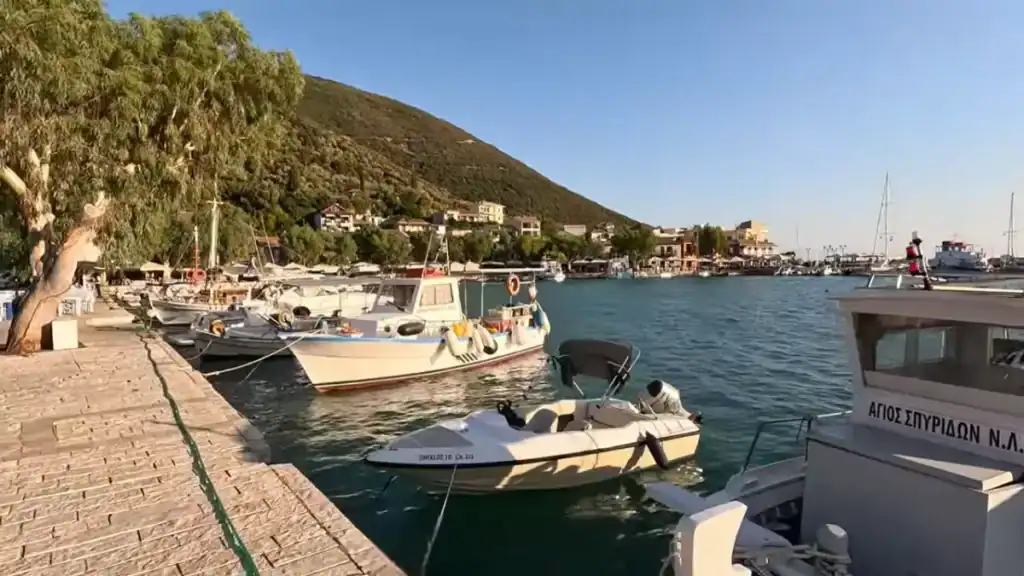
We never felt we were walking around a purpose-built resort. Fishing boats, sailing yachts and seasonal ferries still shared the working waterfront. That gave the harbour more character than we had expected.
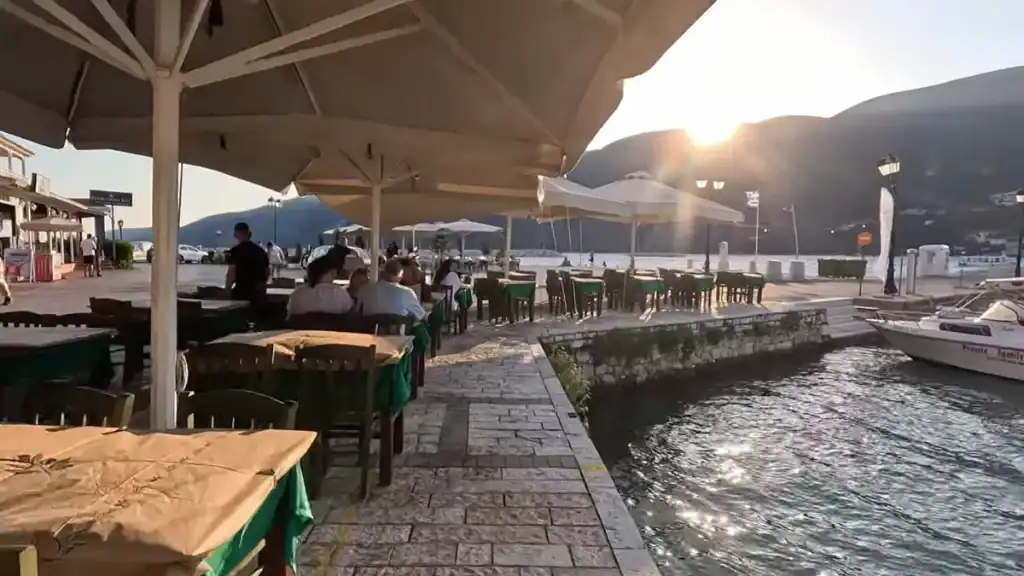
We followed the promenade around the eastern shoreline, where family-run tavernas and cafés looked directly across the water. Meals never felt rushed, and we found the atmosphere noticeably calmer than in Lefkada’s larger resorts.
Evening Brought the Harbour Back to Life
As the afternoon wind faded, we watched the harbour settle into an easy evening rhythm.
We would stroll beside the water as boats returned to their moorings and restaurant tables gradually filled. There was enough activity to make the evening feel welcoming, but we never found the busier resort atmosphere we experienced elsewhere on Lefkada.
Is Vasiliki Lefkada Quiet in the Evenings?
For us, evenings were relaxed rather than silent. Restaurant tables filled and people strolled beside the water, but we never found the busier resort atmosphere we experienced elsewhere on Lefkada.
| Harbour feature | Why it matters |
|---|---|
| ⚓ Working harbour | Fishing boats, yachts and local character |
| 🍽️ Waterfront tavernas | Relaxed dining beside the bay |
| ⛴️ Seasonal ferries | Direct links to Kefalonia and Ithaca |
| 🚶 Compact centre | Restaurants, cafés and accommodation within walking distance |
We also found the harbour genuinely useful rather than simply attractive.
Seasonal ferries connect with Kefalonia and Ithaca, so we could see the appeal for anyone building Vasiliki into a wider island-hopping trip. Compared with Nidri Lefkada, we preferred Vasiliki’s quieter harbour atmosphere and easier access to the southern coastline, although Nidri offered more nightlife and excursion choice.
Who we think it suits: We would choose Vasiliki for couples, sailors, island hoppers and anyone who values a working harbour atmosphere more than a lively beach resort.
🏖️ What Is Vasiliki Beach Like and Where Is Ponti?
Vasiliki’s beach reflected the practical character of the bay for us.
We found it useful rather than spectacular.
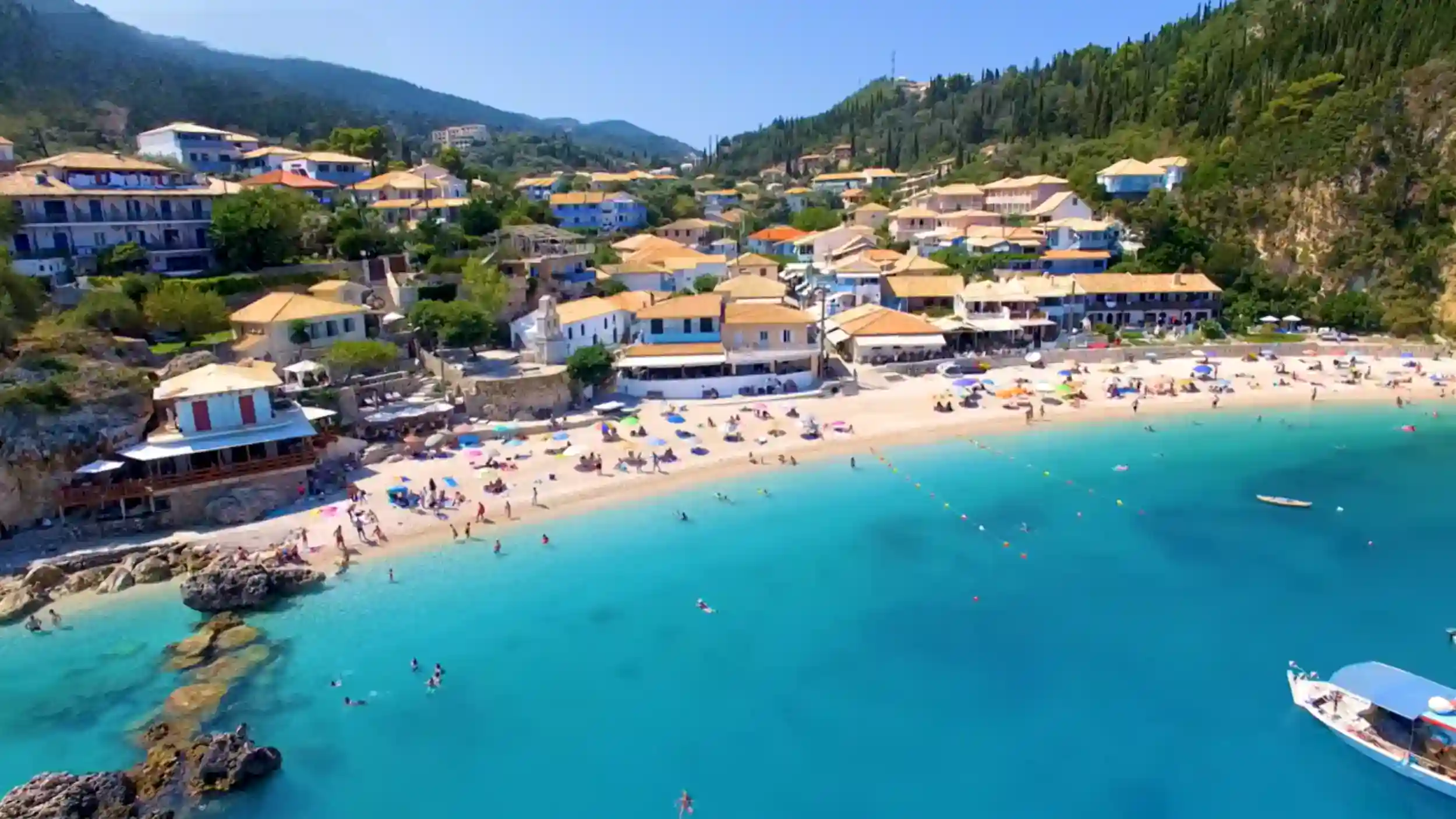
Instead of dramatic limestone cliffs or soft golden sand, we found white pebbles and shingle around the sheltered bay. The clear, shallow water made morning swimming easy. Afternoon wind changed the conditions.
Walking Towards Ponti Gave Us More Space
Although it looked like one continuous beach, we noticed the atmosphere changing as we walked west towards Ponti.
| Area | What it’s best for |
|---|---|
| 🏄 Vasiliki Beach | Windsurfing, swimming and easy access to cafés |
| 🌿 Ponti | Quieter walks, fewer people and a more relaxed atmosphere |
Around the eastern end, windsurf schools and equipment hire became busier as the thermal wind built. Walking west towards Ponti gradually took us away from that activity. The bay felt much more relaxed there.
Agiofili Added a Completely Different Beach Day
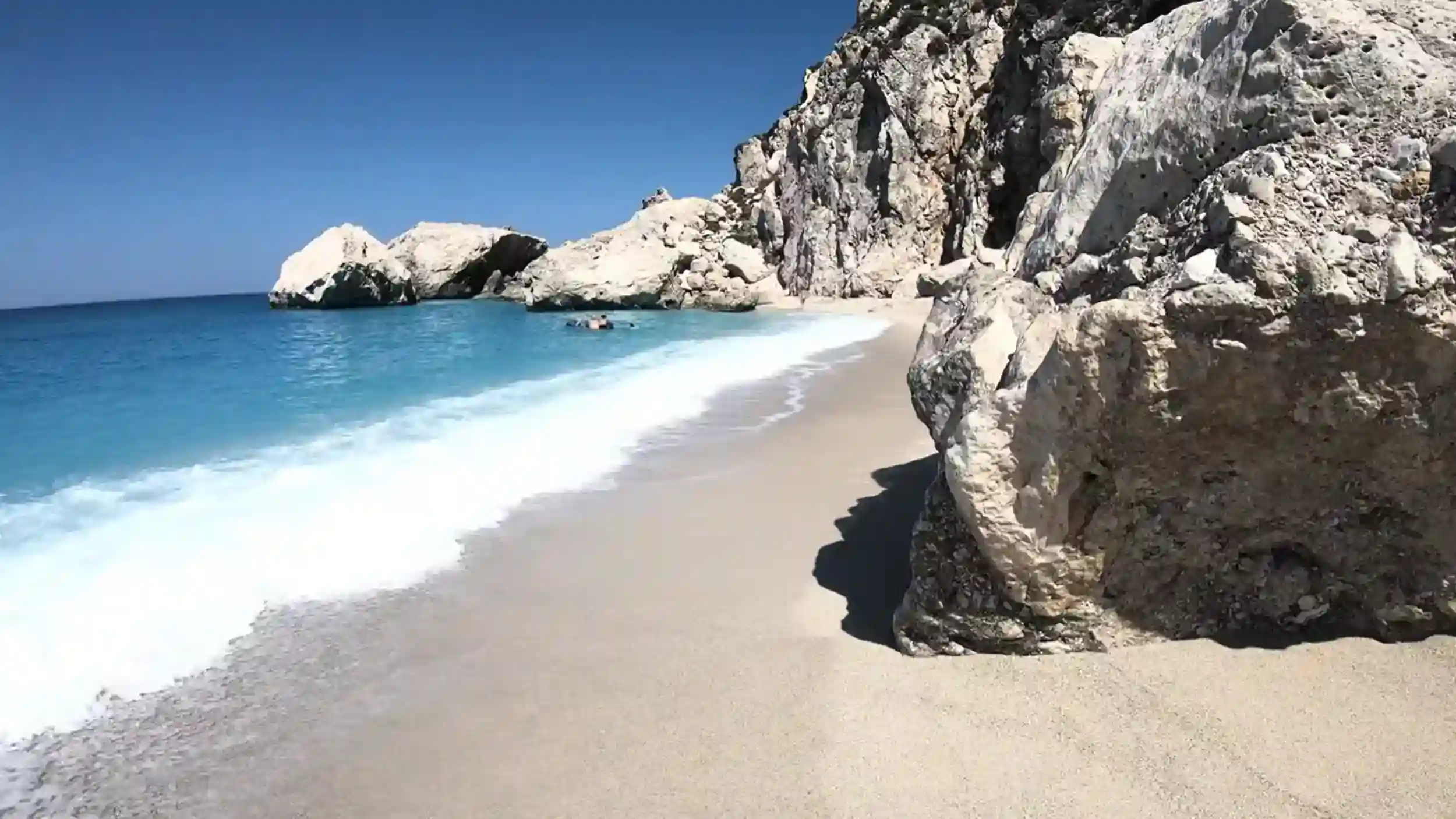
One advantage we particularly valued was being so close to Agiofili Beach. Reaching the small pebble cove by taxi boat or from the road gave us crystal-clear water, cliffs and excellent snorkelling within an easy half-day trip, yet it felt completely different from sheltered Vasiliki Bay.
How we would plan the day: Swim at Vasiliki while the morning water is calm, then use the afternoon for Agiofili or simply watch the windsurfers once the bay comes alive.
🚗 Is Vasiliki a Good Base for Exploring Lefkada’s West Coast?
Vasiliki put us noticeably closer to Lefkada’s famous southwest beaches than the northern bases we considered.
That location made west coast exploring much easier for us because we avoided repeatedly driving the full length of the island.
Whether we travelled by road or considered a boat trip, we spent less time reaching the southwest than we would have from Lefkada Town or Nidri.
| Beach | 📌 Why visit from Vasiliki? |
|---|---|
| 🏞️ Porto Katsiki | Lefkada’s iconic white cliffs and turquoise water |
| 🤫 Egremni Beach | Longer, quieter shoreline with a wilder feel |
| 🌅 Cape Lefkatas | Spectacular clifftop views from the island’s southern tip |
Driving Gave Us Freedom, Boats Avoided the Stairs
We preferred driving for the flexibility, although the narrow, winding mountain roads meant journeys still took concentration.
Boat excursions offered something completely different. They arrived beneath the cliffs of Porto Katsiki and Egremni while avoiding their long staircases. For us, the coastal perspective was almost as tempting as avoiding the climb.
Cape Lefkatas was another excursion that made sense from our southern base.
When the road ended at the lighthouse above the open Ionian Sea, we felt we had reached a genuine edge of the island. The viewpoint made a memorable finale to a day exploring southern Lefkada.
What we would do: We would give Vasiliki two or three nights, using calm mornings around the bay and saving other parts of the day for the west coast beaches and southern cliffs.
🌿 Is Vasiliki Lefkada Good for Non-Windsurfers?
We never needed to windsurf to enjoy Vasiliki. Calm morning swims, kayaking, the harbour, boat trips and easy access to southern Lefkada gave our days plenty of variety before we even considered the watersports scene.
In fact, watching the bay transform each afternoon became part of the appeal. Colourful sails crossed the water against the green mountains while we stayed firmly on shore.
💙 Is Vasiliki Lefkada Worth Staying In?
We did not think Vasiliki was trying to appeal to everyone.
That narrower appeal was part of what we liked about it.
For us, Vasiliki made sense when the trip revolved around outdoor days, quiet evenings and southern Lefkada. If we wanted busy nightlife and endless restaurant choice, we would stay elsewhere.
| Traveller type | Is Vasiliki Lefkada a good fit? |
|---|---|
| 🏄 Windsurfers and wing foilers | ⭐⭐⭐⭐⭐ |
| 🚤 Sailors and island hoppers | ⭐⭐⭐⭐⭐ |
| 🥾 Active couples | ⭐⭐⭐⭐☆ |
| 👨👩👧 Families wanting calm mornings | ⭐⭐⭐⭐☆ |
| 🌃 Nightlife seekers | ⭐⭐☆☆☆ |
We got most from Vasiliki when we treated it as an outdoor base.
Morning swims, kayaking, hiking and boat trips fitted naturally into our days, while the reliable afternoon wind gave us something to watch even when we had no intention of stepping onto a windsurf board.
If we were choosing between bases again, Nidri Lefkada would win for a livelier atmosphere, more restaurants and organised excursions. We would choose Vasiliki for its slower character and much easier access to the southern coastline.
We think Vasiliki’s slower character would suit the shoulder seasons particularly well.
June and September combine warm sea temperatures with fewer visitors, which is exactly when we would want to return: enough facilities remain open without losing the relaxed atmosphere that made the village appeal to us.
Our verdict: We would stay in Vasiliki again for its village atmosphere, outdoor days and easy access to southern Lefkada. It would not be our choice for nightlife. For the way we like to explore, that was a strength rather than a weakness.