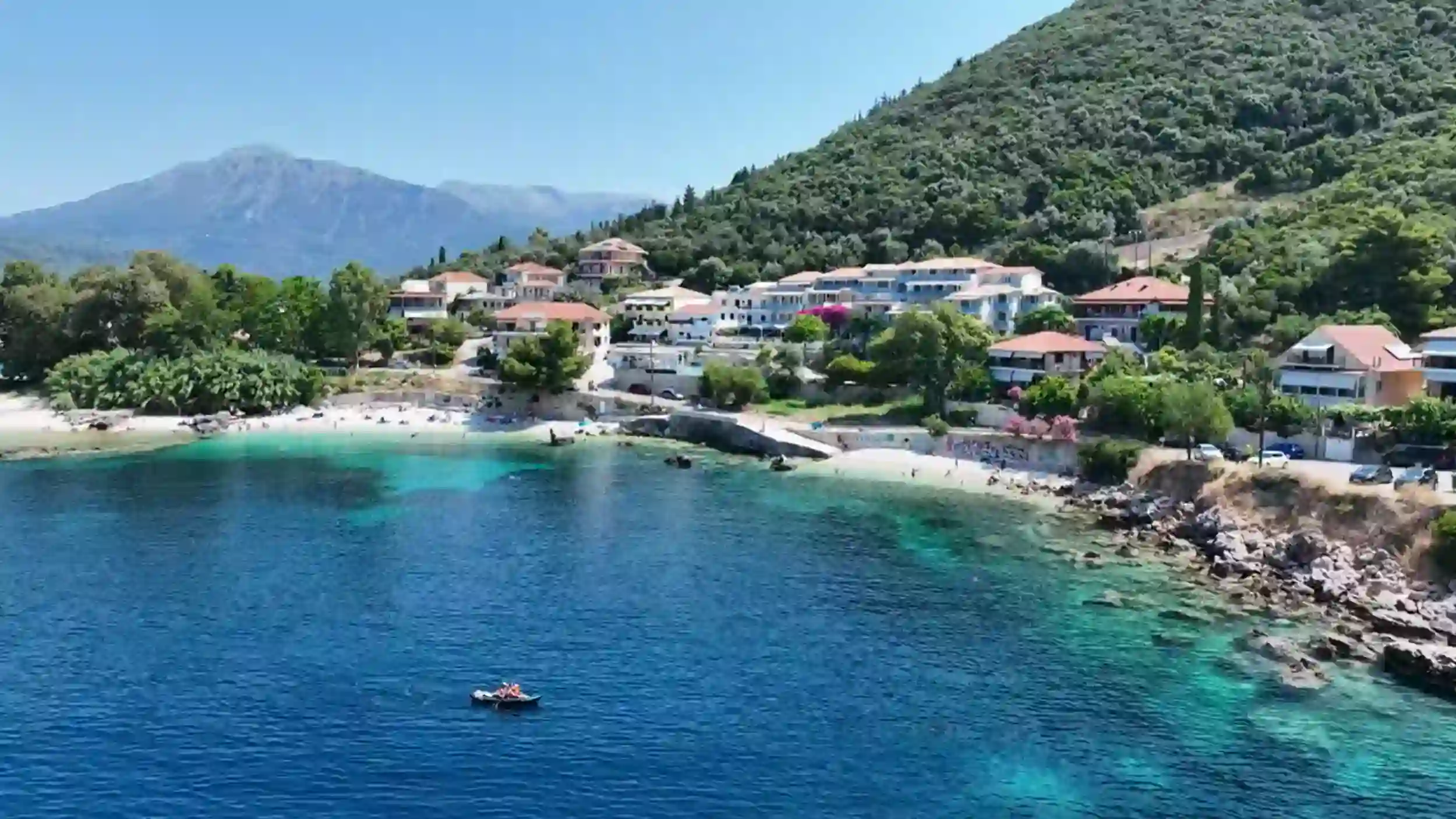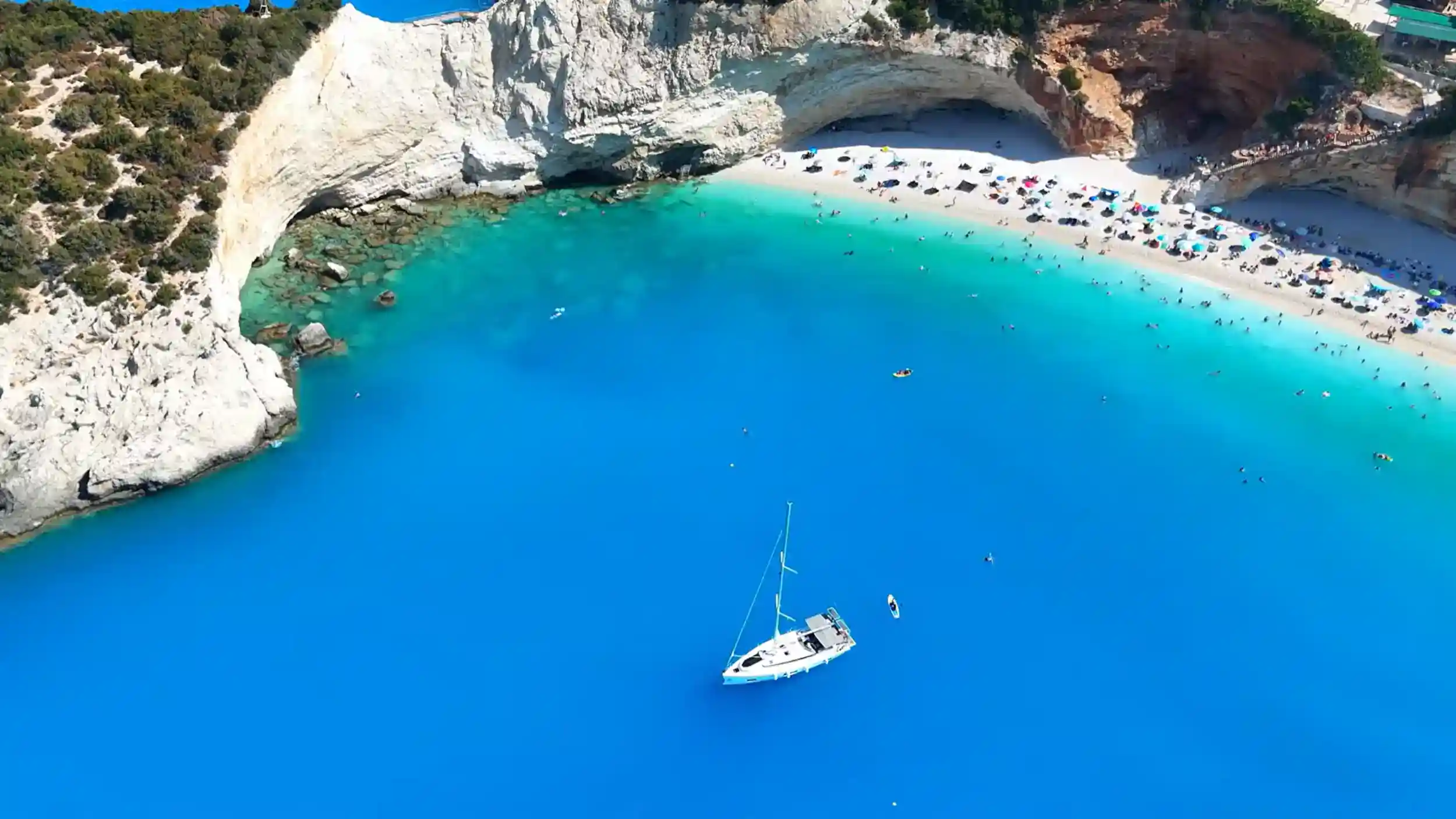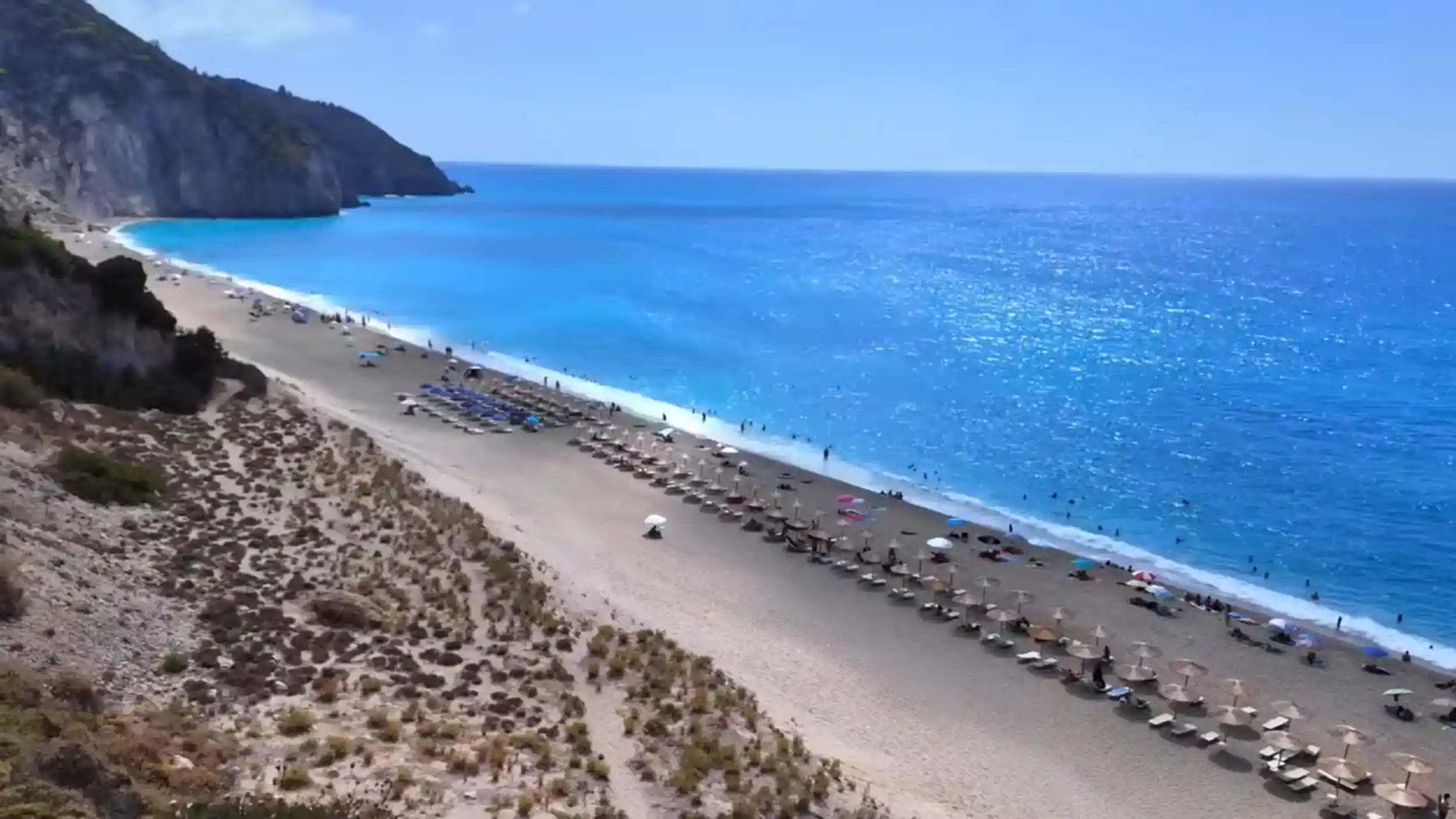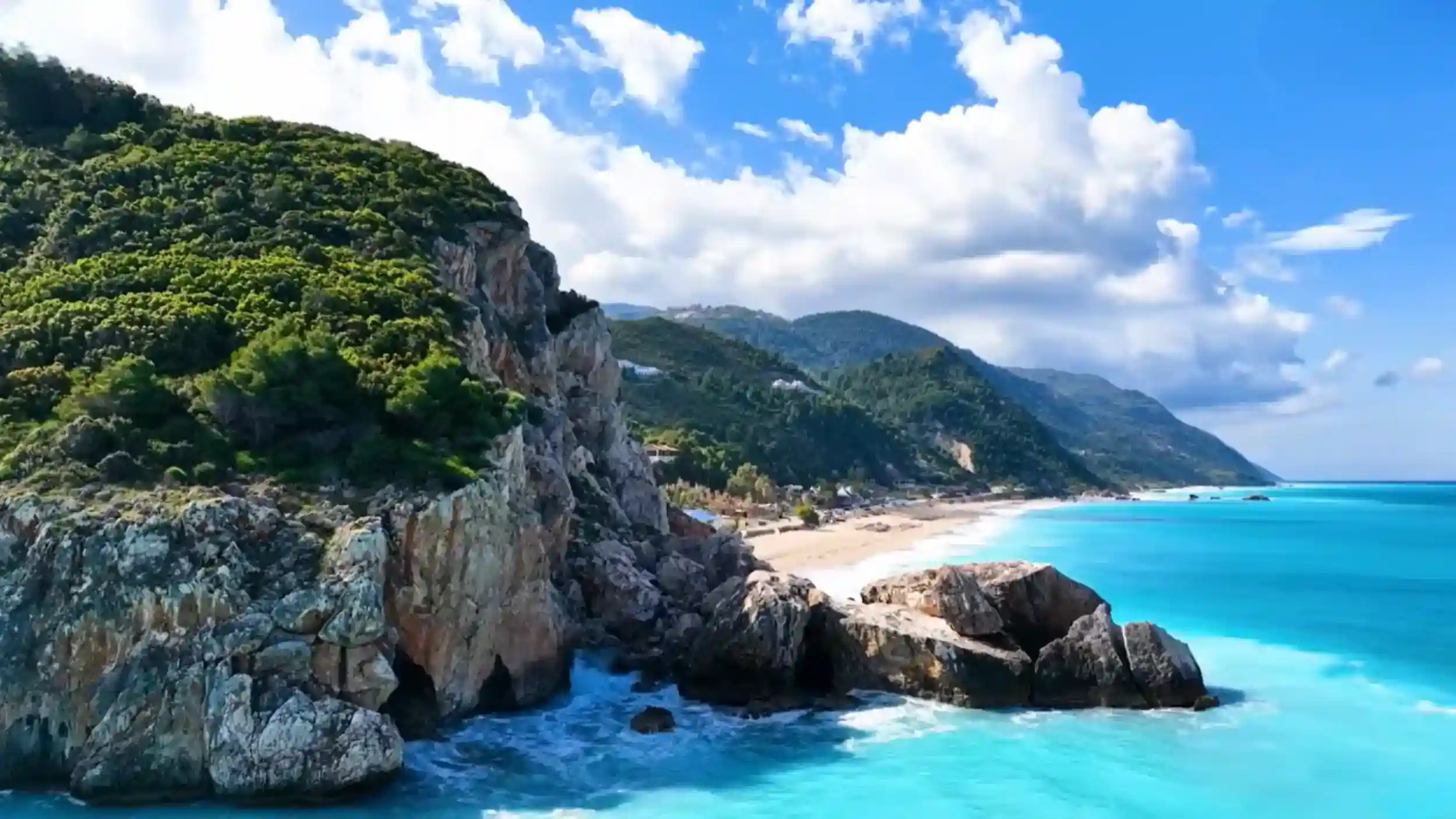
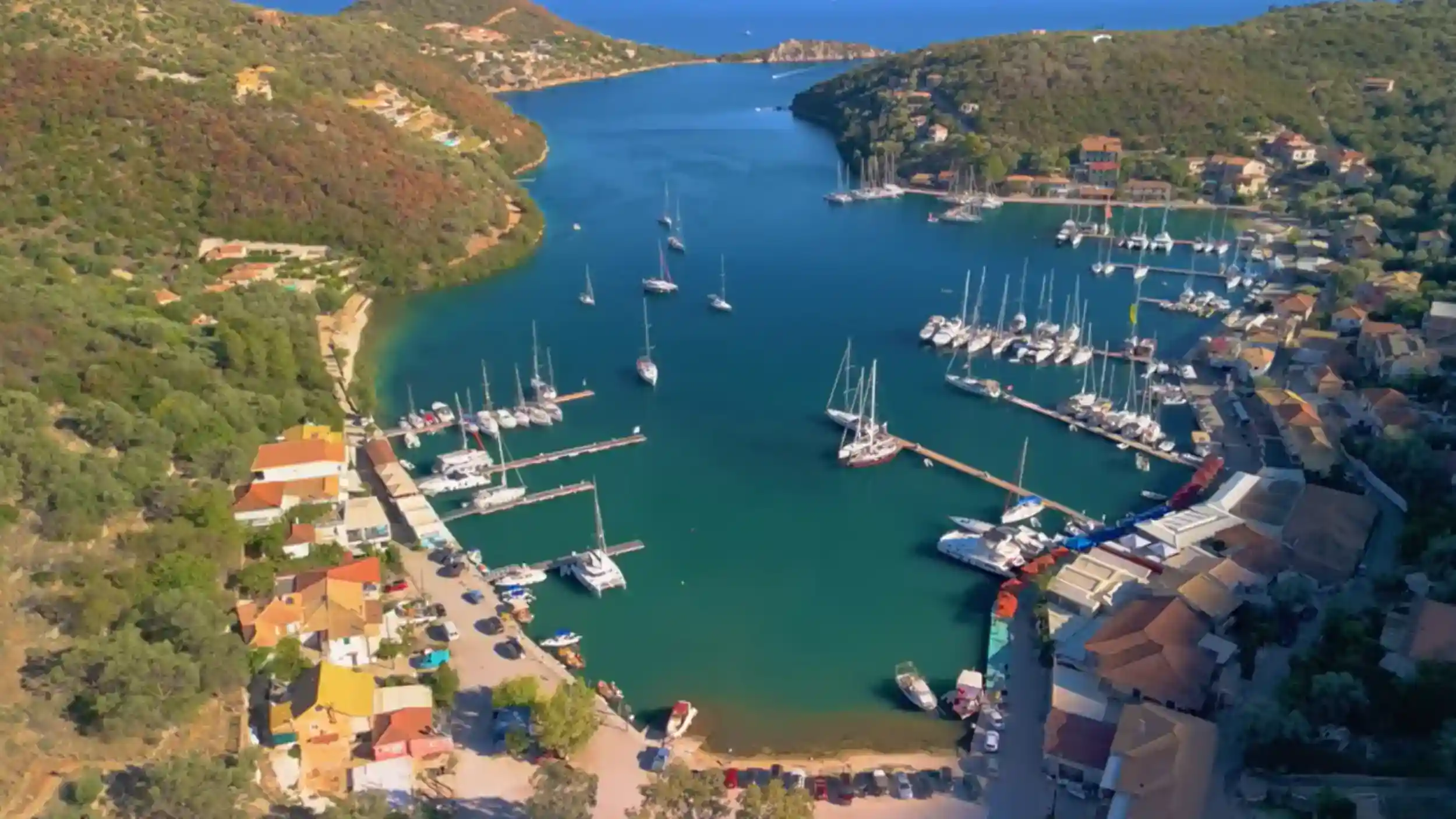
Sivota Lefkada is a compact harbour village in the island’s south, known for a deeply sheltered bay, sailing boats and quiet waterfront evenings. Steep hills and a narrow entrance protect the harbour from the open Ionian, while the walkable waterfront makes Sivota particularly appealing as a peaceful base rather than a conventional beach resort.
We liked that the harbour was not just scenery. Boats shaped the rhythm of the village, tavernas faced the water and, once we had parked, we rarely needed the car again until we wanted to explore farther afield.
🛥️ Why Is Sivota Lefkada Known for Being Sheltered?
Sivota’s greatest asset was not immediately obvious to us.
We only really appreciated it once we noticed the shape of the bay.
Looking towards the open Ionian, we could see how narrow the entrance was. Steep hills wrapped around the water on almost every side. The contrast with Lefkada’s exposed coastline became immediately clear.
The Shape of the Bay Explained the Calm Water
Once we stood beside the harbour, the geography explained why the village developed here.
We found the water noticeably calmer than on the open coastline. That shelter worked for sailors and swimmers, but it also made simply sitting beside the waterfront feel unusually peaceful.
| Natural feature | Why it matters |
|---|---|
| ⛰️ Steep surrounding hills | Shelter from prevailing winds |
| 🌊 Narrow bay entrance | Reduces wave action inside the harbour |
| ⚓ Deep protected anchorage | Safe mooring for sailing yachts |
| 🚶 Compact waterfront | Everything centres around the bay |
Standing on the promenade, we understood why boats have sought refuge here for decades. The harbour felt protected in a way Lefkada’s exposed coastal villages did not. That calmness shaped our impression more than any individual sight.
🚶 Is Sivota Lefkada Walkable?
We found Sivota almost effortless to explore.
We could walk almost everywhere within a few minutes, yet different parts of the waterfront still had noticeably different characters.
Once we had parked, we had no reason to return to the car until it was time to leave.
Walking the Waterfront Revealed Two Different Sides
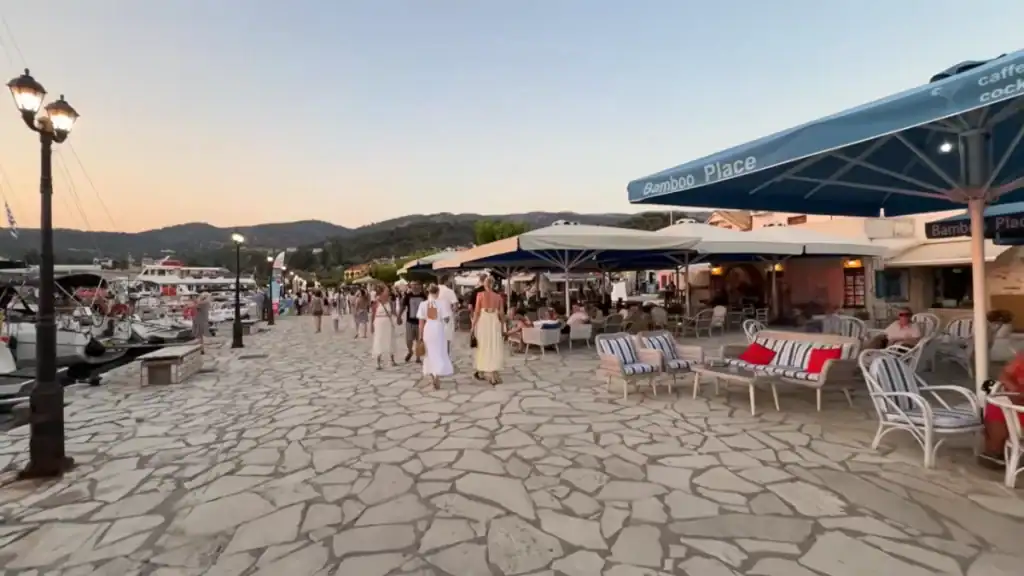
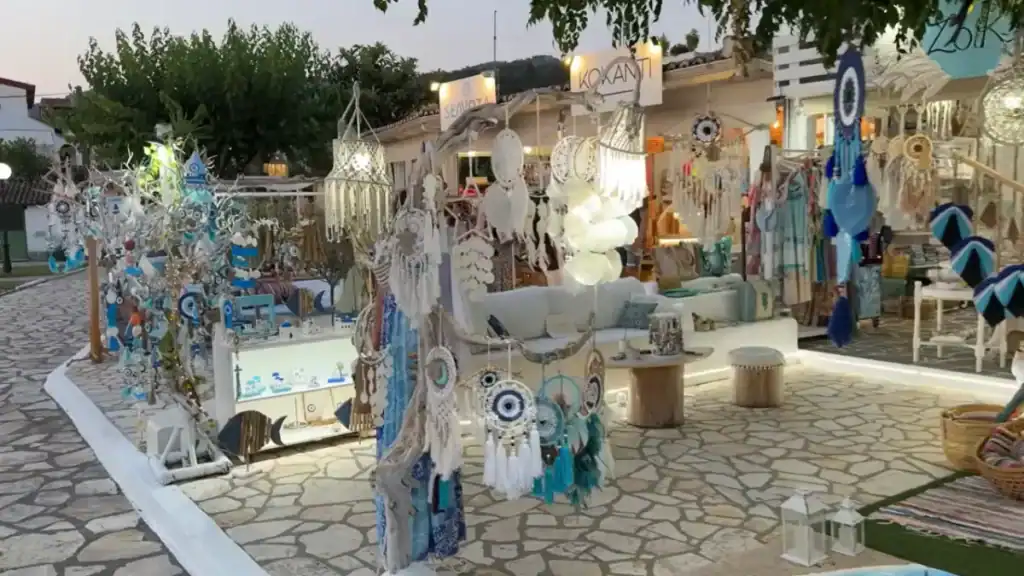
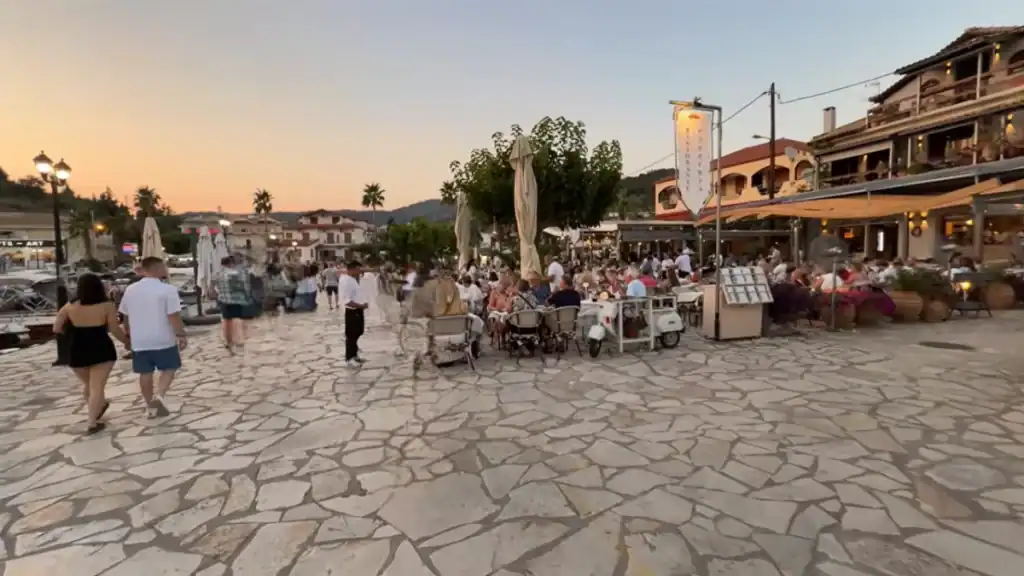
We followed the broad promenade around the curve of the bay, moving between cafés, seafood tavernas, small boutiques and the marina without needing a route.
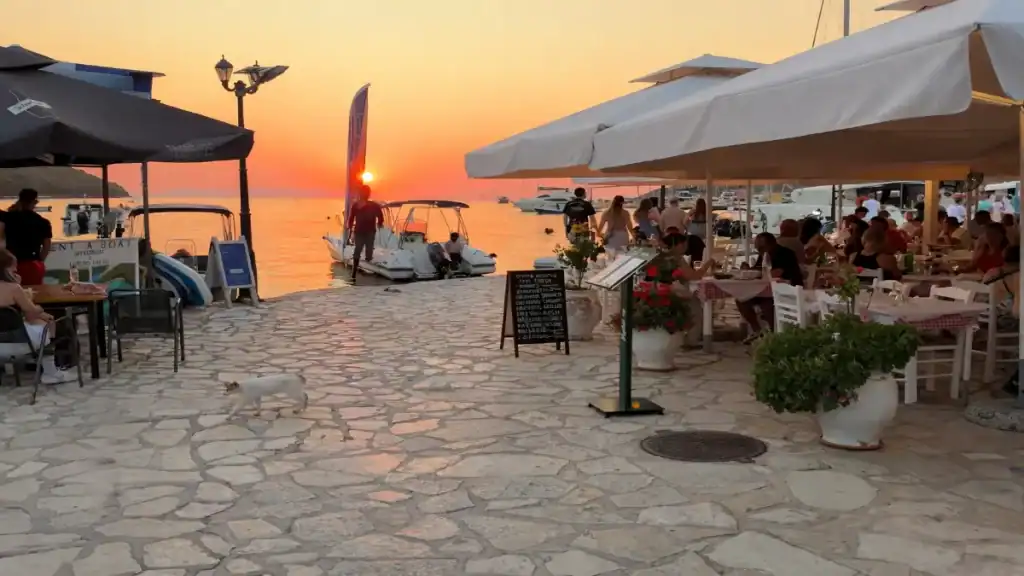
The southern waterfront felt like the social centre, with restaurant tables only metres from moored yachts. Crossing towards the opposite shore changed the mood quickly. Quieter cafés and benches looked back across the harbour.
| Area | What you’ll find |
|---|---|
| 🍽️ South waterfront | Seafood tavernas, cafés and evening dining |
| ⚓ Marina | Sailing yachts and visitor moorings |
| 🌿 North shore | Quieter cafés and waterside views |
| 🛒 Village centre | Bakery, supermarket and everyday essentials |
We left the car in the free parking just outside the village. Very little traffic reached the harbour itself. Without vehicles constantly passing through, we spent more time strolling, stopping for a drink and watching boats arrive.
If we were choosing between southern bases again, Nidri Lefkada would win for a busier promenade and more organised excursions. We would choose Sivota when a slower pace and a more intimate harbour mattered more.
🏖️ Are There Good Beaches in Sivota Lefkada?
We would not choose Sivota primarily for its beaches.
That was actually part of why it felt different to us from many Lefkada coastal villages.
The small pebbly beach beside the harbour was perfectly adequate when we wanted to cool off. We never expected it to become a highlight. It worked as a convenient swim between waterfront time and exploring better beaches elsewhere.
Calm Water Made the Village Beach Useful
The sheltered bay gave us calm water that suited a leisurely swim far better than an energetic beach day.
We found the visibility particularly good around the rocky edges, where looking beneath the surface was more interesting than swimming straight out from the little beach.
| Swimming option | 📌 What to expect |
|---|---|
| 🏖️ Village beach | Calm water and easy access from the harbour |
| 🤿 Rocky edges | Good visibility for casual snorkelling |
| 🚗 Agiofili Beach | Crystal-clear water around 10 km away |
| 🌊 Vasiliki Lefkada | Longer beach with watersports nearby |
For us, Sivota made far more sense as a base than as a beach destination. We would spend the day exploring southern Lefkada, then return to a harbour evening that felt calmer and more intimate than the island’s larger resorts.
⛵ Is Sivota Lefkada Popular With Sailing Boats?
We did not need to be sailors to notice how strongly Sivota revolved around sailing.
Its sheltered harbour made the reason obvious.
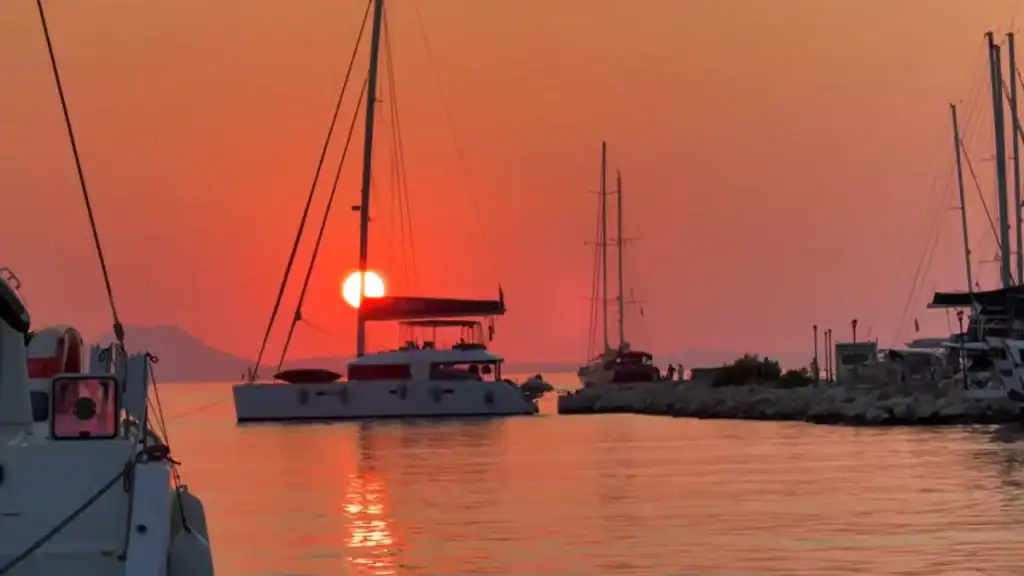
The protected harbour and welcoming waterfront have made Sivota a long-standing stop on Ionian sailing routes. Arriving by car, we still felt that sailing culture immediately. So much of village life faced the water.
Returning Yachts Changed the Harbour Each Afternoon
We noticed the rhythm of the village changing with the boats.
Mornings felt quieter as yachts left for nearby islands and beaches. By late afternoon, we watched the harbour fill again and the tavernas gain a relaxed buzz as crews came ashore for the evening.
| Why sailors stop here | Benefit |
|---|---|
| ⚓ Sheltered harbour | Comfortable overnight anchorage |
| 🚰 Shore facilities | Water and services available on the pontoons |
| 🍽️ Waterfront tavernas | Easy walk from the boat to dinner |
| 🌅 Calm evenings | Relaxed atmosphere after a day at sea |
The moorings beside waterfront restaurants showed us how closely the village and harbour work together. Sailing gave Sivota character without making us feel excluded as visitors arriving by road.
Exploring by road, we would choose Vasiliki Lefkada for a livelier watersports base. We preferred Sivota when harbour life, waterfront dining and a quieter evening were the priorities.
🌅 Is Sivota Lefkada Quiet or Touristy?
Some villages gave us everything they had within an afternoon.
Sivota was different: we thought it improved once the day visitors began leaving.
As the harbour quietened and yachts settled for the evening, we saw the slower side of Sivota that a quick daytime visit could easily miss.
🚗 Is Sivota a Good Base for Exploring Lefkada?
We would use Sivota as a peaceful southern base rather than the island’s most central one. Vasiliki and Agiofili were convenient from here, while the famous west-coast beaches required more driving.
How Far Is Sivota From the West Coast Beaches?
Getting from Sivota, on the south coast of Lefkada, to the island’s renowned west coast beaches takes roughly 30 to 45 minutes by car. This distance shaped a key trade-off in our trip planning: staying in Sivota meant peaceful evenings by the harbour, but it also meant more driving time whenever we wanted to hop between the west coast beaches.
💙 Is Sivota Lefkada Worth Staying Overnight?
For us, staying overnight was when Sivota made the most sense. As day visitors left and yachts settled into the harbour, the village became quieter and the waterfront felt more intimate.
Our Verdict Depends on What You Want Nearby
For us, the answer depended entirely on the kind of holiday we wanted.
| If you want… | Is Sivota a good choice? |
|---|---|
| 🌅 Quiet harbour evenings | ✅ Excellent |
| 🍽️ Waterfront dining | ✅ Excellent |
| 🚤 Sailing atmosphere | ✅ Excellent |
| 🏖️ Famous beaches on your doorstep | ⚠️ Better elsewhere |
| 🌃 Nightlife | ❌ Limited |
We liked the mix of apartments, hillside villas and a small number of harbour-facing rooms rather than large hotels. Staying within walking distance meant evenings could revolve around the waterfront instead of driving to dinner.
If beach-hopping were our priority, we would use our Lefkada beaches guide to compare how the coastline changes from north to south before deciding whether Sivota was the right base.
Sivota was not the obvious Lefkada base for us, and that became part of its appeal. We would remember it less for a major attraction than for quiet harbour evenings, boats returning and the feeling that there was nowhere else we needed to be.