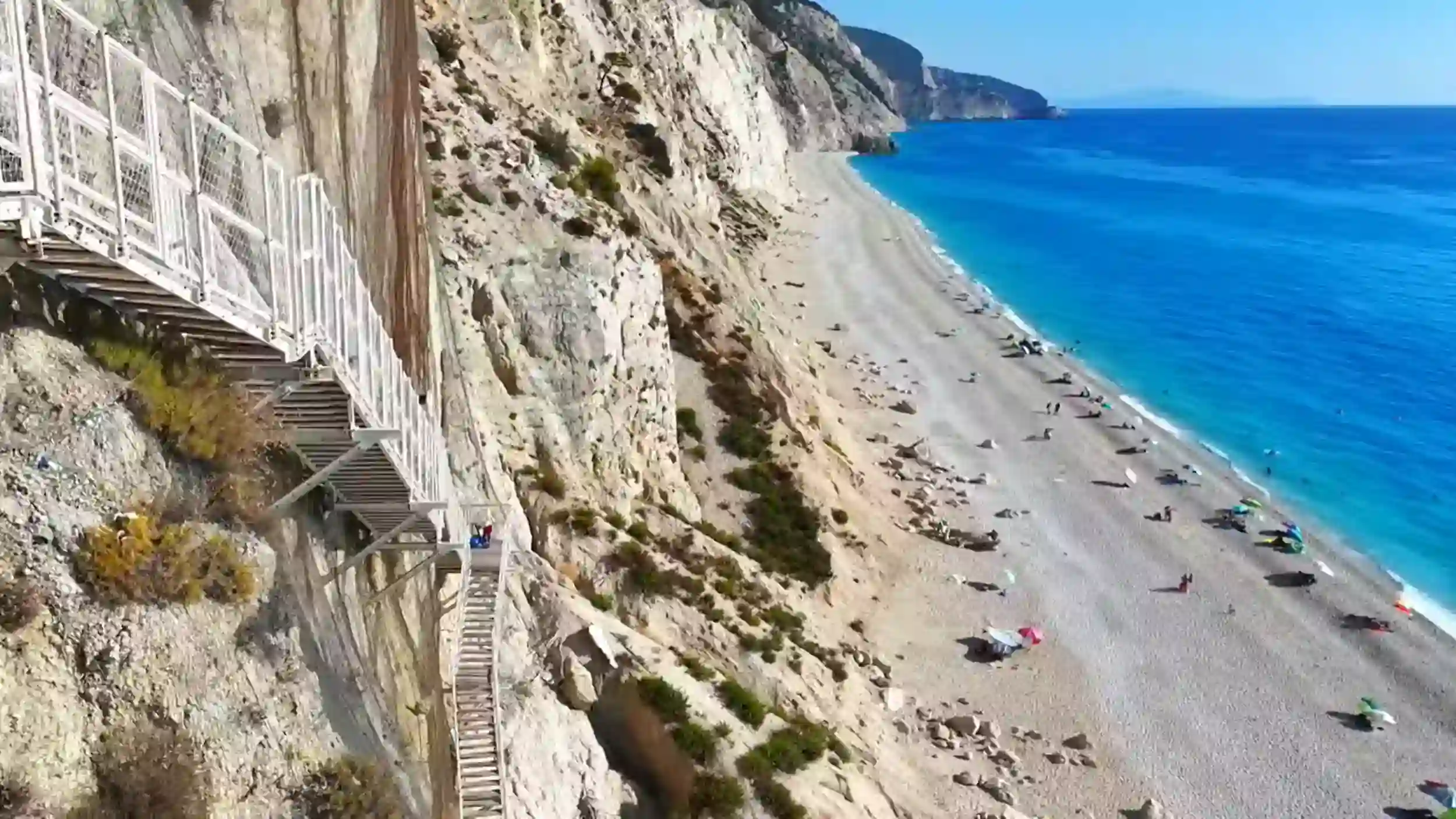
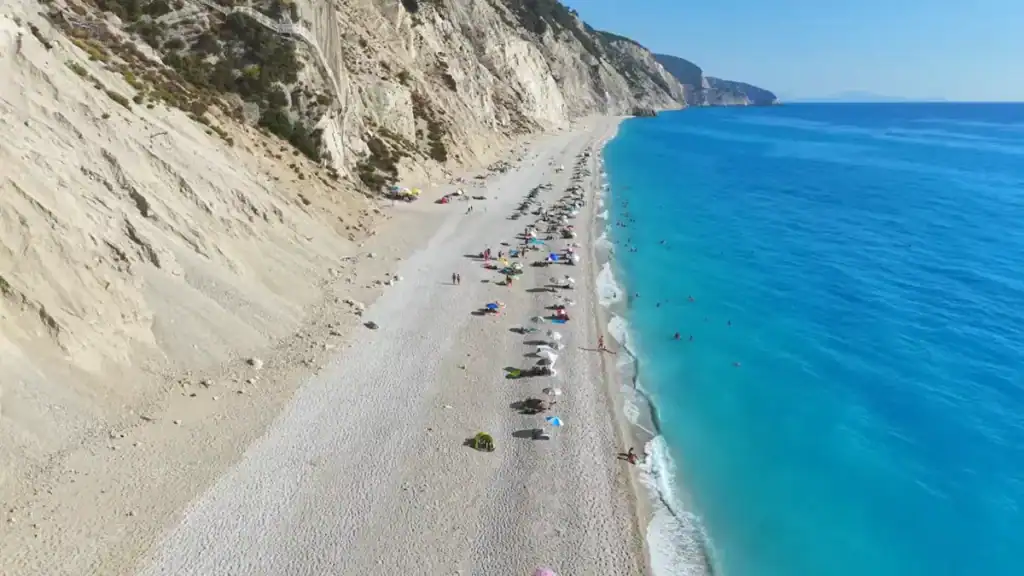
Egremni Beach is one of Lefkada’s more demanding west-coast beaches to reach, with a long cliffside staircase between the parking area and the shore. The effort is rewarded with a broad white-pebble beach, clear Ionian water and much more room to spread out than we found at several of the island’s easier-access beaches.
For us, that trade-off defined Egremni. We would not choose it for a lazy, effortless beach day, but the descent created a genuine sense of arrival and the extra space below made the climb back worthwhile.
🚗 How Do You Get to Egremni Beach and Where Can You Park?
We reached Egremni by road across southwest Lefkada, passing through Athani before arriving at the clifftop parking area. From Lefkada Town, we would allow around 30 to 40 minutes for the drive. The final section felt narrow enough in places to make us slow down, especially on our first journey through the mountains.
Parking gets you to the top of the cliff, not the beach itself. From there, the rest of the journey is on foot down the staircase.
🚙 DRIVE OR TAKE A BOAT?
Drive: more control over when you arrive and leave, but you still have the staircase.
Boat: no cliff climb, although you are tied to departure times.
Boat trips from Nidri and Vasiliki offer a completely different approach. They arrive from the sea and remove the staircase from the day. We preferred having our own timetable, but the boat makes far more sense if the climb would limit how much you enjoy the beach.
🪜 How Difficult Is the Descent to Egremni Beach?
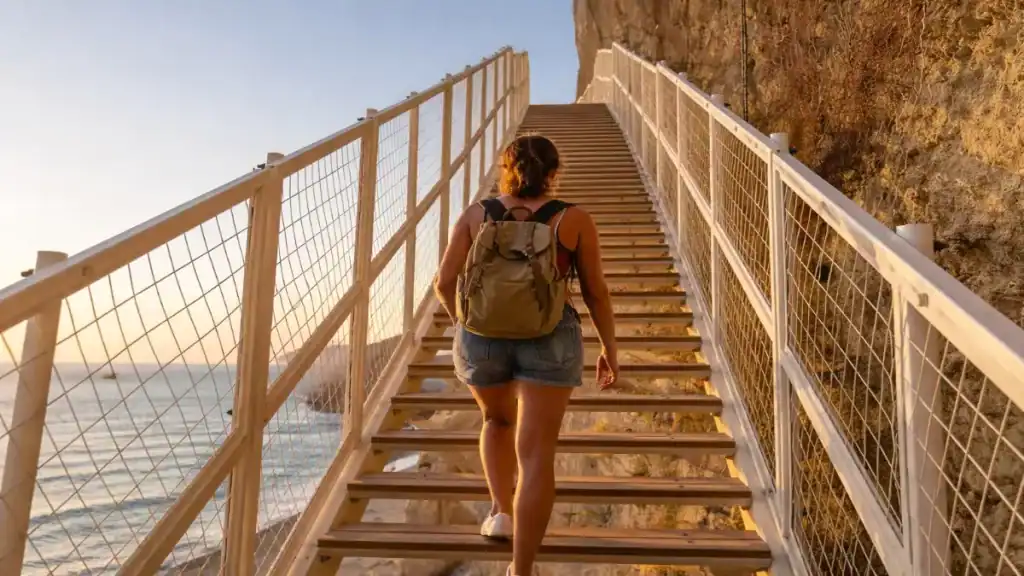
The descent is long enough to affect how we would plan the day. Going down was manageable for us, but it was impossible to forget that every step would have to be climbed again later.
Reaching Egremni Beach in Lefkada, Greece, involves descending approximately 350 to 400 steps.
🥾 THE PART WE WOULD PLAN FOR
Wear comfortable shoes and carry plenty of water. The return journey is more demanding than the walk down, so saving some energy for the climb matters.
Oddly, the effort also improved the arrival for us. The turquoise water gradually opened beneath the staircase, and reaching the pebbles felt like completing a journey rather than simply stepping out of a car beside the sea.
🌊 Is Egremni Beach Good for Swimming?
On the calm day we experienced, the water was one of Egremni’s biggest attractions. We could see the seabed well beyond the shallows, and the clarity made getting into the sea difficult to resist.
It does deepen fairly quickly. We would be more cautious when the Ionian is rough, and this is not somewhere we would assume conditions are equally easy every day.
Pebbles Changed the Practical Side of Our Beach Day
Egremni is a white-pebble beach rather than a soft sandy one. We could walk barefoot, but not comfortably for long. Water shoes made repeated trips in and out of the sea much easier.
🤫 Does Egremni Beach Actually Feel Quiet?
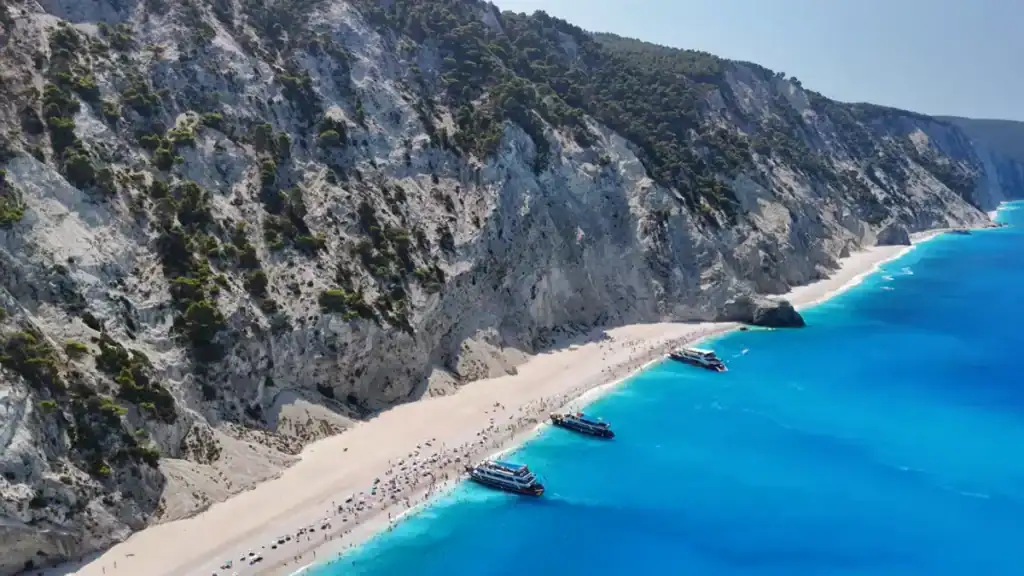
Egremni is famous, so quiet does not mean undiscovered. Tour boats can bring plenty of people to the shore, and the area around the main arrival point naturally attracts more visitors.
What changed the experience was the length of the beach. Once we walked away from the staircase, the space around us opened surprisingly quickly. We never had the same hemmed-in feeling that can develop at a smaller, easier-access cove.
🤫 WHERE WE FOUND THE SPACE
We would not judge Egremni from the first patch of pebbles below the access point. Walking farther along the shore was what made the beach feel calmer to us.
🏔️ The Cliffs Are Part of Egremni’s Appeal, Not Just Its Backdrop
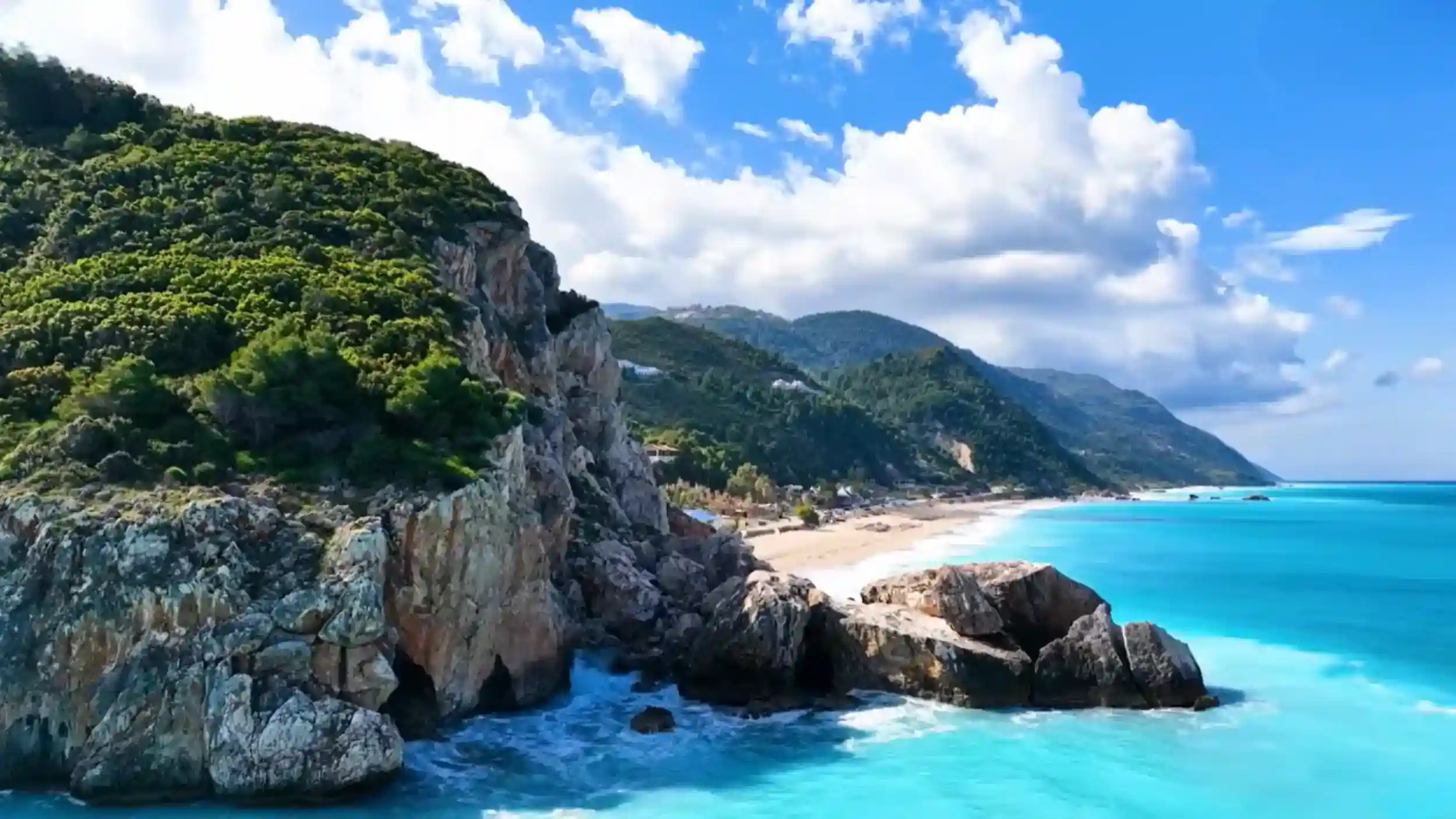
We did not fully appreciate Egremni’s scale until we were standing at water level. The pale limestone walls rose almost vertically behind the beach, while the coastline stretched away beneath them.
The towering white cliffs behind Egremni Beach in Lefkada, Greece, rise as high as 150 meters (roughly 490 feet).
Roads and buildings were hidden above us. Despite Egremni’s fame, that separation from normal island infrastructure gave the shore a convincing sense of remoteness.
The Coastline Has Changed Within Living Memory
The cliffs are not a fixed backdrop. Natural erosion continues to shape this coast, and the area changed significantly after the 2015 earthquake, which led to construction of the current staircase. Knowing that made the landscape feel active rather than simply photogenic.
☀️ What Is the Best Time of Day to Visit Egremni?
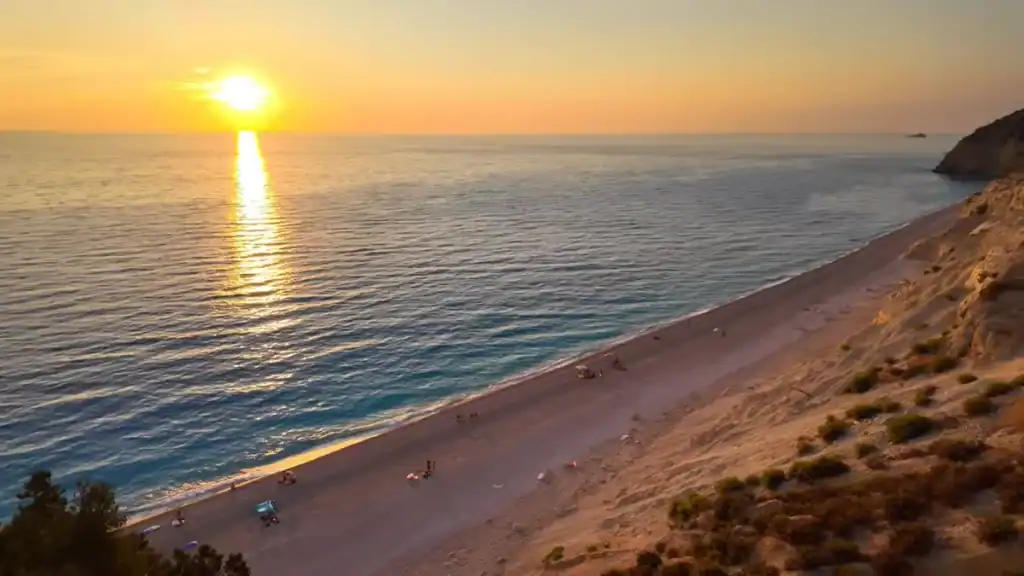
Early morning has one obvious advantage: cooler conditions for the descent and, more importantly, the eventual climb back. Late afternoon offers something different. The light softens and the atmosphere can become quieter as day visitors begin to leave.
We remember Egremni particularly well in that softer light. By then, the beach felt less like somewhere we had come to tick off and more like a stretch of coastline we were reluctant to leave.
🏖️ Is Egremni Better Than Porto Katsiki?
We would choose Porto Katsiki for the classic first Lefkada beach experience and easier access. Egremni wins when space matters more than convenience.
That distinction became clearer once we had visited both. Egremni demanded more effort, but its much longer shoreline gave us greater freedom to move away from the arrival point. Porto Katsiki felt like the more obvious first-time choice; Egremni felt more rewarding when we were prepared to work for the day.
OUR BEACH-DAY CHOICE
🌅 Porto Katsiki: the classic Lefkada experience and the easier first choice.
🤫 Egremni: more effort, more shoreline and more chance to find space.
🚗 Kathisma: easier access, cafés, restaurants and watersports.
💎 Agiofili: a smaller option when sheltered-bay appeal matters more.
If we were choosing Egremni as part of a wider beach itinerary, we would compare the alternatives in our guide to Lefkada Beaches: Understanding the Island’s Coastline. Access, exposure and atmosphere changed our beach choices more than photographs ever could.
So, is Egremni Beach worth visiting? For us, yes, provided the staircase is a compromise you are comfortable accepting. We would not choose it every day, but for clear water, dramatic cliffs and enough shoreline to escape the busiest arrival area, the extra effort genuinely changed the experience.