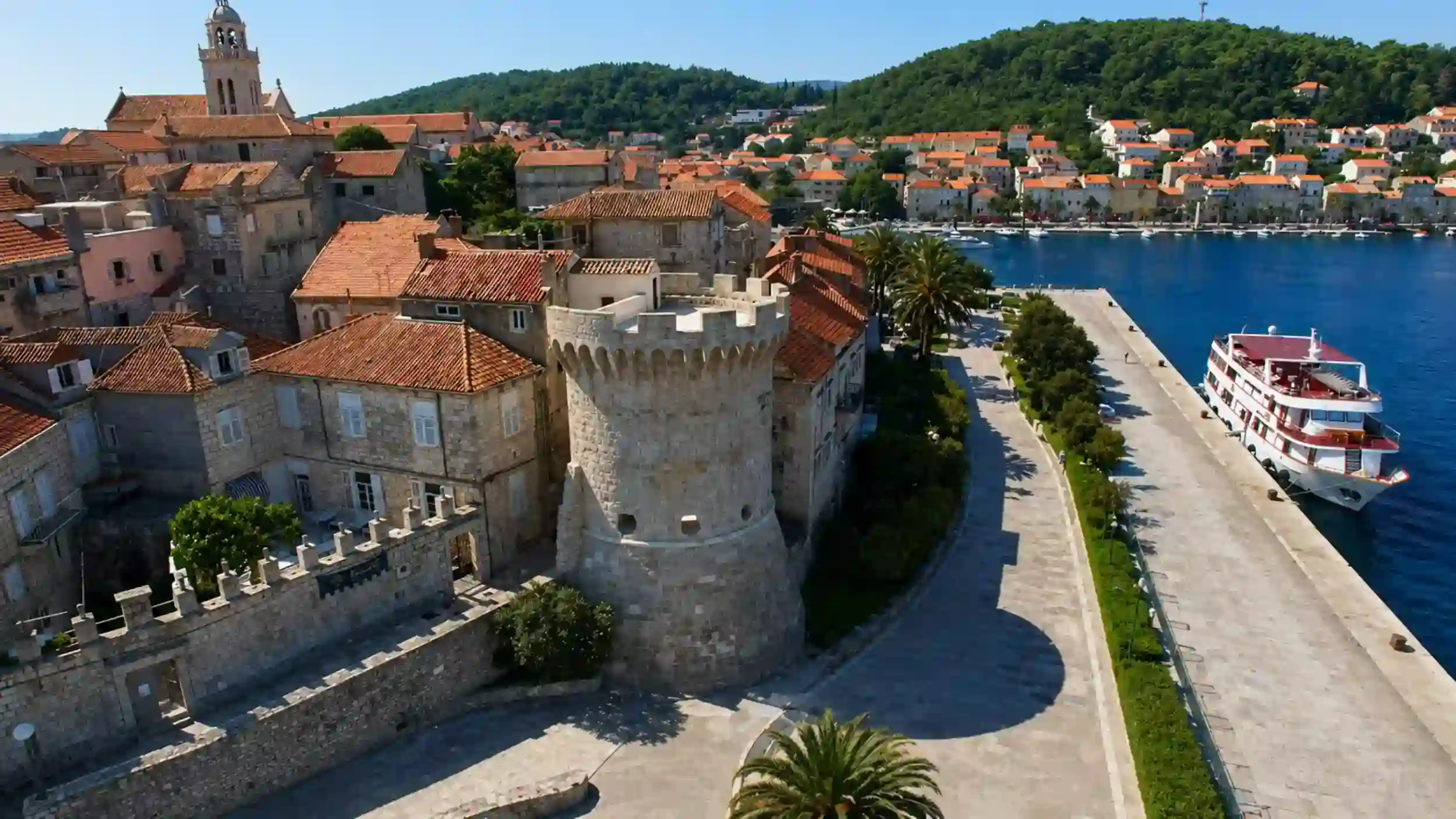
How many days in Korčula Town do you need? From our experience, a day and a half to two days works best. We could cover the main sights in one day, but the extra time mattered because it let us wander without watching the clock, climb the bell tower, swim and still enjoy an evening in town.
By the third day, we had largely finished with the Old Town itself. That was the point when beaches, vineyards and short boat trips became the reason to stay longer.
⛴️ Do You Need a Car in Korčula Town?
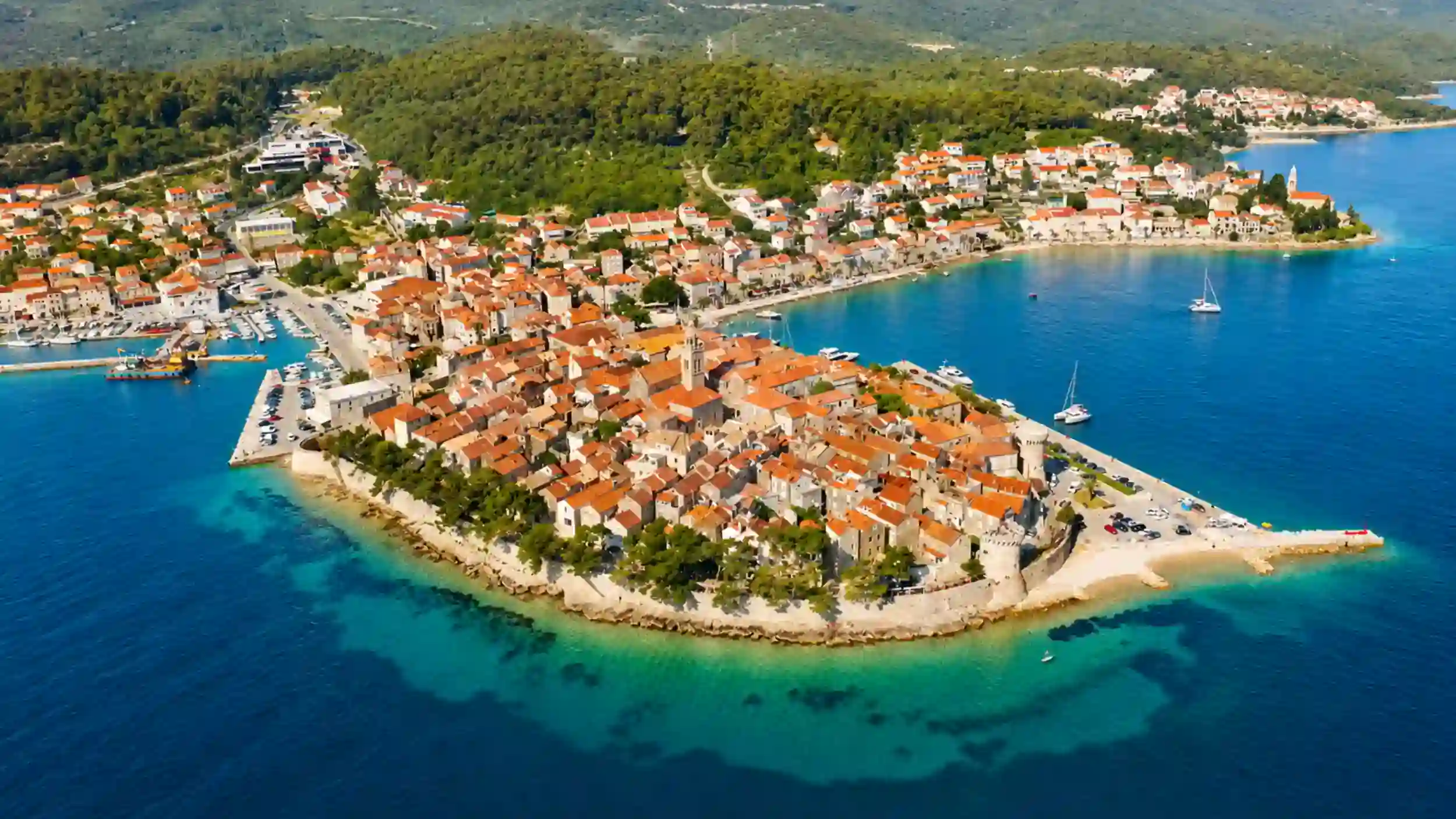
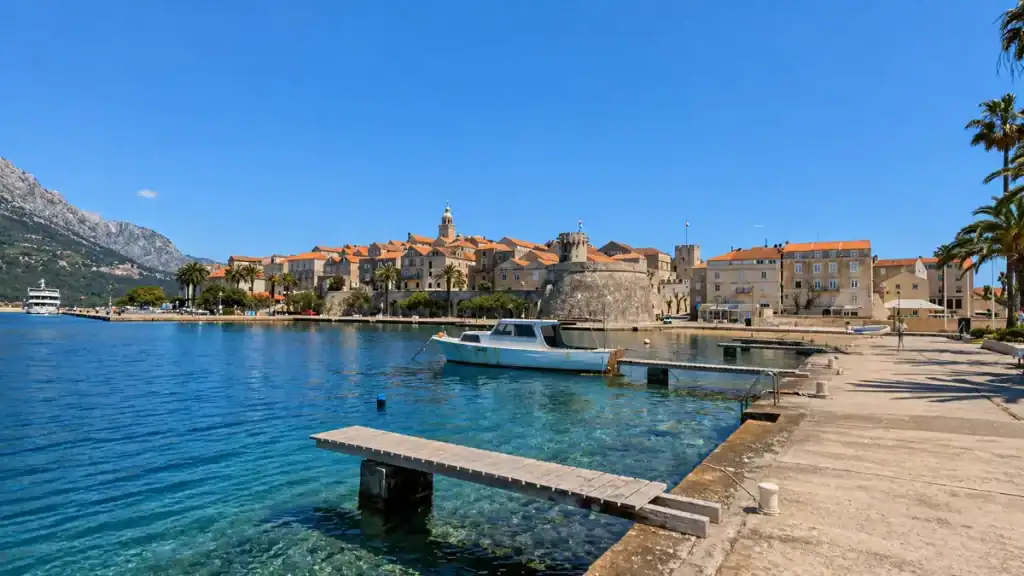
For a one- or two-day stay, we would not hire a car just for Korčula Town. Arriving by ferry gave us an immediate sense of why: the walled peninsula appeared across the water before we docked, and even with an afternoon arrival there was still enough daylight to walk the perimeter, understand the layout and settle in before dinner.
Inside Town, Driving Would Have Added Hassle
We never needed a car inside the Old Town. Everything within the walls was easier on foot, and the distances were tiny.
The calculation changes once the itinerary moves beyond town. Pupnatska Luka, inland villages and wine country are easier with your own transport. Taxis and rental options around the ferry terminal give you alternatives, so there is little reason to hire a car merely for the Old Town and then leave it unused.
For a one- or two-day stay, arriving without a car would not concern us at all.
🏘️ How Long Does It Take to Explore Korčula Old Town?
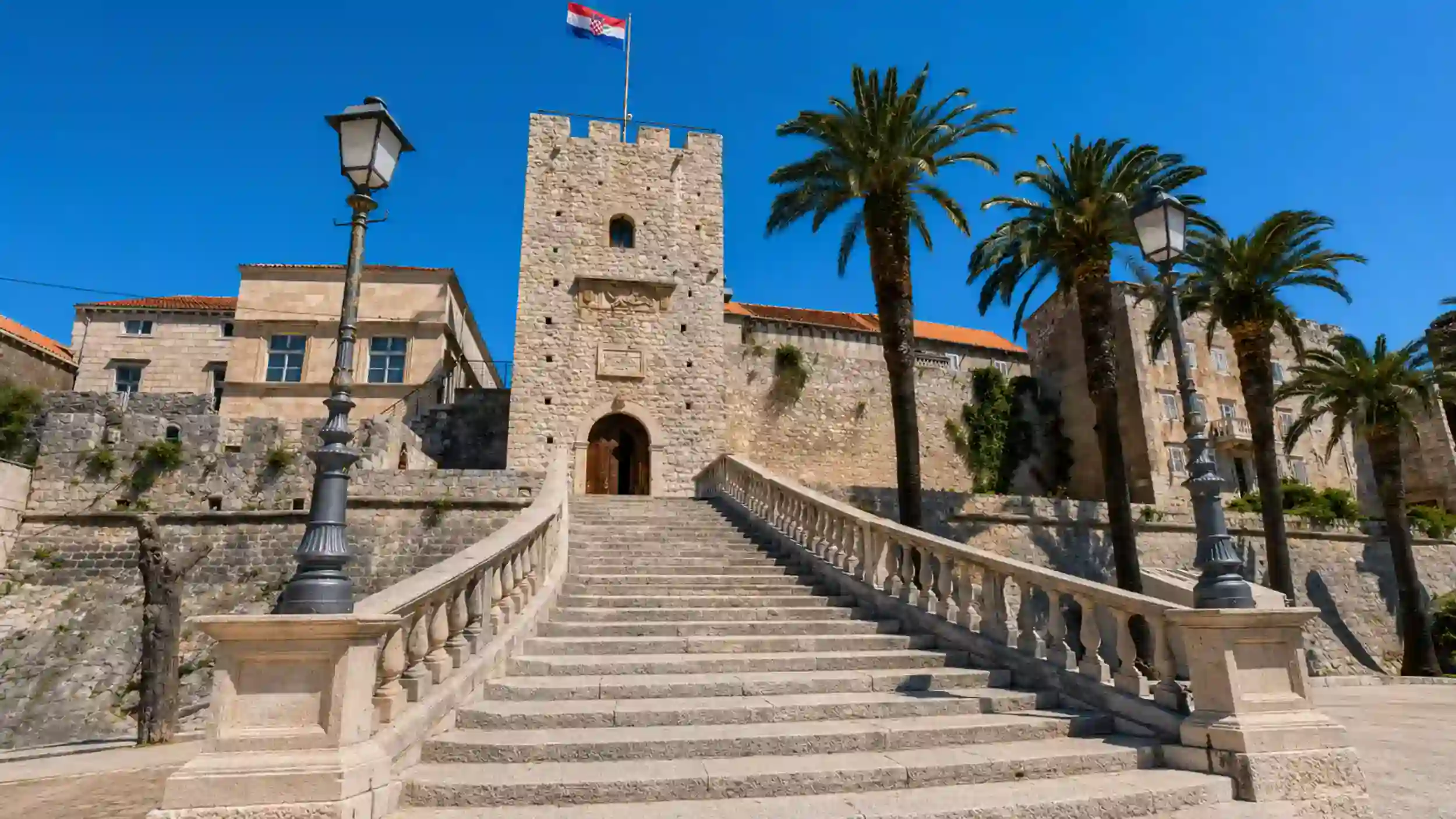
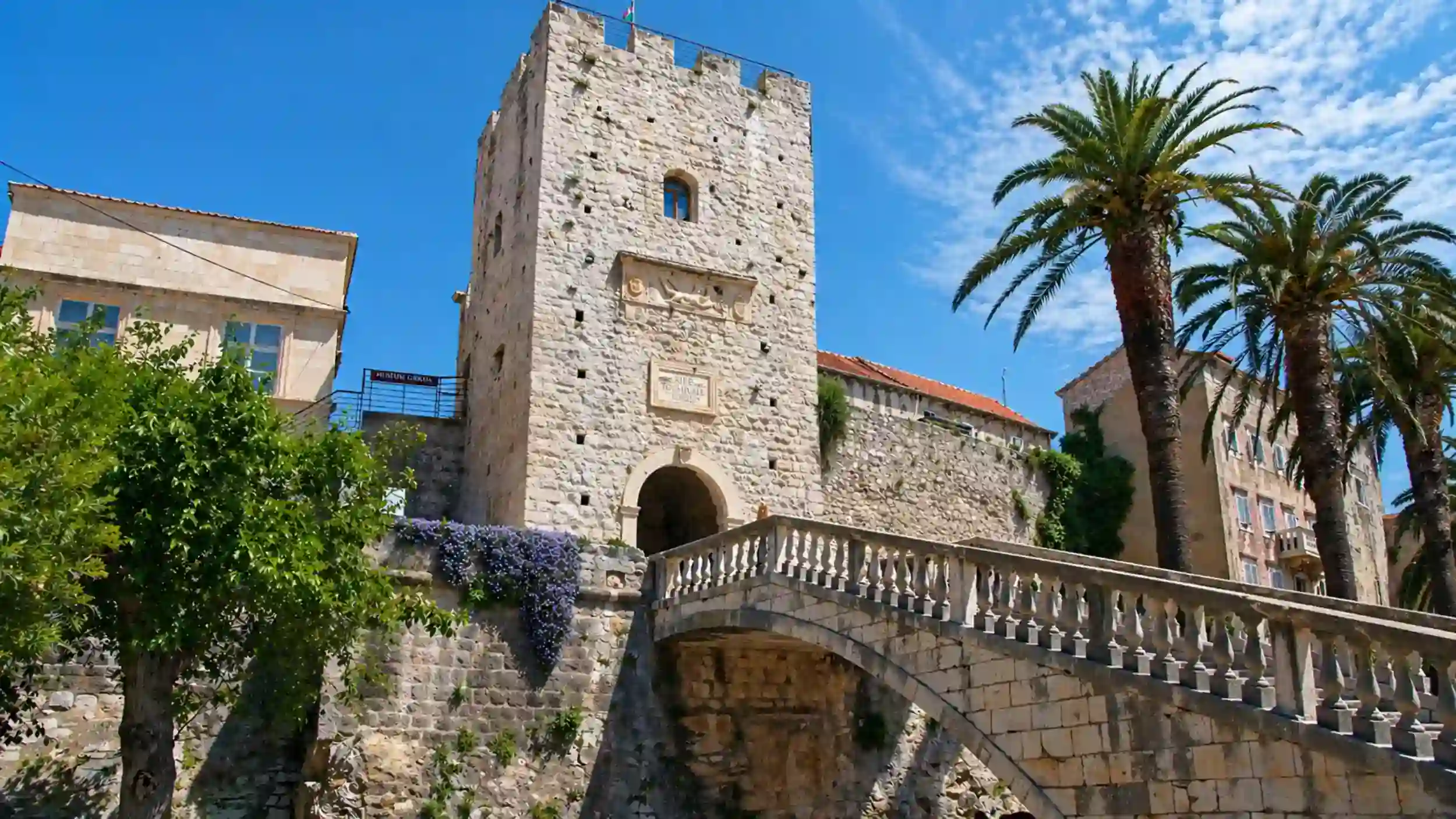
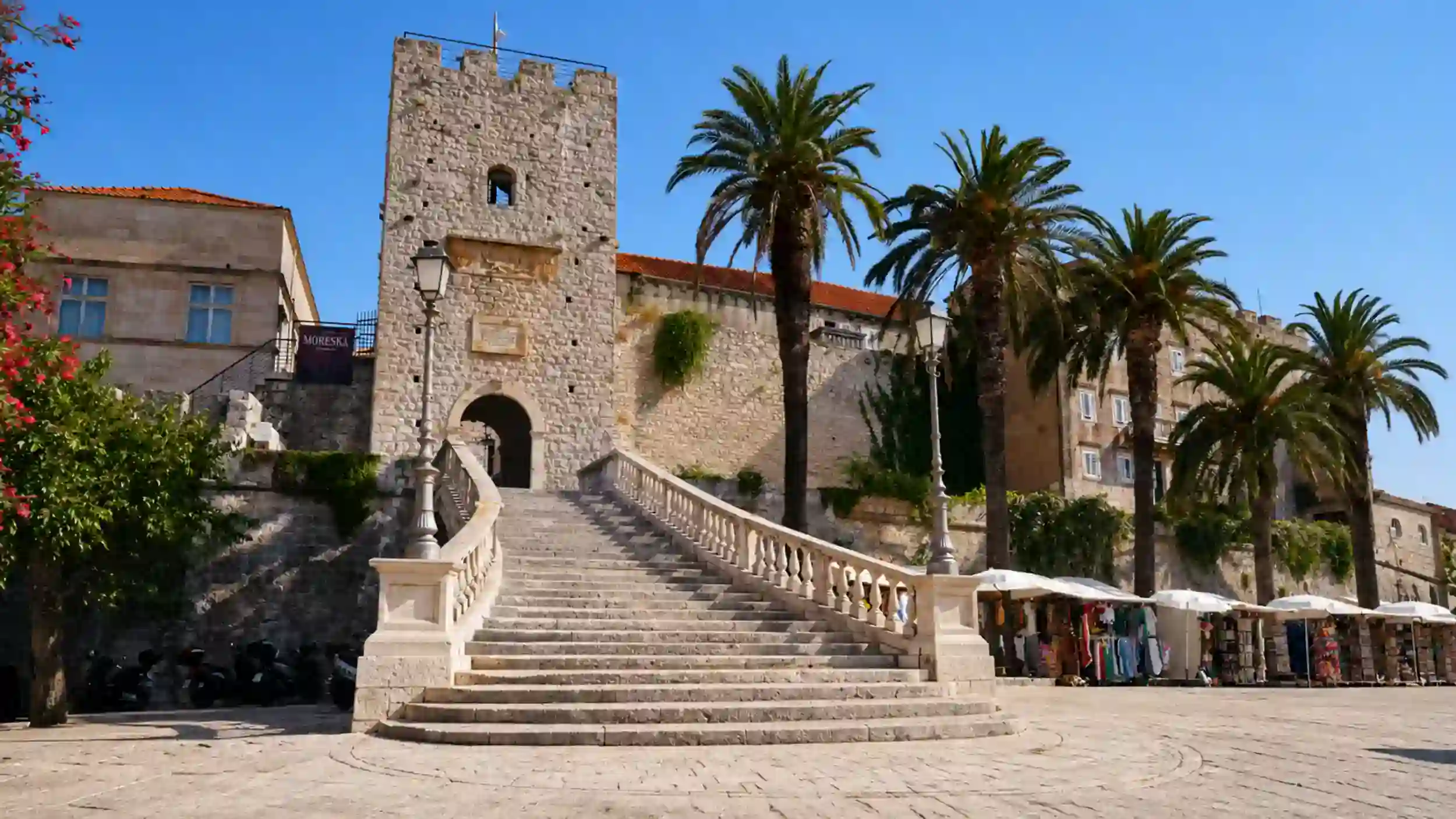
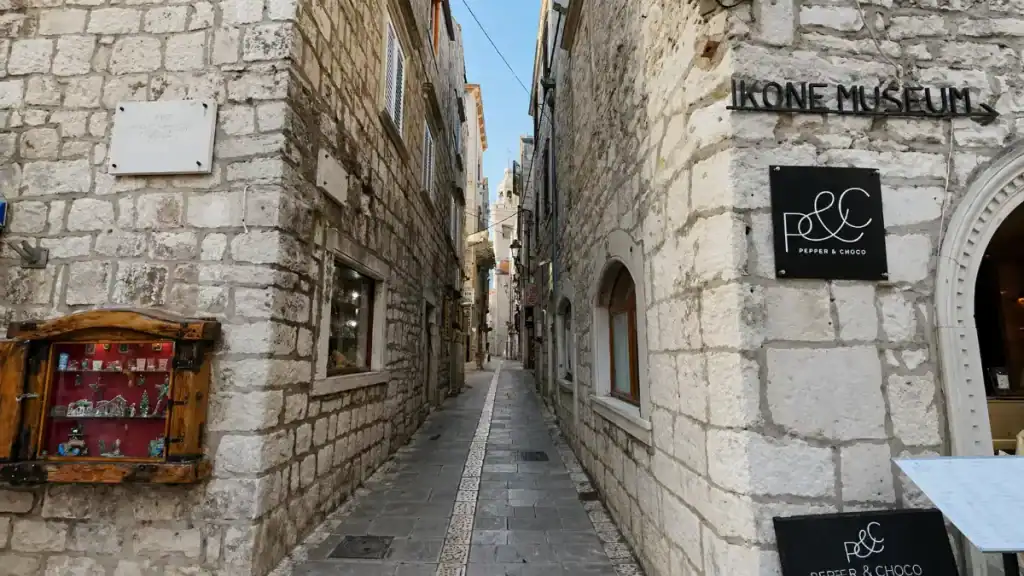
At a relaxed pace, we could walk around the entire walled peninsula in about twenty minutes, although properly exploring the lanes takes longer. Korčula Old Town looked more substantial from the ferry than it felt once we were inside, where narrow streets climb gently towards the centre over uneven stone steps.
That perimeter walk was useful before we tried to see anything properly. Fortress towers and water on both sides did most of the orientation for us.
Wandering Beat Trying to Cover the Lanes Efficiently
Once inside, we stopped looking for the quickest route to St Mark’s Cathedral. Streets reconnect so often that getting seriously lost is difficult. Slowing down also exposed the small things: doorways, worn steps and corners that would have disappeared if we had treated the lanes as a route to complete.
Summer changed the timing. Starting early meant more shade between the stone buildings. Later, once the temperature dropped, we preferred being outside the walls. The sunset walk around Korčula Town was far more atmospheric when evening light reached the water, and by then there was no reason to hurry.
🔔 Is St Mark’s Cathedral Bell Tower Worth Climbing?
St Mark’s Cathedral became our obvious reference point near the centre. Much of its stonework dates from the 14th and 15th centuries. Craftsmen from Dubrovnik, Venice and Milan contributed to the building. We nearly missed the small gold-and-black lunar-phase indicator outside because the tower naturally draws most of the attention.
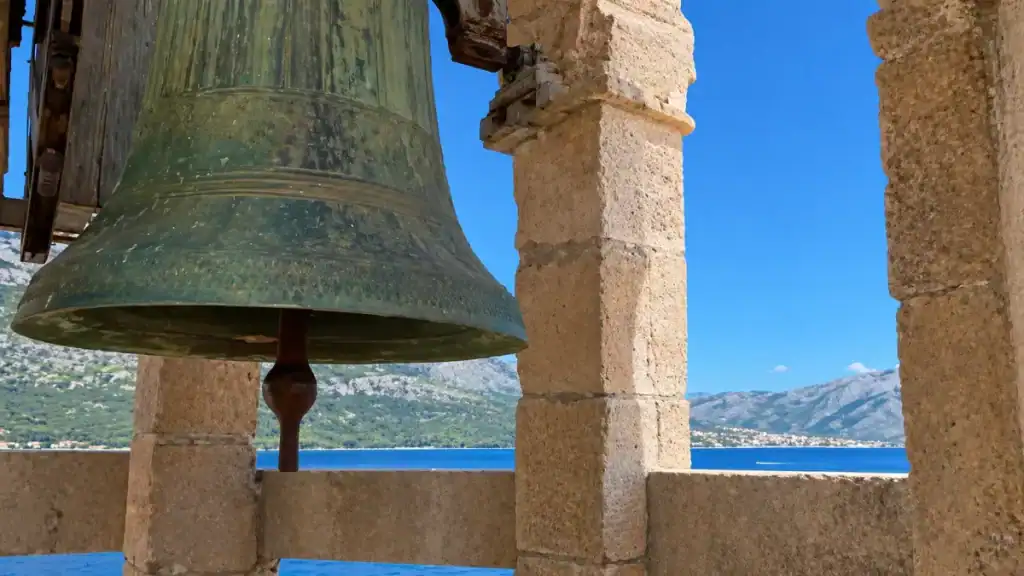
For us, yes. The climb was worth doing for the view across rooftops, fortress towers and the Adriatic, but the narrow staircase meant we were glad we had not squeezed it into a tiny gap between other plans.
The Descent Was the Part We Underestimated
The lower staircase is extremely narrow. When people are moving both ways, progress slows quickly. I would not squeeze the visit into a tiny gap between other plans because the descent can take longer than expected.
💡 ALLOW A LITTLE SLACK
The tower is not a long attraction, but the tight staircase can slow things down. Give yourself enough time to enjoy the view instead of treating the climb as a quick tick-box stop.
🏛️ Is One Day Enough for Korčula Town?
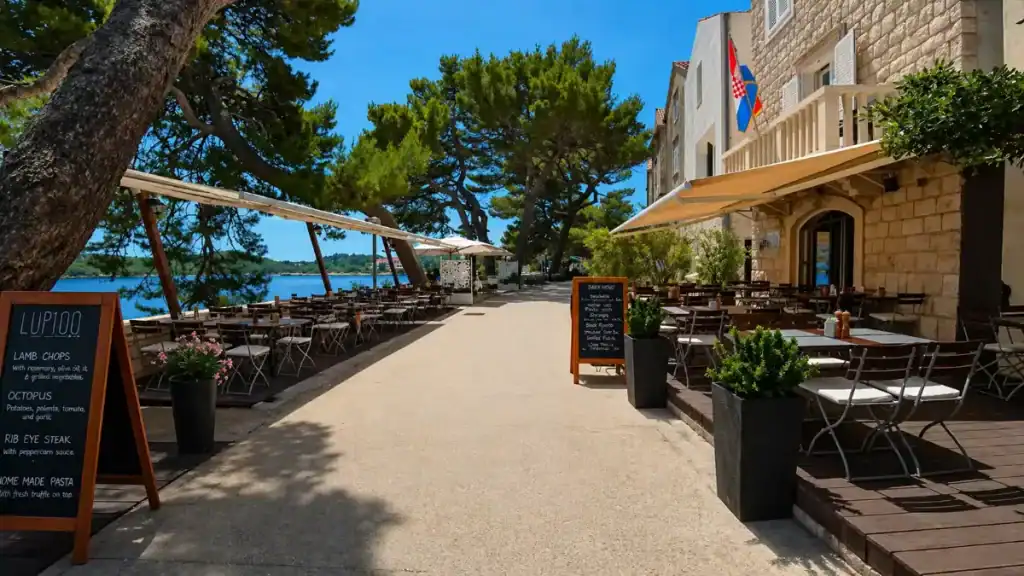
Yes. Our first full day was enough for the perimeter, main lanes, cathedral and bell tower, with very little time disappearing simply moving between them. One day works if seeing the essentials is the priority; what it does not give you is much room to stop treating the Old Town as a sightseeing exercise.
We started with the outside of the walls, then wandered uphill through the smaller streets. Later, when the morning crowds had eased, the cathedral and bell tower made more sense. By late afternoon we were ready to stop sightseeing altogether.
By late afternoon, we had stopped looking for another attraction. The waterfront was enough.

🏊 What Does a Second Day in Korčula Town Add?
The second day gave us something more useful than extra sightseeing: time to swim, wander without a route and enjoy the town after its main sights were already familiar. Instead of repeating the first day more slowly, we let that familiarity change how we used Korčula Town.
We started early at Šuarin bakery while the full selection of local pastries was still available, then wandered without a fixed route. By afternoon, familiarity had set in and we had crossed some of the main streets more than once.
Swimming Gave the Extra Time a Purpose
Several places along the shoreline around Korčula Town provide easy swimming access. A couple of hours in the Adriatic still left plenty of time to return for dinner.
That is why two days worked so well for us. The sightseeing was essentially finished, but the town had not run out of reasons to stay.
🏖️ Is Three Days Too Long in Korčula Town?
Three days felt too long to devote only to the Old Town. By then we knew the main lanes, perimeter, cathedral and waterfront, so another full day only made sense once Korčula Town became a base for beaches, vineyards or trips elsewhere.
Pupnatska Luka Is Close Enough for an Easy Beach Escape
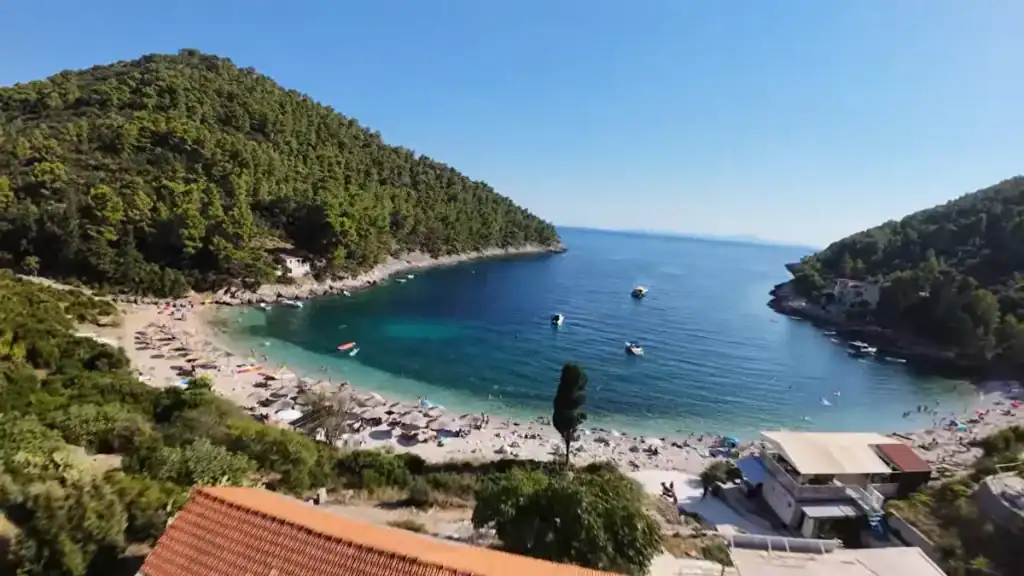
Pupnatska Luka lies about 15 kilometres from Korčula Town and takes roughly twenty minutes by car, depending on traffic. The road heads through olive-growing countryside. Near the end, it drops towards a sheltered cove with clear water and a white pebble shore.
This was the point when having a car started to make sense. For the Old Town it had been unnecessary; for a beach several kilometres across the island, the freedom became useful.

🚤 What Day Trips Can You Take From Korčula Town?
A car is not the only way to make a third day feel different. From the harbour, we could look towards short trips to Orebić, Badija and Vrnik, using Korčula Town as a base without committing to a long journey. The day trips from Korčula Town are what make that extra day much easier to justify.
Orebić is the clearest conventional ferry trip. It sits across the channel on the Pelješac Peninsula and takes roughly fifteen minutes to reach. Badija and Vrnik are even closer, but these small islands are normally served by seasonal water taxis rather than conventional ferries.
⛴️ EASY OPTIONS FROM THE HARBOUR
🏝️ Badija: monastery, pine woodland and swimming
🪨 Vrnik: stone-quarry history and a much smaller island setting
🌊 Orebić: an easy mainland change of scene across the Pelješac Channel
For us, this is where a third day earns its place. We would not spend it repeating the Old Town; we would use Korčula Town as the starting point for seeing more of the island or the surrounding Adriatic coast.
📅 How Many Days in Korčula Town Is Best?
Our answer would be a day and a half to two days. One day covers the essential sights, but the extra time was what gave our stay breathing room: swimming, a slower evening and the freedom to wander without arranging every hour around ferry times.
| 📅 Time | 👤 Best for |
|---|---|
| ⏱️ 1 day | Old Town, perimeter walk, cathedral and bell tower |
| ⭐ 1½–2 days | The best balance for most visitors |
| 🏖️ 3 days | Old Town plus beaches, vineyards or a boat trip |
Three days only starts to feel worthwhile once you look beyond the walls. Pupnatska Luka, nearby islands and the vineyards around Lumbarda or Čara are what give that extra time a purpose.
If wine interests you, part of the third day can go to Korčula’s wine country. Grk around Lumbarda and Pošip further inland around Čara add something genuinely different from another circuit of the Old Town.
Our simple answer is two days. We would stay for three only when Korčula Town is becoming a base for exploring more of the island, not because the Old Town itself needs another full day.