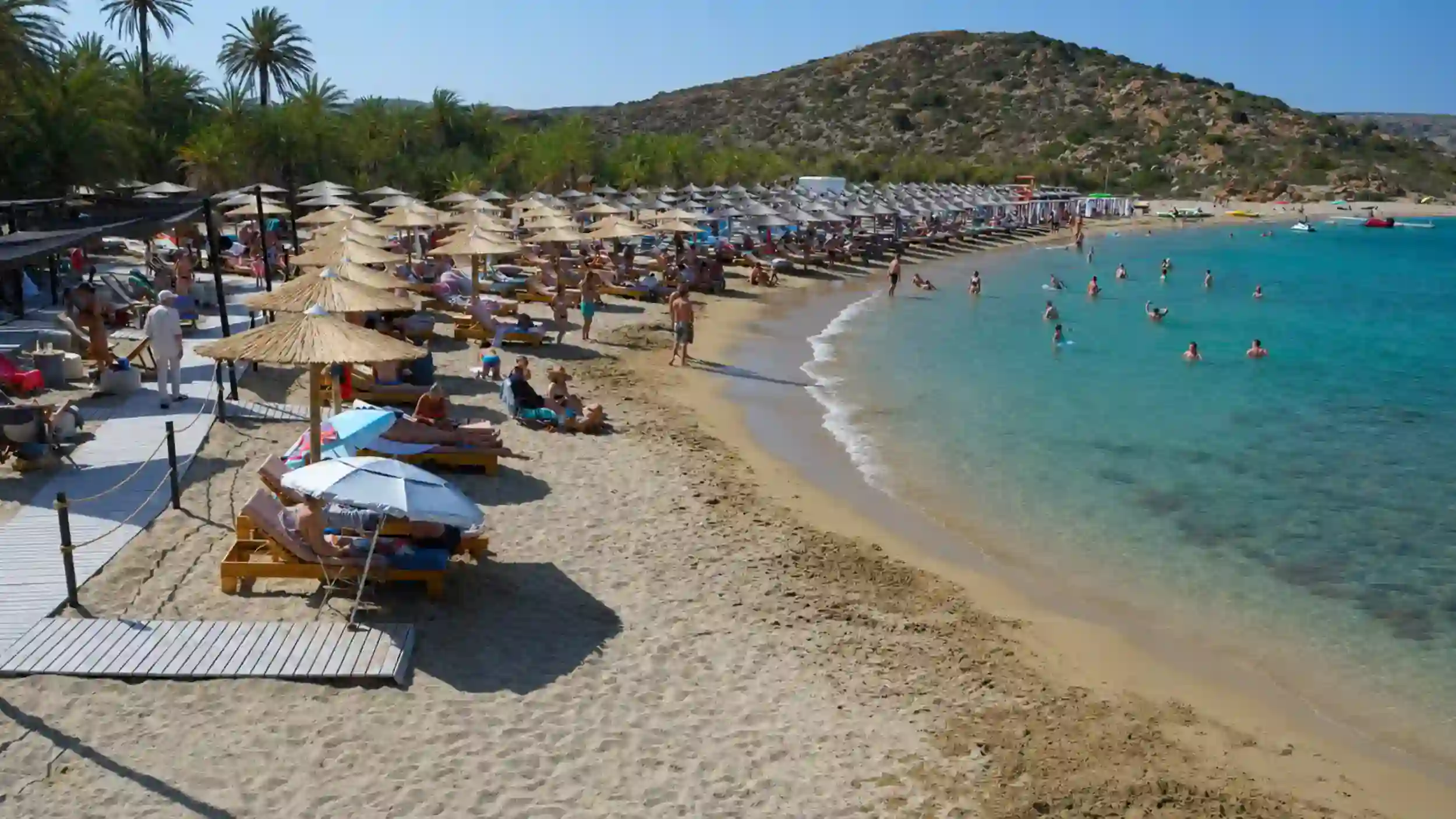
Beaches near Vai Beach are better understood as a small group of very different stops rather than one single beach destination. This catches people out. Visitors often drive up expecting Vai alone to carry the entire day, stay too long, and leave thinking the area is overrated. It is not overrated. It just needs handling properly.
The practical base for this whole stretch is usually Palekastro. That is where you fuel up, buy water, sort breakfast, and return for food later. From the village, all the main beaches are within a short drive, which means this is less about choosing one beach and more about building a sensible sequence. The fuller picture of staying out in this corner of the island is worth reading if you are still deciding between Palekastro and Sitia as a base.
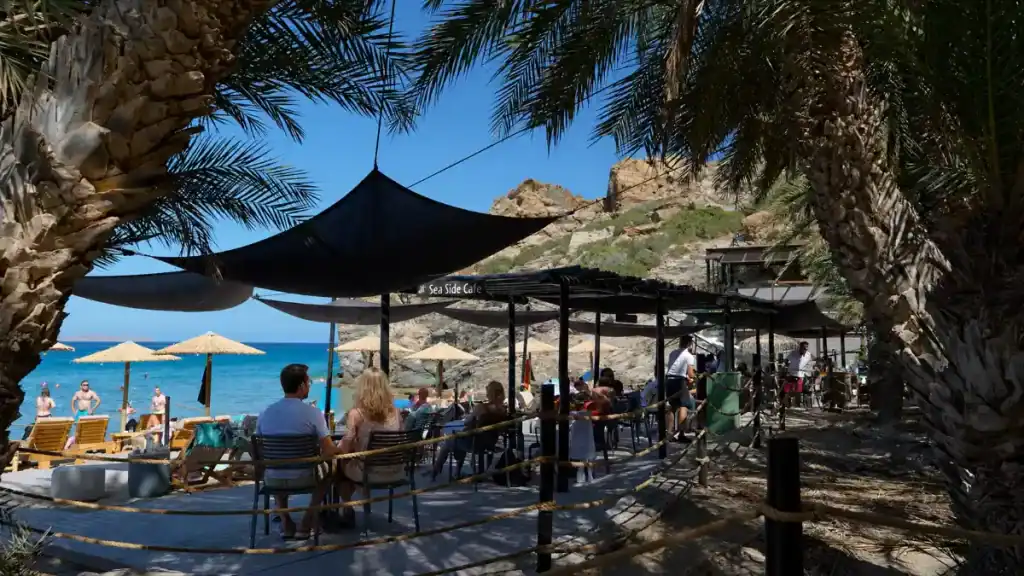
Vai Beach
Vai is the famous stop because of the palm grove. The beach sits in a neat curved bay, but what makes it distinctive is the dense wall of native palms behind it. That grove is the visual reason people come. Remove the palms and this would be an average organised beach by Cretan standards.
The sand is soft enough, the sea enters shallowly, and the water is clear. It is also often calmer than the more exposed nearby beaches because the bay gets some protection from the summer wind. None of that is a problem. The issue is that the actual swimming experience is only decent, while the visitor load is heavy.
There is a large paid parking area above the beach, but in peak summer it starts filling by late morning. Tour buses begin arriving not long after, and once they unload, the whole bay tightens quickly. Most of the usable frontage disappears under sunbeds and umbrellas, and the open feel is gone before midday.
There is a taverna and snack counter at the back, so everything is easy enough logistically, but Vai is not somewhere that rewards staying all afternoon.
What does reward the stop is seeing the grove from above. A short marked footpath runs behind the palms and takes only a few minutes to cross. It gives some elevated viewing points through the trees. There is also a signed path climbing the southern side of the bay. In around ten minutes you get the clearest overhead view of the palm grove meeting the sea, which is the one angle that justifies the drive.
That is the correct use of Vai: arrive, walk it, look at it, swim briefly if you want, then move on.
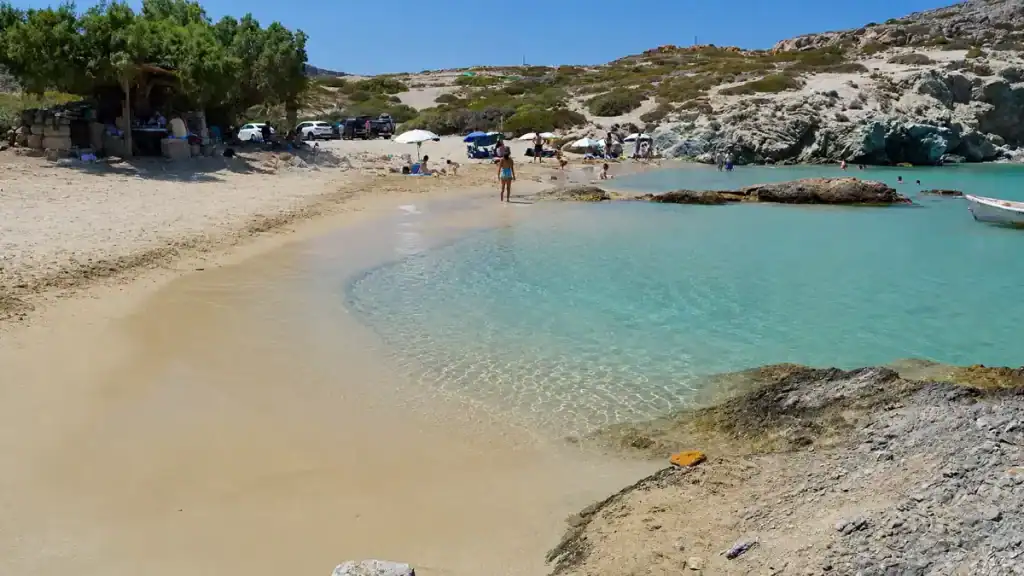
Itanos and Erimoupolis
A few minutes beyond Vai the road becomes rougher but not enough to matter if you drive slowly. This is where the best beach stop in the cluster begins.
Itanos and Erimoupolis are effectively the same destination in visitor terms. The old city remains spread across the headland, and the bays around it share the same parking area and access. Local references switch between the two names, but you can think of it as one archaeological beach stop.
The first thing that stands out is how little infrastructure there is.
No sunbeds. Unfortunately no café. No organised beach strip. Just a dirt parking area, low scrub, open sea, and two adjacent bays divided by a rocky rise.
This absence is exactly why it works.
The shoreline is a sand and pebble mix, and the water is cleaner and clearer than Vai. There is less foot traffic, less noise, and far less of that resort-beach feeling. Even in August, crowds stay surprisingly low because most people turn back after Vai and never continue north.
For swimming, this is the strongest beach in the area. It is also the one I would push hardest in any ranking of which East Crete beaches actually repay the drive, because the difference between Vai and Itanos is far bigger than the short distance between them suggests.
The old Itanos remains sit directly on the low headland between the bays. You can walk freely through low walls, basilica outlines, scattered stone blocks, and remnants of foundations without tickets or barriers. It is not a long archaeological visit. Twenty to thirty minutes covers it comfortably. But it gives the place more substance than a simple beach halt.
There is no shade and no water source, so bring both with you.
If you are choosing where to spend the longest actual swim of the day, this is the place.
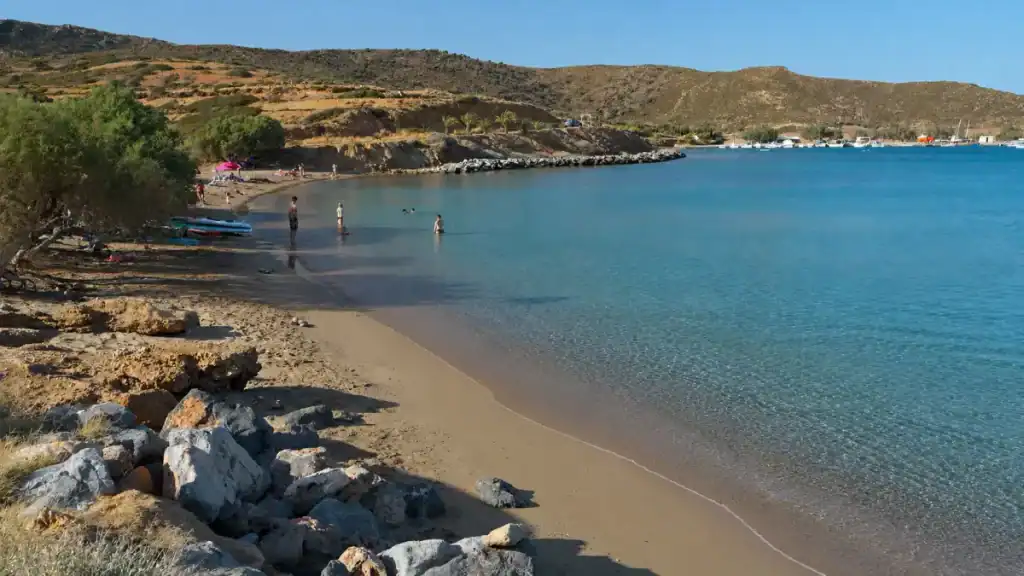
Kouremenos Beach
Kouremenos lies just north of Palekastro on the east-facing side, and it has a completely different character again.
This is a long, straight beach rather than a sheltered bay. The sand is rougher, there is more pebble underfoot, and the sea shelves deeper than Vai. It looks broader and more open immediately because the shoreline runs for a long distance and the visitors spread out instead of bunching together.
The key condition here is wind.
By afternoon in summer, Kouremenos becomes one of the most reliable windsurf spots in eastern Crete. The meltemi comes through this coast hard enough that several rental stations and schools operate along the back of the beach. Sails start filling offshore and the whole place changes from swimming beach to sports beach.
If you are there for wind, it is excellent.
If you are there for a lazy afternoon on a towel, it can become uncomfortable very quickly.
Morning is the better swimming window. Earlier in the day the sea is calmer, the beach feels open, and there is plenty of room to spread out. Later on, sand starts moving, umbrellas shake, and lying still stops being pleasant unless you enjoy the blast.
Parking is informal along the road behind the beach. There are a few tavernas at the southern end, useful enough but not somewhere to plan the day around.
Kouremenos works as a practical broad beach with cleaner water than Vai, but it is less memorable than Itanos unless you actively want the wind.
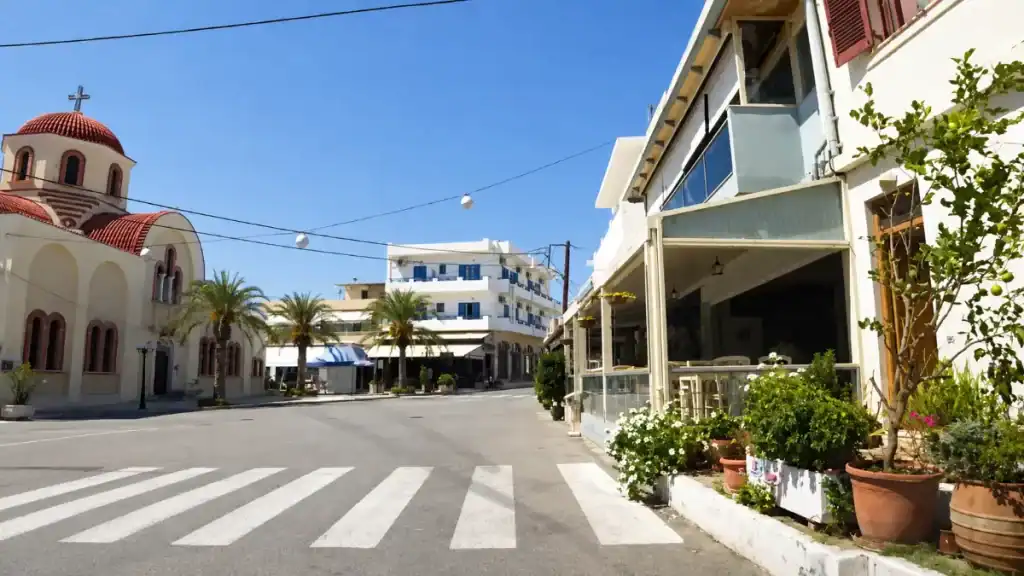
The Best Order from Palekastro
Palekastro should be treated as the hub for this whole section. You leave from there in the morning, carry enough water for the day, and work the beaches in sequence rather than randomly.
Start with Itanos while it is still quiet and before the sun gets harsh. This gives you the best swim in the calmest conditions.
Move back to Vai in mid-morning, before the tour buses have fully compressed the bay, and use it mainly for the grove, the footpath, and the elevated view.
Leave Kouremenos either for an early return swim near base or for later in the day only if windsurfing is part of the plan.
All three fit comfortably into one day because none of them needs long hours individually.
The common mistake is giving Vai the whole schedule because it is the famous name. In reality, Vai is the shortest stop, Itanos is the strongest beach, and Kouremenos is the functional wind beach.
If time is limited, that is the order to remember.