

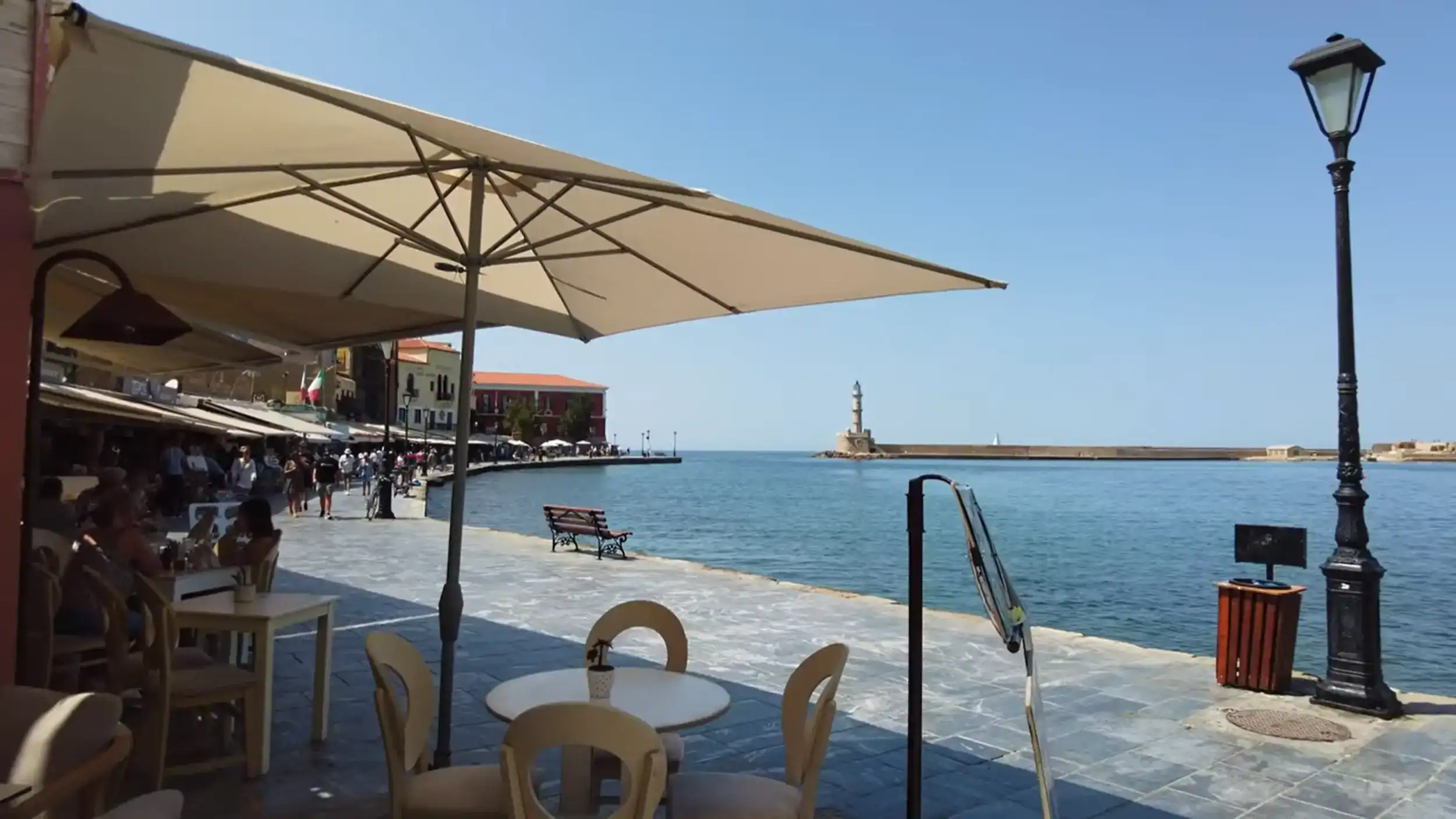
Most people arrive at the Old Port of Chania and stop there. The harbour is genuinely beautiful – the Venetian lighthouse, the curved waterfront, the pale facades lit amber after dark – and it would be easy to spend three days circling the same blocks and feel satisfied. Easy, and not quite right. Chania rewards the person willing to leave the obvious path before noon. Not dramatically, not by crossing into anything remote, but by simply walking west when everyone else is walking east.
Why Walk West Before Noon
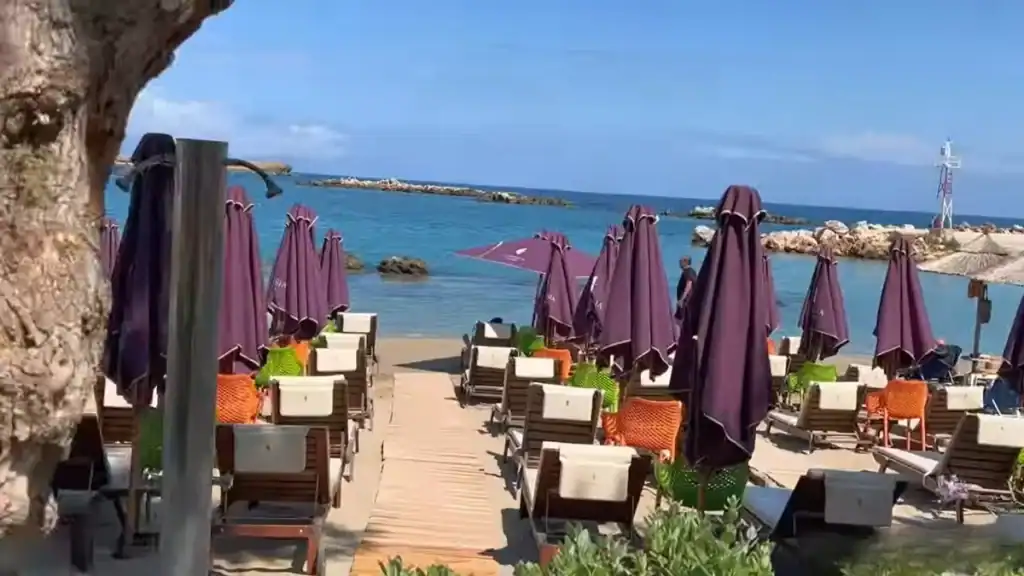
The waterfront promenade running west from the old port has no official name that most visitors bother learning. In Mediterranean cities they might call it the malecón; here it is simply the seafront path, and on most summer mornings it is almost empty before nine o’clock. Walk it west for around twenty minutes and you arrive at Nea Hora, a small neighbourhood beach that functions less as a tourist destination and more as a place where the city goes to cool down. There are sun loungers available, though the arrangement is loose. If you buy something – a frappe, a cold water – a chair tends to follow without ceremony.
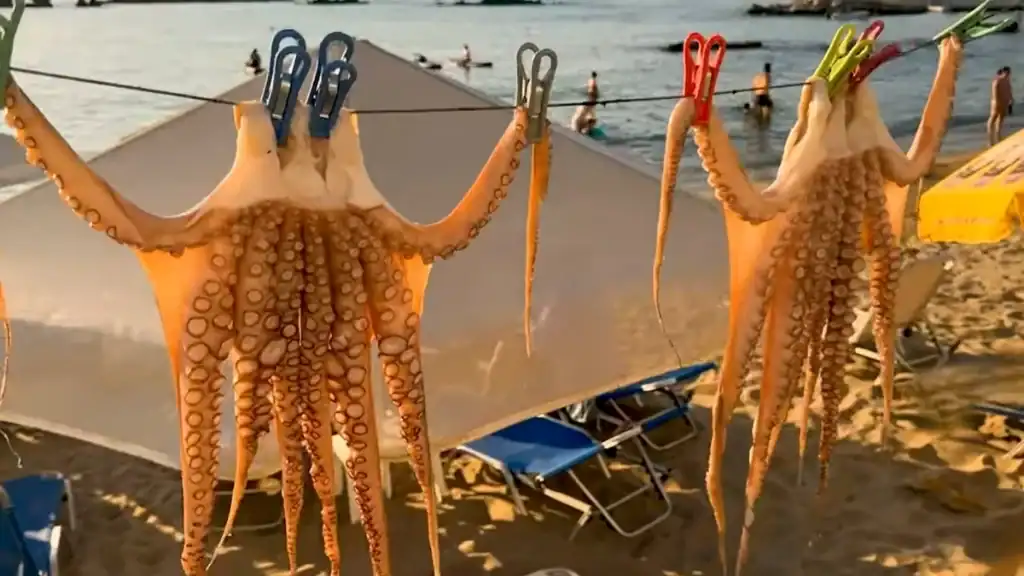
The octopus is harder to explain. At several of the small tavernas lining the edge of Nea Hora, whole octopuses are strung on lines above the entrance, drying in the late morning heat. It is arresting if you are not expecting it – the texture, the smell, the strange dignity of it. The restaurants are not performing anything; they are just drying octopus, as they have always done. The sunset from here, particularly in August, is quiet in a way the old port is not. The light flattens across the water at around eight in the evening, and the frappuccinos, which cost roughly three and a half euros, arrive without rush.
What the Old Town Smells Like After Siesta
Between roughly two and five in the afternoon, a significant portion of Chania shuts. Not entirely – the restaurants along the harbour remain open for tourists – but enough of the surrounding streets go quiet that the character of the place changes. This is worth experiencing rather than avoiding. The old town in siesta has a particular smell: warm stone, olive oil from somewhere, the faint salt of the harbour channelled through the narrow lanes. The cats are everywhere and entirely unbothered.
The practical argument for respecting siesta is straightforward: after five, everything restarts, and the pace of local life reasserts itself. Wandering Chania’s old town at this hour – when the lanes are quieter and the geometry of the place becomes legible again – is how its layered character reveals itself most honestly. The port at night is a different environment from the port at midday – louder, more luminous, more genuinely social. People eat late. The restaurants, and there are many of them, cover the full range of what Mediterranean cooking can do at different price points. Finding something worth eating in Chania at nine at night is not a problem. What takes more effort is finding a table without a view and understanding that this might be the better choice. The restaurants set back from the waterfront – two or three streets in – are typically quieter, occasionally less expensive, and more likely to be occupied by people who live here.
The Olive Oil Factory
About an hour’s drive east of Chania, the olive groves become impossible to ignore. They cover the hillsides in a grey-green wash that, depending on the season, appears either dusty or luminous. Crete produces olive oil in quantities that are difficult to absorb as a visitor – the figure cited by producers is around twenty-five litres per person per year consumed domestically, which is not a number that makes immediate sense until you start paying attention to how the oil appears in everything.
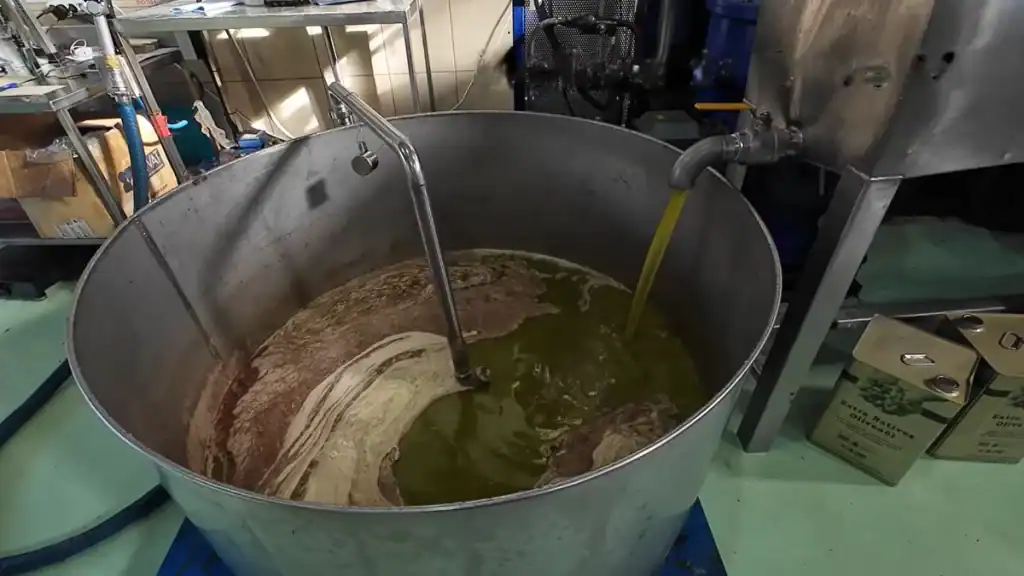
A working olive oil factory is worth visiting not because it is picturesque, which it is not, but because the process is more complicated than most people assume. The harvest runs from September through November. When olives arrive they must be pressed the same day; left overnight, the oil oxidises and the quality drops. The sorting process – removing leaves, snails, stones that fall into the nets alongside the fruit – happens before pressing, not after. The stone pressing, which produces a paste before the centrifugal stage separates liquid from solid, is still the method used here. The paste has a smell that bears no resemblance to supermarket olive oil, and the difference in taste between what they call lower quality and best quality is audible when someone offers you both to smell – the better oil has something green and almost grassy in it, aggressive without being unpleasant.
The Cretan argument that olive oil accounts for local longevity – women reaching ninety regularly, they will tell you – is unprovable as stated and probably not the whole story. But the oil that comes off these presses, used daily in cooking and preserved foods, is not what most Western supermarkets stock in bottles labeled extra virgin.
Getting to Elafonisi: What the Pictures Leave Out
Elafonisi appears in every list of beautiful beaches in the Mediterranean. The photographs are not exaggerated – the water is genuinely that colour, and the pink sand, produced by crushed shells and coral, is real, if subtler in person than in images edited for maximum saturation. What the photographs leave out is the wind. On the days when the water turns that particular shade of blue-green, a wind tends to accompany it. Not threatening, but present – the kind that puts sand in everything and makes umbrellas a negotiation rather than a certainty.
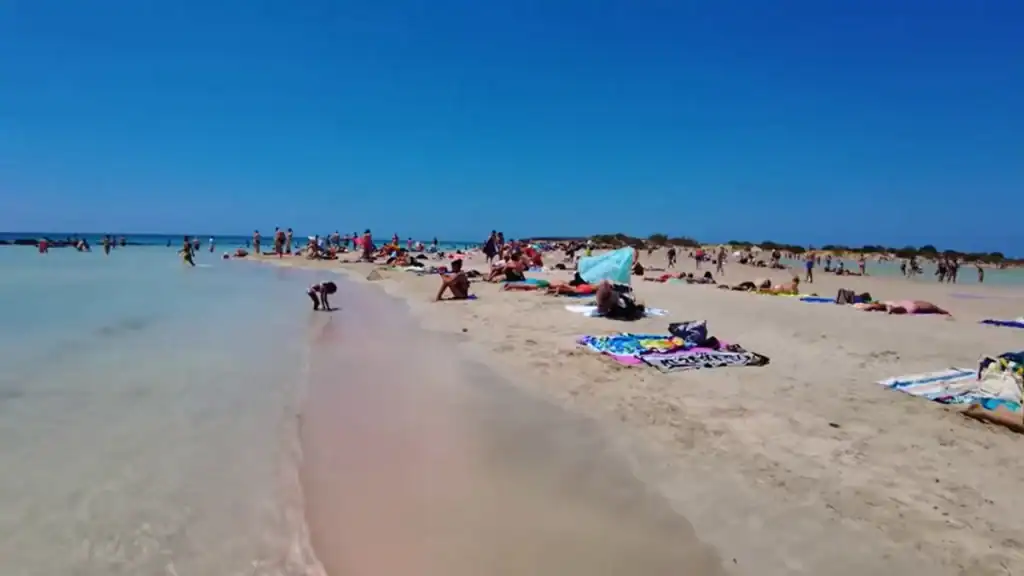
Getting to Elafonisi from Chania requires either a rental car or a tour. The tour option, bookable through platforms like GetYourGuide, costs around fifteen US dollars, includes pickup from the hotel, and provides an umbrella. It is not the most romantic mode of arrival, but Crete is large, the roads involve significant gradients, and the transfer takes about ninety minutes in each direction. The case for driving yourself is real if you want flexibility; the case against it is that the island’s road system demands more attention than a first visit might comfortably offer.
The beach is crowded by mid-morning. Getting there early is the standard advice, and it is correct. The sandbar connecting the shore to the small island offshore becomes increasingly trafficked as the day progresses; in the early hours it has a quality that the afternoon crowd absorbs entirely.
Fassana: A Beach That Doesn’t Announce Itself
Fassana is a small beach that appears on the itinerary of organised coastal tours and almost nowhere else. It is a local preference – the kind of place that resists easy description because nothing about it is dramatic. The water is clear, the beach is small, the food at the taverna is the kind of straightforward grilled fish and salad that requires no menu explanation. A forty-five-minute stop is roughly what most tours allocate. This is not enough time to understand it and is probably exactly the right amount of time given everything else.
The lesson Fassana offers, if it offers one, is about what beaches are like when they are not designed for tourists – the pace is slower, the absence of infrastructure is total, and the experience of sitting still for twenty minutes with nothing competing for your attention is, by late afternoon, close to necessary.
An Olive Tree Older Than Most Civilisations
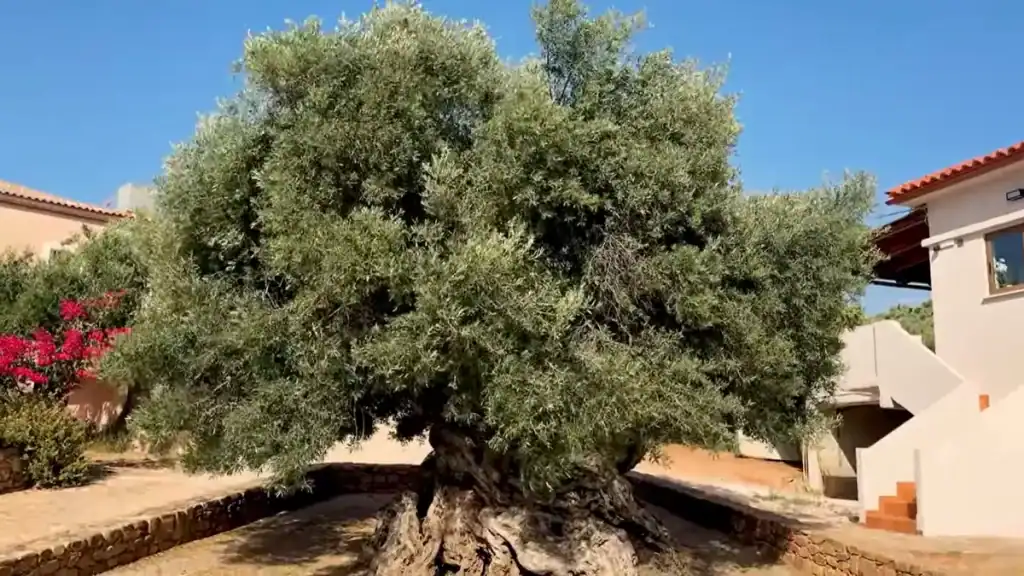
Near the village of Vouves, there is an olive tree that is estimated to be between three and five thousand years old. The estimate is based on trunk diameter and core sampling; the exact figure is contested among dendrochronologists, which is one of those facts that the tree seems indifferent to. It still produces olives. This is perhaps the detail that requires a moment – a tree that was already mature during the Bronze Age continues to fruit, the olives falling and composting where they land because the tree is a protected monument and the harvest is not taken. The hardwood of the trunk has, in places, turned to dust, and the remaining structure is braced internally in ways not visible from outside. The impulse to place a hand on it is nearly universal among visitors and not easily explained. It does not communicate anything. But the scale of the trunk relative to a human body, and the simple arithmetic of what this organism has survived – civilisations, occupations, centuries of pressing exactly the kind of oil you will have tasted an hour earlier at the factory – makes the gesture feel less sentimental than it sounds.
The Rhythm of Arrival and Departure
Reaching Chania takes effort depending on where you are coming from. There is no direct ferry from many of the smaller Cycladic islands; the route from Milos, for instance, involves a stop at Santorini, a transfer, and a second vessel – a travel day of seven or eight hours that is chaotic at embarkation and calm once you are out on the open water. The Santorini ferry terminals, specifically, are the kind of place where patience is not a virtue so much as a structural requirement.
The buses from Heraklion to Chania run for about two hours through landscape that cycles between coast and mountains. It is not a hardship. The view through the window in the late afternoon, when the light turns the hills amber and the sea appears and disappears behind ridges, is part of arriving – the place reveals itself gradually, and the Old Port, when you finally reach it and open the door onto the balcony of wherever you are staying, carries the weight of having been earned.
Chania is not a city that yields much to hurry. The hidden corners it contains – the western seafront at dawn, the factory smell of pressed olives, the quiet beach that no one has photographed into abstraction, a tree that has been alive for longer than most languages – are not hidden in any dramatic sense. They are simply the parts of the place that require a different kind of attention than most itineraries encourage.
What Stays
What most people remember about Chania is the harbour at night – the lights reflected on the water, the warmth, the particular ease of a meal that extends into the small hours with no particular pressure to end. This is a real thing and worth having. But the city also contains the other version: the morning walk before the heat builds, the factory where oil is made by hand the same way it has been made here for centuries, the ancient tree that doesn’t need you to understand it. These are not alternatives to the harbour. They are what the harbour is built on top of – the slow, unglamorous, extraordinarily old life of this island, still running underneath everything, still producing fruit.