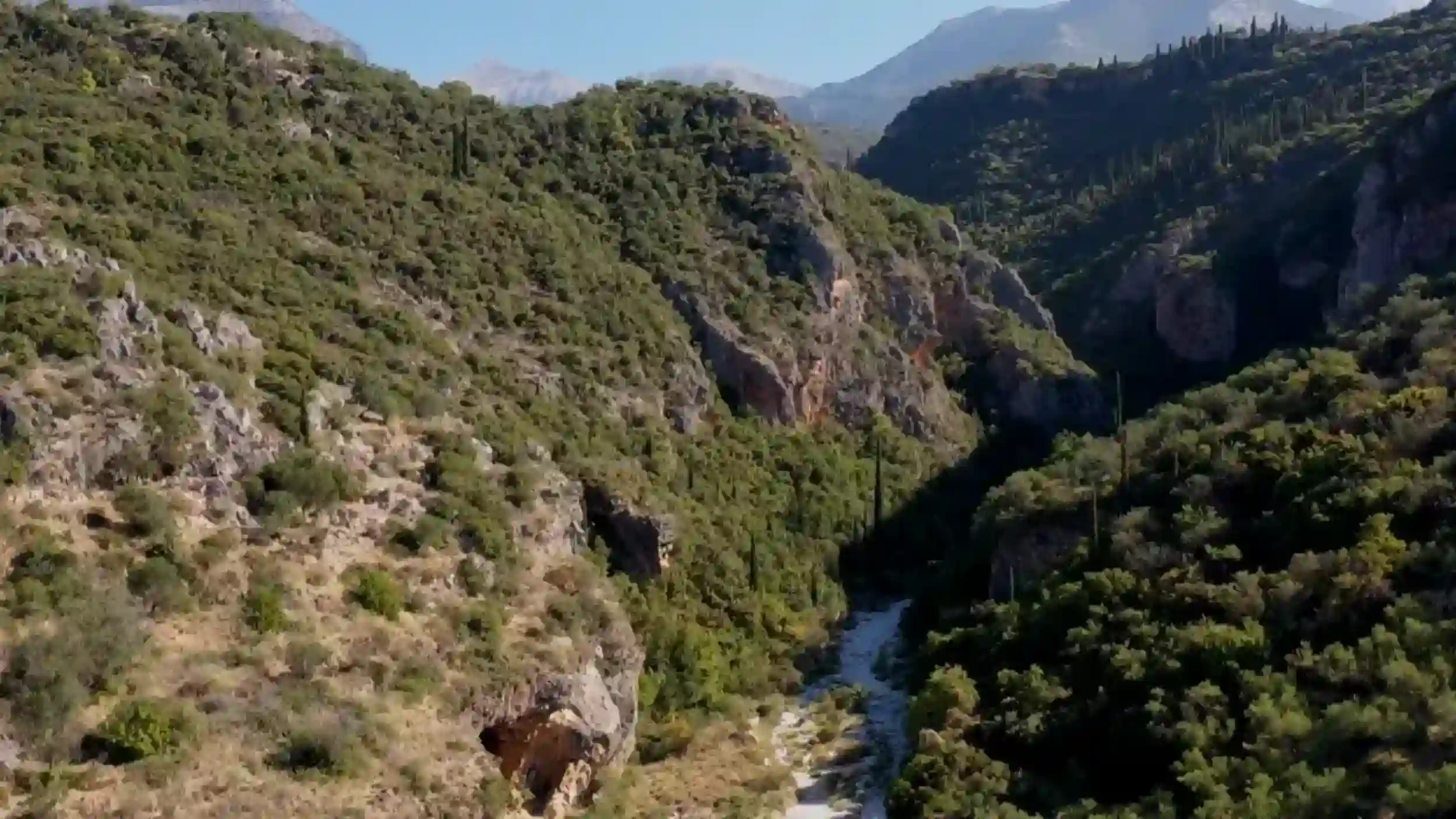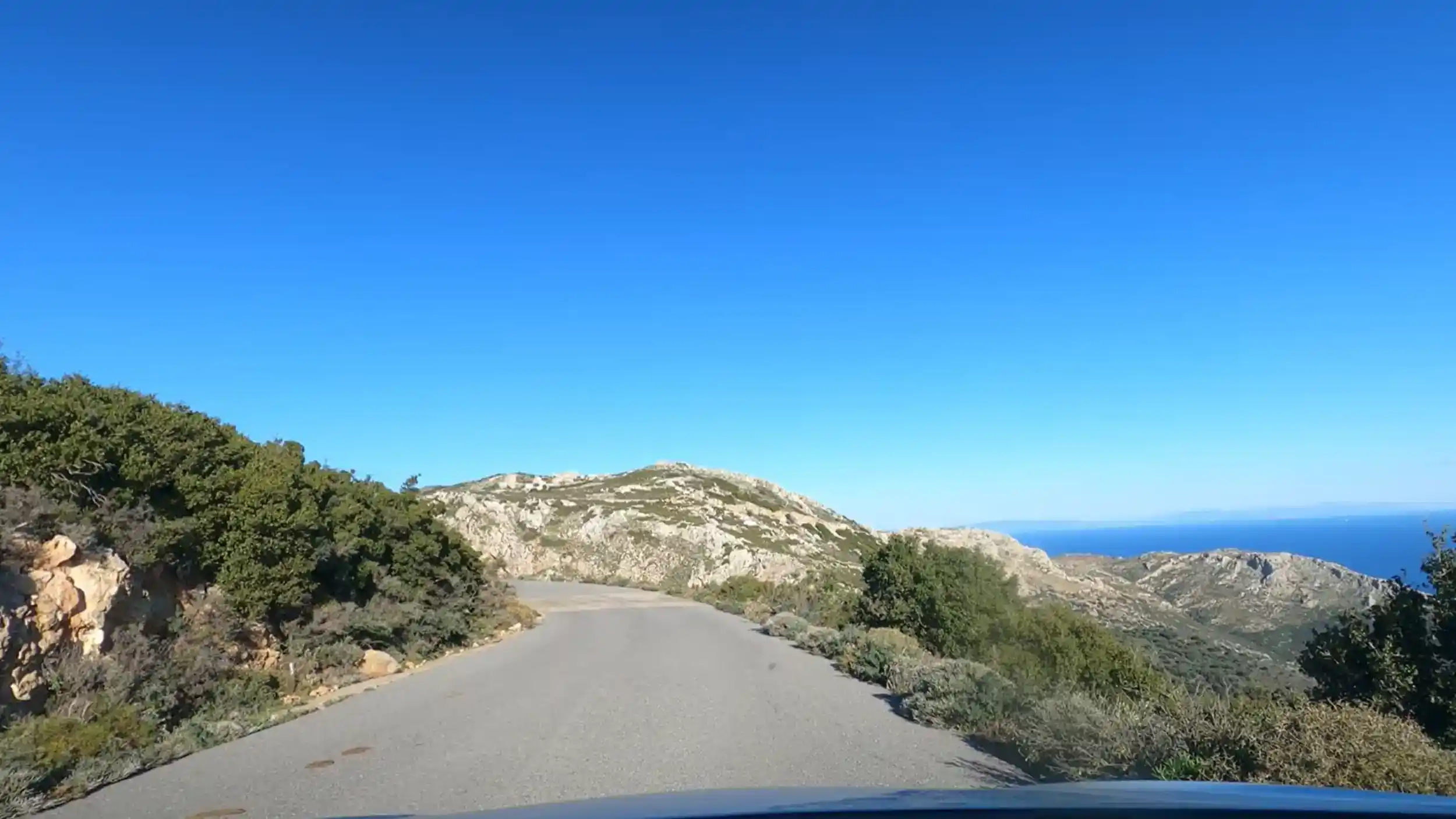

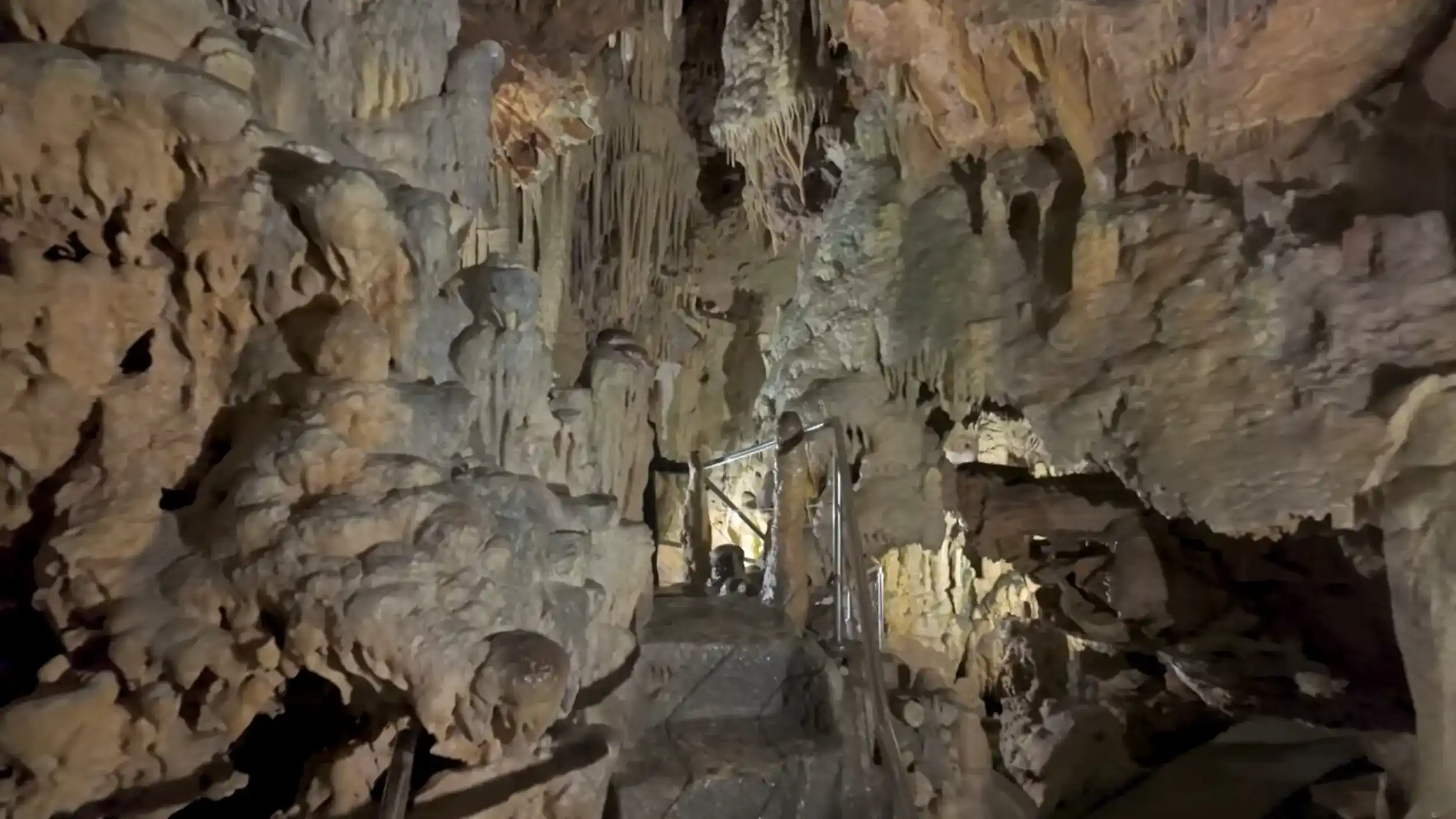
The road into the southern Mani doesn’t ease you in. It narrows, climbs, drops, offers views you can’t quite look at safely, and then deposits you at a small coastal flat that seems entirely too ordinary for what’s underneath it. The Diros Caves on the Mani Peninsula are one of those places that have accumulated a lot of language over the years – hidden wonder, fairy tale world, the Parthenon of Greek caves – and most of it, for once, isn’t wrong.
Arriving and Buying Tickets
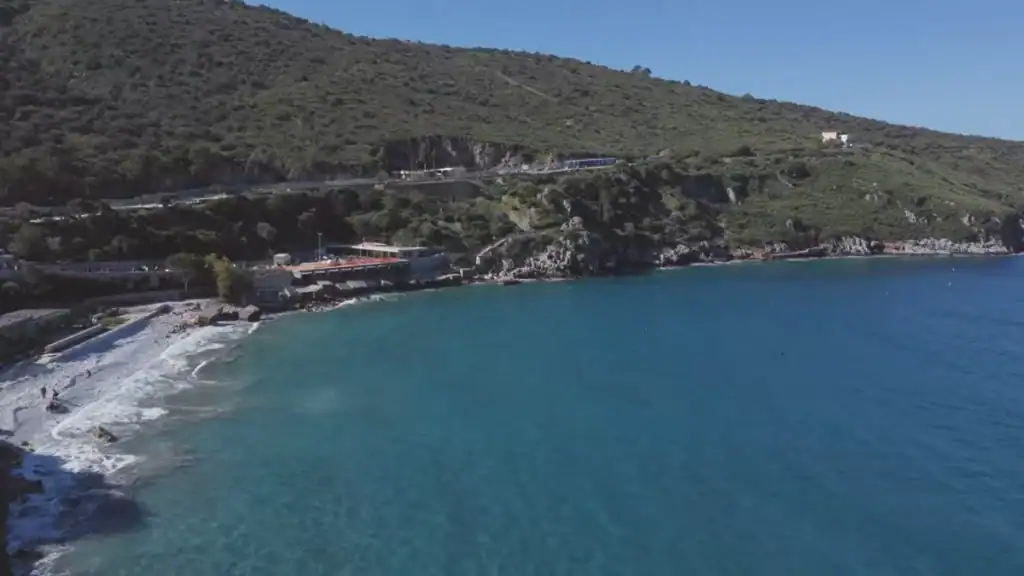
The site sits at the end of a coastal road near Pyrgos Dirou, and the car park fills quickly in summer. There’s a small complex at the entrance – ticket office, a modest café, some shade if you find it early. The organisation is straightforward. You buy your ticket, you wait for your group, you go in. The cave operates a timed entry system using boats, which is the reason the whole operation is as controlled as it is. Each boat holds a small number of visitors, and a guide steers from the back while pointing out formations overhead. There’s no self-guided option here. You move at the pace of the group. Tickets are purchased on-site; there’s no advance booking through a major platform. That detail matters more in July and August than it does in October.
The Underground Boat Ride Experience
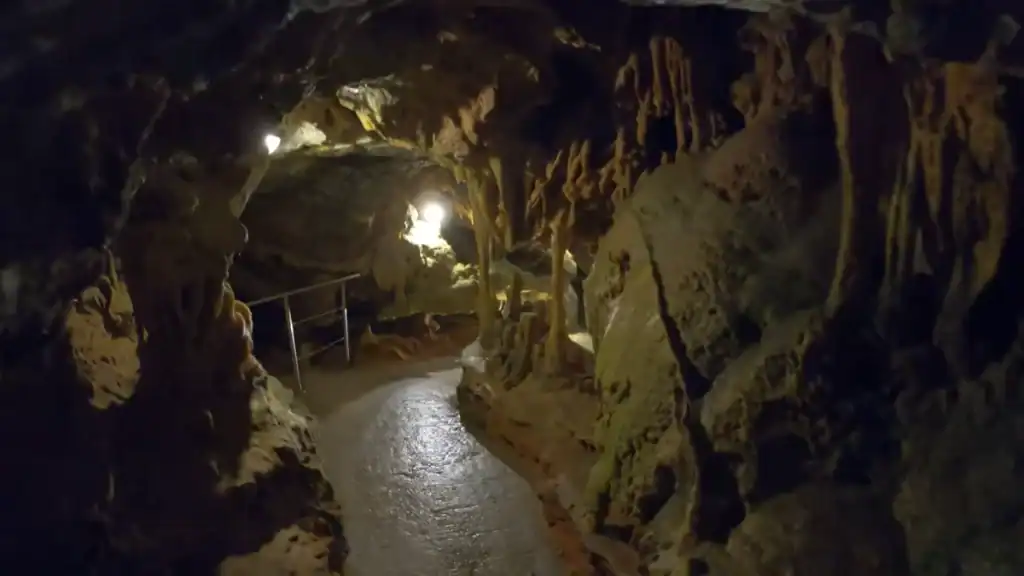
The tourist route runs 1,500 metres in total. Around 1,200 of those are on water, travelled by flat-bottomed boat through passages that are sometimes wide enough to feel like halls and sometimes close enough that you find yourself tilting your head without being asked to. The remaining 300 metres are on foot, on a path that emerges near the end.
The cave formed over several million years. The water inside – brackish, fed from the mountain of Sayyas – sits between 13 and 15 degrees Celsius. The air runs slightly warmer, between 18 and 21. You notice both. The temperature drop when you enter is immediate and the humidity is close to total. Whatever you’re wearing on a Greek summer afternoon will feel briefly wrong.
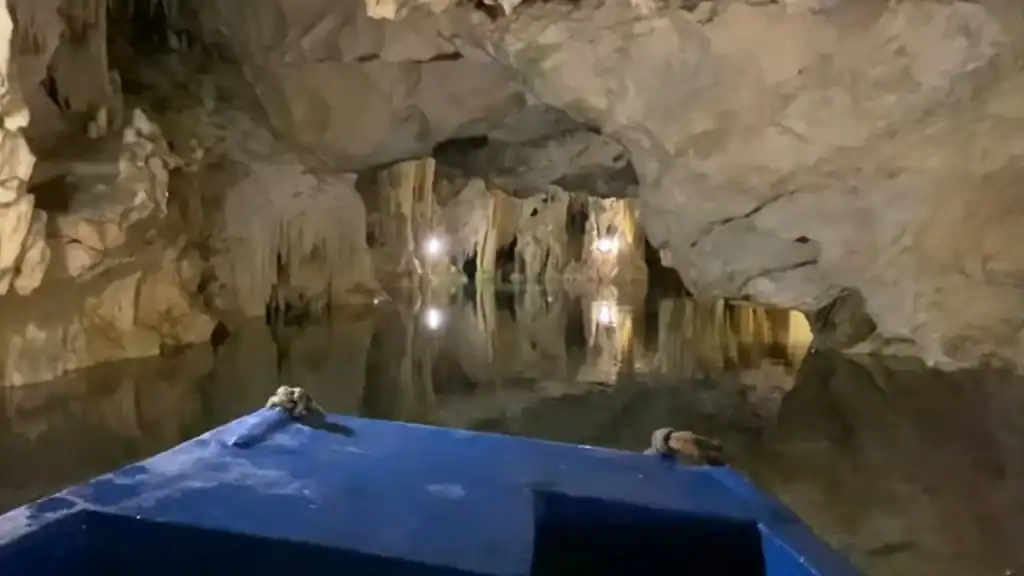
What the boat ride does that photographs don’t quite capture is the scale variation. Some chambers open to 30 metres overhead – the largest hall on the tourist route is 160 metres long – and others press in until the ceiling is close enough to read. The formations shift throughout: stalactites that look like chandelier drippings in one section, pale pink tasselled columns in another, and then the Crystal Rain hall, where tube-like stalactites cover the entire ceiling so densely that the effect is more textile than stone. The Stone Forest. The Pillars of Hercules rising out of the water. The Sea of the Wrecks, named for fallen stalactites that rise from the lake surface like the masts of something that went down a long time ago.
The guide narrates throughout. If your Greek is limited and theirs is too, some of the finer detail gets lost. The formations tend to speak for themselves regardless. The visit, boat and walking section combined, takes around 45 minutes.
Waiting Times in Summer
This is the part the promotional material skips. In peak summer the wait between buying your ticket and actually boarding a boat can stretch to two hours, occasionally longer. The queue is managed by the timed-entry system but the throughput is what it is – each boat carries a handful of people, the route takes 45 minutes, and the cave has been drawing thousands of visitors every summer since the 1960s. The maths is not complicated.
Arriving early – before 10am – reduces the wait substantially. Arriving on a Saturday in August and expecting otherwise is an optimism the site won’t reward. Anyone planning around the caves should know that the area around the entrance has limited shade for a long queue, which adds its own dimension to a warm morning. There is, at least, nothing about the cave itself that diminishes with a wait. You don’t emerge feeling the ticket was oversold.
Visitor Reactions and Common Impressions
Most people come out quieter than they went in. That’s not a generalisation constructed for effect – it’s a fairly consistent observation from the site. The scale of what’s been building down there for millions of years, still building in sections the tourist route doesn’t reach, has a way of making the 45 minutes feel both short and sufficient.
The thing that surprises people most is often the colour. The pink chambers are genuinely pink – a pale, mineral rose that arrives without warning after stretches of white and grey. The Crystal Rain ceiling surprises people who thought they understood what a cave ceiling looked like. Children, who presumably have lower baseline expectations of geological formations, often react more physically than adults – actual sounds, actual pointing.
What some visitors find disorienting is the passivity. You’re in a boat. Someone else steers. You look up, you look left, the boat moves on. There’s no lingering, no retracing steps to look again. If something catches your eye as you pass beneath it, it’s already behind you. Whether that’s a loss or simply the nature of the experience depends on the visitor, but it’s worth knowing in advance. You’re not exploring. You’re being taken through.
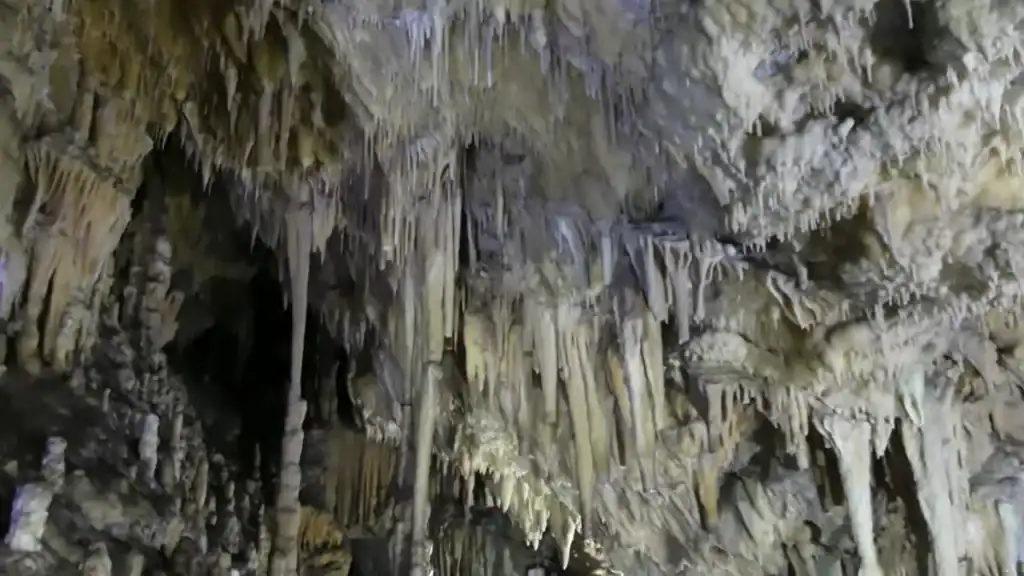
The fossilised bones – hippopotami in significant numbers in the largest hall, a panther skeleton dated to 24,000 years ago deeper in – don’t feature heavily in the tourist route itself but are mentioned in the commentary. The hippopotami in particular tend to generate a particular kind of pause. They are not what most people expect to encounter in a cave in the southern Peloponnese.
Combining the Caves with Nearby Stops
Pyrgos Dirou is a small village. The caves are the reason most people drive this far south, and the surrounding area is set up accordingly – there are tavernas along the coast, a few places to sit after the visit, not a great deal else in the immediate vicinity. That’s not a flaw; it’s geography.
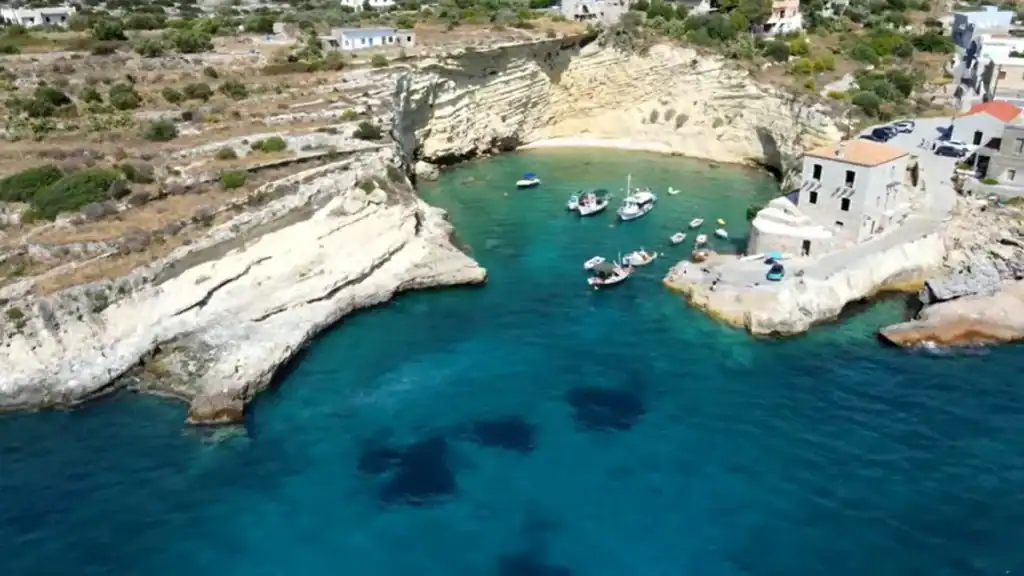
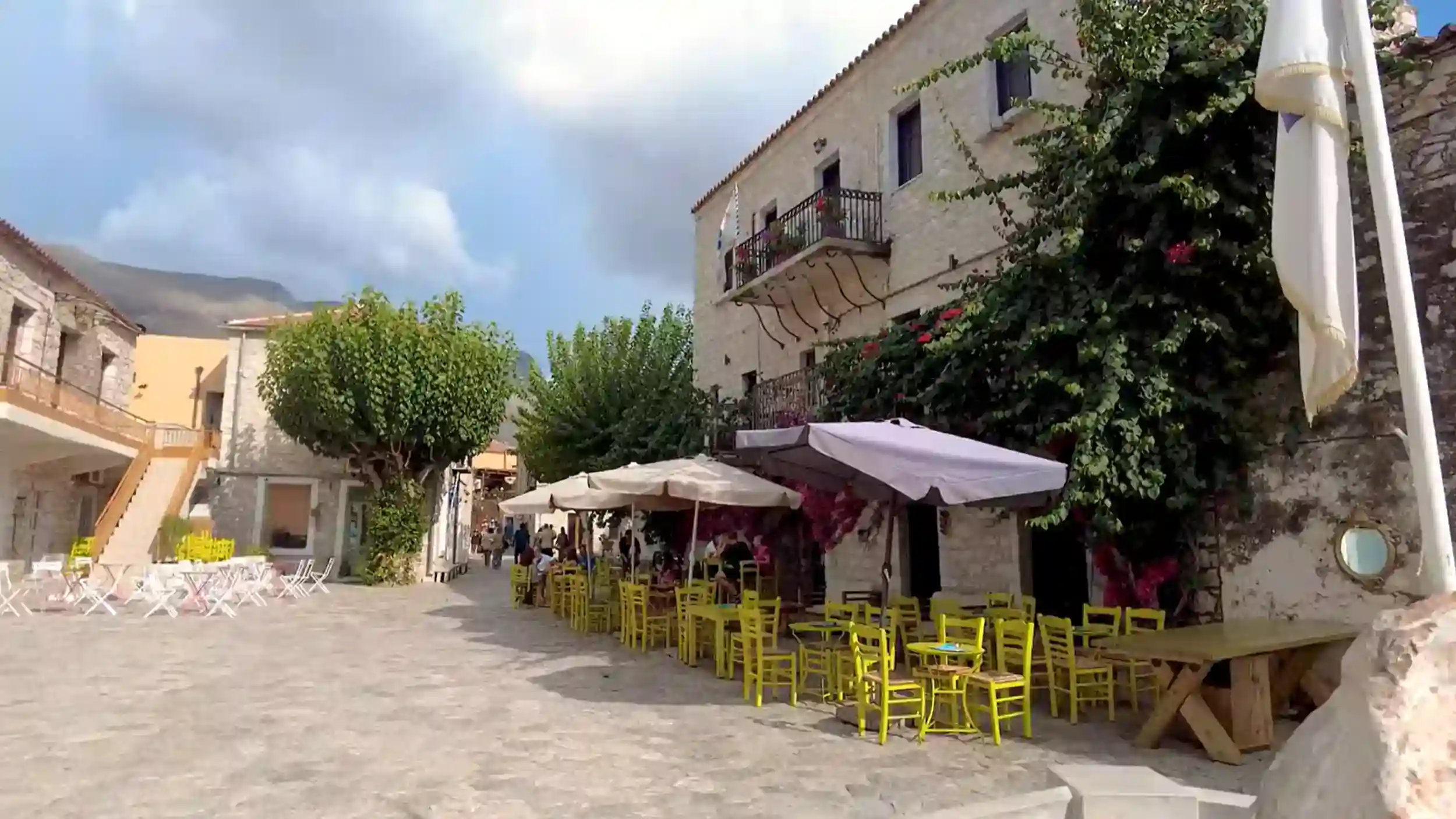
The nearby bay at Mezapos is worth the short detour for anyone who wants to swim before or after. The village of Areopoli, around 10 kilometres north, is the main settlement of the inner Mani – tower houses, old churches, a central square that functions as an actual central square rather than a tourist reconstruction of one. It makes a sensible base if you’re spending more than a day in the area.
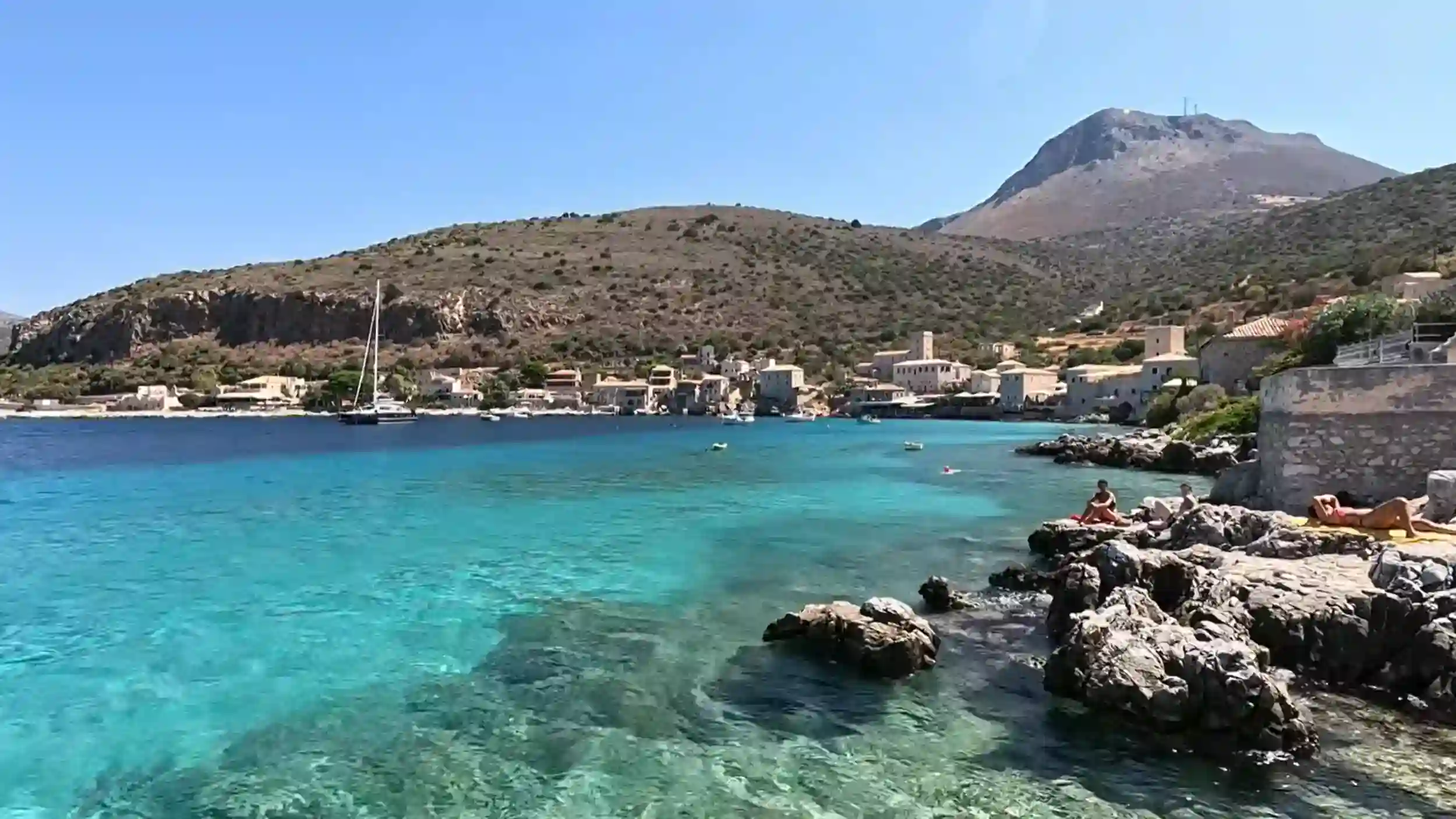
Limeni, just north of Areopoli on the coast, has tavernas built over the water and a harbour calm enough for swimming. It tends to fill with day-trippers from mid-morning, which suggests timing the caves first and Limeni after, rather than the reverse.
The Mani as a region has a particular density to it – historically, architecturally, in the quality of the light on the rock. The caves sit within that rather than standing apart from it. They were here, after all, long before the towers were built and the wars were fought above them. The Paleolithic remains found in the wider area are a reminder that people have been moving through this landscape for an extraordinarily long time. The cave just kept its own record.