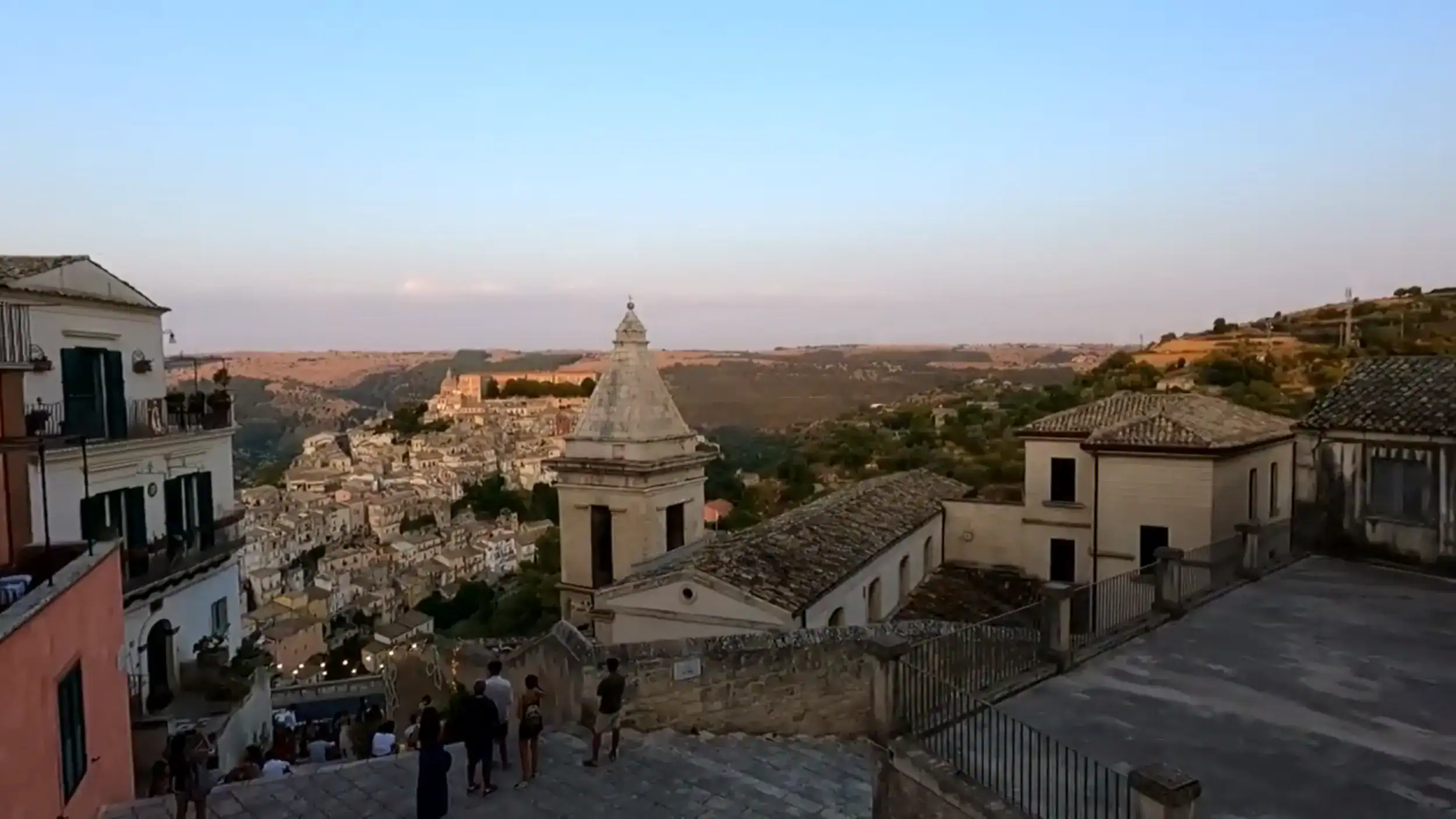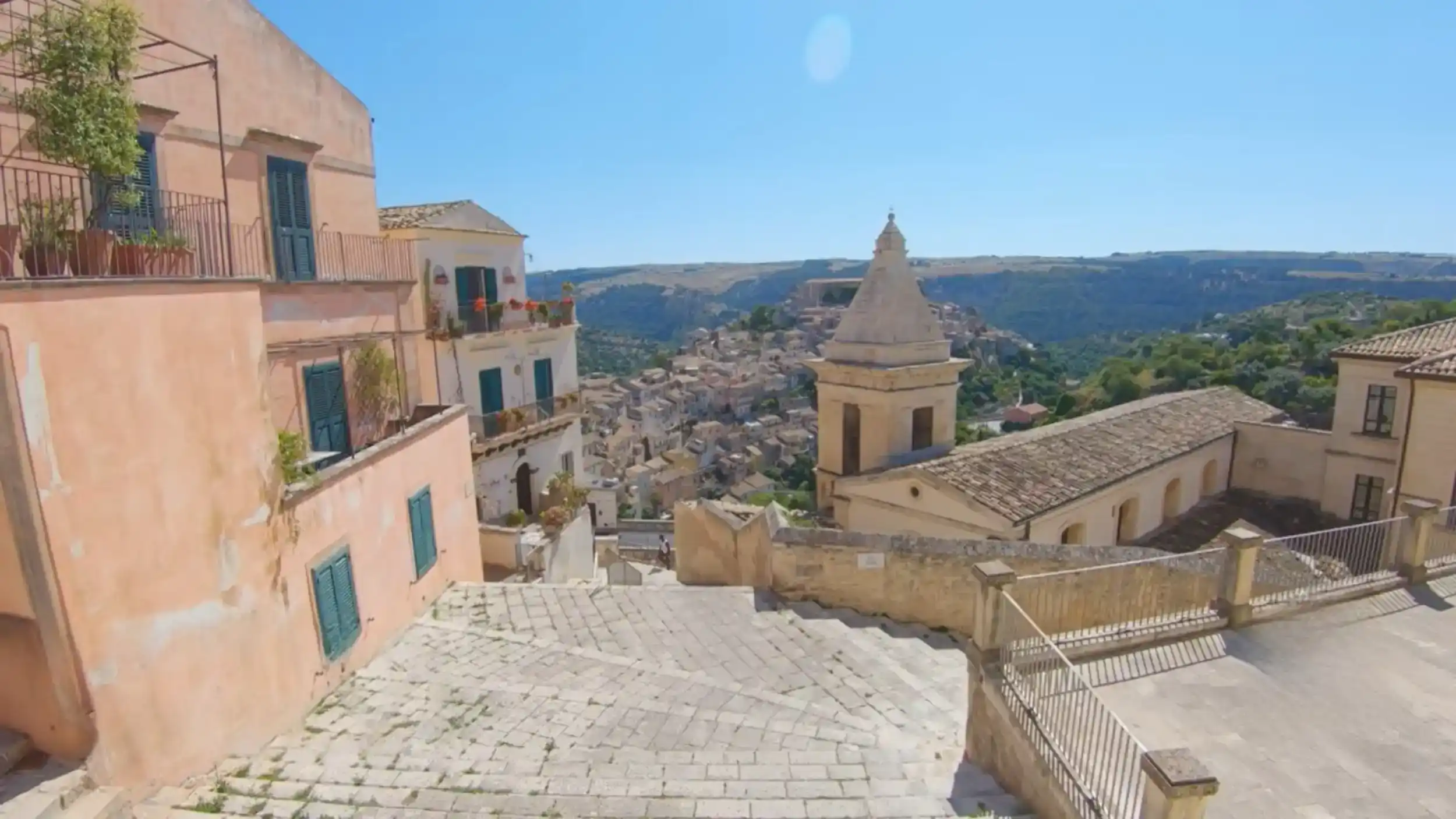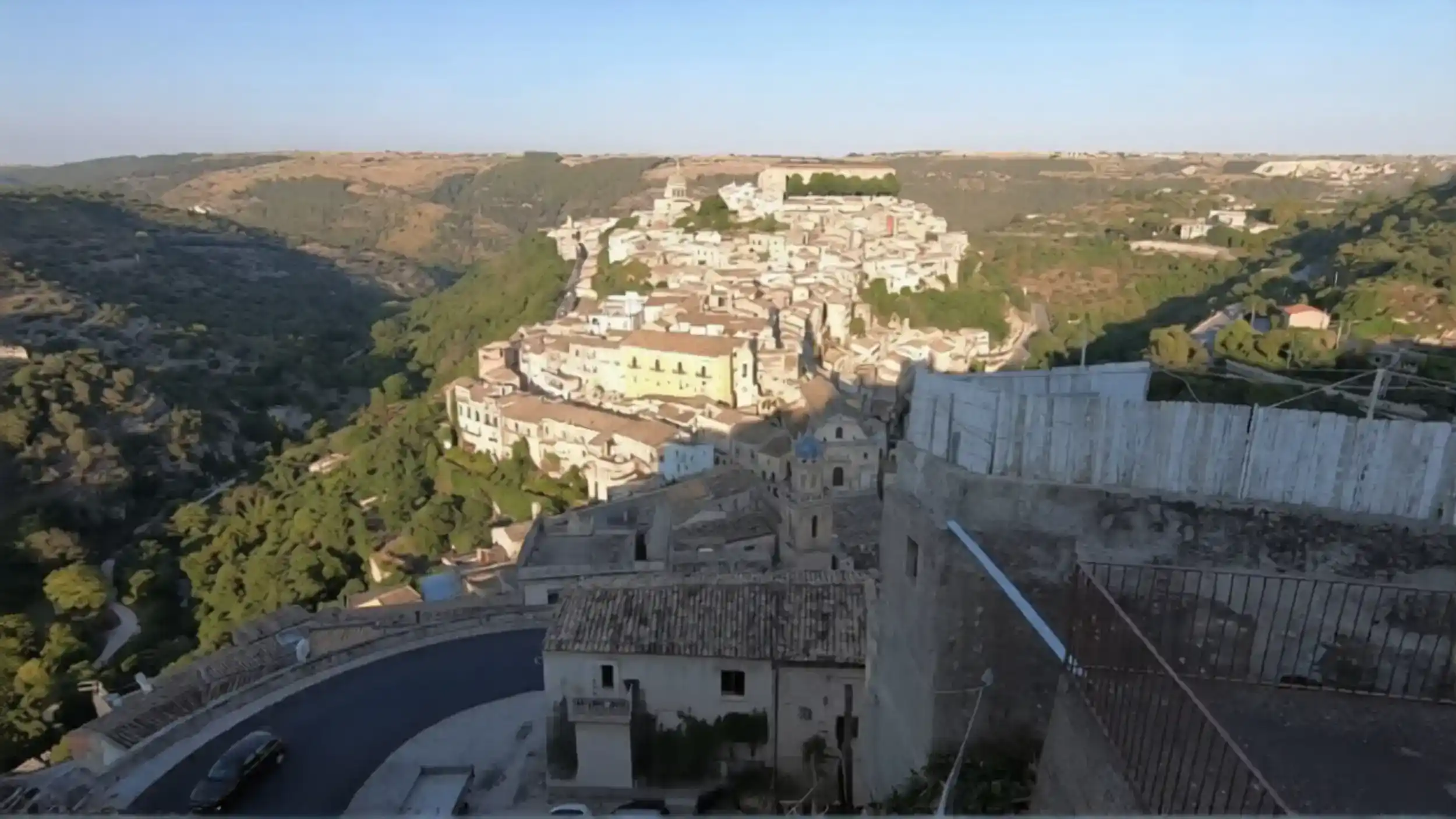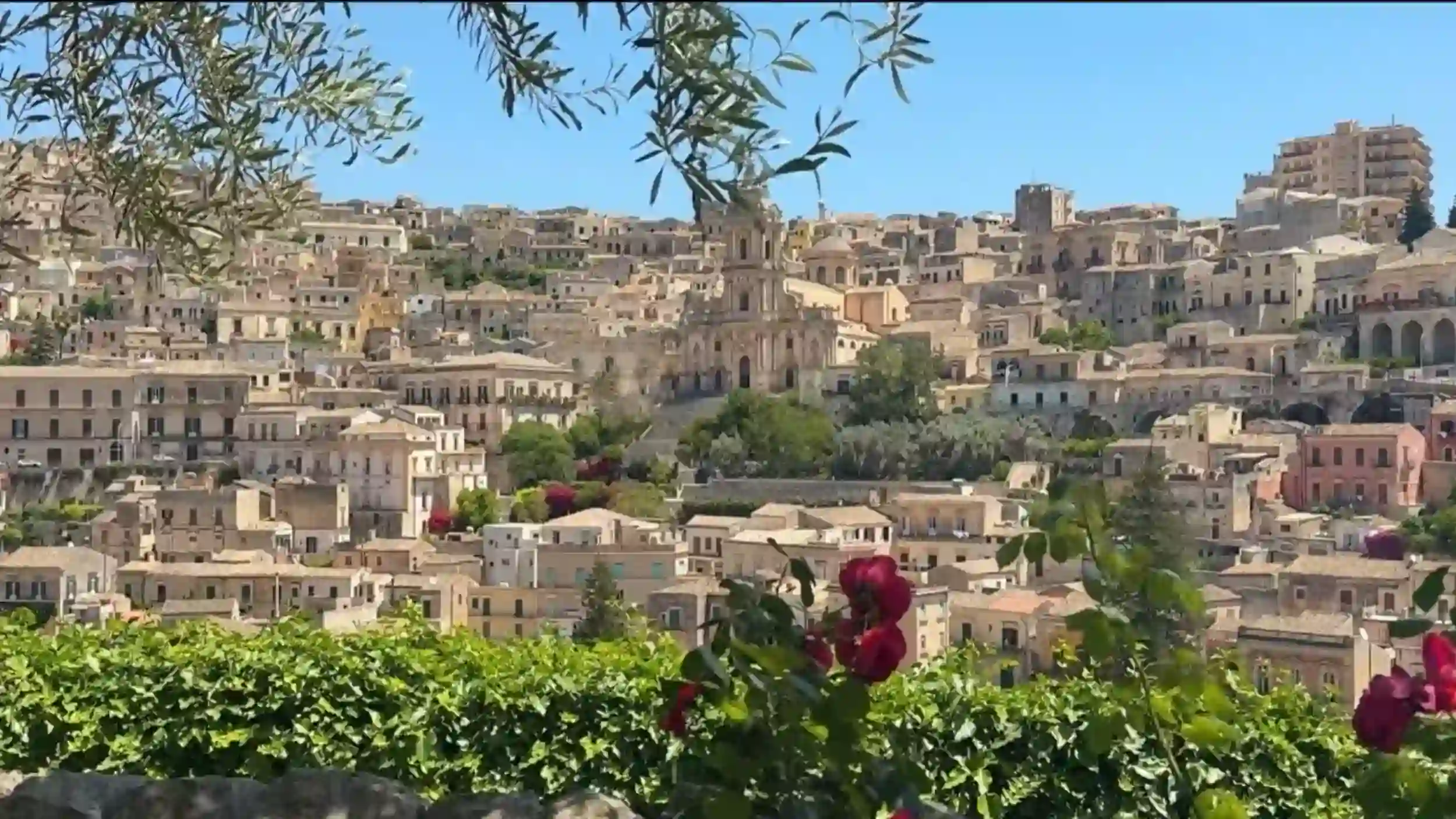
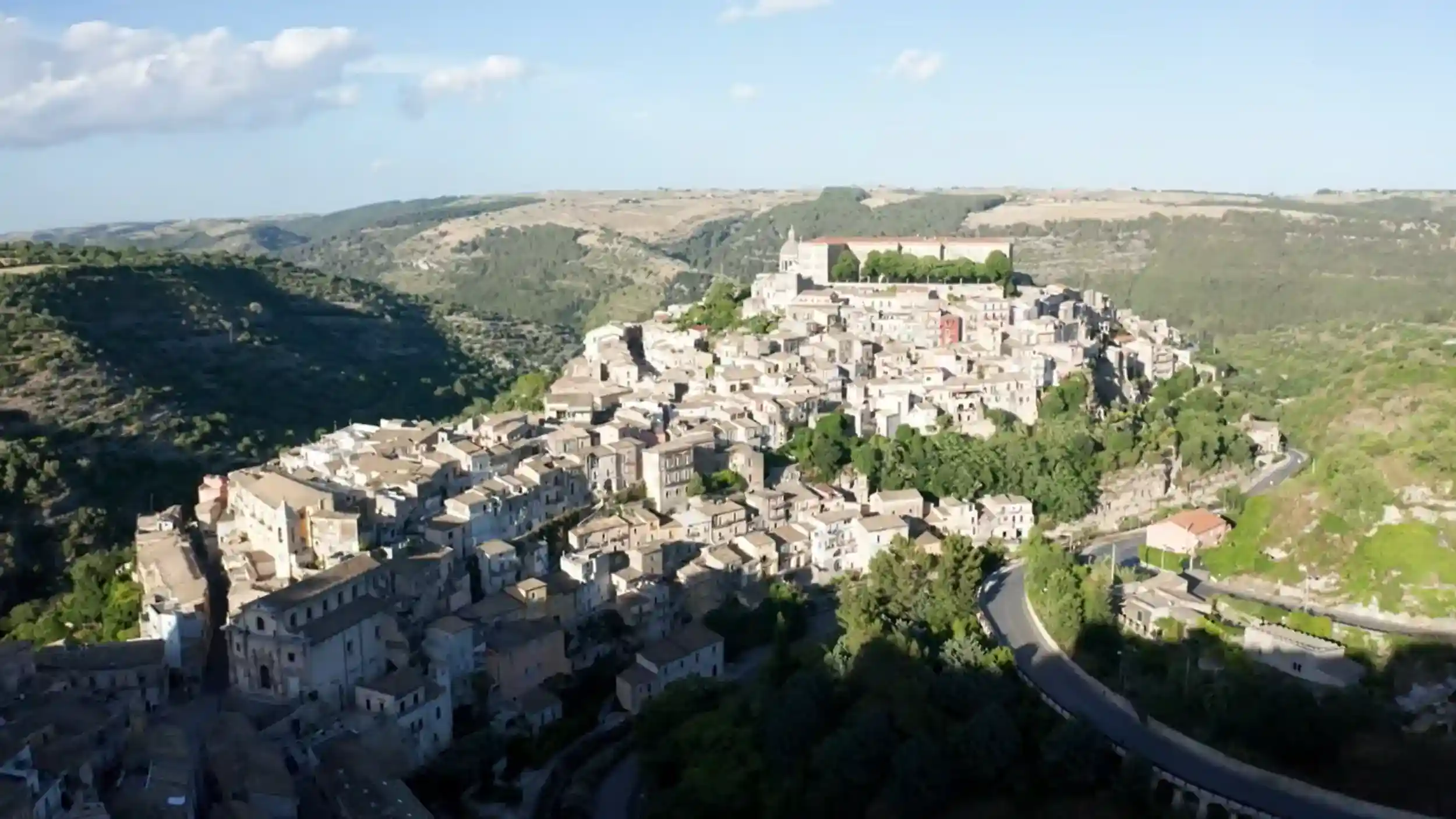
Driving to Ragusa from Noto took us roughly an hour, with the road journey coming in at about 50 kilometres depending on exactly where we started and parked. That made it an easy addition to a southeastern Sicily road trip. Most of the route felt rural and straightforward, but the memorable part came at the end, when Ragusa Ibla suddenly appeared across the valley in a dense sweep of hillside buildings.
We would not rush that final approach. The first view is part of the experience, not simply the moment before you arrive.
🚗 What Driving to Ragusa From Noto Was Like for Us
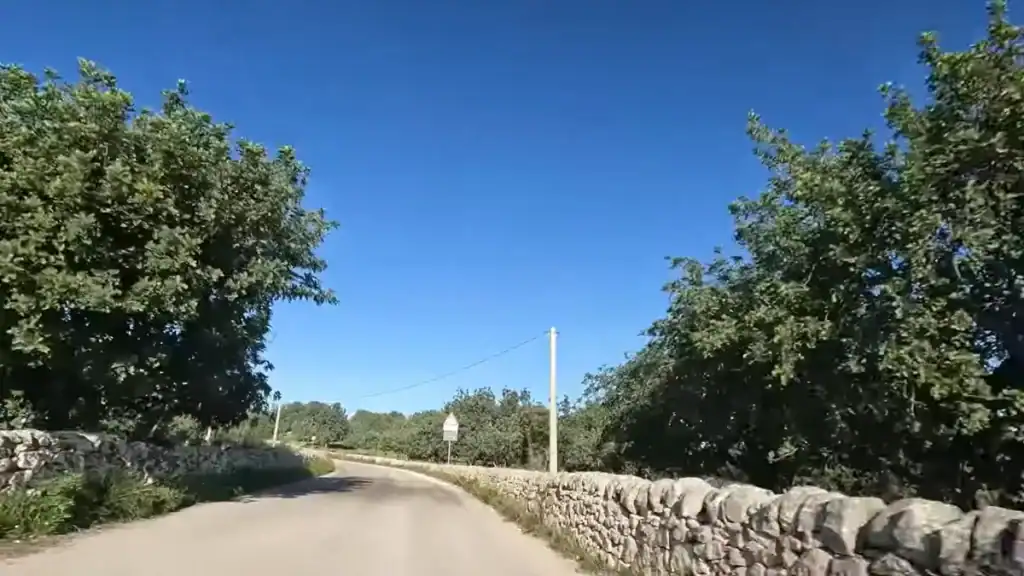
The drive from Noto to Ragusa was less about covering distance for us and more about watching the landscape gradually change. Quiet provincial roads took us through farmland, dry-stone walls and carob groves, with very little to suggest how dramatic the arrival would eventually become.
That understated countryside actually improved the journey because Ragusa was not revealed too early.
Expect a Relaxed Drive Rather Than a Fast Road
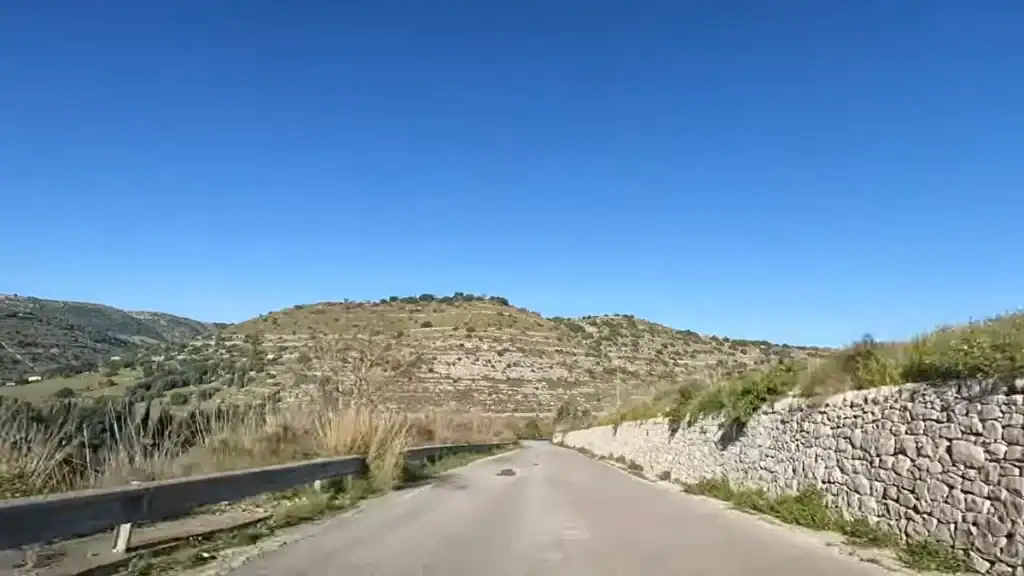
Although the journey took around an hour, it never felt like a road to hurry. Traffic was generally light when we drove it, but the provincial roads narrowed, bent and climbed enough to require steady attention. I would allow the full hour and enjoy the Hyblaean countryside rather than build the day around the quickest possible arrival.
Which Route Would We Take From Noto to Ragusa?
I would use the main inland route towards Rosolini and Ispica before continuing towards Modica and Ragusa, following the SS115 corridor for much of the journey. It is the route I would choose over trying to save a few minutes on smaller rural roads because the navigation is simpler and the road is generally easier to follow.
We did not find the drive difficult, but I would not describe every section as fast or motorway-like. Expect bends, changes in elevation and ordinary Sicilian traffic as you approach the towns. There are no motorway tolls to budget for on this Noto–Ragusa route.
Rosolini, Ispica and Modica are the main towns associated with the route, although whether we actually drive through their centres depends on the navigation and bypasses used. Modica is the obvious place to turn the journey into part of a wider Baroque road trip rather than treating every town as something to pass through.
| 🚗 The Drive From Noto | 📌 What We Found |
|---|---|
| ⏱️ Around one hour | A relaxed journey through the countryside |
| 🌳 Rural scenery | Carob groves, farmland and stone walls |
| 🛣️ Provincial roads | Quiet but occasionally narrow |
| 🚙 Easy driving | Best enjoyed without rushing |
The Countryside Adds More Than We Expected
We were travelling through the same limestone landscape that helped shape southeastern Sicily’s Baroque towns, so the rural section never felt completely separate from the destination. Our guide to Ragusa’s history, food and local character adds more context to what you find once you arrive.
Could We Travel From Noto to Ragusa Without Driving?
Yes. A direct bus is an alternative if we do not want a car, although it is considerably slower than driving. Current journey planners show an AST service from Noto to Ragusa taking about 2 hours 15 minutes, compared with roughly an hour by car. There is also a direct train, which can be a useful alternative if the timetable suits our day.
🌄 The Moment Ragusa Appeared Across the Valley
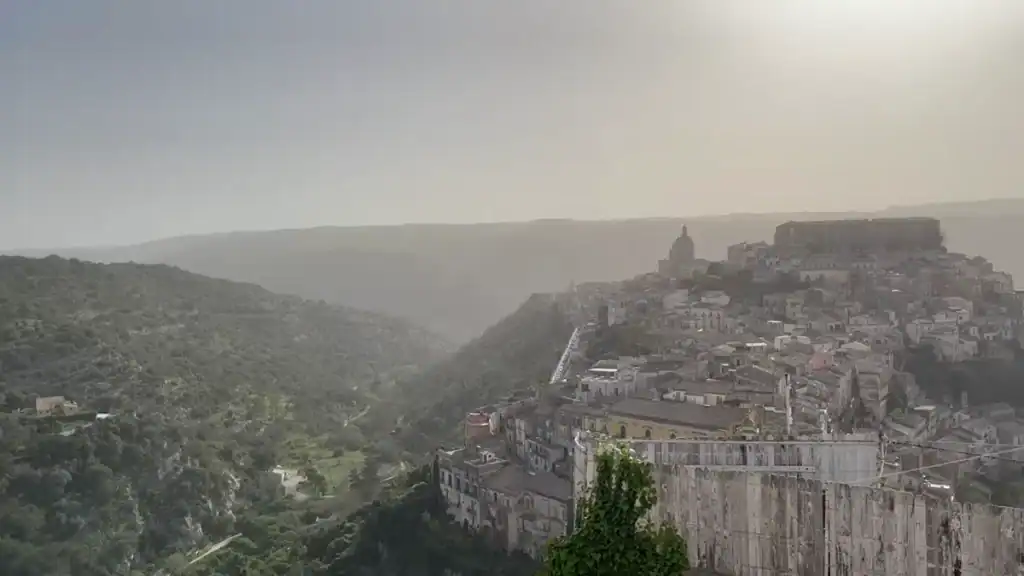
For most of our journey, there was little indication of what was ahead. Fields, limestone walls and scattered farmhouses dominated the scenery. Then the road reached the valley and Ragusa appeared almost at once, which made the first view much more dramatic than I had expected.
It remains one of the strongest road arrivals we experienced in southeastern Sicily.
Ibla Doesn’t Gradually Reveal Itself
Unlike hill towns that appear in fragments as you approach, Ragusa seemed to arrive in a single view. Ibla rose from its limestone ridge above the valley, with Ragusa Superiore occupying higher ground behind it. Seeing both together also helped us understand the city’s unusual two-part layout before we had parked.
| 🌄 First View of Ragusa | 📌 What Stands Out |
|---|---|
| 🏰 Ragusa Ibla | Perched dramatically above the valley |
| 🏙️ Ragusa Superiore | Visible on the higher ridge behind |
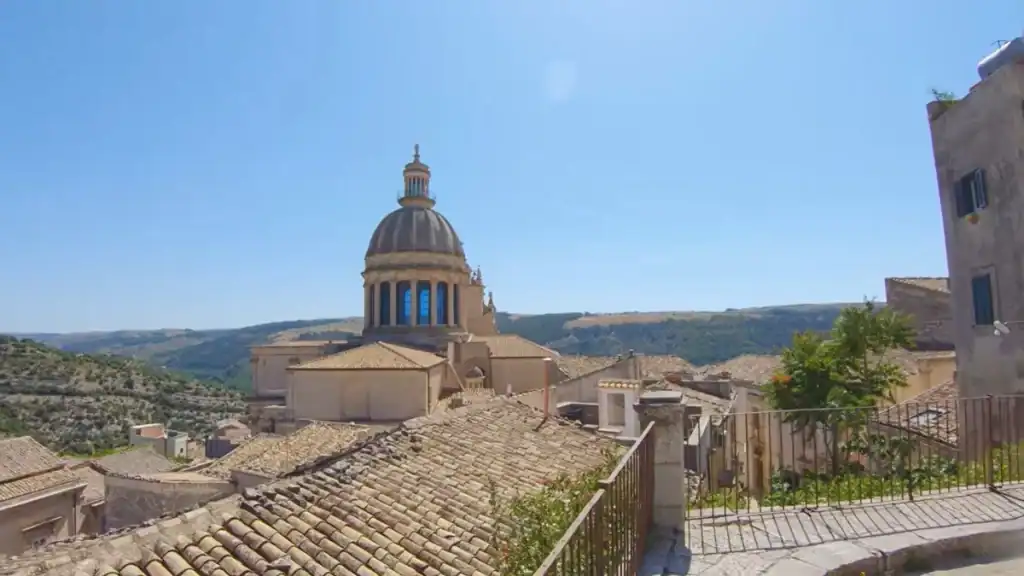
| ⛪ San Giorgio | The cathedral dome stands out immediately |
| 📸 Valley panorama | One of Sicily’s finest road approaches |
Give the First View More Than a Glance
Our instinct was to keep driving towards town, but this is one approach where I think stopping to take in the wider setting matters. Once you leave the car, our guide to Ragusa Ibla’s stairways, squares and hidden corners picks up the experience at street level.
🅿️ Where We Parked Before Exploring Ragusa Ibla
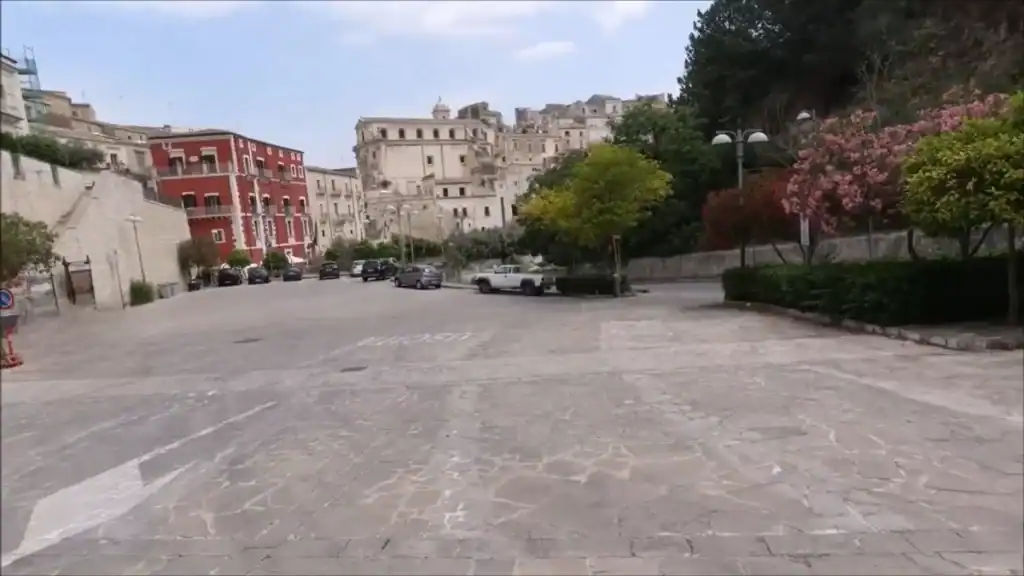
We did not see any advantage in driving deep into Ragusa Ibla. The oldest streets become narrower and steeper towards the centre, and leaving the car near the edge of the old town made the transition to exploring on foot much simpler.
Fuel was only a small part of the cost of this journey. For a roughly 50-kilometre drive, a typical petrol hire car using around 6–7 litres per 100 kilometres would burn about 3–3.5 litres. With Italian petrol currently around €2 per litre, I would budget roughly €6–€7 for fuel each way, while remembering that the exact figure depends on the car, route and fuel price on the day.
Once we had parked, continuing through the cobbled streets felt like the natural next stage of the journey.
Parcheggio Repubblica Worked Well for Our Visit
We used Parcheggio Repubblica when approaching from the valley and found it conveniently placed for Ibla. From there, we could continue on foot towards Piazza Duomo, the Cathedral of San Giorgio and the quieter lanes beyond without trying to negotiate the historic centre by car.
That would still be my first choice if Ibla was the priority. I would set the car park itself as the destination rather than simply entering “Ragusa” into the sat-nav and letting it take us deeper into the historic streets. If it were full, I would look for another signed parking area on the edge of Ibla rather than circle the narrow centre.
| 🅿️ Practical Arrival | 📌 Our Approach |
|---|---|
| 🚗 Parcheggio Repubblica | Convenient parking near Ibla |
| 🚶 Continue on foot | The easiest way to explore |
| ⛪ Piazza Duomo | A natural starting point |
| 🌳 Giardino Ibleo | An easy walk beyond the centre |
Leave the Car Behind to Understand Ibla
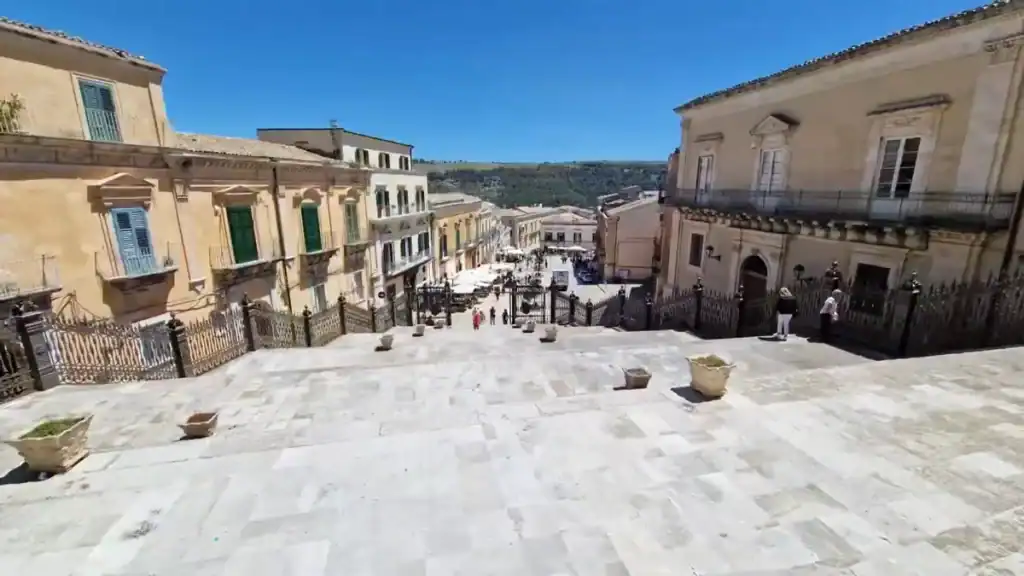
The drive gave us Ragusa from a distance, but walking changed the scale completely. Narrow streets, steps and piazzas replaced the valley panorama. Our guide to walking down into Ragusa Ibla shows what that transition looks like once the car is no longer part of the day.
🗺️ What We Would Combine With Driving to Ragusa
Driving to Ragusa made most sense to us as part of a wider southeastern Sicily route rather than an isolated there-and-back journey. Several Baroque towns sit close enough together that you can combine historic centres, countryside and local food without spending most of the day in the car.
The short distances also mean the day can remain flexible rather than becoming a rigid sequence of driving deadlines.
Noto, Ragusa and Modica Fit Together Naturally
We would start in Noto, continue to Ragusa and finish in Modica if we wanted all three in one day. Each has a noticeably different character, while the drives between them are short enough that the route still feels like a day of exploring rather than a day spent moving between places.
| 🗺️ Suggested Route | 📌 How We Would Use It |
|---|---|
| 🏛️ Noto | Start the morning exploring |
| 🚗 Ragusa | Spend the afternoon in Ibla |
| 🍫 Modica | Finish with dinner or chocolate tasting |
| 🌅 Scenic drives | Short, enjoyable connections between towns |
Don’t Turn the Route Into a Race
Yes, I would call driving to Ragusa from Noto scenic, but not because every kilometre delivers a dramatic view. The appeal builds through carob groves, dry-stone walls and rolling Hyblaean countryside before the landscape becomes much more theatrical on the approach to Ragusa.
The roads between these towns were part of the experience for us, especially where rolling limestone countryside contrasted with the Baroque architecture at each stop. If your route continues beyond Ragusa, our Ragusa history and food guide explains why we think the city deserves enough time to be more than a brief stop.