
Post title or brief description

Soft Footprints
Travel Guides

Soft Footprints Travel Guides

Our Destinations:
Your Inspiration!

How Challenging Is the Samaria Gorge Hike?

If you click on affiliate links and make a purchase, I may earn a small commission. This doesnโ€™t affect the price you pay. The commission helps support the website’s upkeep.

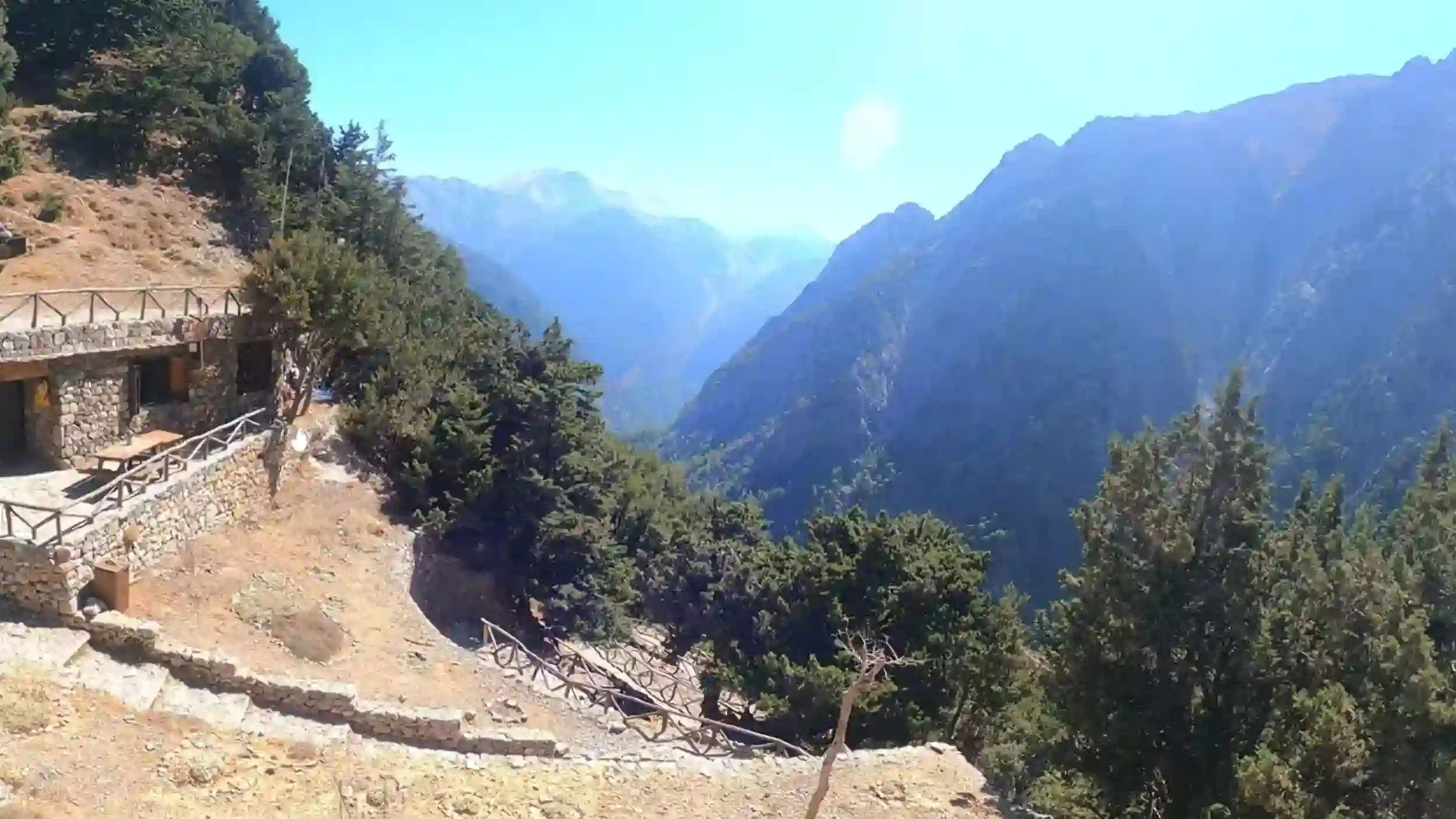
Stone shelter and wooden railing at the gorge rim, dense pines dropping away into a vast mountain valley below.

You start before the sun clears the peaks of the Lefka Ori. The bus empties at Xyloskalo, and you step out into the high plateau, the stones still cool from the night. There is a hush, broken by the occasional call of a bird or the distant scrape of a hiker’s boot. The gorge stretches below like a ribbon, sunlight pooling in pockets along its first switchbacks. Your legs feel heavy immediately. Not from fatigue – yet – but from anticipation.

The descent begins sharp and unrelenting, a steep zigzag that makes your knees notice their existence in ways your mind hasn’t prepared for. The pine and cypress smell resinous, almost sweet, rising in waves as you pass. Every turn gives a glimpse back at the plateau you just left, a patchwork of grey rock and green scrub, suddenly vast in its emptiness.
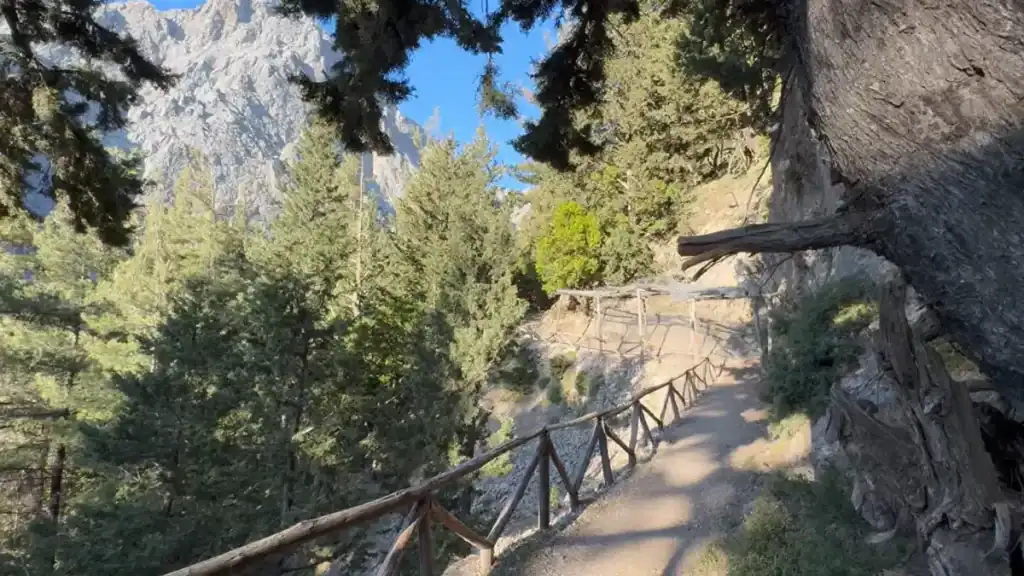
Narrow dirt path with wooden post railing winds through pine trees on the Chania Samaria Gorge trail, limestone cliffs rising sharply behind.

A Conversation Between Stone and Water

Somewhere near the gorge floor, a creek murmurs over polished stones. You notice it before you see it, a quiet counterpoint to the crunch of boots on gravel. The stream is shallow, cool to the touch, and yet every dip sends a tremor through your fingers. A group of hikers pauses upstream, their conversation soft and intermittent. One laughs at a slip, and the sound carries in the narrow canyon.

The gorge walls press in. Limestone rises sharply on either side, white turning to grey, grey to almost black where shadows hold longer than expected. You can see the Iron Gates ahead, the narrowest stretch, but for now the path is irregular, a shifting mosaic of stone, roots, and shallow water pools. A small lizard darts across, stopping mid-step to watch you pass. The canyon has a rhythm; if you pay attention, you start to move with it rather than against it.
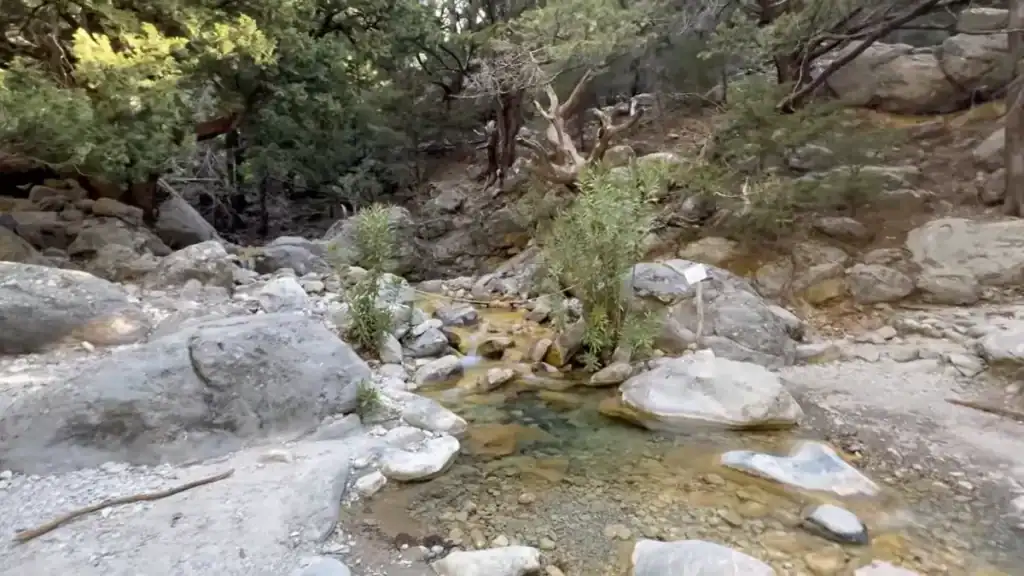
Clear shallow stream pooling between smooth pale boulders, thin reed-like plants growing from the rocky streambed, scrub trees crowding the banks.

The gorge cuts through the White Mountains behind Chania – the same Lefka Ori range whose upper ridges hold snow through spring and whose geology carved every one of the roughly hundred gorges that drain the Cretan massif. Samaria is the most famous. Understanding the broader landscape makes the hike feel less isolated and more connected to the island’s deeper structure.

Footfalls and Fatigue

By the midpoint, your legs speak in small, persistent complaints. Every descent is a negotiation: careful planting, slight adjustment, the brief stretch of calf before the next step. You notice the way shoes interact with wet stone, how soaked socks make a sound when pressed, how two liters of water strapped to your back sway in time with your gait.

A local guide passes, walking a pair of older hikers through a conversation that drifts between warnings and casual jokes. You catch fragments: “Keep your balance,” “No hurry,” “Look for the shadow under the boulder.” The human detail is grounding, a reminder that everyone carries their own rhythm through the canyon.
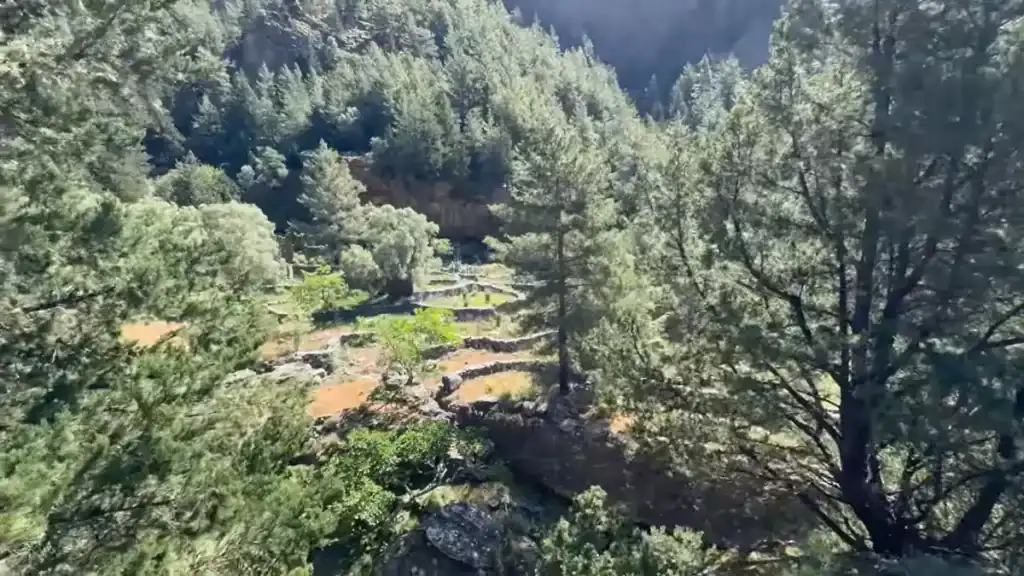
Abandoned stone terraces visible through dense pine canopy in Chania Samaria Gorge, dark cliff face looming above the overgrown valley floor.

Light Shifts

Lower down, the walls broaden. Sun hits the water differently here, bouncing green and gold across stones that were shadowed earlier. The air smells warmer, heavier with dust and pine resin. A breeze snakes through, enough to lift hair from your neck and cool a patch of skin, but unreliable enough that you feel it as a gift rather than expectation.

You notice the subtle changes in light, temperature, and sound as you approach Agia Roumeli. The gorge opens incrementally, revealing the Libyan Sea beyond scrub and rock. The village waits at the end, unhurried, improbable in its calm after the canyon’s intensity.
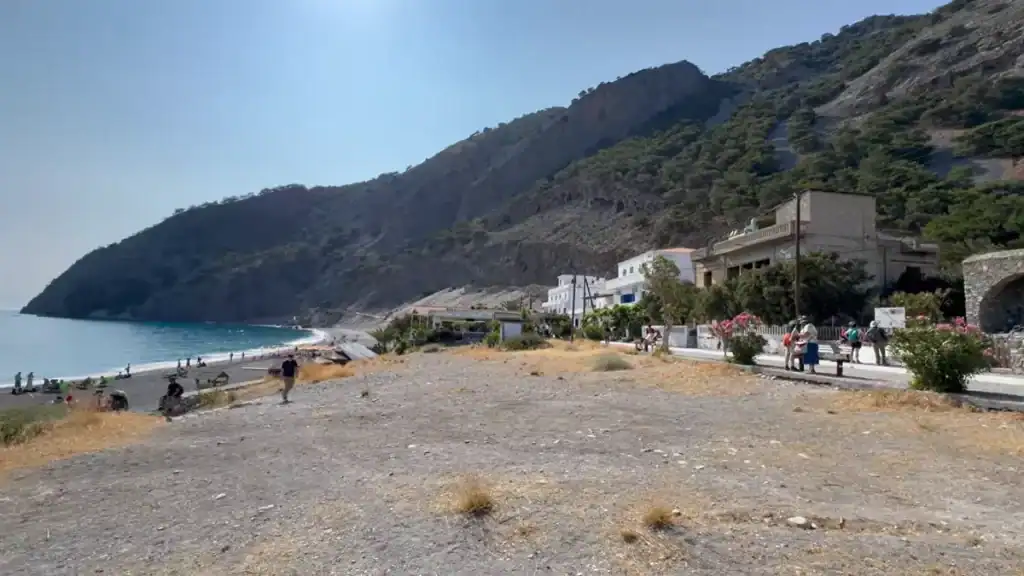
Small coastal village with white buildings beside a dark pebble beach, steep tree-scattered mountain dropping directly to the water's edge.
Agia Roumeli Where the Gorge Meets the Sea.

Arrival Without Ceremony

The ferry dock is quiet for now. Boats rest in still water, nets and ropes coiled. Children chase each other along the quay, their laughter light, fragile against the canyon’s memory. You sit on a stone wall, drinking water that tastes like the gorge itself – cool, mineral, necessary. The heat from the trail lingers in your legs, a memory of effort embedded in every joint.

Later, the sun begins to drop behind the cliffs. The gorge’s shape softens in the fading light, and you realize the path you took is the one that has taken you. The hike isn’t just physical; it is temporal, sensory, relational. You remember the weight of your pack, the occasional slip, the small human gestures that punctuated the stones.

What You Carry Away

It is difficult to describe how far sixteen kilometres can feel when you descend more than a thousand metres, how a stream becomes both a boundary and companion. The Samaria Gorge doesn’t announce its lessons in neat summaries. It leaves impressions: knees aching in unexpected ways, a brief lizard sighting, the smell of pine and dry earth, the village that waits patiently at the end.

People return to this hike not for completion, but for the way it transforms the ordinary into measured awareness. Walking through stone, water, and shadow – through human echoes and seasonal shifts – produces a memory that doesn’t sit neatly in an itinerary. Those visiting Chania beyond the familiar harbour route often find this hike marks the point where the island starts to feel genuinely large.

PS โ€” Planning a Vacation Soon? Use My Proven Booking System!

My personal travelย experiences have shaped this list of reliable resources I use consistently. In fact, by utilizing these links, youโ€™ll simultaneously supportย Softfootprintsย independent travel journalism while paying nothing extra yourself.

1.ย Omio

This platform searchesย hundreds of airlines worldwide for optimal flights. As a result, youโ€™ll never miss route options or deals.

2.ย Booking.com

One of the main reasonsย why it is so easy for me to find good accommodations is because they have a very big inventory of places. Moreover, I always check the reviews because they give me the confidence I need to choose the properties.

3.ย Rentalcars

The best thingย about traveling is when you are able to move around with your car because then you have complete freedom. I am always turning to Alamo, Hertz, and Sixt when looking for a trustworthy company to rent a car from, and also I make sure to take full coverage.

4.ย Viatorย andย Get Your Guide

These complementary platformsย help me discover exceptional local experiences. Similarly, both offer easy booking policies. However, I check both since their inventory varies by destination.

5.ย EKTA Insurance

You can never go wrongย if they decide to have travel protection for overseas trips. After all, part of their coverage that includes getting sick, injuries, theft, and cancellations gives one a feeling of tranquility. At the same time, their 24/7 assistance guarantees that help is there whenever a call is made.

They provide insurance coverage that even involves specially made packages with continuous emergency support. Naturally, this feature makes them perfect for people who travel abroad.

6.ย Priority Pass

Airport comfort becomesย accessible with this global lounge network. Indeed, itโ€™s my first check during layovers. After ten years as a member, having a peaceful retreat enhances my entire travel experience.

Picture of Ian Howes

Ian Howes

Ian Howes is a travel writer and the founder of Soft Footprints, a publication focused on lesser-known destinations, local culture, and experiences that most travelers overlook. His approach centers on slow, intentional travel and first-hand research, shaped by time spent exploring regions beyond mainstream tourism routes.

Ianโ€™s interest in meaningful travel began after a formative stay on a small Greek island, which reshaped how he engages with destinations and local communities. Since then, he has built extensive on-the-ground experience across diverse regions, with a focus on local traditions, overlooked landscapes, and sustainable travel practices.

Through Soft Footprints, Ian provides practical, experience-based guidance for travelers seeking authentic, off-the-tourist-path journeys. His work emphasizes accuracy, cultural respect, and responsible exploration, helping readers develop a deeper understanding of the places they visit.

Picture of Ian Howes

Ian Howes

Ian Howes is a travel writer and the founder of Soft Footprints, a publication focused on lesser-known destinations, local culture, and experiences that most travelers overlook. His approach centers on slow, intentional travel and first-hand research, shaped by time spent exploring regions beyond mainstream tourism routes.

Ianโ€™s interest in meaningful travel began after a formative stay on a small Greek island, which reshaped how he engages with destinations and local communities. Since then, he has built extensive on-the-ground experience across diverse regions, with a focus on local traditions, overlooked landscapes, and sustainable travel practices.

Through Soft Footprints, Ian provides practical, experience-based guidance for travelers seeking authentic, off-the-tourist-path journeys. His work emphasizes accuracy, cultural respect, and responsible exploration, helping readers develop a deeper understanding of the places they visit.