
July and August in the Mani Peninsula are not subtle. The sun arrives early and stays long, pressing down on limestone and scrub with the kind of intensity that makes the landscape look bleached by noon. Temperatures regularly push into the mid-to-high thirties. The air is dry rather than humid, which helps – but only so much. This is summer in the Mani Peninsula at full force, and the land makes no particular effort to soften the experience.
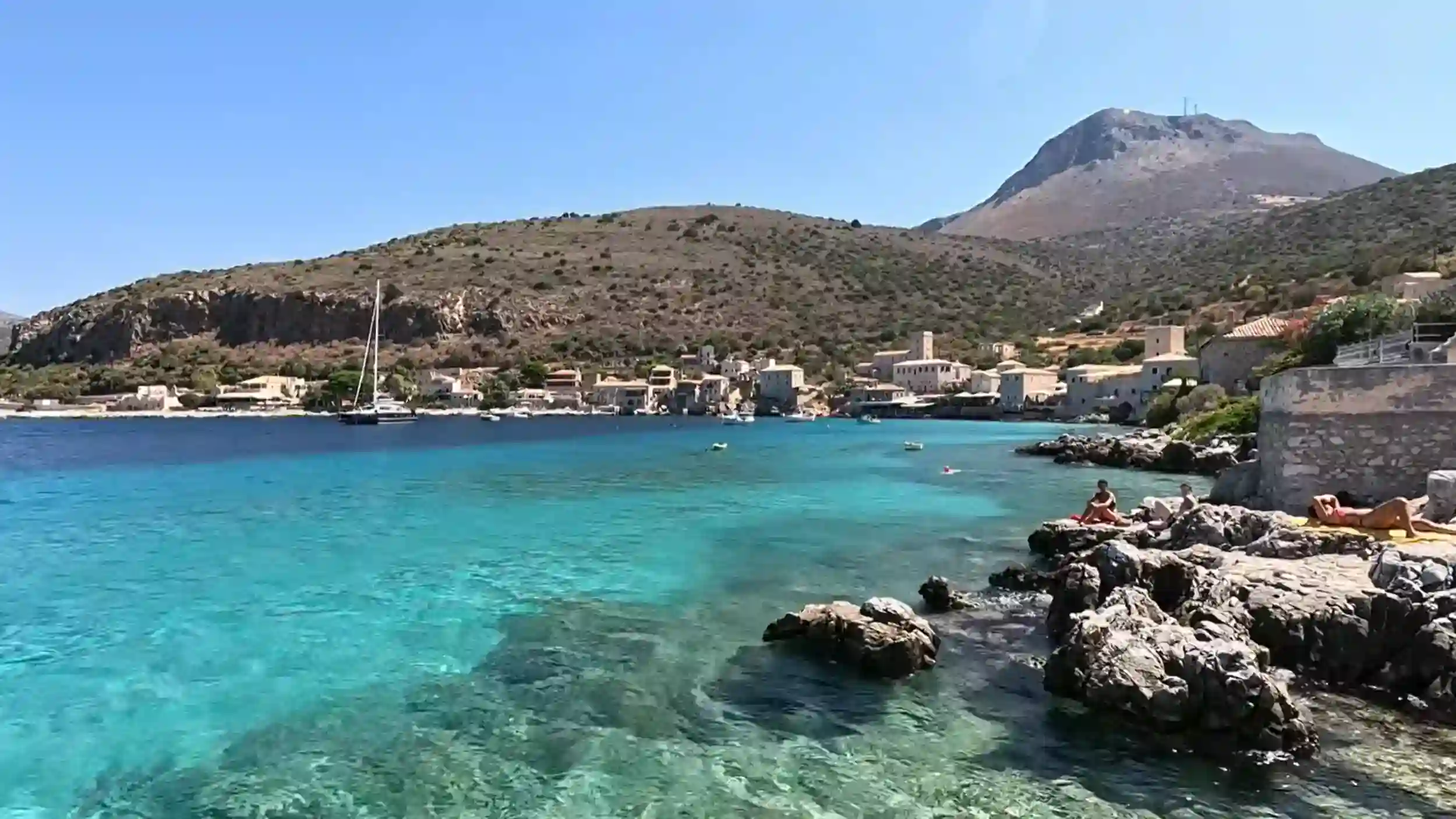
Featured image: Limeni
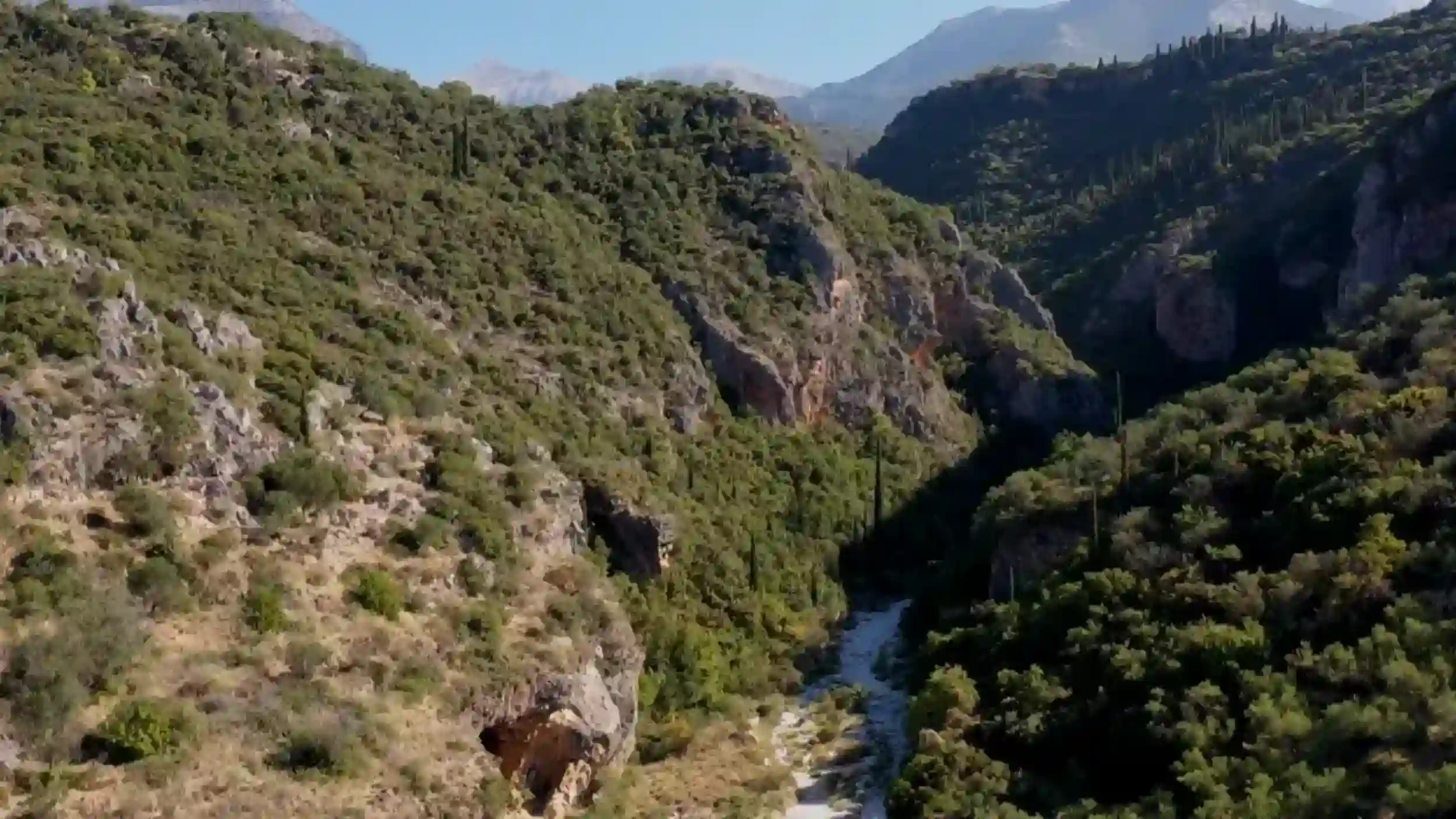
What strikes many visitors is how physical the heat feels here compared to other parts of Greece. The Mani has almost no tree cover across large stretches of its interior. The rock absorbs heat through the morning and radiates it back through the afternoon. Villages that look inviting from a distance – clusters of tower houses rising from a hillside – can feel like slow ovens by two in the afternoon. There’s no shade between buildings in many of the older settlements because shade wasn’t the priority when those towers were built. Defensibility was.
Midday
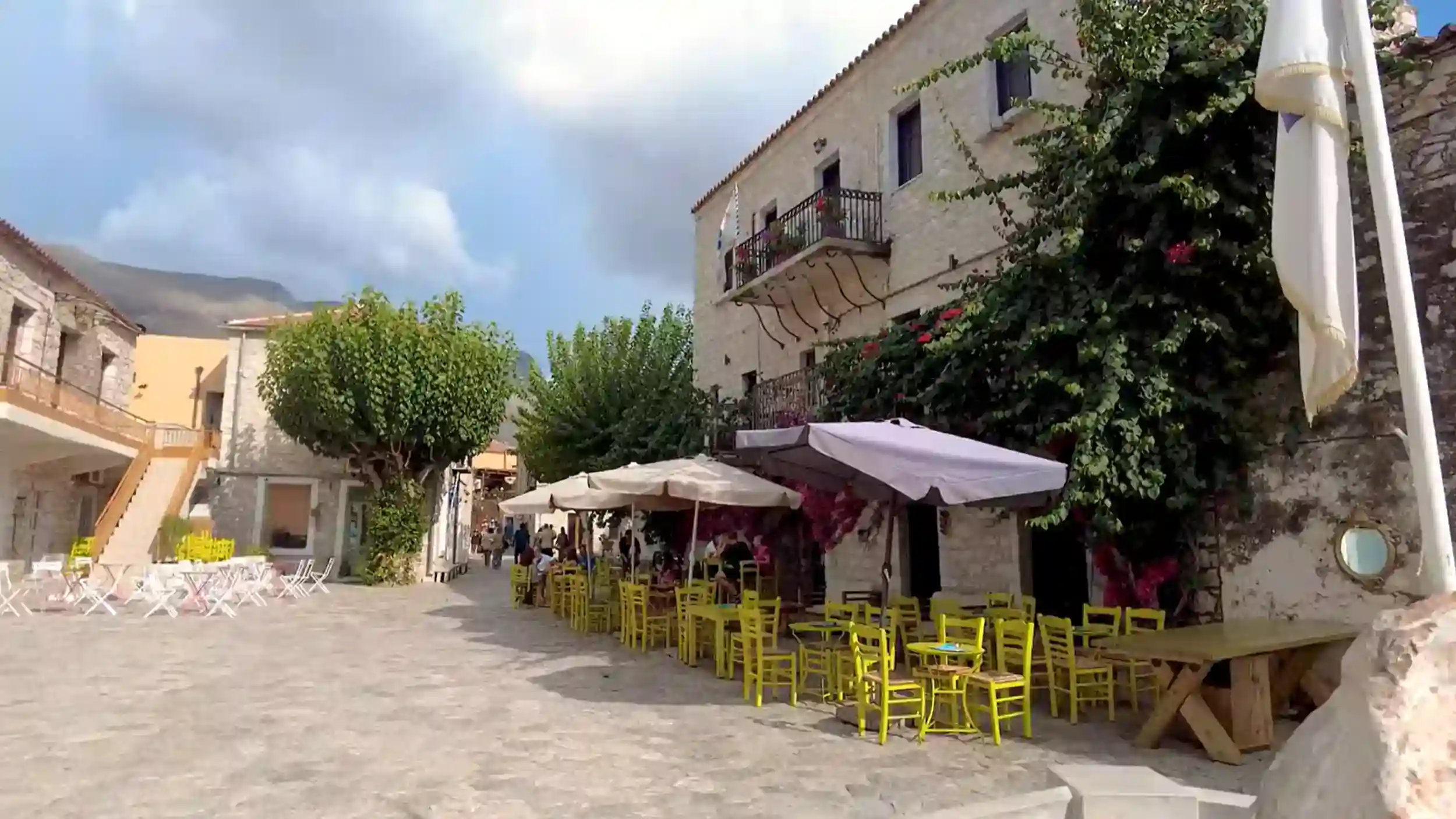
By midday the streets empty with a completeness that can feel startling if you’re not expecting it. Kardamili, one of the more visited entry points to the Mani, goes quiet in a way that feels absolute. Shutters close. The few cafés that stay open do so for the tourists who haven’t yet adjusted their rhythms. Locals are largely absent from the streets between roughly noon and five, a pattern that holds across the peninsula whether you’re in a coastal town or one of the inland tower settlements.
Vathia – the most photographed of the Mani’s fortified villages – is particularly still at this hour. It’s not heavily populated even in the evening; what few people remain have learned, over generations, that fighting the midday heat is a losing proposition. The village sits exposed on its hillside with nothing to interrupt the sun. In high summer, wandering through it before ten in the morning or after six in the evening produces a very different experience than arriving at one in the afternoon, when the silence tips from atmospheric into something more oppressive.
This midday contraction is worth taking seriously as a practical matter. Archaeological sites, the coastal paths and hiking trails, even short drives through the interior all become considerably less pleasant between noon and mid-afternoon. The peninsula’s roads offer little in the way of shade, and the exposed stretches feel relentless. The rhythm the Mani imposes in summer isn’t inconvenient – it’s the correct structure for the season.
Evenings
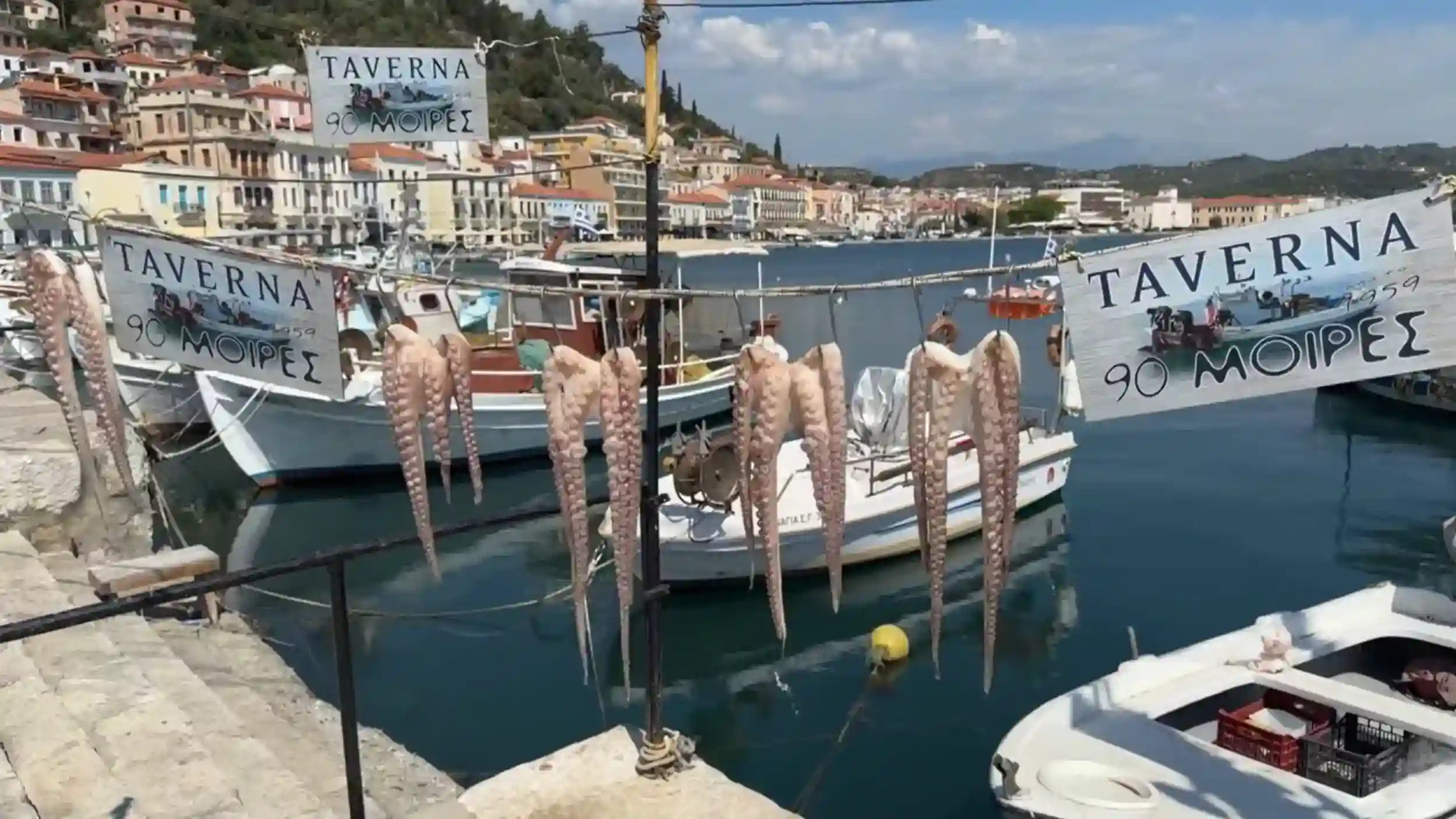
Evenings reconstitute everything. Tables appear outside tavernas that seemed closed an hour before. People who were invisible at two o’clock are now unhurried and present, settling into meals that aren’t designed to end quickly. This is where the Greek approach to dinner becomes most legible: eating is a social event with its own pace, not a transaction between hunger and satiation. The Sunday lunch – and by extension any significant evening meal – is something closer to a symposium than a sit-down. Wine, fresh ingredients, traditional dishes, and conversation that runs in several directions at once. The gossip is as much a feature as the food. As is the nagging about how things used to be better, followed by a toast and a return to optimism.
In Kardamili, overlooking the coast, this pattern plays out with the added dimension of the light coming off the water. Dinner in high summer often doesn’t begin until nine, sometimes later. The heat of the day has finally loosened its grip, the air has cooled enough to make sitting outside genuinely pleasant, and the meal expands to fill the available space. Ouzo before food, a proper Greek salad – which in Greece means tomatoes, cucumbers, green peppers, onion, Kalamata olives, and a slab of good feta, not the lettuce-heavy version exported to the rest of the world – and then whatever the kitchen has made well that evening.
The quality of local ingredients in this corner of the Peloponnese is notable even by Greek standards. The olives grown on the Mani’s rocky terrain are smaller than those from more fertile regions, but the flavour is concentrated. Herbs from the hillsides – chamomile, oregano, and others – go directly into marinades and dressings. The connection between the landscape and what ends up on the table is short and visible.
Light
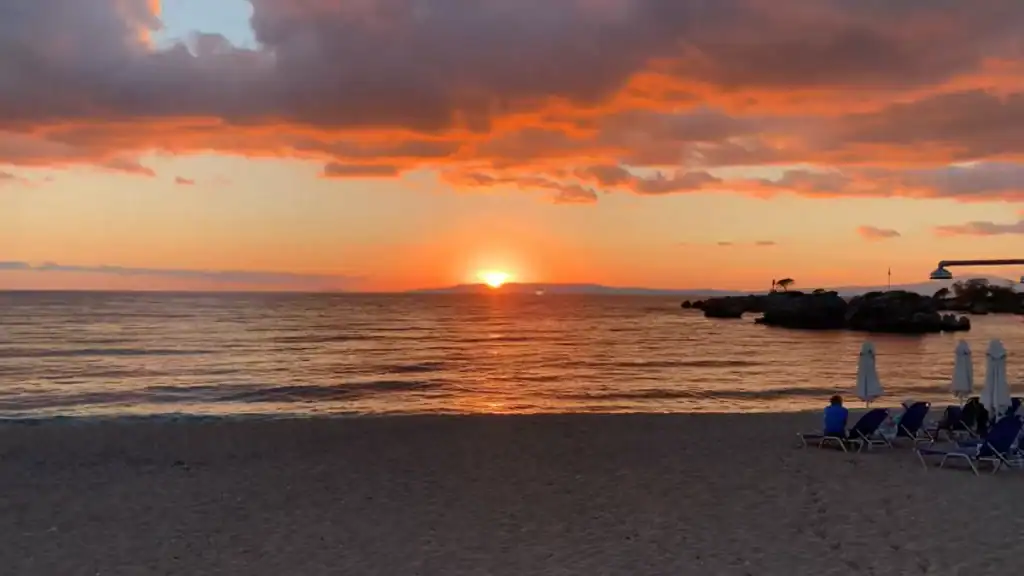
The light in peak season is something that the Mani’s landscape amplifies rather than softens. Because the terrain is so open – sparse vegetation, pale rock, long sight lines down to the sea – there’s very little to diffuse or filter what comes from above. Morning light in July hits the tower houses at low angles and turns the stone amber. By ten it’s already clinical, bright without warmth, exposing every surface. In the late afternoon, around six or seven, the angle shifts again and the Mani briefly becomes extraordinary – the same towers that looked harsh at noon now rendered in ochre and copper against a deep blue sky. Photographers and painters have been drawn to this quality for decades, and it’s easy to understand why.
The absence of clutter in the landscape – few trees, no softening of edges, a horizon that drops straight into sea on three sides of the peninsula – means the light has nowhere to hide. What it does to a ruined fortified house on an exposed hillside, or to the coastline north of Vathia as the sun drops, is difficult to describe without either overstating it or sounding like a brochure.
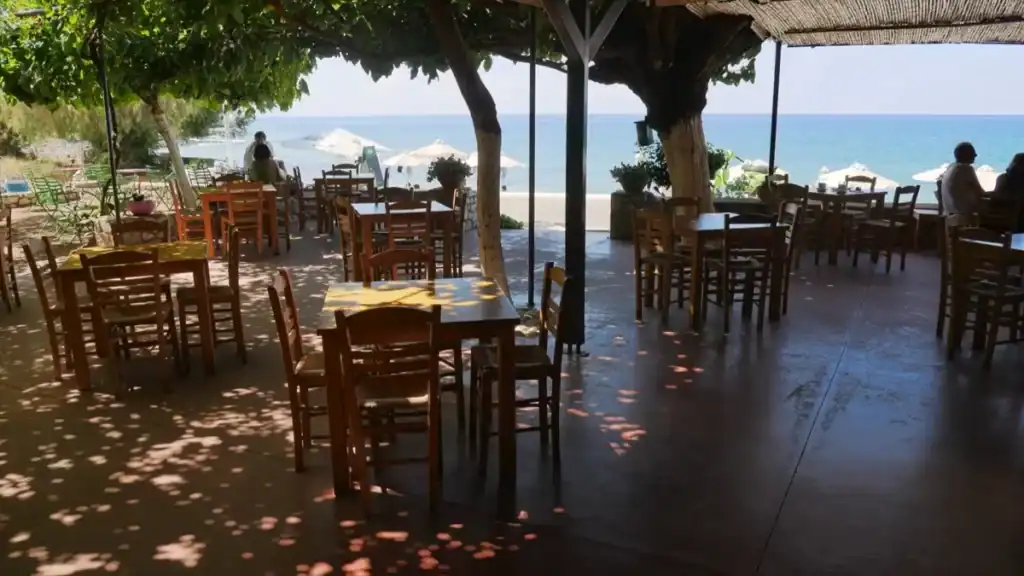
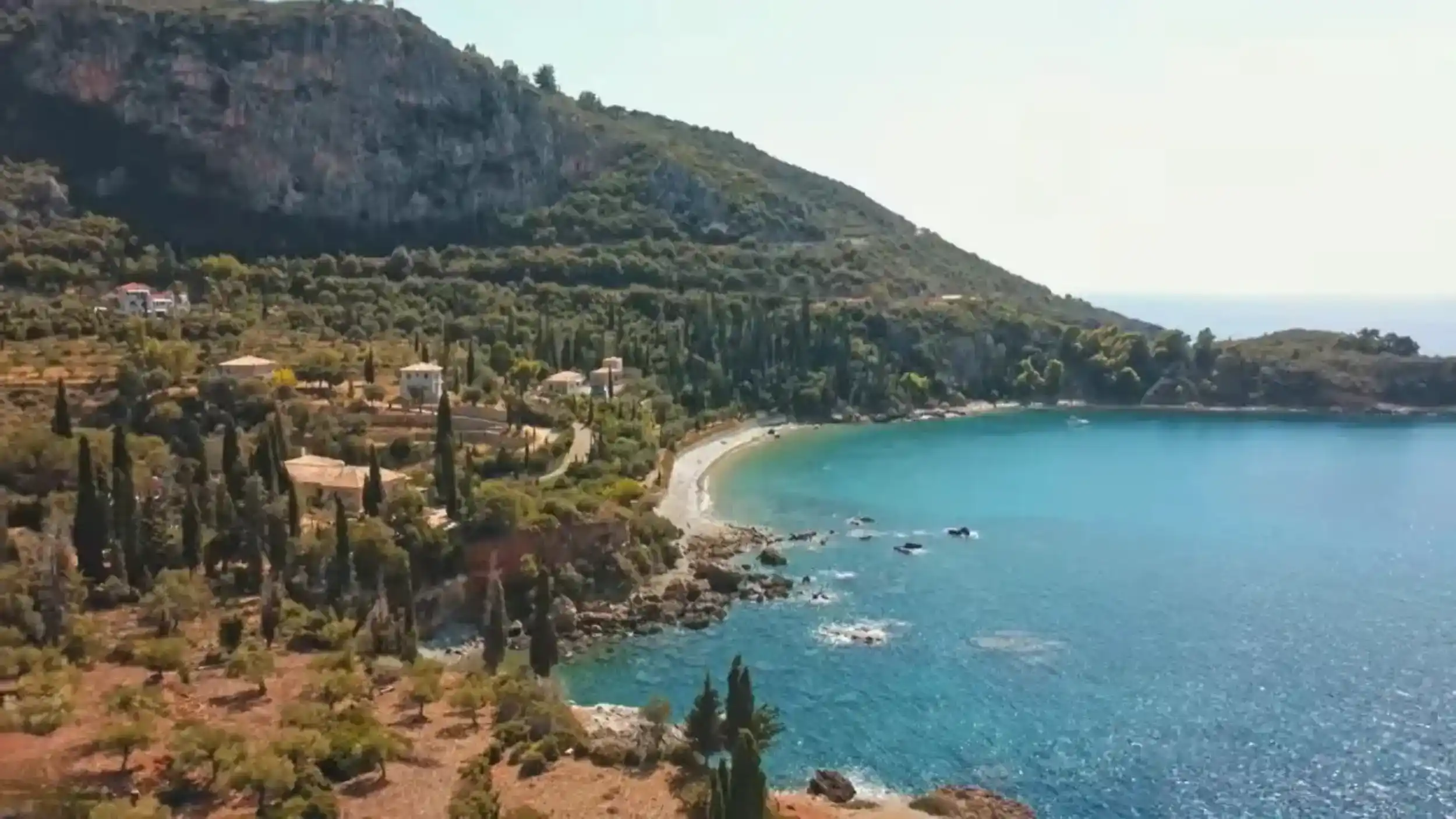
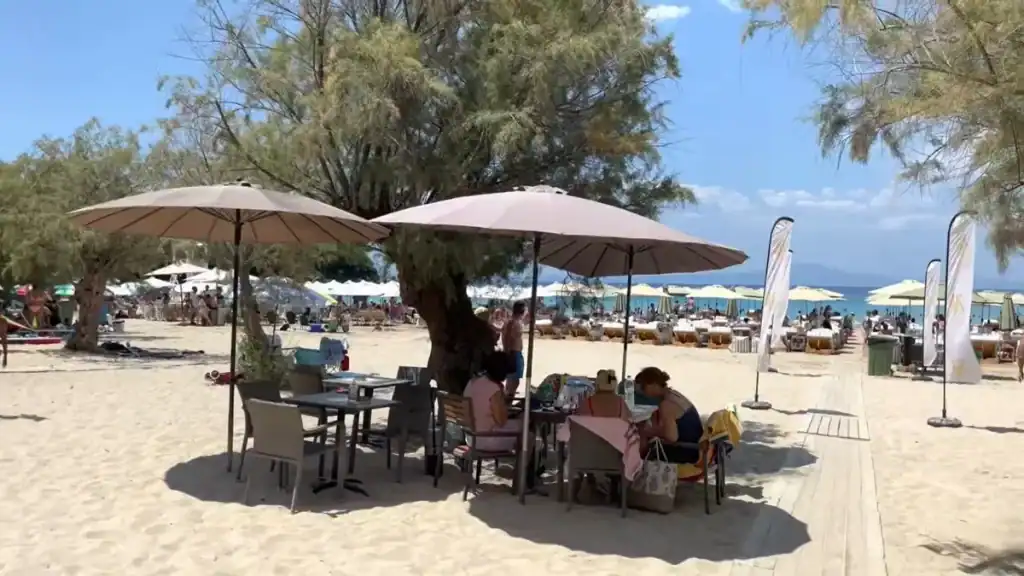
The sea itself, in high summer, is the deep transparent blue of the southern Mediterranean. The coastline south of Kardamili offers swimming from rocky shelves and small coves, the water calm and clear. It’s not a beach destination in the conventional sense – the Mani offers very little in the way of sandy beaches and doesn’t pretend otherwise – but the combination of that water, at that temperature, after a day of that heat, has its own logic.
Visitors
The Mani has never attracted mass tourism in the way that other parts of the Peloponnese do, and high summer doesn’t fundamentally change that. It draws visitors, but slowly and selectively. The roads, while improving, have historically filtered out those unwilling to navigate narrow mountain routes. The lack of large resort infrastructure keeps numbers manageable. The peninsula currently sustains around 5,000 permanent residents – a fraction of the 60,000 who lived here two centuries ago – and tourist volumes reflect that scale.
What has changed in recent years is the composition of visitors rather than the total number. Northern Europeans – Scandinavians, British, Germans – have been arriving not just as tourists but as semi-permanent residents, buying land and building or restoring homes. The Mani is quietly becoming something like a northern European retirement outpost grafted onto one of the most historically self-contained corners of Greece. The summer months see these seasonal residents return, which gives some villages a population density that exists only between June and September.
For travellers visiting in July or August, the practical reality is that accommodation books up and restaurants fill later in the evening, but the feeling of being in an overrun place never quite materialises. The Mani’s geography resists that. The distances between villages, the absence of a single obvious hub, the terrain that discourages casual exploration – all of it distributes visitors across the peninsula rather than concentrating them. Peak season here is relative. Compared to the islands, or to the more accessible archaeological sites further north, the Mani in high summer still feels like somewhere you’ve had to mean to go.