Vila do Conde cycling along the River Ave can be a relatively short riverside ride or part of a much longer circuit through rural northern Portugal and back along the Atlantic. The recognised river section towards Ponte D. Zameiro is about 12 km and linear, while the extended ride described here needs a half day rather than a fixed completion time because the precise loop depends on where you turn back towards the coast.
What made the longer version memorable for me was the change of landscape rather than the distance. Vila do Conde loosened its grip gradually, fields and Vinho Verde vines took over, then the return opened into dunes and Atlantic views. By the time the Ave appeared again, it no longer felt as though I had simply cycled out of town and back.
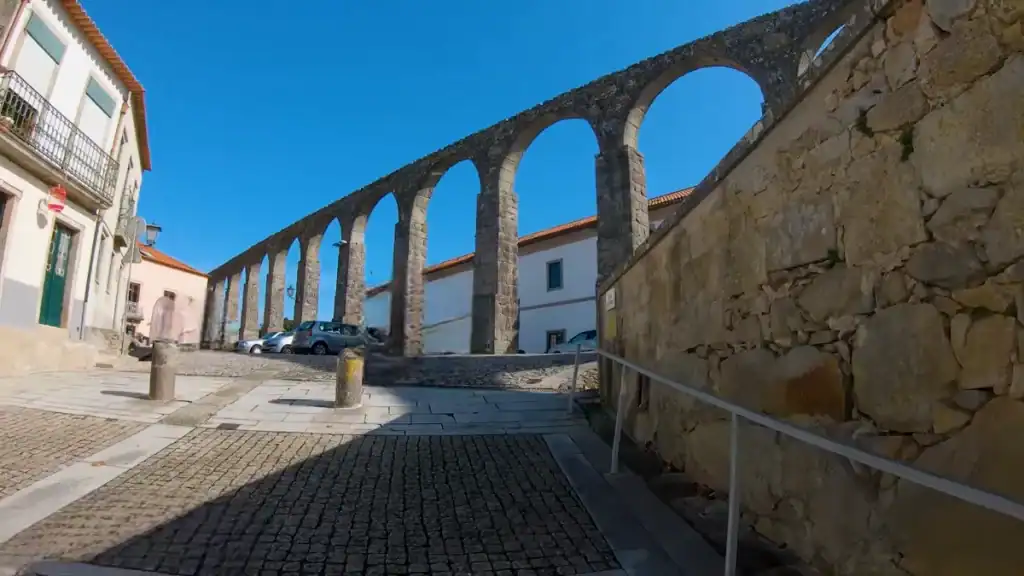
🚴 Where Does the River Ave Cycle Route Go?
The recognised Viver o Ave section took me from around Senhora da Guia beside the river inland towards Ponte D. Zameiro. At roughly 12 km, that is the defined part of the journey. It is linear rather than a loop, so the simplest version means choosing a turnaround point and retracing the Ave.
The opening kilometres felt uncomplicated. There was no long urban escape to negotiate first; the Ave gave me an obvious direction while the harbour and denser streets slowly fell behind.
🧭 THE SIMPLE VERSION
🚲 River section: about 12 km
↔️ Format: linear rather than a loop
📍 Start: around Senhora da Guia beside the Ave
🌉 Inland reference: Ponte D. Zameiro
⏱️ Best plan for a short ride: choose your turnaround point and retrace the river
The Town Seemed to Fade Rather Than End
There wasn’t a point where Vila do Conde suddenly disappeared.
Instead, buildings thinned, gaps opened between properties and cultivated land became more noticeable. The extra space registered before any particular landmark did. On a bicycle, that slow transition was part of the pleasure because I could actually watch the surroundings becoming more rural.
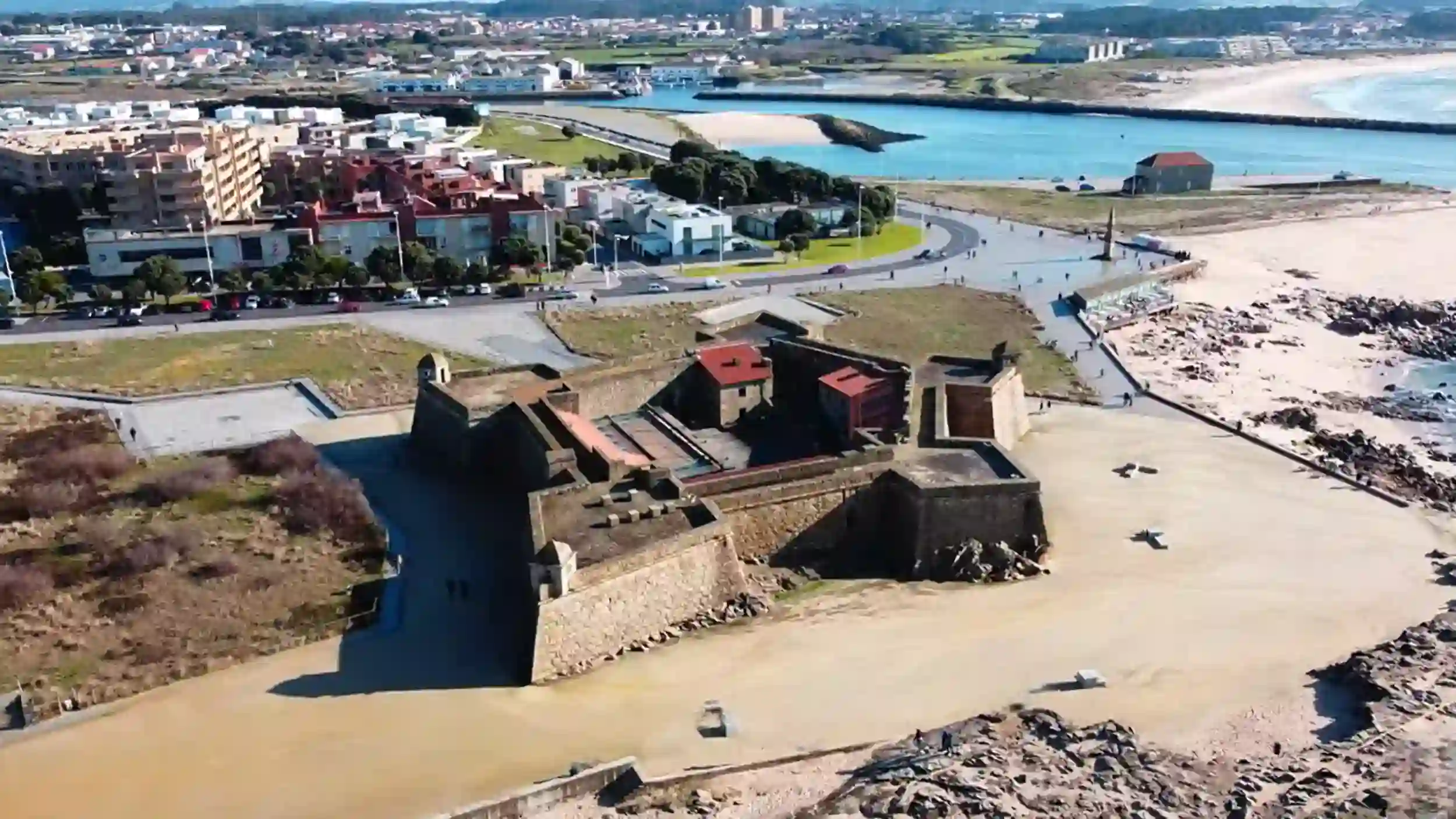
The Vila do Conde harbour gives useful context to the river mouth and waterfront at the beginning. Further inland, the Atlantic character gradually slips away.
🌿 How Difficult Is the Ride for an Occasional Cyclist?
Twelve kilometres sounds beginner-friendly, but distance does not tell the whole story. The recognised river route should not be confused with a perfectly surfaced urban cycle lane from beginning to end, so complete beginners need to be comfortable with changing surfaces and a more rural cycling environment.
For an occasional cyclist, the useful advantage is that the Ave makes the day easy to shorten. There is no need to complete every kilometre. Ride inland while the route still feels enjoyable, then turn back.
That is the option I would favour for someone more interested in scenery than completing a route. The longer circuit asks more of you: additional distance, navigation beyond the defined river section and several hours on the bicycle.
💡 BEGINNER OR FULL LOOP?
New or occasional cyclist: use the Ave as an out-and-back ride and choose your own distance.
Comfortable recreational cyclist: extend inland and build the coastal return into the day.
The difference is important because the two rides may start in the same place, but they are not really the same undertaking.
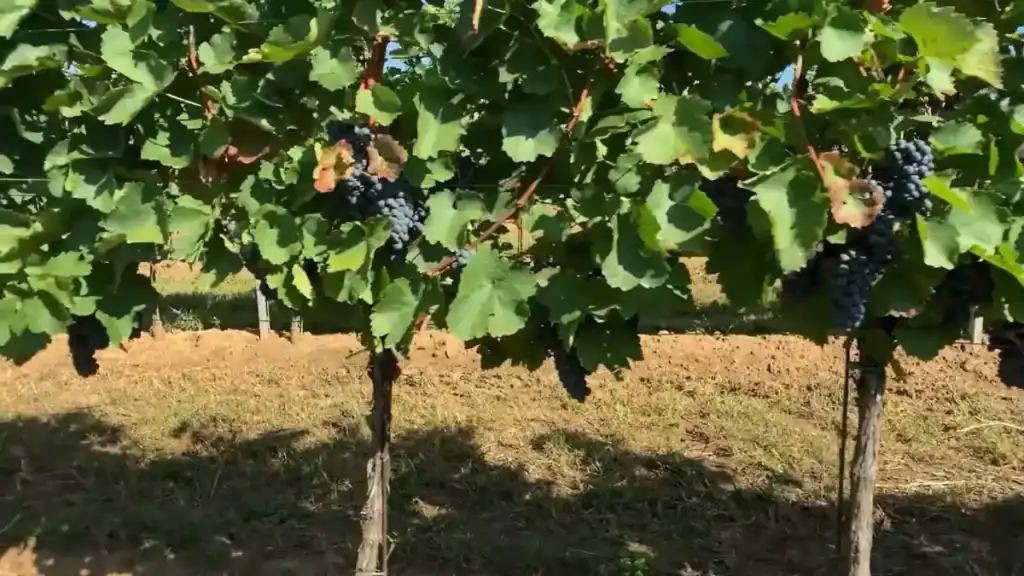
🍇 What Is the Inland Section of the Ride Like?
Within the first hour, smaller settlements and cultivated fields had begun replacing the denser streets around the coast. Traffic felt less dominant, agricultural land occupied more of the view and Vinho Verde vines gradually became part of the scenery. The change was progressive rather than dramatic, which was exactly what I liked about it.
I wasn’t measuring this part of the ride by attractions or stops. Houses became more scattered and the landscape seemed to acquire a little more room every few minutes. That was enough to keep the journey interesting.
The High Pergolas Were What Caught My Eye
Then the vines started changing the look of the route.
They appeared beside fields, gardens and ordinary properties, often trained much higher than the low, regimented vineyard rows I was used to seeing elsewhere in Europe. Traditional Vinho Verde vines frequently grow on tall supports and pergolas, sometimes creating green corridors along boundaries or above paths.
There was no particular wine estate I was trying to reach, and that suited the ride. The vines belonged to the everyday landscape rather than being confined to a visitor attraction. I preferred discovering them that way.
It also made this section feel very different from the return. Inland, attention stays close: vines, fields, houses and small settlements. Later, near the Atlantic, almost everything pulls your eyes towards the horizon.
🔄 Can You Turn the River Ave Ride Into a Full Loop?
Yes, but the recognised River Ave route itself is linear. My longer journey became a loop only by leaving that simple out-and-back format, continuing through the inland landscape and eventually working back towards Vila do Conde from the coast.
That distinction also explains why there is no honest universal distance or completion time for the extended circuit. Where you turn towards the sea changes the ride, as does the precise combination of roads and tracks you choose.
I would reserve half a day rather than treating the longer version as a timed four-hour or five-hour challenge. Navigation, photographs and slower stretches all eat into an apparently generous schedule. More importantly, rushing would remove much of what made the ride worthwhile for me.
The shorter river option is different. It can be fitted around sightseeing and abandoned whenever your legs, the weather or the clock say enough.
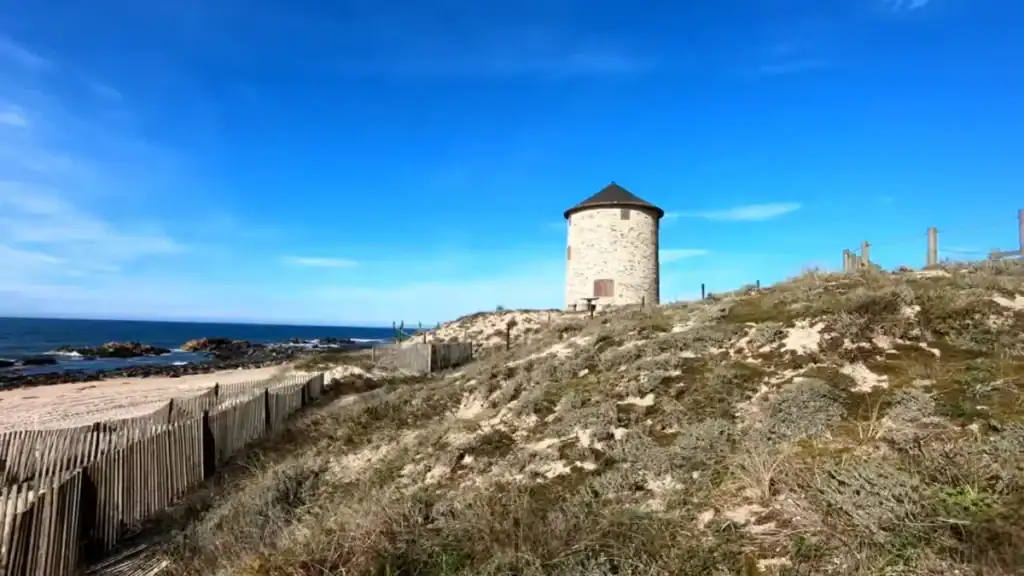
🌊 What Is the Coastal Return to Vila do Conde Like?
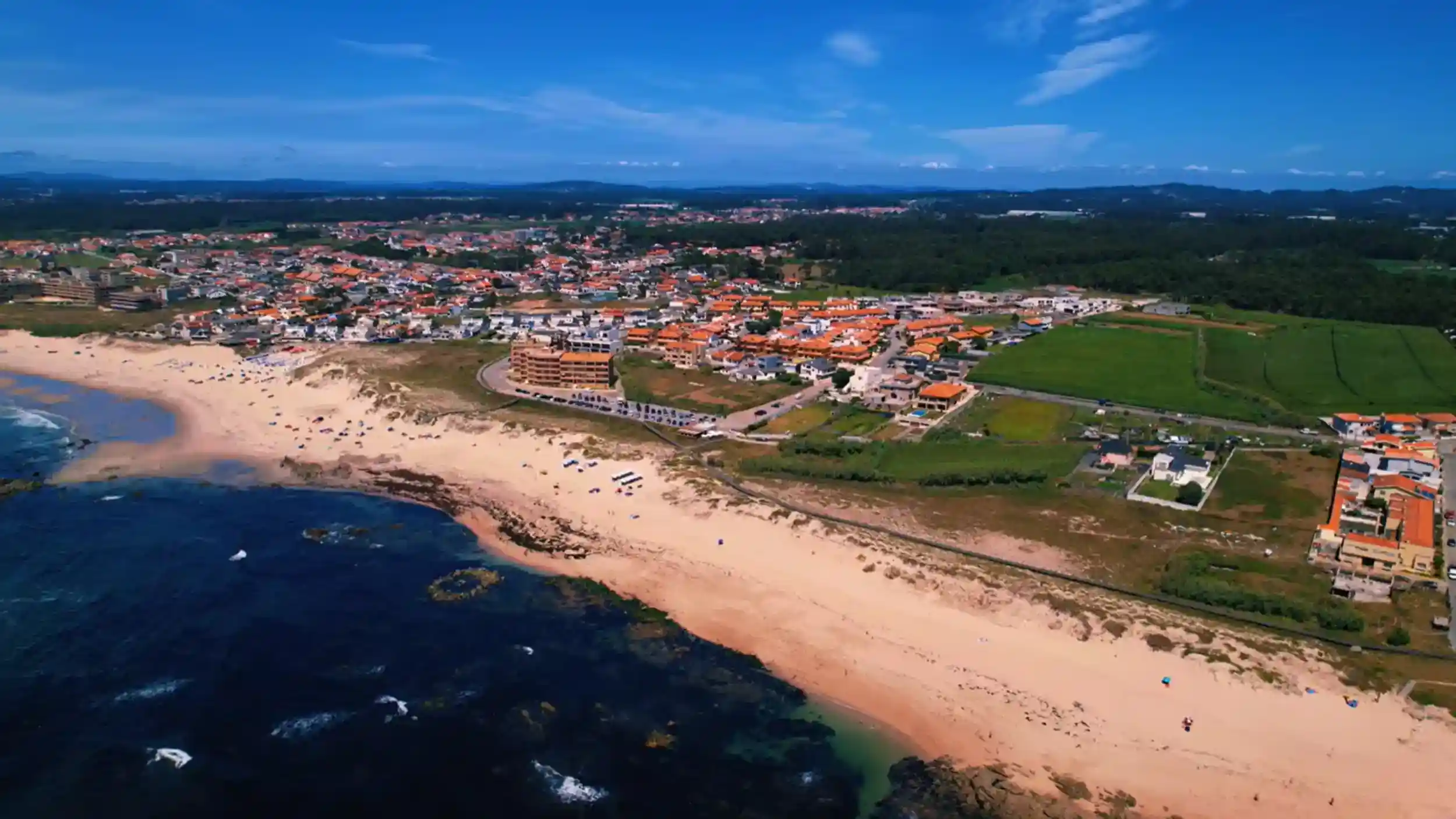
It felt almost like starting a second ride. As I turned back towards Vila do Conde, agricultural surroundings began to recede, the landscape became more exposed and eventually the Atlantic returned to view.
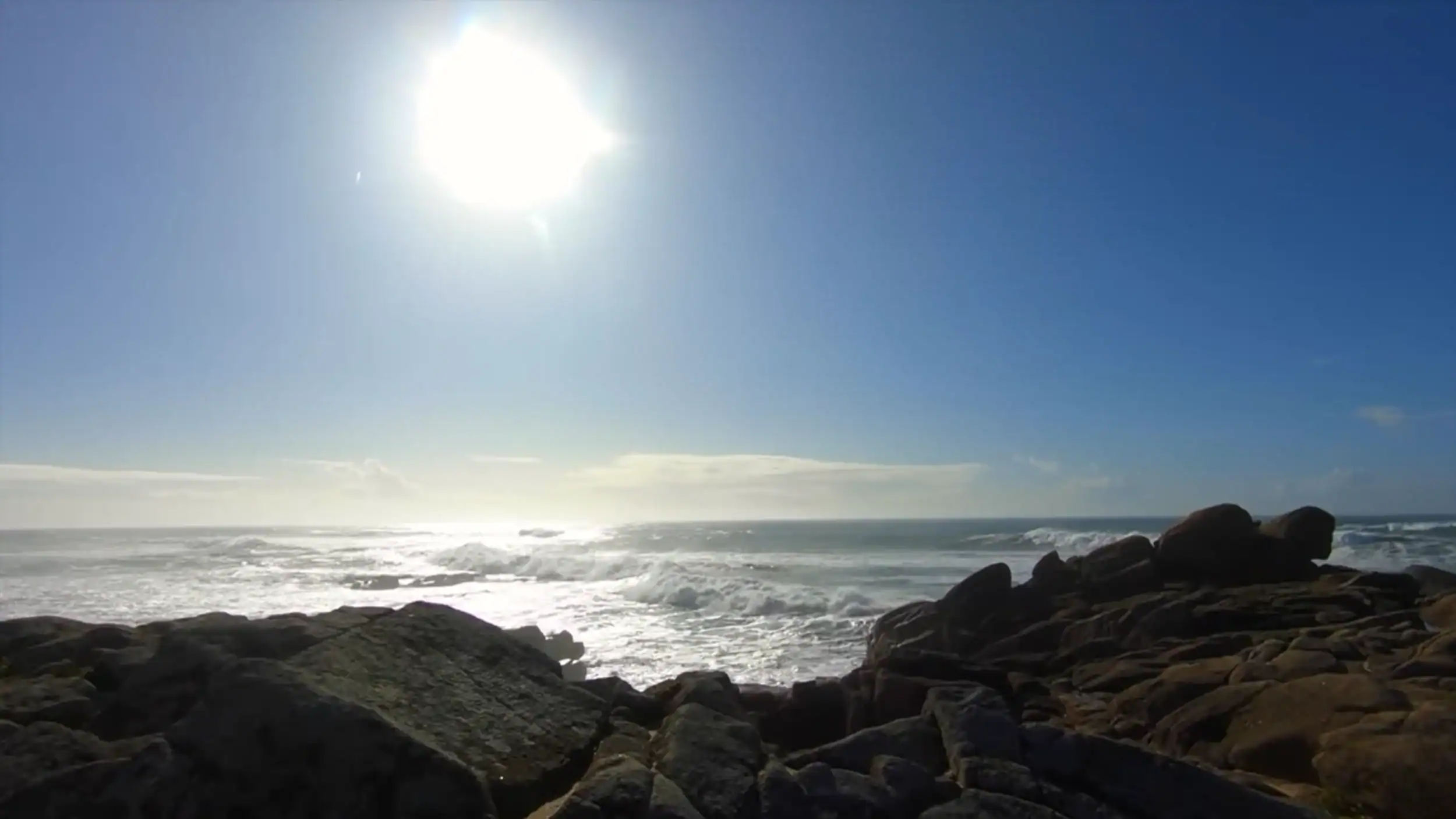
After the enclosed rural lanes, the horizon felt enormous.
Much of the inland journey had kept my attention close to the bicycle, looking across fields and between properties. Near the coast, dunes and beaches replaced that detail. The sea became the dominant feature again.
Why I Would Return by the Atlantic Again
This was where the longer circuit justified the extra effort. The Vila do Conde coastal walk explores the same exposed shoreline at a slower pace, but reaching it after the wine country made the contrast much stronger on the bicycle.
Inland feels greener, tighter and agricultural. The coast is brighter, windier and visually open.
Had I simply retraced the Ave, I would have seen the gradual rural transition twice. Returning by the Atlantic gave the second half its own identity, which is why the complete ride felt like a journey rather than a there-and-back cycle.
🌤️ What Is the Best Time for the Longer Ride?
I would choose spring or early autumn for the longer inland-and-coastal circuit. Several hours on the bicycle were much more appealing to me without the strongest summer heat, while useful daylight still left room to stop rather than constantly watch the time.
Summer is certainly possible. An early start becomes more attractive, though, particularly if the day is hot.
There is another condition I would check before worrying too much about temperature: wind. The inland landscape can feel comparatively enclosed, whereas the coastal return offers much less shelter. A persistent Atlantic headwind can make the final kilometres feel very different from the easy seaside finish imagined when looking at the route on a map.
🌬️ BEFORE SETTING OFF
Check the wind direction as well as the temperature. For the full circuit, conditions on the exposed return can matter more than a few degrees either way.
🚲 What Kind of Bike Do You Need for the Route?
For the short riverside ride, I would be comfortable with a conventional city or trekking bike. For the longer circuit, I would prioritise comfort and a bike suited to changing surfaces. If hiring locally around Vila do Conde or neighbouring Póvoa de Varzim, I would explain that the plan includes rural sections rather than simply cycling around town.
Several hours in the saddle made that distinction more important than it first sounded. Once the easy waterfront cycling was behind me, flexibility and comfort mattered more than having a bike designed purely for town riding.
For the shorter ride, that decision matters much less.
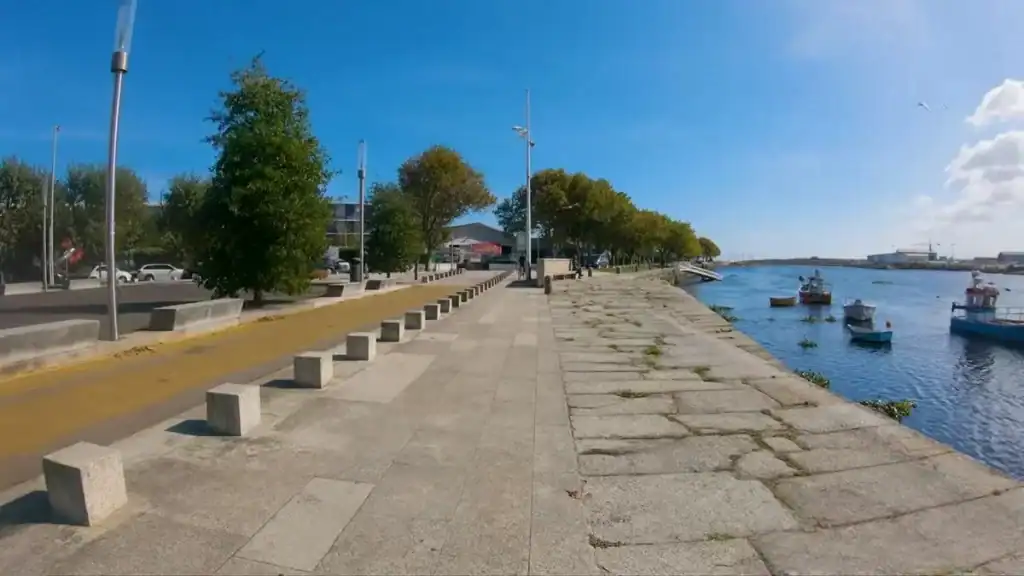
🌉 How Does the Longer Vila do Conde Cycling Route Finish?
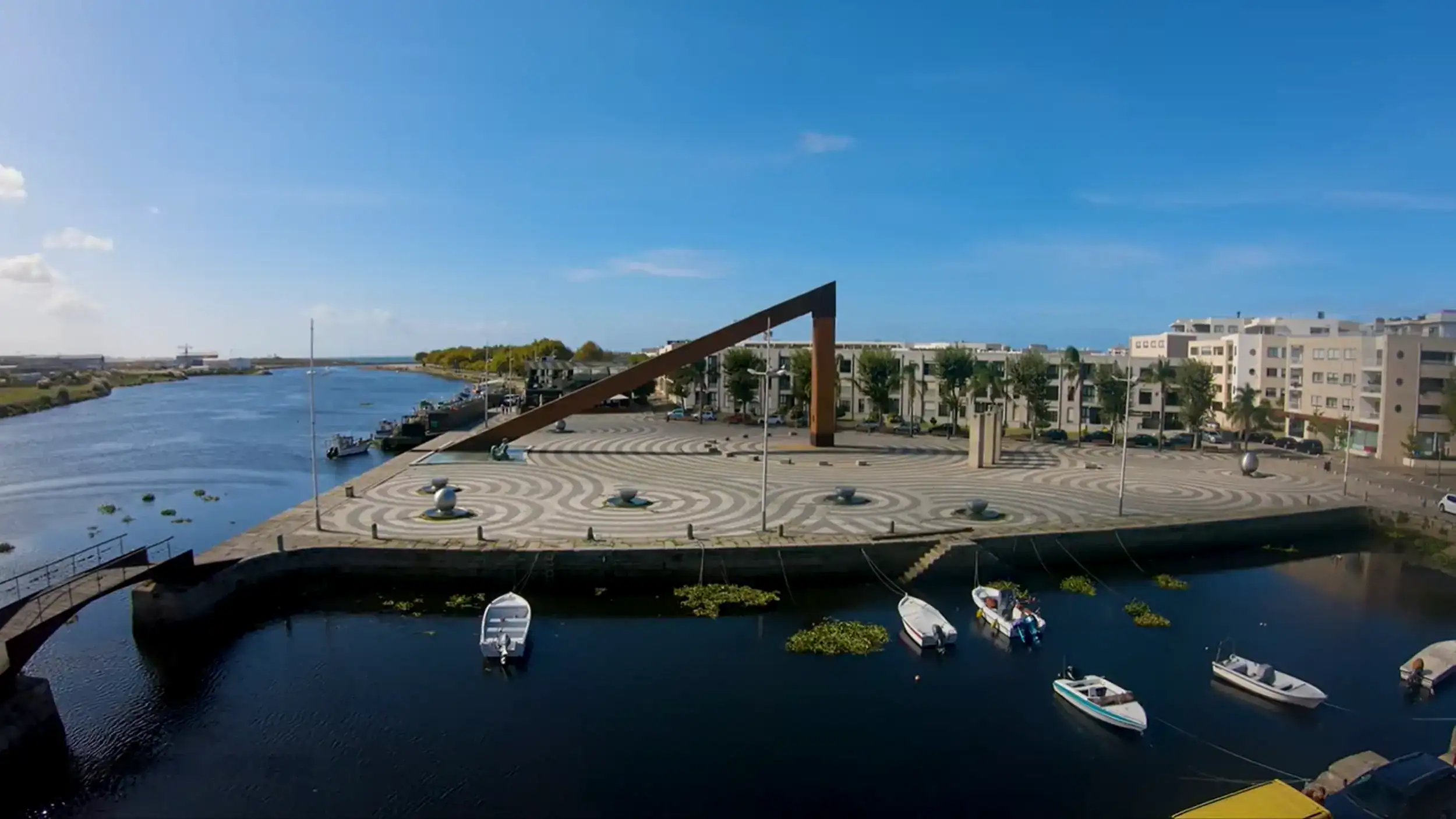
Following the coast south eventually brought the River Ave and Vila do Conde back into view, giving me an obvious geographical finish after several hours of changing scenery. By then, the countryside from earlier in the ride felt surprisingly distant.
The same river that had guided the opening section now made the circuit easy to put back together. After hours of changing scenery, there was something satisfying about arriving at such an obvious geographical reference.
Santa Clara Was the Sign I Was Back
Crossing the Ave, the Monastery of Santa Clara rose above the rooftops and gave the ride a clear visual finish. The Atlantic was behind me. The river led back through town towards the waterfront.
From here, it is easy to continue through the Vila do Conde historic centre or simply follow the Ave towards the starting point.
What stayed with me was not one landmark but the sequence of landscapes. River became farmland, farmland became Vinho Verde country, then the return opened into dunes and Atlantic sky.
If you want an uncomplicated cycle, use the Ave as an out-and-back ride and choose a distance that suits you. If you are comfortable spending longer on the bicycle, the inland-and-coastal circuit is the more rewarding version. The extra kilometres matter less than the fact that the scenery never asks you to ride through the same experience twice.