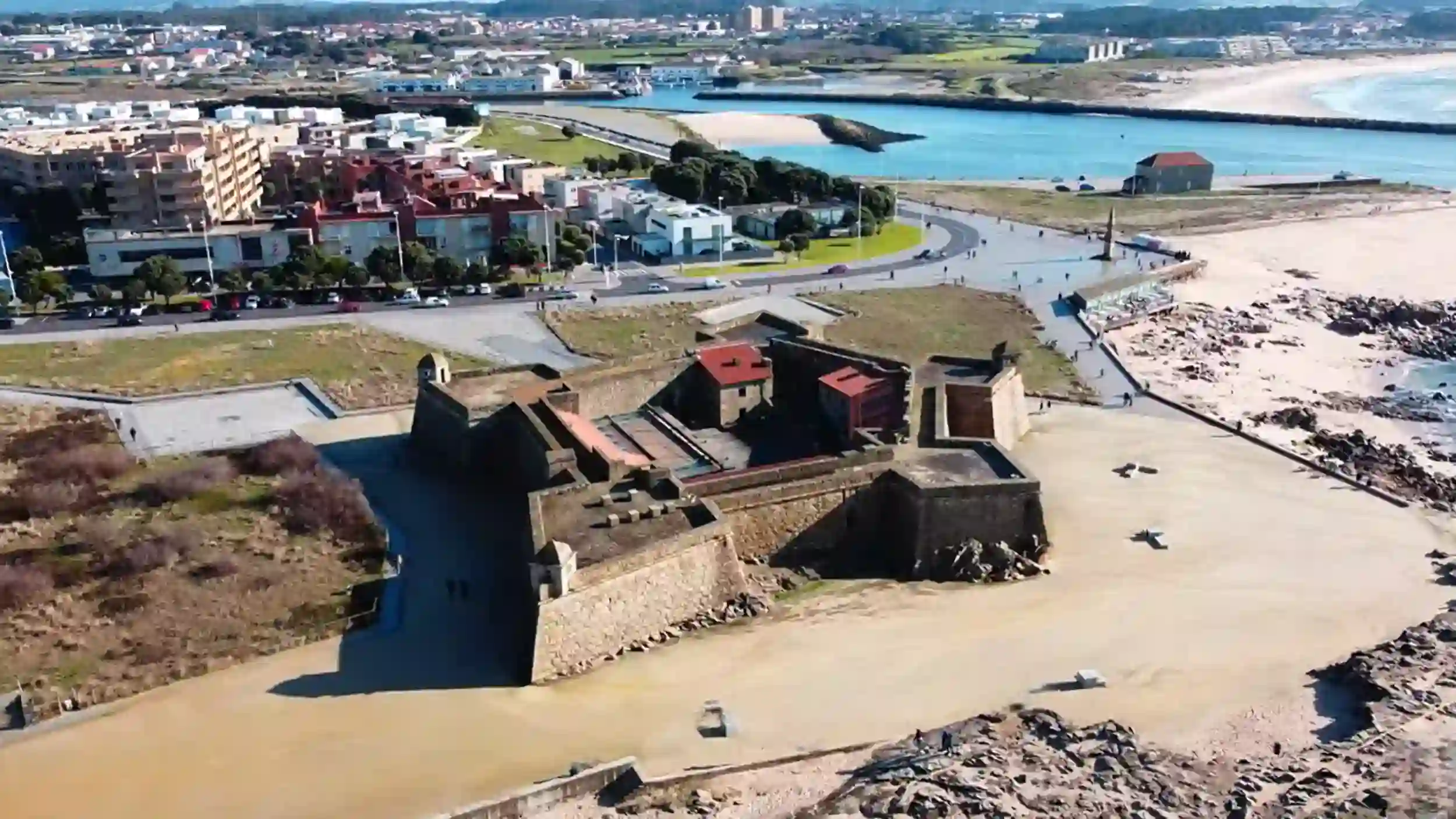
Vila do Conde fort stands where its purpose becomes obvious: directly at the mouth of the River Ave, between the sheltered estuary and open Atlantic.
Built between 1570 and 1641, Forte São João Baptista guarded the river entrance and the town behind it from attacks arriving by sea.
What made the harbour interesting to us, though, was not the fort on its own. We could follow the river past boats and the marina, reach the defensive walls, then keep walking until the sheltered water gave way to the Atlantic.
📍 Quick answer: the harbour is close to central Vila do Conde, easy to explore on foot and worth allowing around an hour for if you want to walk rather than simply photograph the fort.
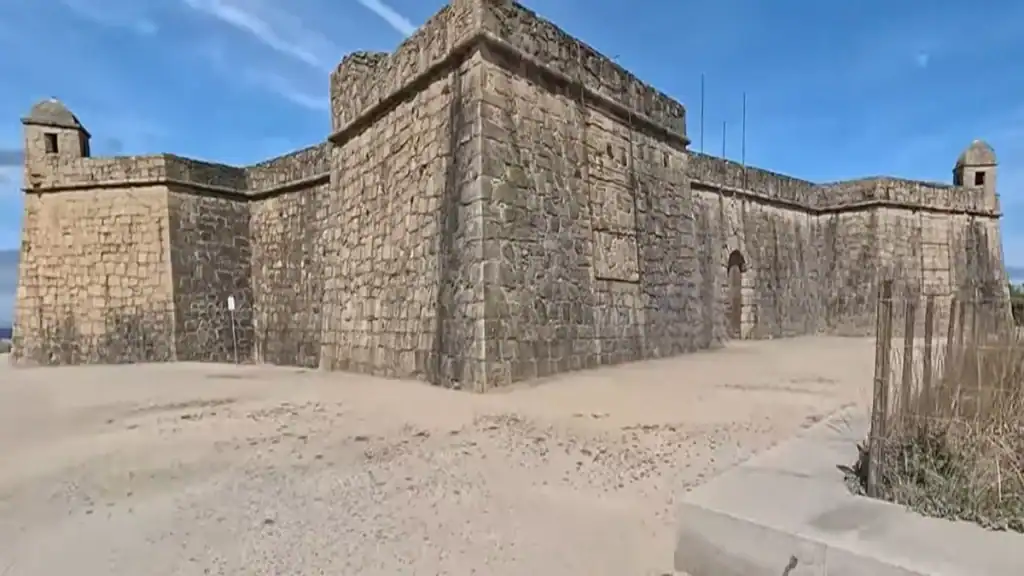
🏰 Why Was Vila do Conde Fort Built Here?
Standing beside the walls made the answer obvious to us. This was the point where anyone approaching Vila do Conde by sea had to pass between the open Atlantic and the entrance to the River Ave.
Built between 1570 and 1641, the fort could therefore guard both the river entrance and the town behind it from attacks arriving by sea.
Its Defensive Position Is Easier to Understand on Foot
From this low position, defenders could watch both the Atlantic approaches and the entrance to the Ave, a river running around 91 kilometres inland from the Serra da Cabreira.
So the fort was protecting far more than the waterfront immediately behind it.
What we actually noticed on the ground was the wind.
Walking around the walls, the Atlantic side felt noticeably more exposed. Move back towards the harbour and the difference was immediate: calmer water, boats and considerably more shelter.
💡 Worth knowing: the outer walls and surrounding area remain accessible, although hospitality businesses now occupy the fort itself.
Looking inland added another layer. The Monastery of Santa Clara remained visible above the town during much of our approach.
Seeing the monastery high on its hill and the fort almost at water level explained Vila do Conde’s geography better than the map had.
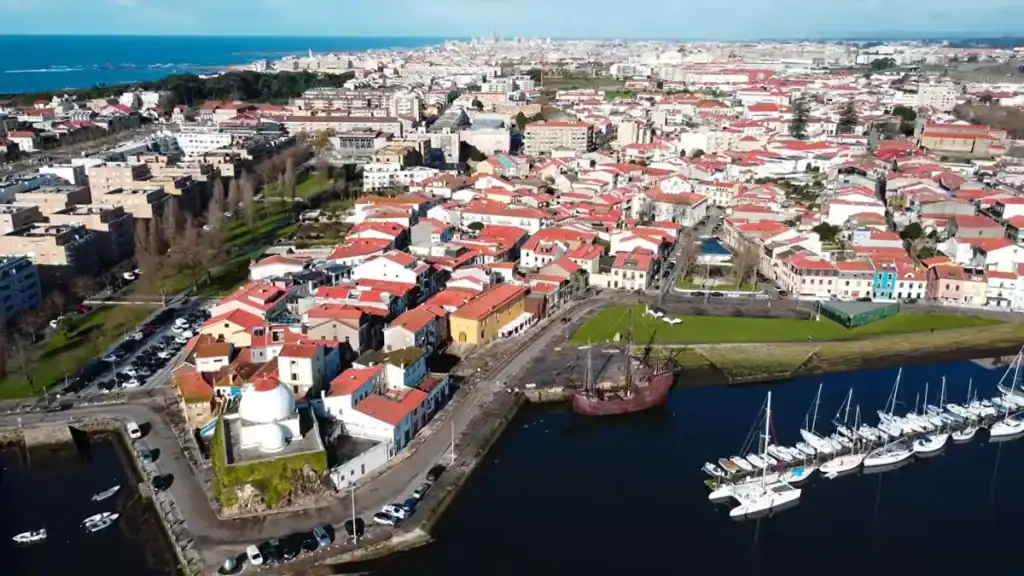
⛵ Why Does Vila do Conde Harbour Feel So Sheltered?
We understood the shelter as soon as we walked behind the fort. The exposed Atlantic conditions dropped away surprisingly quickly and the water became noticeably calmer.
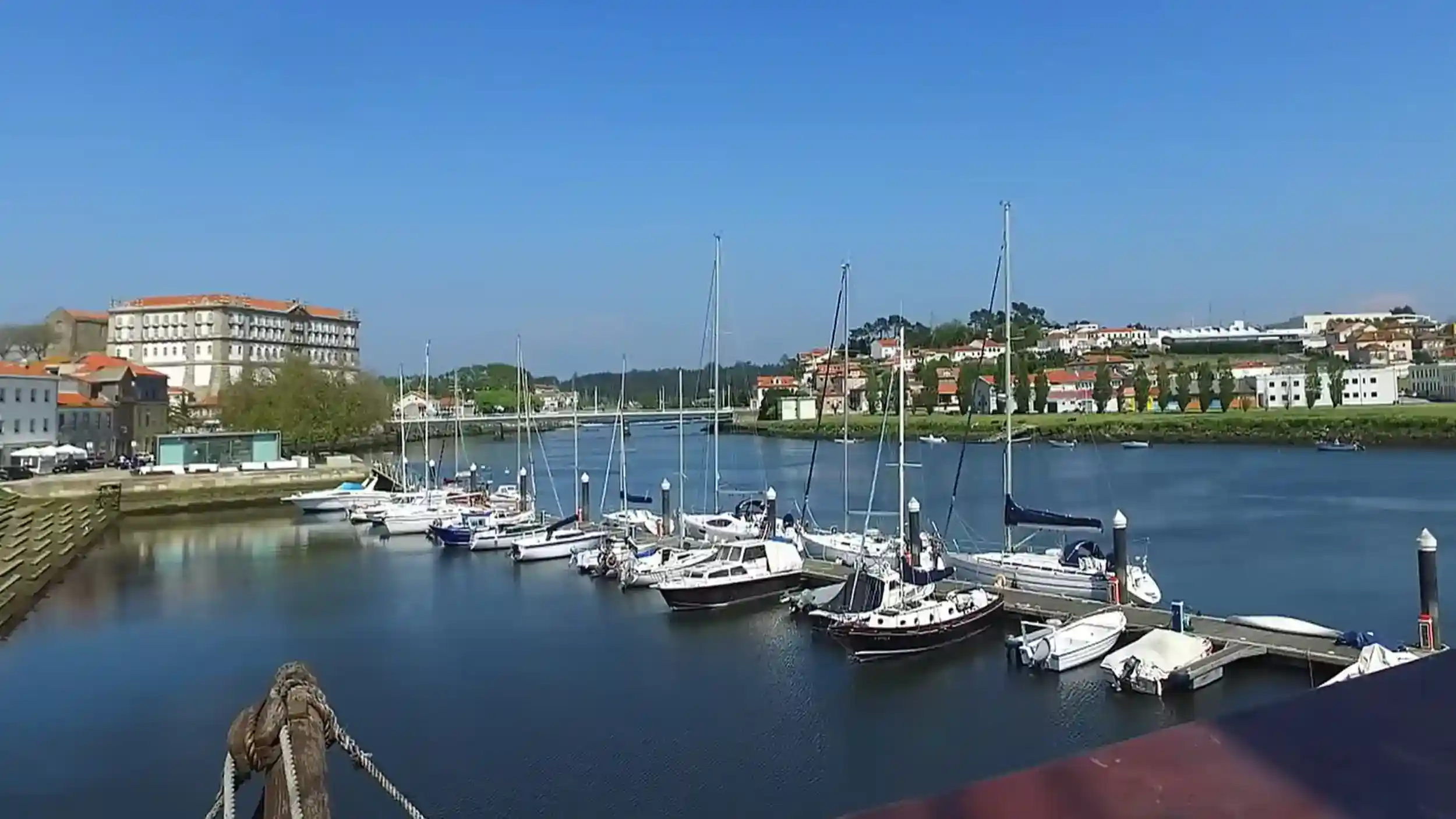
Fishing boats line the protected quay, repair yards sit behind them and the marina continues along the estuary. After feeling the Atlantic wind around the fort, we did not need much explanation for why a harbour developed here.
- 🌊 At the fort: exposed river mouth and Atlantic conditions
- ⚓ Behind it: calmer estuary water and working boats
- ⛵ Further inland: marina and sheltered waterfront
- 🚶 On foot: the transition happens within minutes
The Harbour Never Felt Like a Separate Attraction
That was important to us. We were not repeatedly stopping, driving and starting again.
The flat waterfront let one place flow naturally into the next. Boats gave way to the marina, then the river mouth and seawall.
At the outer end, the perspective reverses. Vila do Conde sits behind you while the view opens across the water and along the coast.
If you want to understand how this waterfront connects with the historic centre and beach, our main Vila do Conde guide puts the different parts of town together.
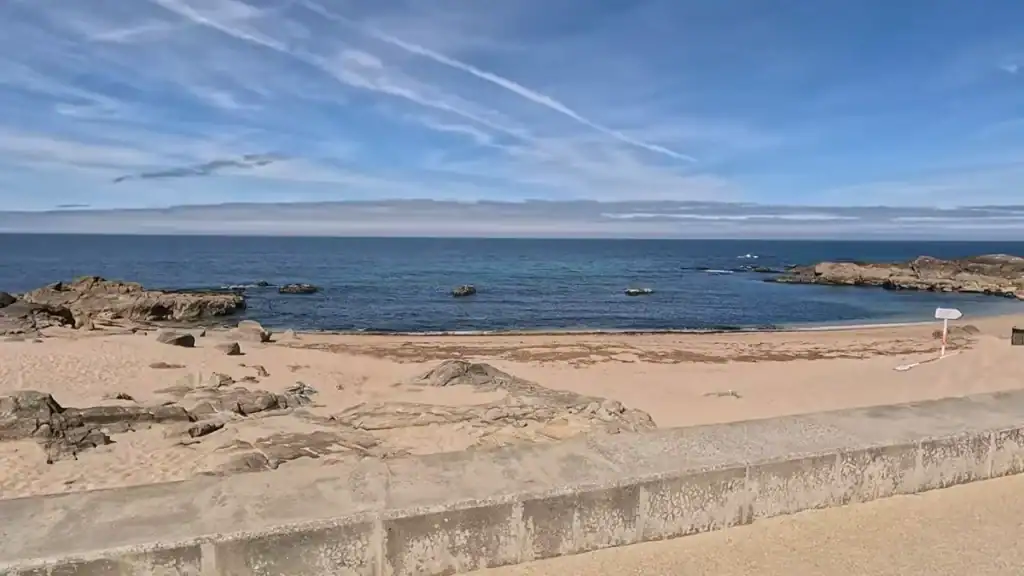
👀 What Is There to See Around Vila do Conde Harbour?
We found the waterfront more rewarding than the fort on its own. The defensive walls gave the walk its historical anchor, but the small beach, replica ship, working harbour, marina and seawall were what made us stay.
Everything was close enough to connect naturally on foot:
- 🏰 Forte São João Baptista at the river mouth
- 🏖️ Praia da Senhora da Guia beside the fort
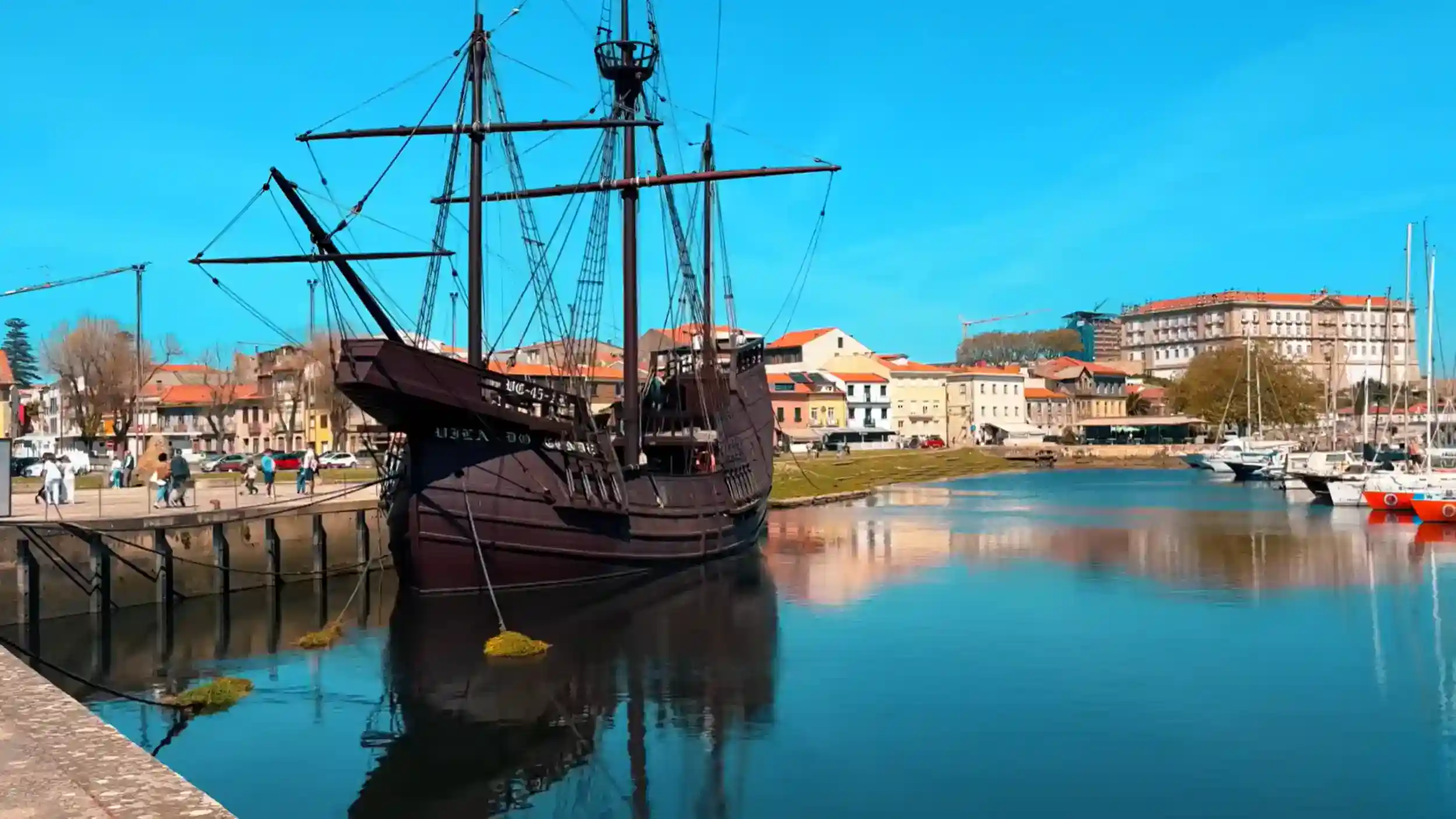
- ⛵ Nau Quinhentista replica ship
- ⚓ Working harbour and marina
- 🌊 Seawall leading towards the Atlantic
Praia da Senhora da Guia Feels Different From the Open Coast
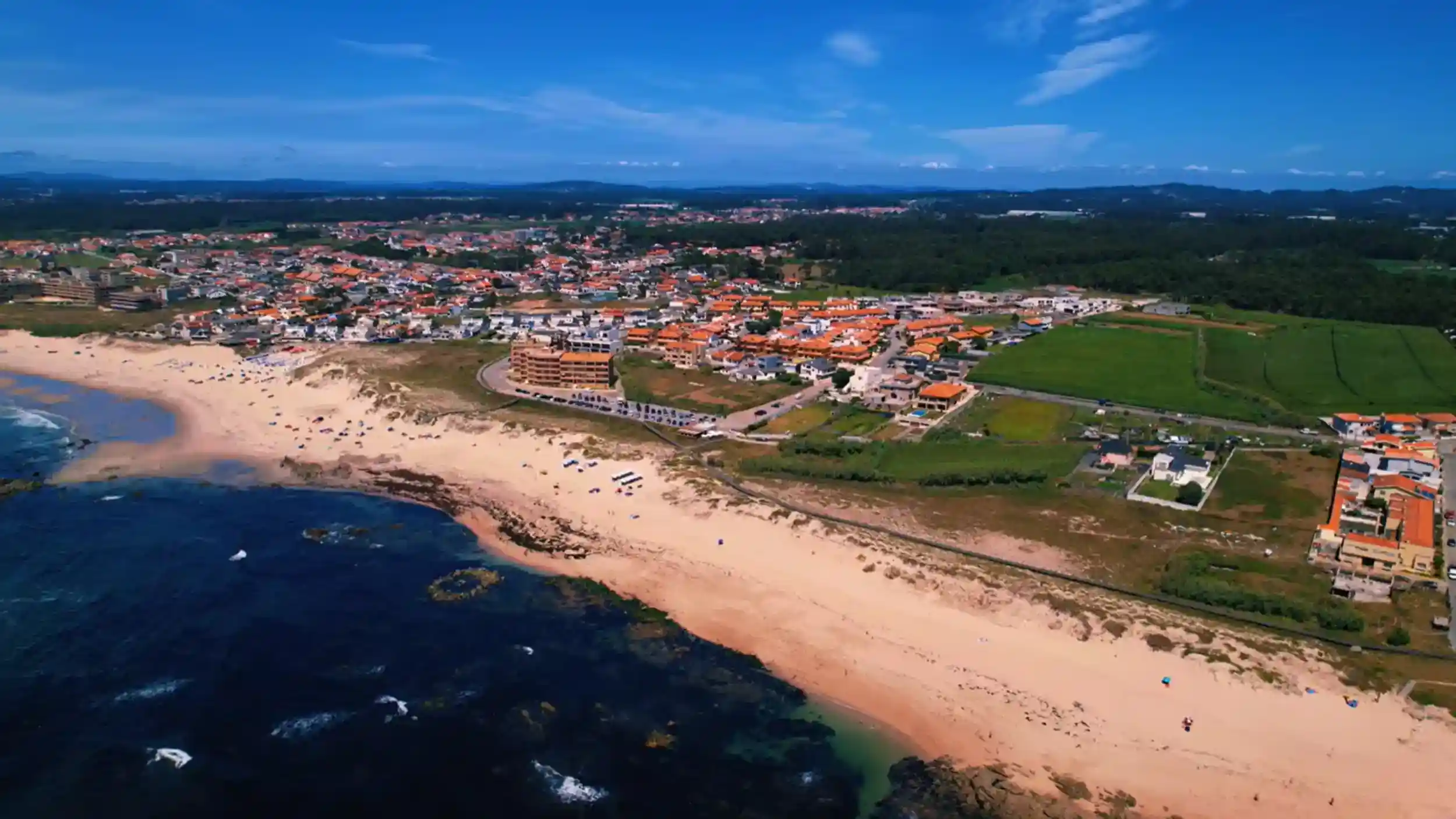
The little beach beside the fort gave us an immediate contrast with Vila do Conde’s much broader Atlantic shoreline.
It feels relatively sheltered, but rocks around the water still matter. We would judge swimming conditions when we arrived rather than assume the smaller cove automatically means an easier swim.
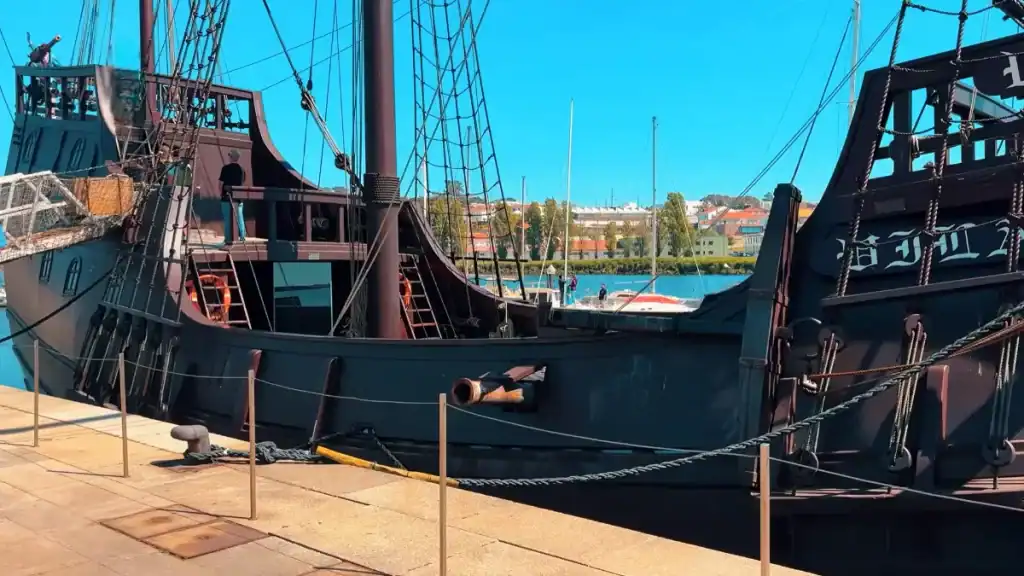
The Replica Ship Makes the Maritime History Tangible
A few minutes away, the Nau Quinhentista recreates a 16th-century Portuguese carrack and can be boarded.
We liked its position almost as much as the ship itself. It sits on the Ave where Vila do Conde’s maritime history actually happened, rather than being tucked away as an exhibit disconnected from the river.
From here, continuing towards the fort meant following the same waterfront until river, harbour and Atlantic gradually merged into one route.
Past the fort, we noticed the town falling away rather than ending abruptly. Our Vila do Conde coastal walk follows that transition as the working waterfront gives way to seawall and open coast.
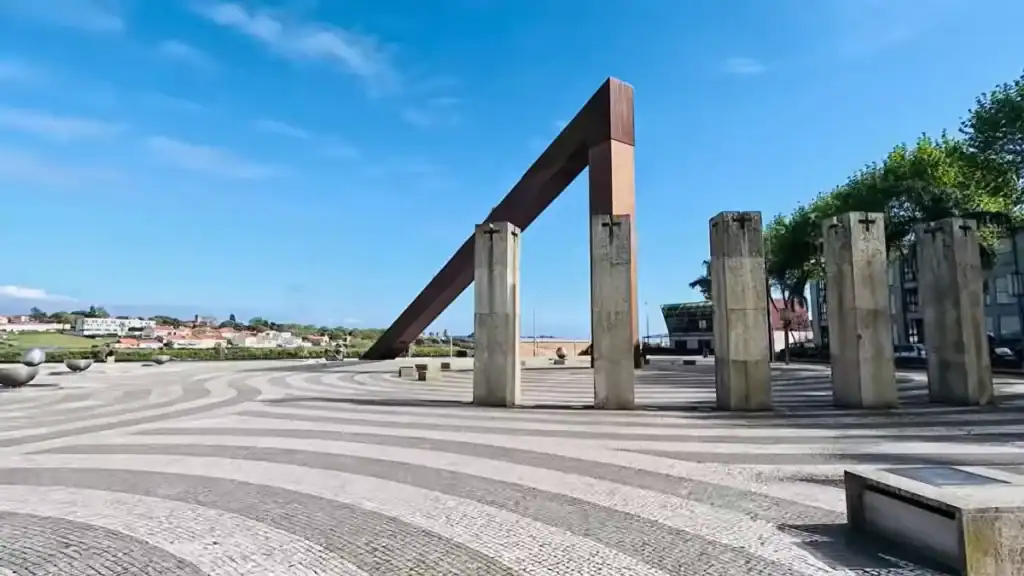
🚶 Can You Walk From Vila do Conde Harbour to the Beach?
Yes. We think walking is the best way to experience this part of Vila do Conde because the harbour, fort and beach sit close enough together for the landscape to change around you rather than between separate stops.
Using a car between them would remove the most interesting part for us: watching the sheltered River Ave gradually become the open Atlantic.
Under an Hour Covers the Main Waterfront Walk
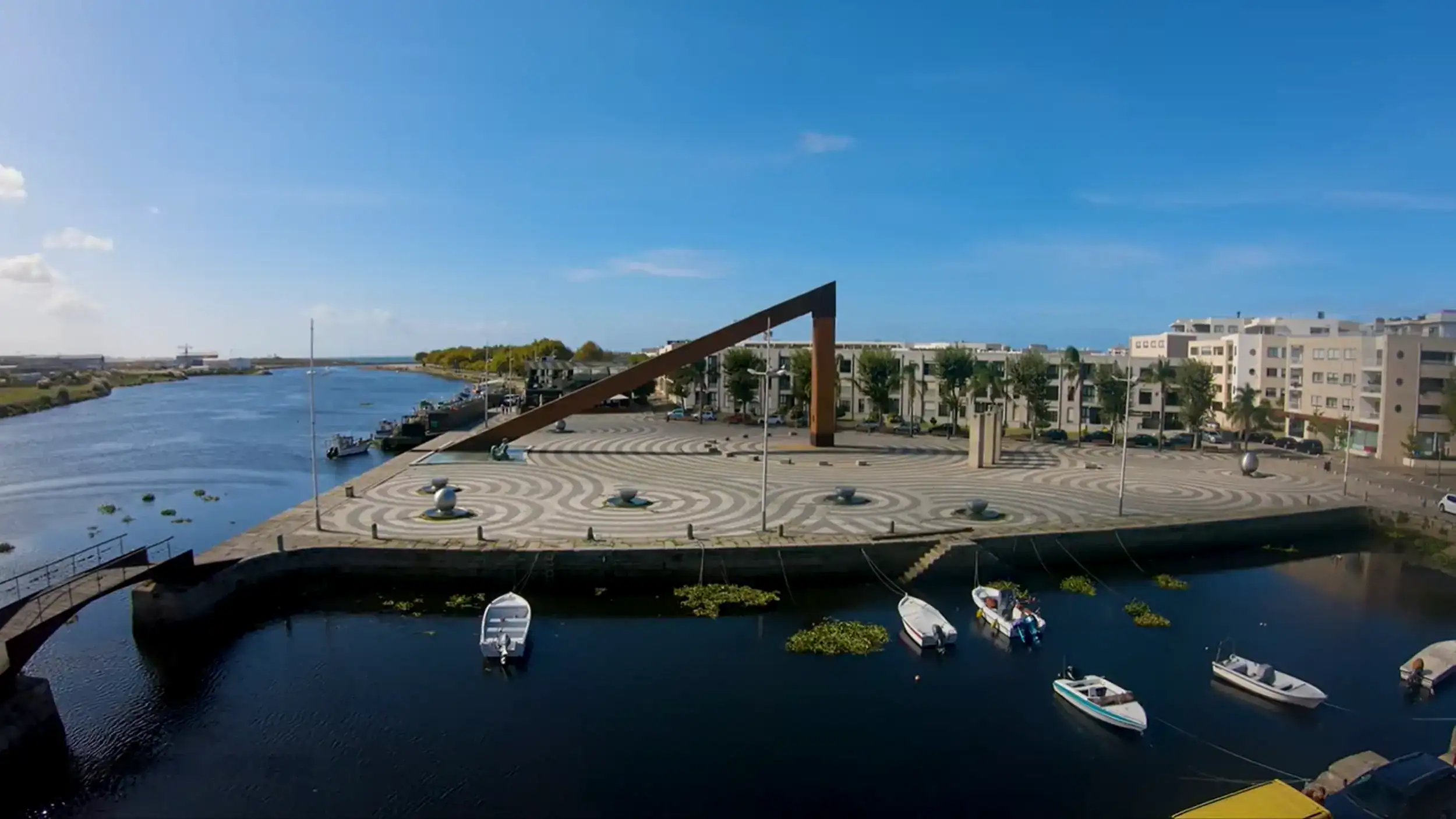
Rua Afonso Costa gives you a simple line beside the river. It passes the Nau Quinhentista and solar clock before reaching the fort, marina and seawall.
⏱️ Our timing: allow under an hour for the basic waterfront walk, but longer if you board the replica ship, stop at the fort or linger around the river mouth.
We would not rush it. The interesting part is the transition rather than the distance.
Historic riverfront becomes working harbour. Boats give way to the fort. The sheltered estuary opens onto Atlantic water. Then the beaches begin.
📍 Is Vila do Conde Harbour Close to the Town Centre?
Yes. We never felt that reaching the harbour required a separate excursion. It sits close enough to central Vila do Conde that we simply folded it into the same walk from the historic streets towards the Atlantic.
That compactness gave us several sensible ways to link the town together:
- 🏘️ Start among the historic streets
- 🌊 Drop down to the River Ave
- ⛵ Follow the waterfront towards the harbour
- 🏰 Continue past the fort
- 🏖️ Finish beside the Atlantic
There was no point at which we felt we had left Vila do Conde to reach its harbour. The character simply changed as we walked.
⭐ Is Vila do Conde Harbour Worth Visiting?
Yes, but we would visit Vila do Conde harbour for the complete waterfront rather than the fort alone.
The fort provides the historical anchor. The working boats, marina, replica ship, small beach and river mouth are what turn it into a worthwhile walk.
For us, the strongest moment was simpler: walking from calm estuary water around the fort and suddenly feeling the full Atlantic wind.
That physical change explains why the harbour is here better than any information board could.
👍 Best for: travellers who enjoy maritime history, working waterfronts and walks where the landscape changes as you go.
👎 Less compelling for: anyone expecting the fort itself to be a major conventional visitor attraction with extensive interiors to explore.
If the harbour is only one part of your visit, things to do in Vila do Conde is the better next step for deciding what else to combine with it.