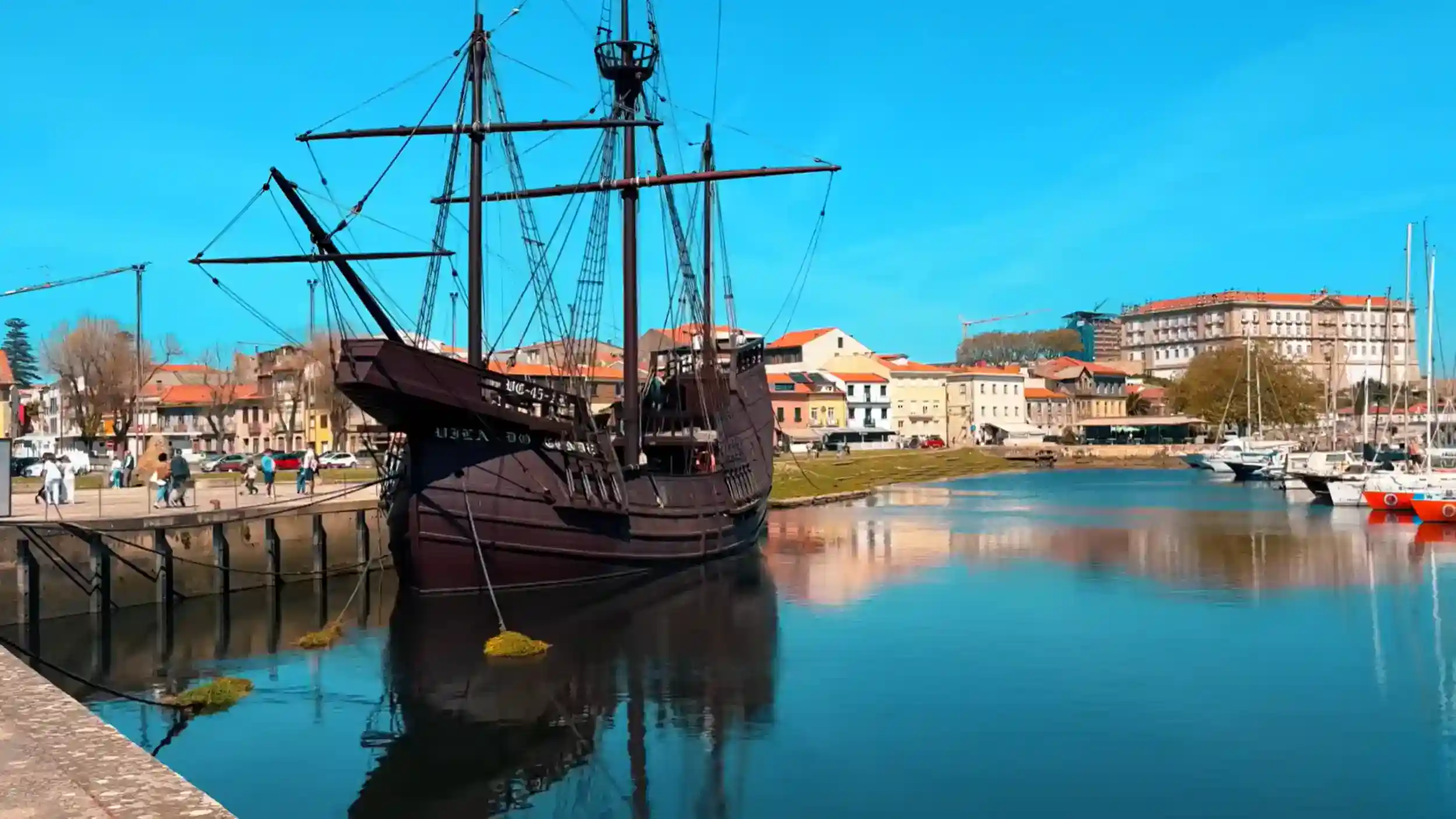
Vila do Conde historic centre is worth visiting if you enjoy compact Portuguese towns where history remains mixed with everyday life. It is easily walkable, and a few hours is enough to explore its churches, cobbled streets, small squares and lace-making heritage before following the River Ave towards the waterfront or climbing towards Santa Clara.
What makes the walk work is the change in character over a short distance. Manueline stonework gives way to a tiny maritime chapel, then the river begins to influence the streets. You never feel as though you have entered a preserved sightseeing quarter.
⛪ Is Igreja Matriz Worth Visiting?
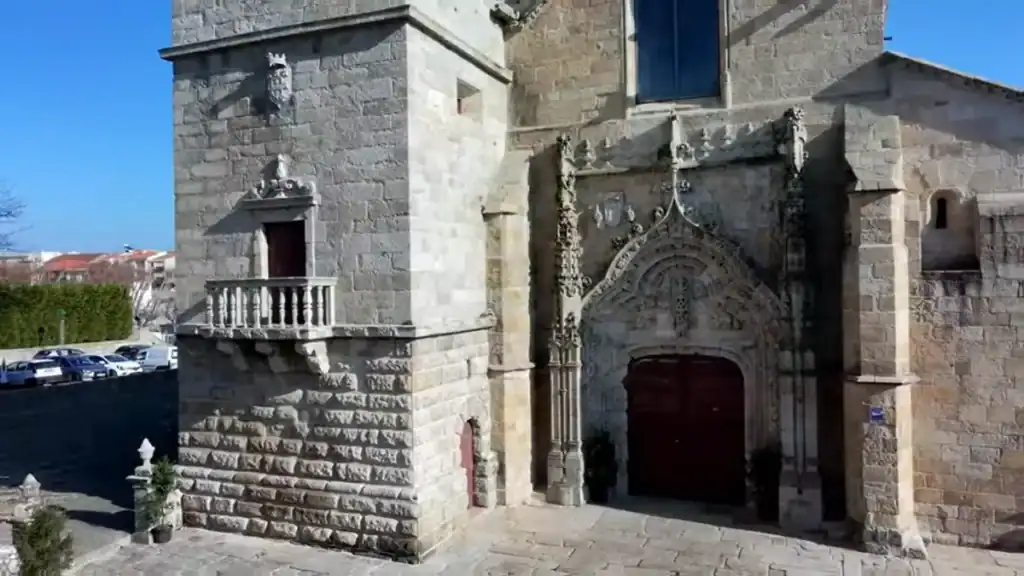
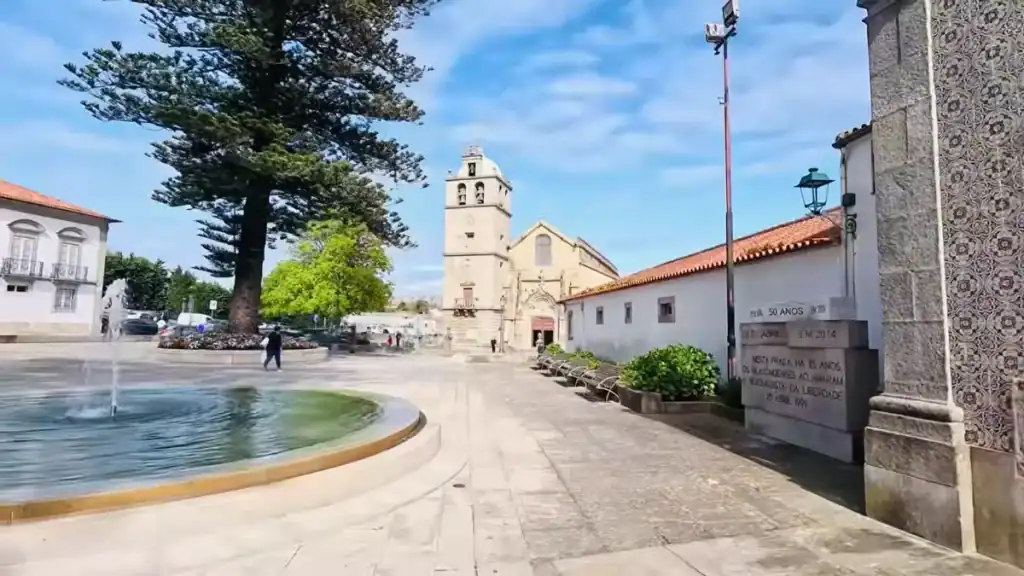
For us, yes. Igreja Matriz gave the historic centre its strongest architectural focal point, and the setting helped. Its granite façade faces the 18th-century town hall across Praça Vasco da Gama, where the sudden openness of the square made the church feel more imposing after the narrower streets around it.
The detail is concentrated around the entrance. Construction began in the late 15th century, combining late Gothic architecture with Manueline decoration developed during the reign of Manuel I. The main portal is attributed to João de Castilho.
Look at the Portal Before Going Inside
The trilobed entrance, pinnacles and central image of São João Baptista are easy to miss if you simply cross the square and head indoors. Angled morning light can help by throwing shadows into the carving; stronger, flatter light makes some of that depth less obvious.
Inside, the emphasis changes completely. Three naves and wooden ceilings replace the granite detail outside, alongside gilded 18th-century altarpieces and stained glass dating from 1909.
It is a useful place to slow down early in the walk. The church gives you something substantial to examine without turning the wider Vila do Conde visit into a succession of major monuments.
⚓ Is Capela de Nossa Senhora do Socorro Worth the Walk?
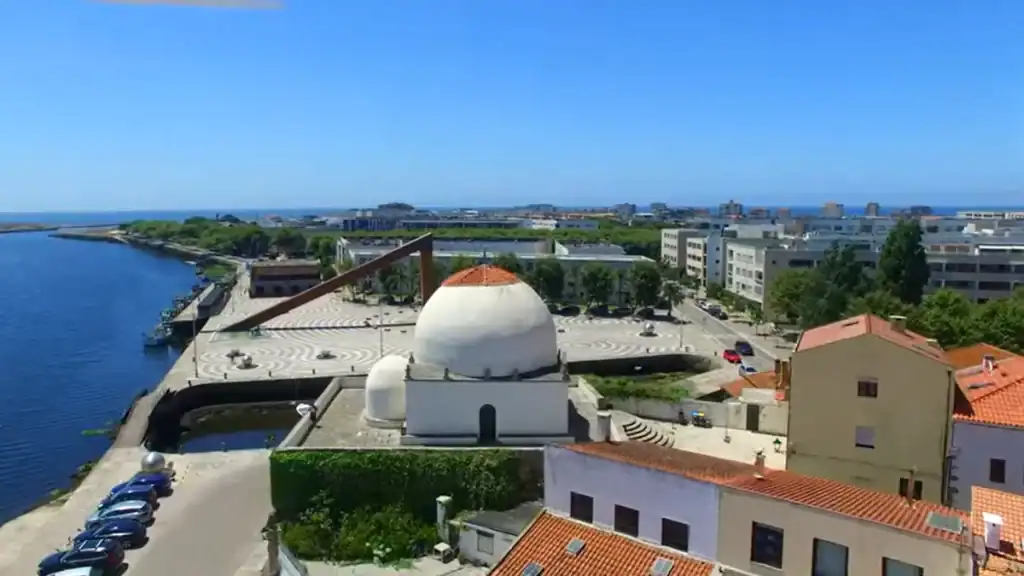
We found it worth including because the chapel changed both the architecture and the direction of our walk. It occupies a rocky rise above the Ave, and its rounded white dome looks quite unlike Vila do Conde’s larger churches.
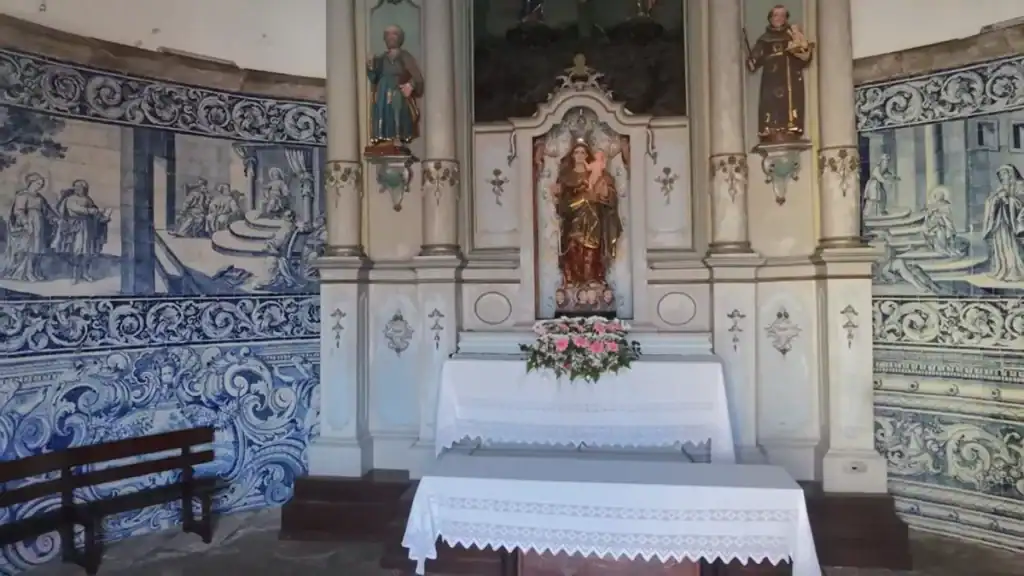
Built between 1599 and 1603, the chapel reflects influences associated with Portugal’s maritime connections with Asia. Inside the circular space, 18th-century azulejo panels create a much more intimate setting than Igreja Matriz. An anchor beside the Virgin and child in the altarpiece brings the maritime connection into the decoration itself.
The Setting Matters as Much as the Interior
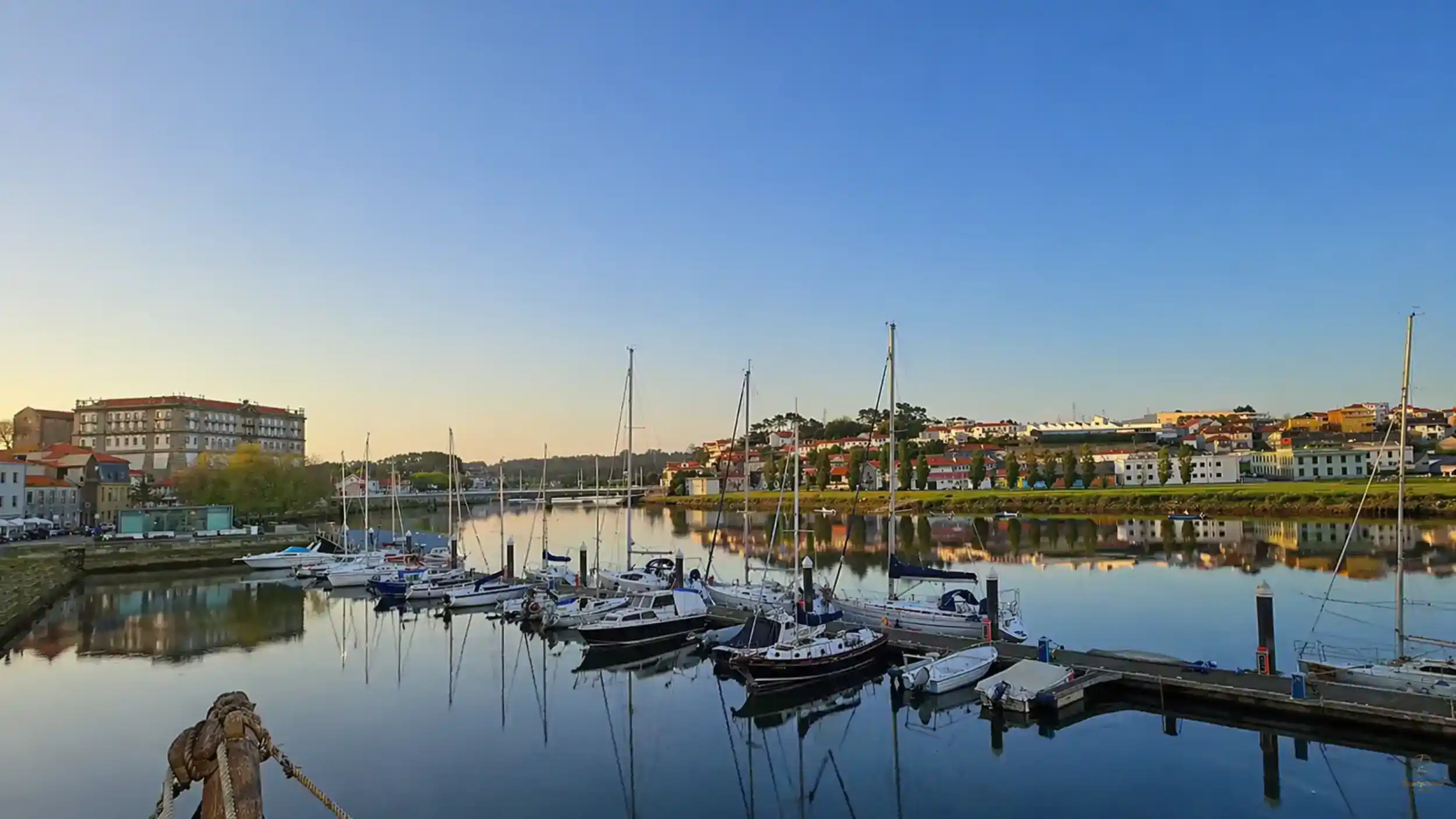
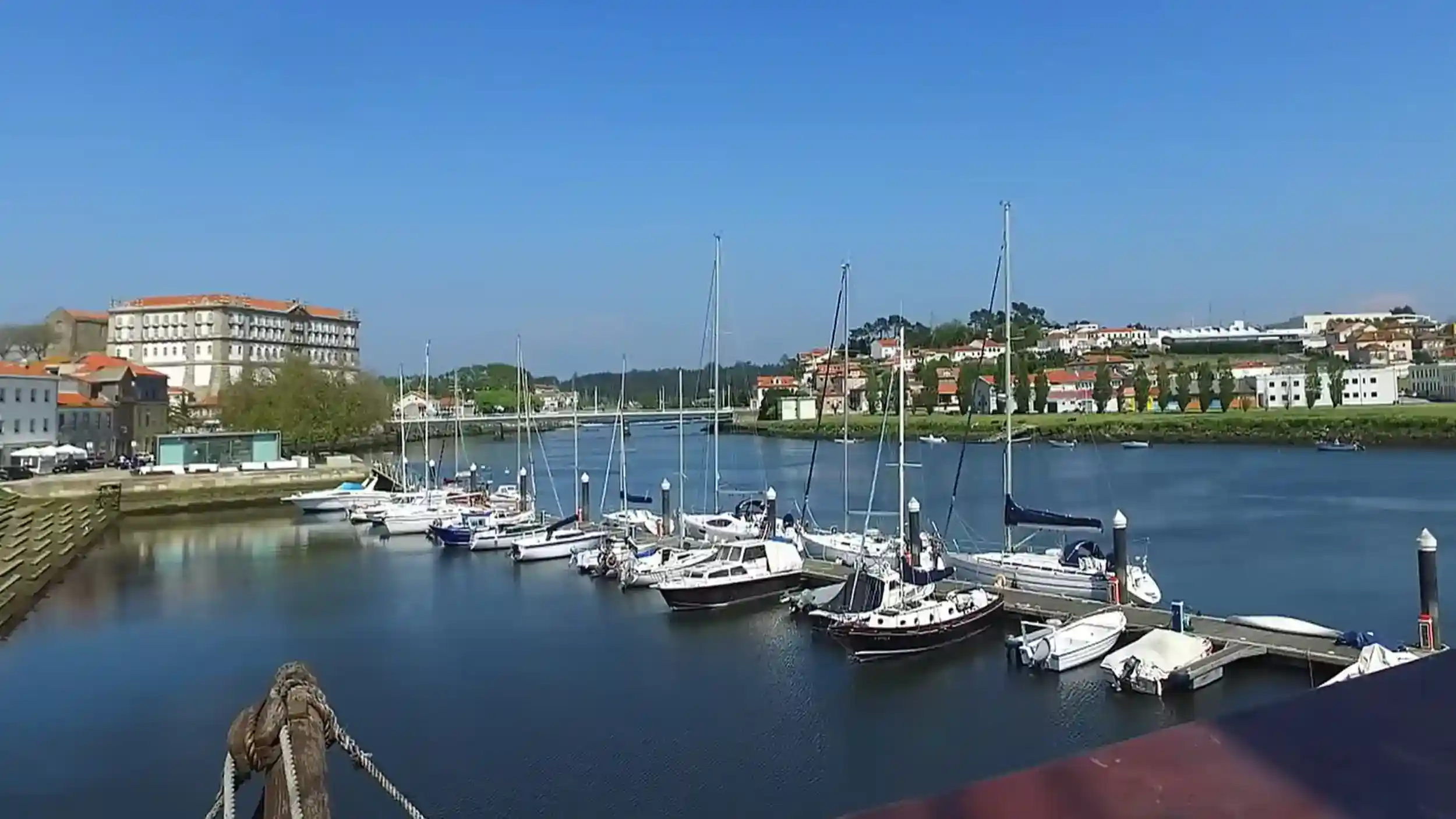
Step outside and the reason for including the chapel in a walking route becomes clearer. The Ave widens below on its way towards the Atlantic, with fishing boats often visible on the river.
That position gives the walk continuity. Historic streets do not simply end and leave you searching for the next attraction; the chapel draws you naturally towards Vila do Conde harbour and a different side of the town.
🧵 Why Is Lace-Making Important in Vila do Conde?
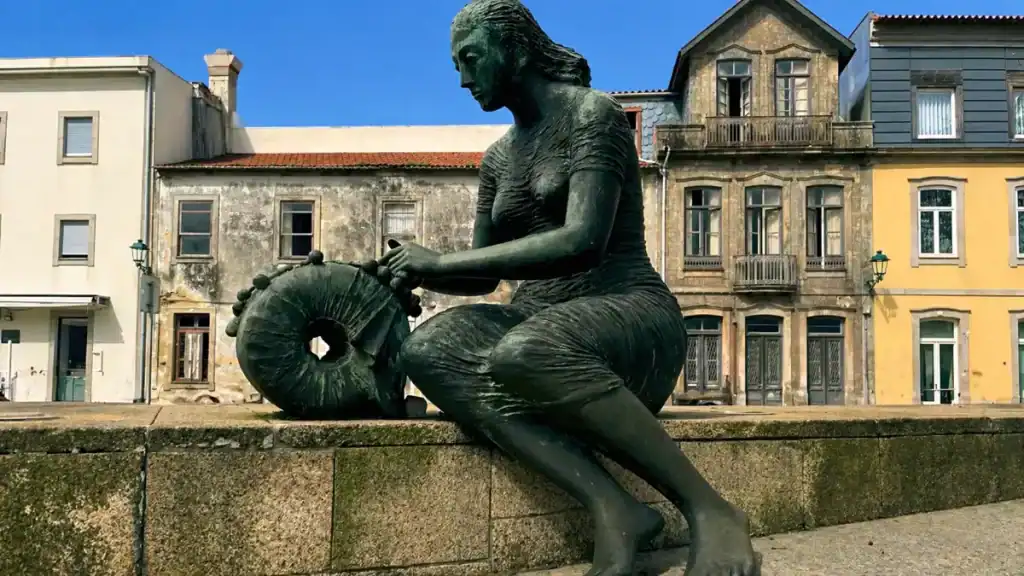
It gave us a side of Vila do Conde’s history that the churches could not. Known as renda de bilros, bobbin lace became an important local activity from the early 17th century, with women primarily responsible for its production. Near the riverfront, the bronze Rendilheira statue places that more domestic history directly into the townscape.
The tradition eventually crossed the Atlantic to Brazil, particularly Ceará and Fortaleza, which made the craft feel much less like a small local curiosity once we understood its reach.
The Lace Museum Makes the Craft Easier to Understand
Casa do Vinhal, a 17th-century building, now houses the Museu das Rendas de Bilros. Its collection includes finished lace, bobbins, cushions, patterns and archival material.
The scale can be surprising. A certified 52-square-metre lace piece shows how far the craft developed beyond the small pieces its domestic origins might suggest.
A weekday visit gives you a better chance of seeing artisans demonstrate the technique, rapidly crossing and twisting threads around fixed pins. Weekend demonstrations are less certain.
That is one practical detail worth planning around. The historic centre itself does not require an itinerary, but anyone particularly interested in lace-making has a reason to favour a weekday.
🚶 How Long Do You Need in Vila do Conde Historic Centre?
A few hours was enough for us to explore the historic centre without turning the streets into a route between attractions. The main points of interest sit close together, so we could change direction for a side street, small square or river view without worrying about losing much time.
That freedom was part of the appeal. We never felt that wandering away from the obvious route meant sacrificing something more important elsewhere.
Morning Has the Edge for a First Walk
Earlier hours bring two useful advantages: quieter streets and more angled light around Igreja Matriz. By mid-afternoon, Praça Vasco da Gama and the surrounding cafés can become busier, while stronger direct light can flatten some of the church’s carved stonework.
- 🌅 Morning: better for quieter streets and the Manueline portal.
- ☕ Afternoon: more activity around the squares and cafés.
- 🧵 Weekdays: the stronger choice if a lace-making demonstration matters to you.
There is no need to obsess over timing, though. These differences refine the experience rather than determine whether the historic centre is worth seeing.
🏛️ Where Should You Go After the Historic Centre?
We would use extra time to climb towards the Monastery of Santa Clara and its aqueduct rather than circle the same central streets again. By the time the old centre began to feel familiar, changing scale and gaining height added more to the visit than searching for another small sight.
The change of scale is considerable. Small streets and squares give way to the much larger monastery complex, while the elevated position opens Vila do Conde out below.
It also prevents a common problem with compact historic centres: stretching a short visit simply because you have allocated more time than the old streets really need. Once you have explored them properly, move on.
⭐ Is Vila do Conde Historic Centre Worth Visiting?
Yes, particularly if you prefer historic towns that still feel lived in rather than arranged around visitors. Vila do Conde historic centre is compact, walkable and varied enough to justify a few hours, with Igreja Matriz, the riverside chapel and lace-making heritage providing different reasons to stop.
It is less convincing if you want a dense concentration of major monuments. That is not really what this part of Vila do Conde offers.
The stronger experience comes from allowing the old streets to connect with the rest of town. Follow them towards the Ave, continue to the maritime waterfront or climb towards Santa Clara. The historic centre works best as the beginning of that exploration, not as an attraction sealed off from everything around it.