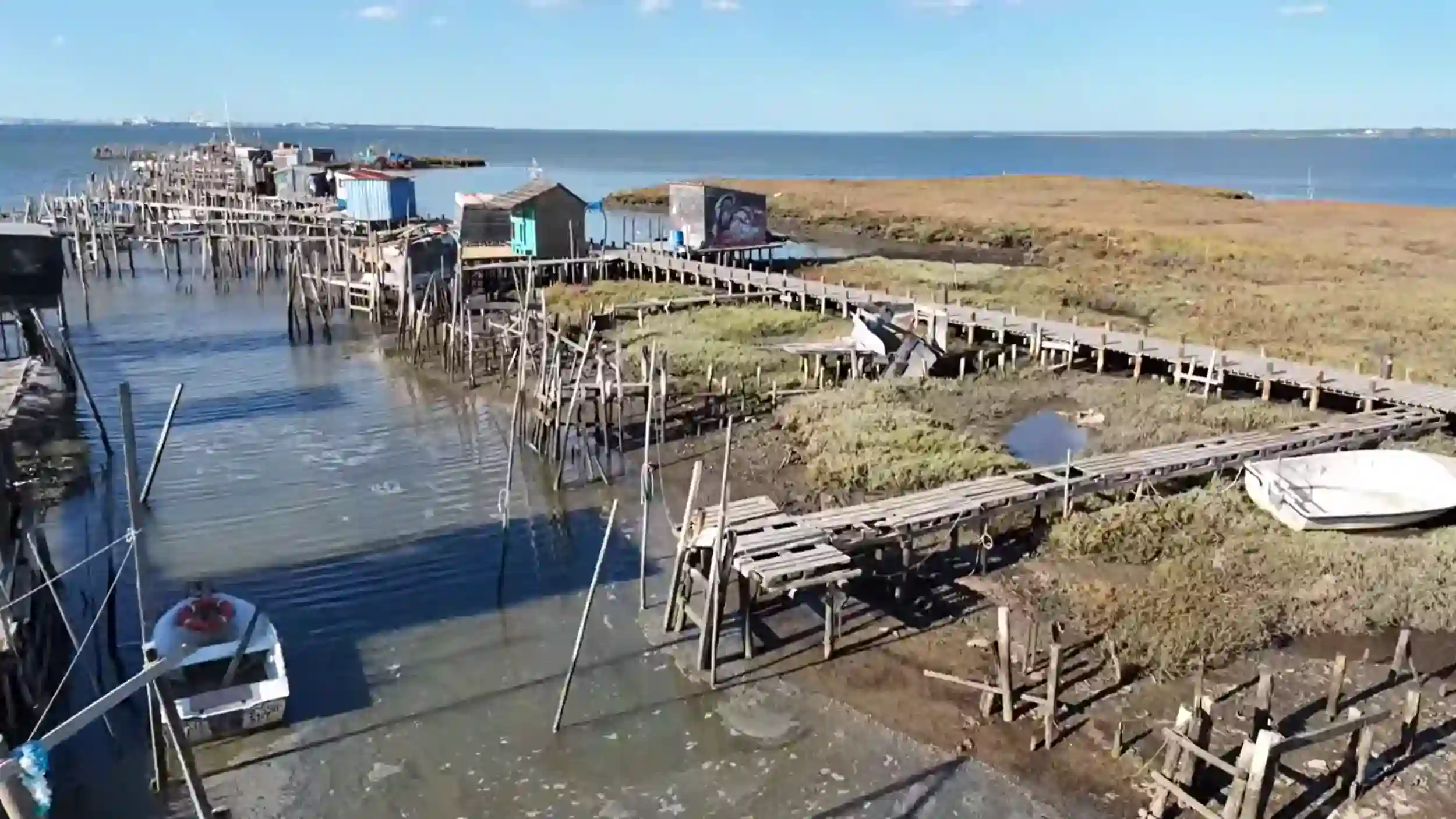
Carrasqueira Palafitic Pier is one of the most distinctive places on the Alentejo coast, yet it remains a working fishing structure rather than a purpose-built tourist attraction.
Built above the mudflats of the Sado Estuary, its maze of timber walkways reflects decades of practical adaptation instead of formal design. For visitors exploring the region, Carrasqueira Palafitic Pier offers a fascinating contrast to the Atlantic beaches nearby and reveals a quieter side of the Comporta coast that many travellers overlook.
🛠️ How the Pier Was Built and Why It Took the Shape It Did
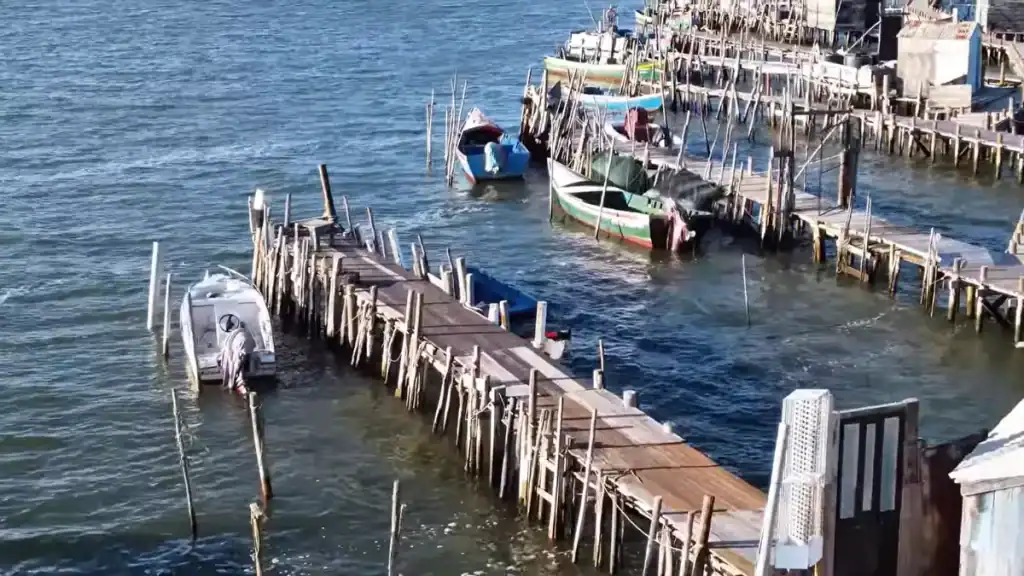
Carrasqueira Palafitic Pier wasn’t designed by an architect or built as a single project. Instead, it evolved over decades as local fishing families solved the practical challenge of reaching boats across the deep mud of the Sado Estuary.
The result is a structure that looks almost improvised but follows a simple logic. Raised timber walkways keep fishermen above the mud at every stage of the tide, allowing them to reach deeper water where boats remain accessible even when the estuary empties.
Why Carrasqueira Palafitic Pier Looks So Unusual
Its distinctive zigzag layout wasn’t planned for appearance.
| Feature | Why it exists |
|---|---|
| 🌊 Timber walkways | Provide access above deep tidal mud |
| 🪵 Zigzag design | Built in stages by different fishing families |
| ⚒️ Mixed construction | Repaired and extended over many decades |
| 🚤 Long reach into the estuary | Allows boats to remain usable at low tide |
Each family constructed and maintained its own section according to its needs, materials and available time. That explains why no two stretches are identical. Heights vary, angles change and repairs are clearly visible, creating the irregular appearance that has become synonymous with Carrasqueira Palafitic Pier.
A Structure That Continues to Evolve
Unlike a preserved monument, the pier remains a working part of the fishing community.
Timbers are replaced when needed, leaning piles are reinforced and individual sections continue to adapt to the movement of the estuary. The result is a structure that changes gradually over time while continuing to serve exactly the purpose for which it was built.
🚶 Walking the Carrasqueira Palafitic Pier
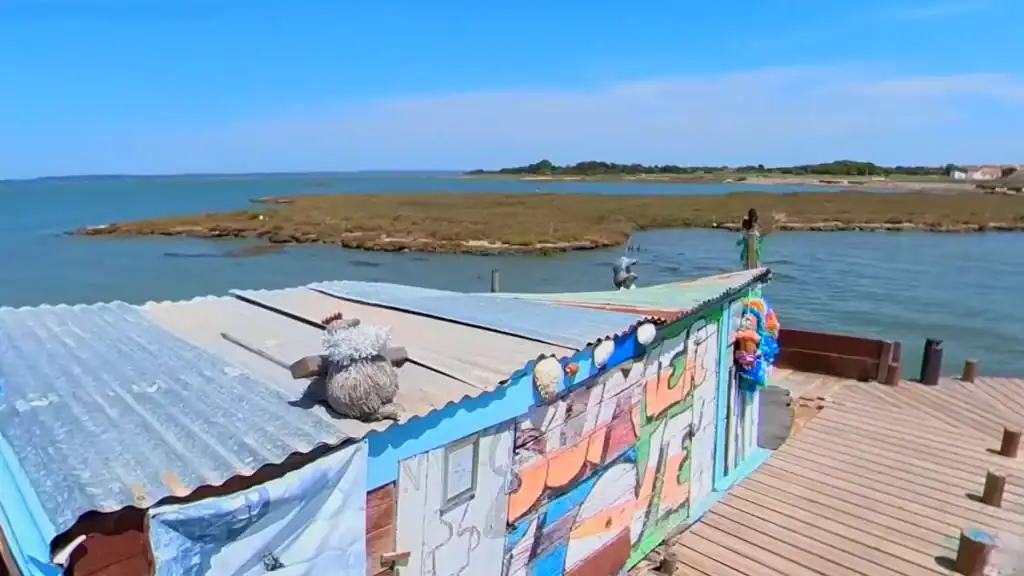
Walking Carrasqueira Palafitic Pier is less about reaching a destination and more about experiencing a working landscape that changes with every step. It is one of the few places on the Comporta coast where fishing activity, tidal mudflats and local history remain completely intertwined rather than presented as a visitor attraction.
The timber walkways stretch across the estuary in a series of bends and junctions, with fishing huts, boats and exposed mud constantly altering the view. At low tide, the full complexity of the structure becomes visible, while high tide brings the water almost level with the boards and changes the character of Carrasqueira Palafitic Pier completely.
Walking Carrasqueira Palafitic Pier
A few practical points help you enjoy the experience.
| What you’ll notice | What to expect |
|---|---|
| 🌊 Tides | A completely different atmosphere between high and low tide |
| 🪵 Timber boards | Some older sections flex gently underfoot |
| 🚶 Walking surface | Generally straightforward but uneven in places |
| 🐟 Fish market | Sometimes open near the entrance, depending on the day’s catch |
The movement beneath your feet often surprises first-time visitors. Some sections feel solid, while older boards flex slightly as you walk, reminding you that Carrasqueira Palafitic Pier remains a functional structure rather than a restored attraction.
Morning visitors may also find a small fish market operating near the entrance, where local families occasionally sell fresh catches landed from the estuary. Opening times depend on the fishing rather than a fixed schedule, making it something of a fortunate discovery rather than a guaranteed stop.
🌿 The Estuary Setting and Why It Matters
Without the Sado Estuary, Carrasqueira Palafitic Pier wouldn’t exist.
The tides, mudflats and sheltered waterways created the conditions that local fishing families depended on, shaping both the location and the unusual design of Carrasqueira Palafitic Pier. Today, that same landscape supports one of Portugal’s richest coastal ecosystems, making the surroundings just as important as the wooden walkways themselves.
Wildlife Around Carrasqueira Palafitic Pier
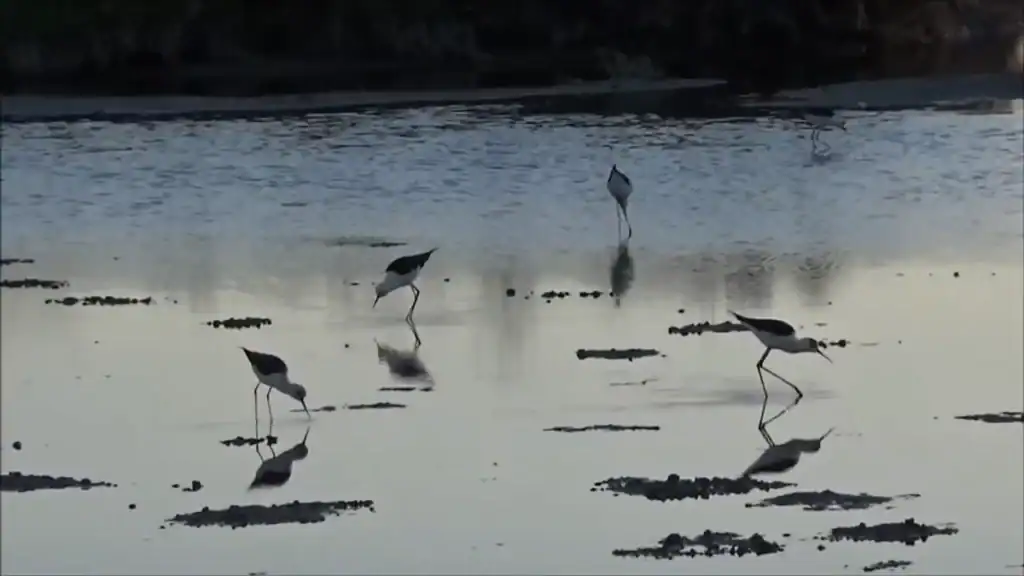
The estuary changes throughout the year as resident and migratory wildlife move through the reserve.
| Wildlife | What you may see |
|---|---|
| 🐦 Wading birds | Black-winged stilts, spoonbills and herons |
| 🦆 Migratory species | Large numbers during autumn and winter |
| 🐬 Bottlenose dolphins | Regularly seen elsewhere within the estuary |
| 🌾 Reed beds | Important habitat for many bird species |
The reserve is best known for its birdlife, but it also supports one of Europe’s few resident populations of bottlenose dolphins. Visitors interested in seeing them can learn more about Sado Estuary dolphins, which explains where sightings are most reliable and how the dolphin tours operate.
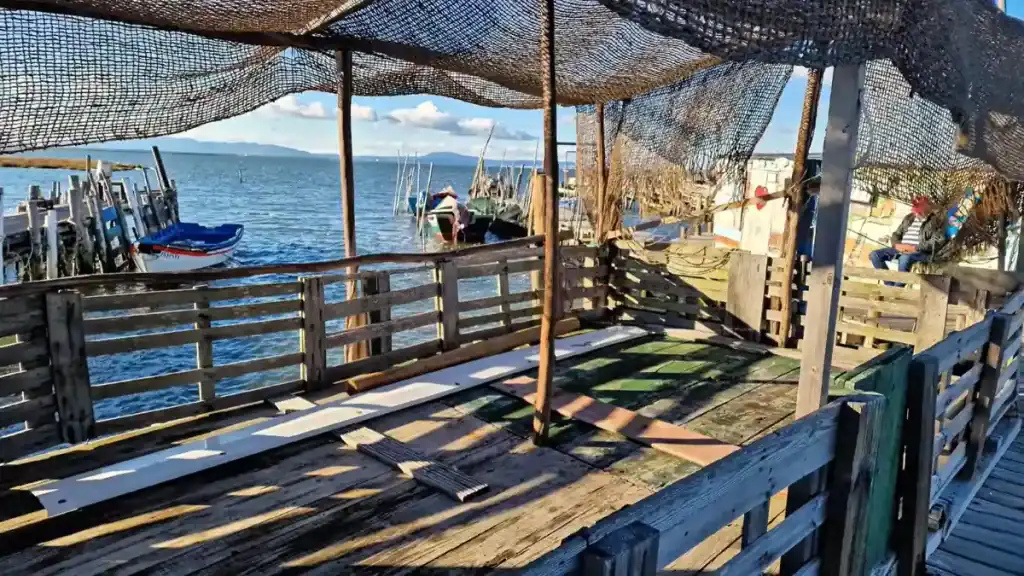
A Landscape That Still Works
Although the scenery feels peaceful, this isn’t simply a protected viewpoint.
Fishing continues, boats still leave the pier and the surrounding wetlands remain a functioning natural environment rather than a recreated heritage site. That combination of living tradition and protected nature is what gives Carrasqueira Palafitic Pier much of its character and helps it stand apart from more conventional visitor attractions.
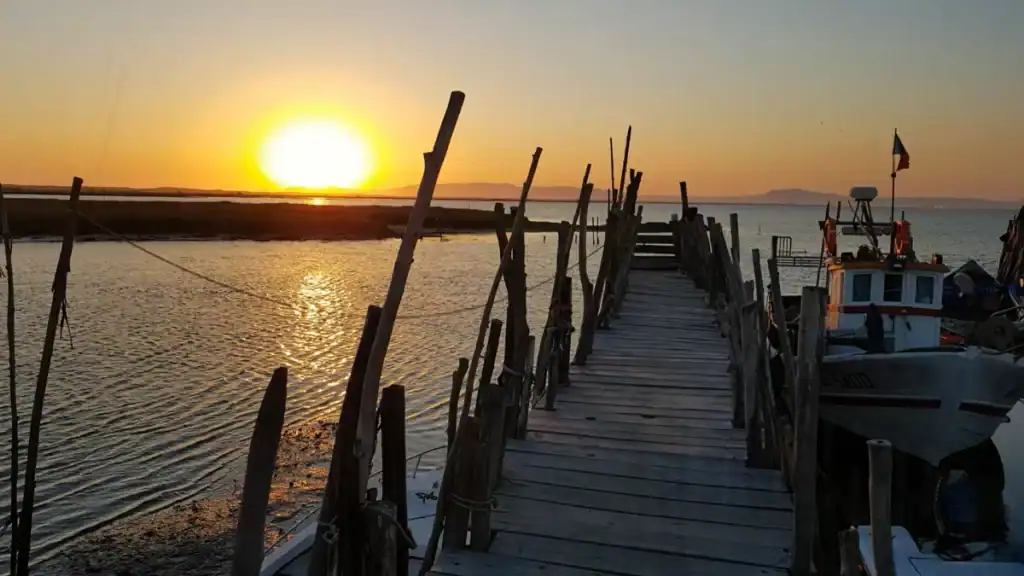
🌅 When to Visit and How to Get the Most from the Light
The time of day has a bigger impact on Carrasqueira Palafitic Pier than at many coastal attractions.
Light, tide and weather all transform the appearance of the timber walkways and surrounding estuary. Visiting without considering these factors can produce a completely different experience from the one seen in photographs.
Morning or Afternoon?
Each part of the day offers something different.
| Time | Best for |
|---|---|
| 🌅 Morning | Quiet walkways, cooler temperatures and active birdlife |
| ☀️ Midday | Clear views across the estuary |
| 🌇 Late afternoon | Warm light on the timber and long shadows |
| 🌄 Low-tide afternoons | The pier’s most dramatic appearance |
Photographers often favour the late afternoon, when the timber takes on warmer tones and the low sun throws long shadows across the exposed mudflats. If low tide coincides with this time of day, Carrasqueira Palafitic Pier reveals its intricate network of walkways at its most striking.
Planning Your Visit
Parking is available close to the entrance and there is no admission charge.
Carrasqueira Palafitic Pier also works well as part of a wider day exploring the region. After visiting the estuary, many travellers continue along the Comporta coast to experience the Atlantic beaches, creating an easy contrast between two of the area’s most distinctive landscapes.