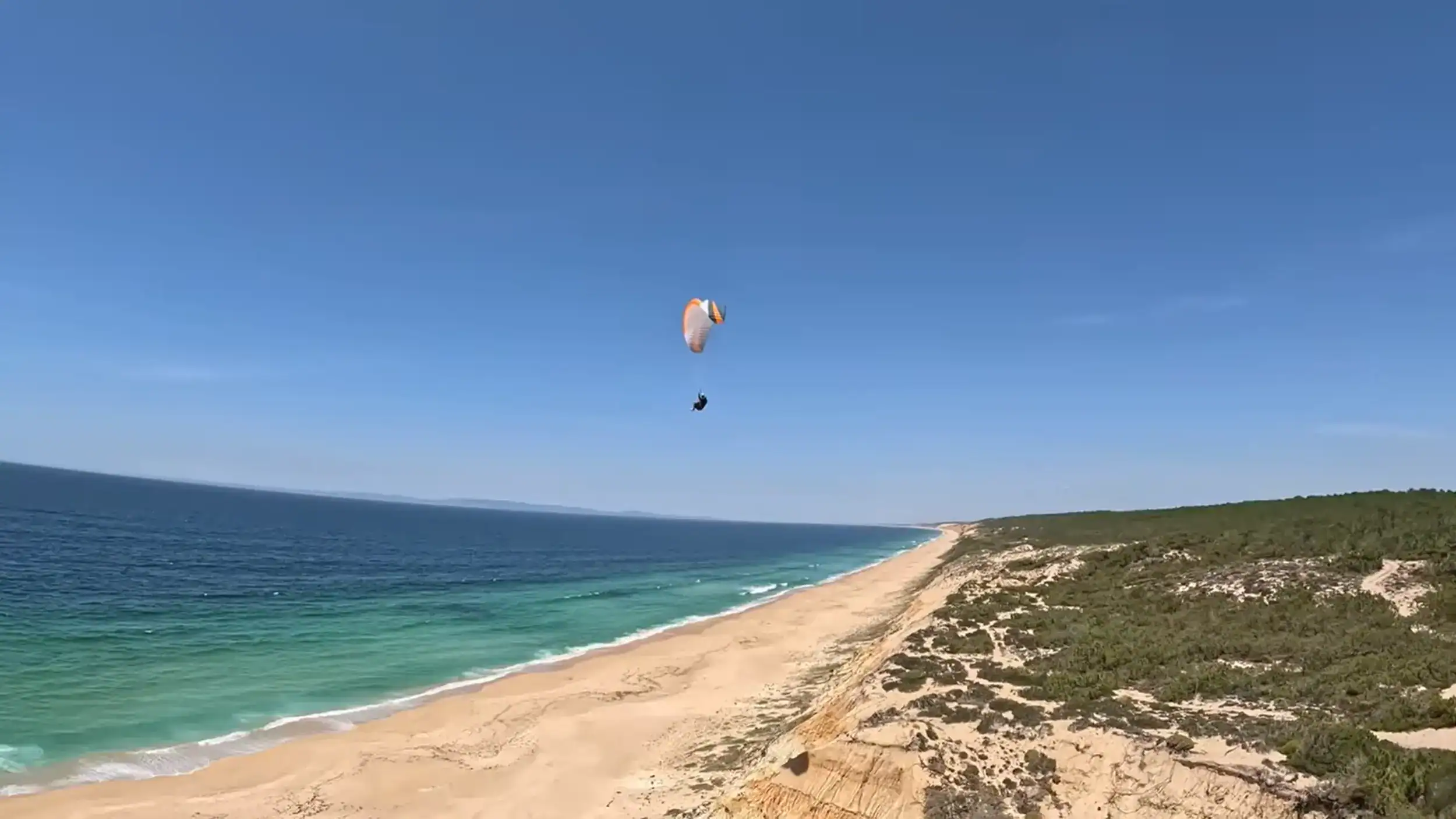
Aberta Nova beach suited us when we wanted a quieter, less developed stretch of the Alentejo coast. South of Carvalhal, we found a broad Atlantic shoreline backed by high dunes and the Arriba Fóssil da Galé, with fewer facilities and visitors than the more accessible beaches farther north.
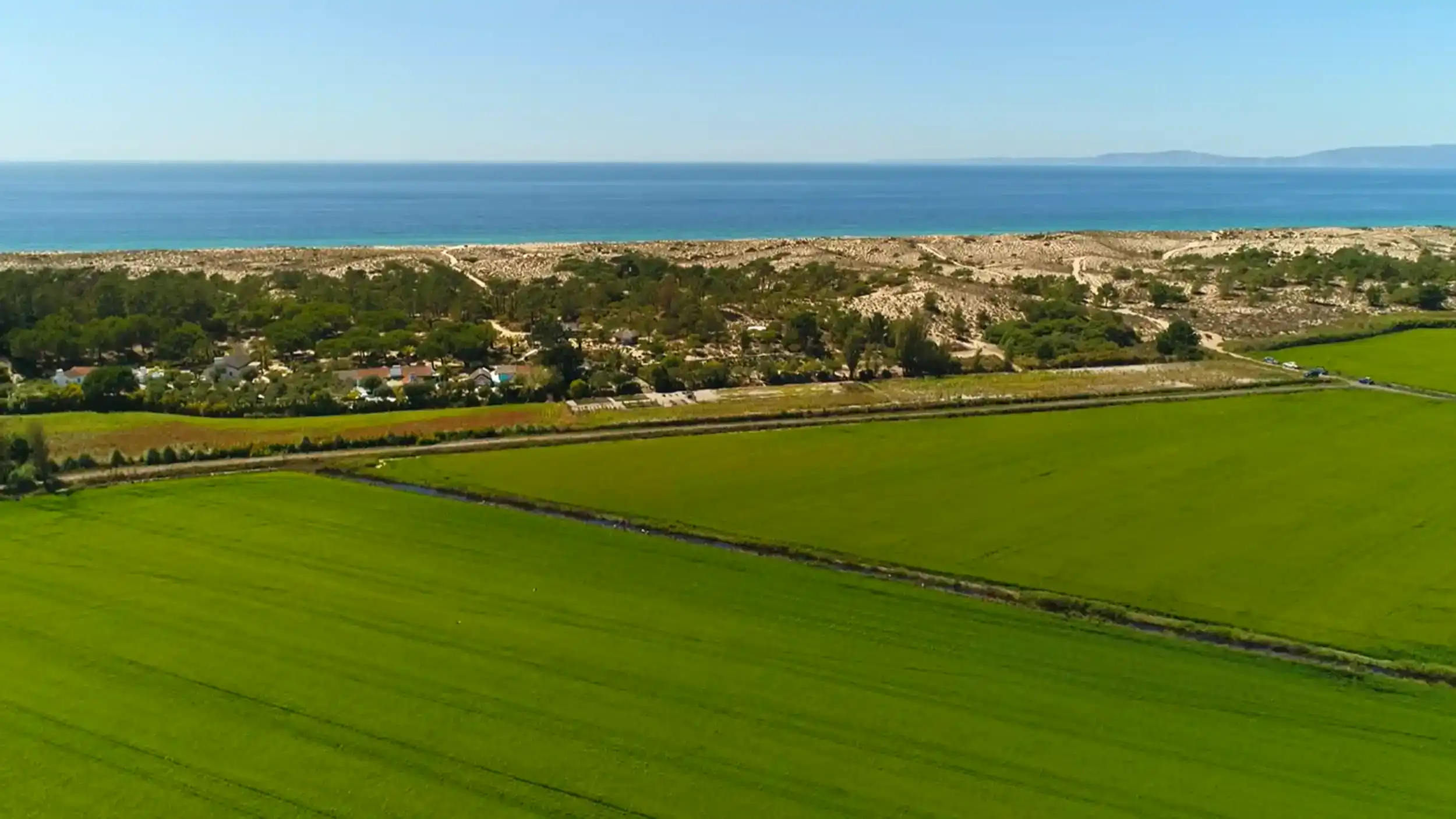
Getting there became part of the experience for us. The unpaved track through pine forest filtered out passing traffic, and once we crossed the dunes the attraction was wonderfully simple: a long, open beach with space in both directions and very little development around it.
🏖️ Why Does Aberta Nova Feel Quieter Than the Better-Known Comporta Beaches?
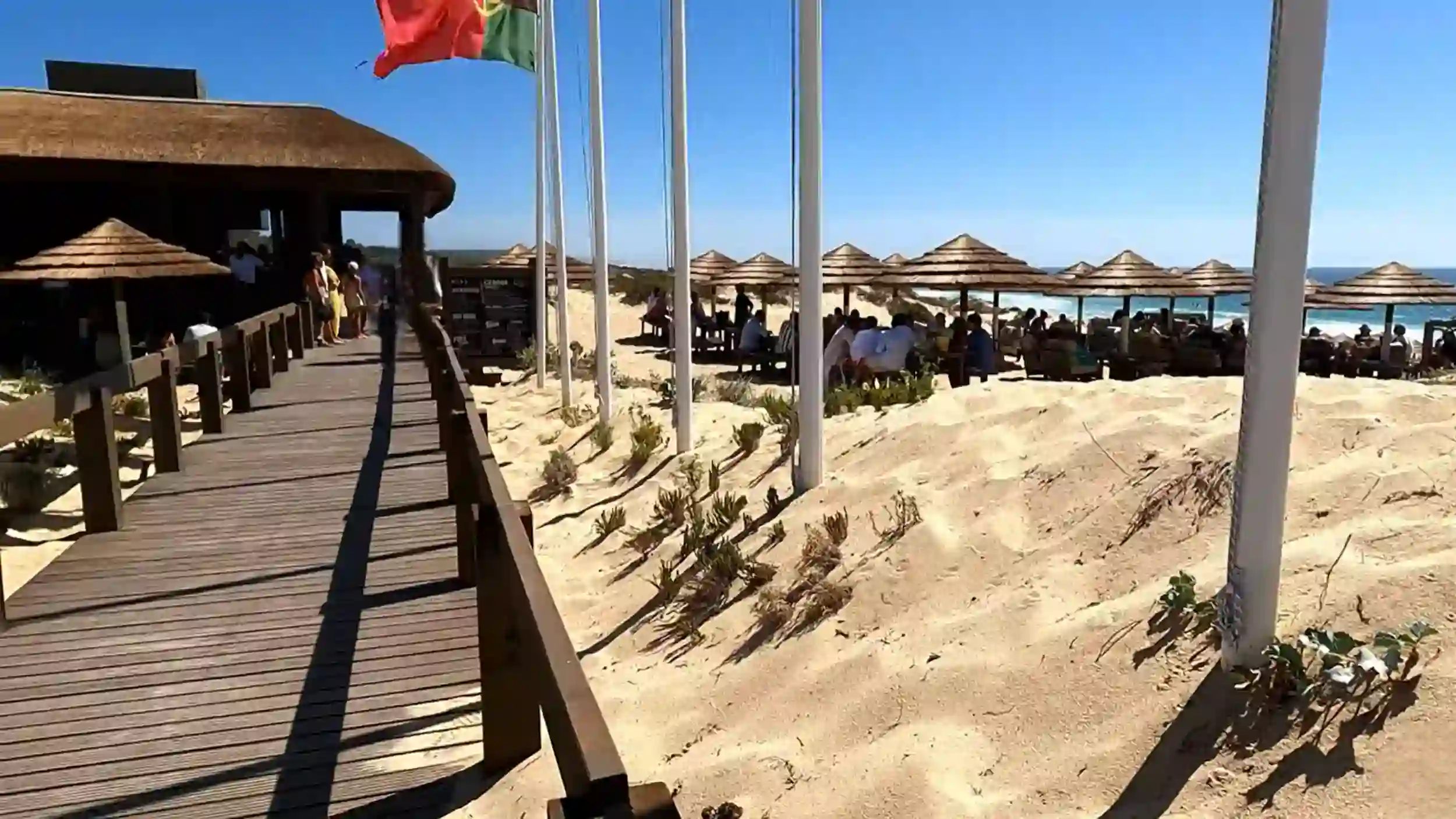
The difference hit us as soon as we reached the end of the boardwalk. The shoreline seemed to run almost without interruption in both directions, while the dunes screened the road, parking and pine forest behind us. Compared with the easier-to-reach beaches farther north, there was far less here to concentrate people into one busy beachfront area.
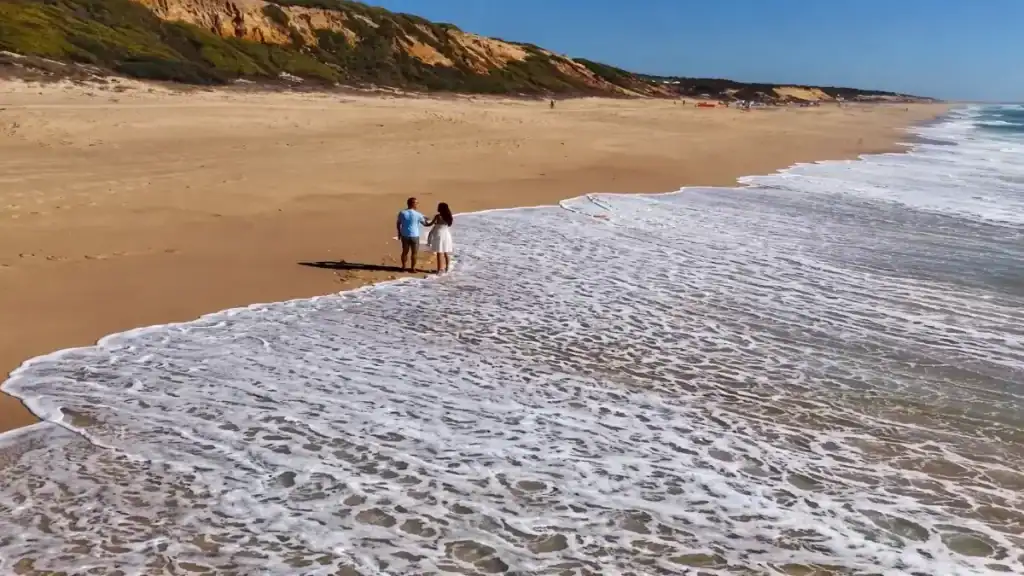
The Dunes Hide Almost Everything Inland
Once we stepped off the boardwalk, almost everything connected with getting there disappeared from view.
| Feature | What to expect |
|---|---|
| 🏖️ 3.5 km of sand | Plenty of room, even in summer |
| 🌾 High dune ridge | Hides roads, buildings and parking |
| 🌊 Atlantic surf | Constant waves and changing conditions |
| 🌿 Fontainhas stream | A natural landmark across the beach |
The high dune ridge blocked almost everything inland from our view. The road, car park and pine forest disappeared, leaving us with sand, sea and the sound of the Atlantic. The Fontainhas stream became one of the few obvious landmarks as it crossed the beach towards the ocean.
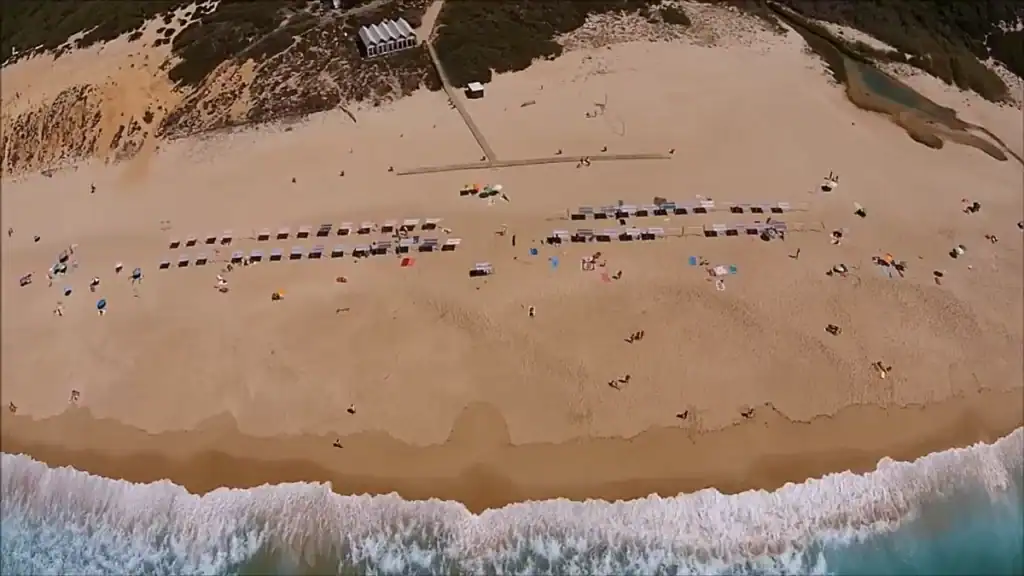
Atlantic Conditions Matter More Than Warm Weather
Warm weather did not automatically make this a swimming beach for us. We looked at the Atlantic first.
The seabed shelved gradually when we entered, but we could see how quickly successive Atlantic sets could change the conditions. With no marked swimming zones, we would always judge the sea before going in. Compared with other beaches on the Comporta Coast, Aberta Nova felt significantly quieter and less developed to us.
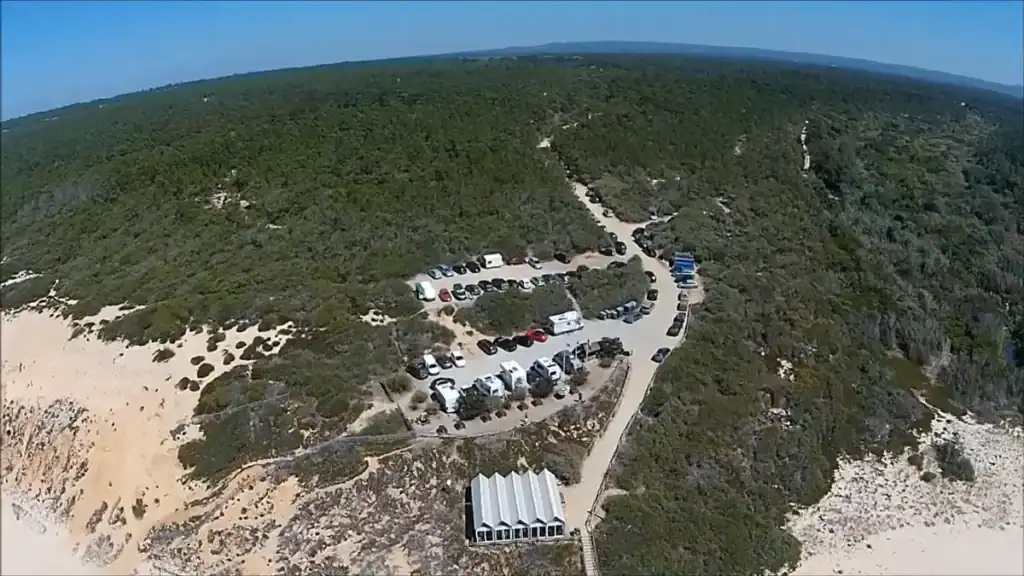
🚗 How Do You Get to Praia da Aberta Nova?
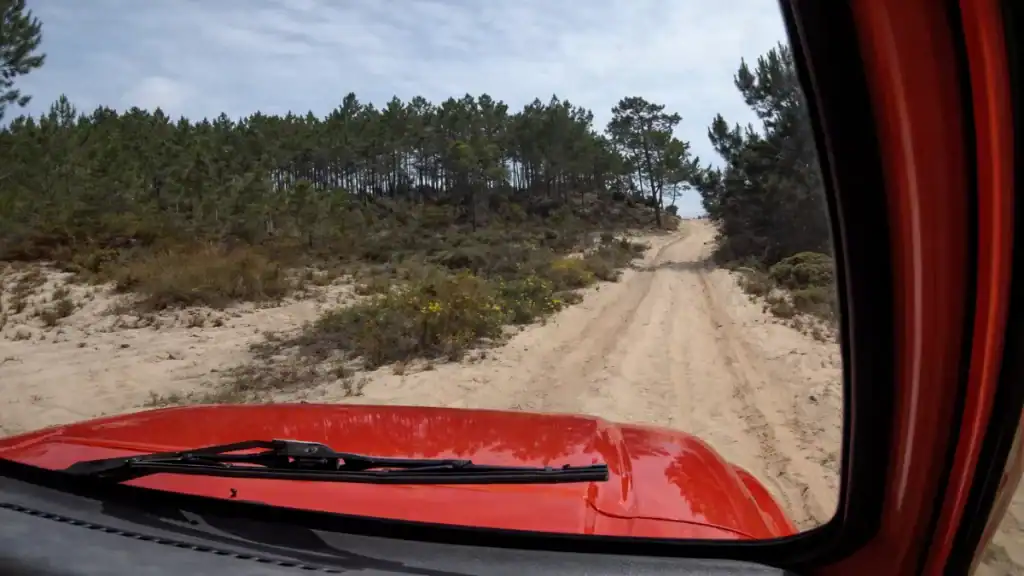
We reached Aberta Nova by leaving the main road near Melides and following roughly five kilometres of unpaved track through pine forest. It was noticeably slower and less straightforward than pulling into the better-known beaches farther north, but that final approach explained much of what we found when we arrived: fewer casual visitors and very little development.
Five Kilometres of Dirt Road Helps Keep It Quiet
The dirt road was not difficult for us to understand, but it made the beach feel like a deliberate destination rather than somewhere we would casually stop on the way past.
🚗 GETTING TO ABERTA NOVA
- Leave the main road near Melides. The initial approach is straightforward.
- Follow roughly 5 km of unpaved forest track. This is the part that makes access slower than at the beaches farther north.
- Park in the informal clearing beside the dunes.
- Walk the short boardwalk across the dune ridge to reach the beach.
The narrow dirt road discouraged the kind of casual stop that is easy at beaches farther north. For us, the slower journey created a genuine sense of leaving the busier coastline behind before we had even crossed the dunes.
Facilities Stay Deliberately Simple
We came here expecting a wilder beach, so the limited facilities felt consistent with the reason we had made the slower journey.
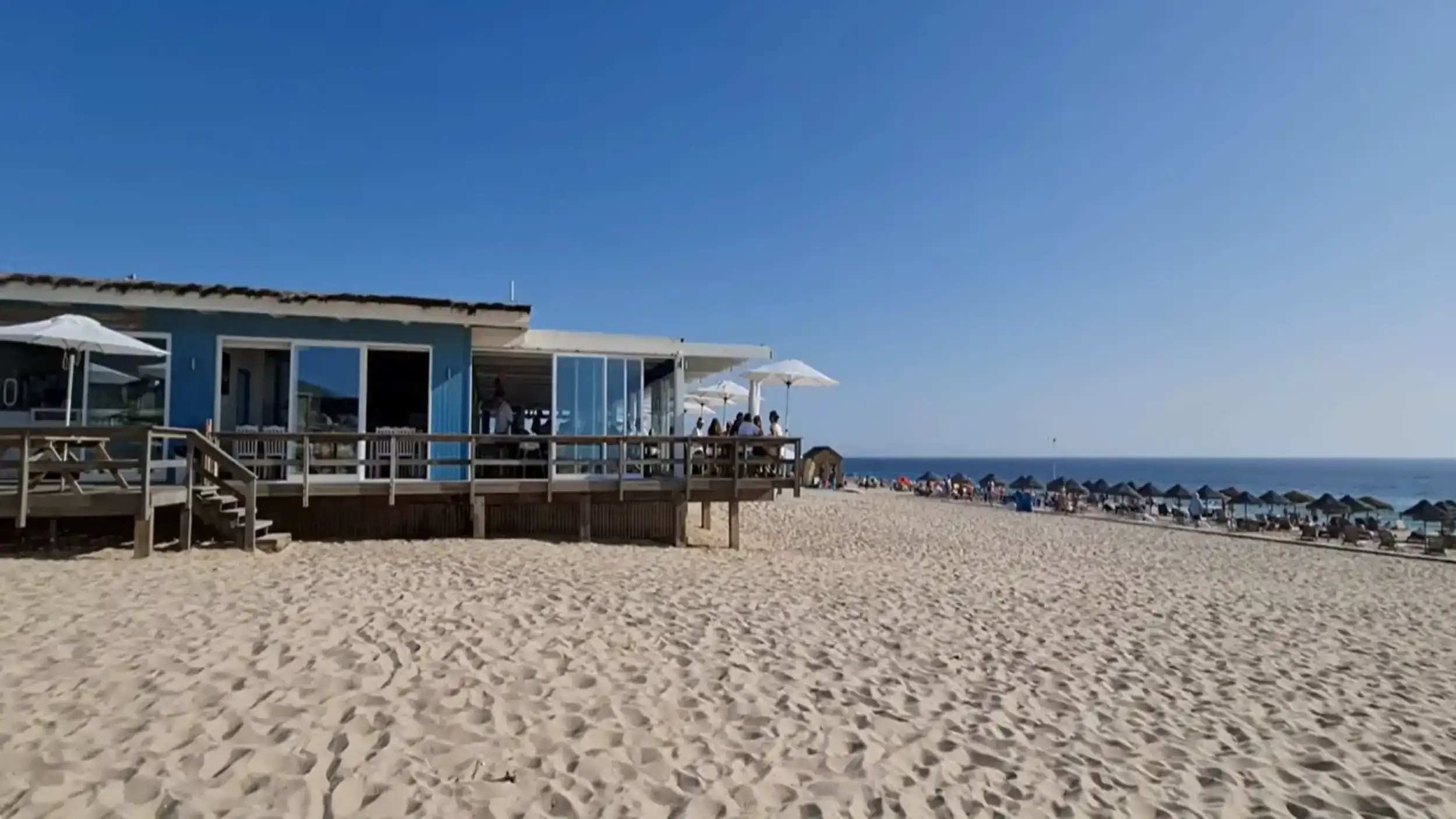
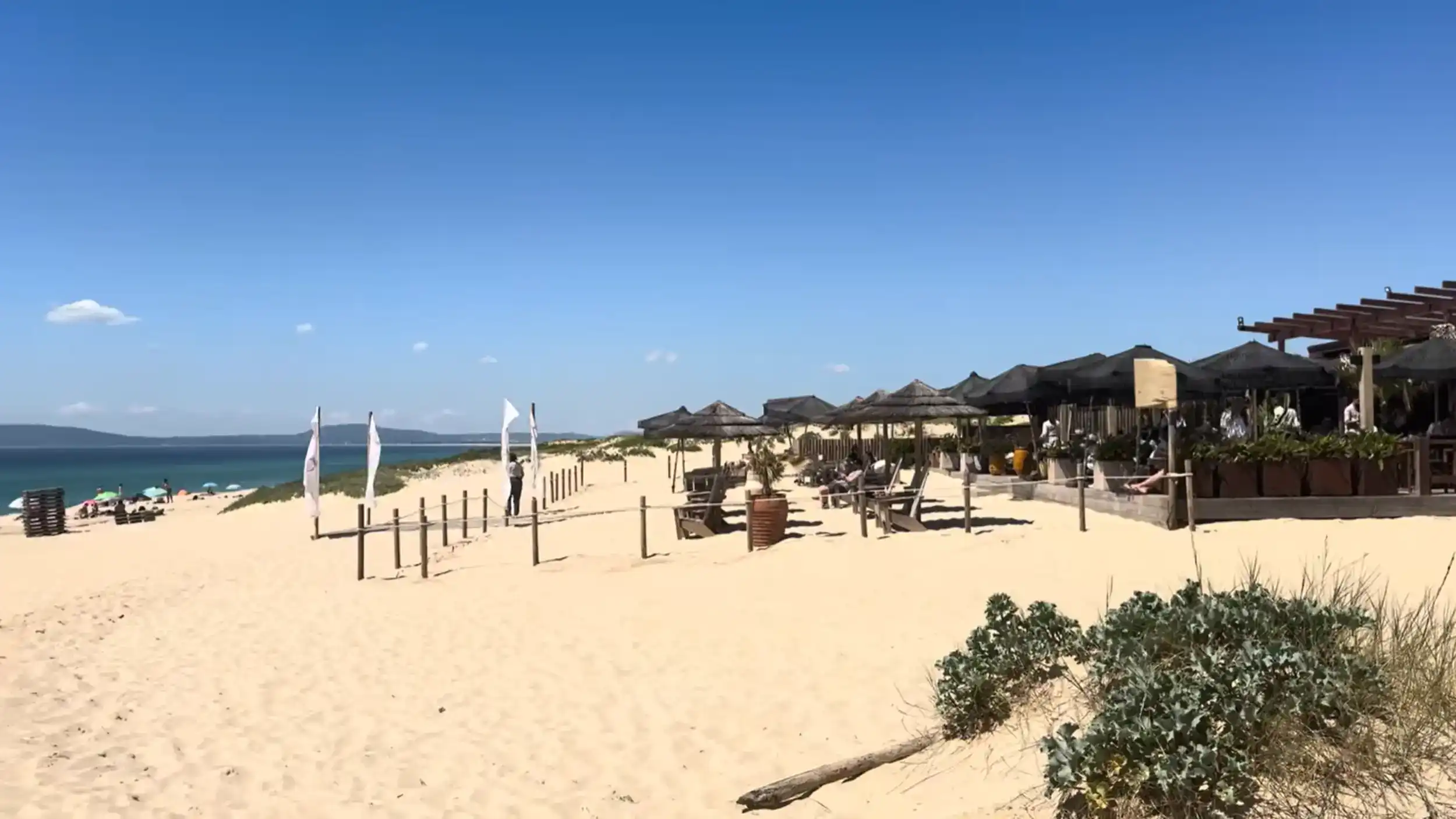
We parked in the informal area behind the dunes, with a seasonal beach bar nearby depending on the time of year. Beyond that, there was very little infrastructure, and we thought that helped rather than hurt the beach. Farther south, Melides gave us the same wild-coast feeling with restaurants, accommodation and village services close enough to make a longer stay easier.
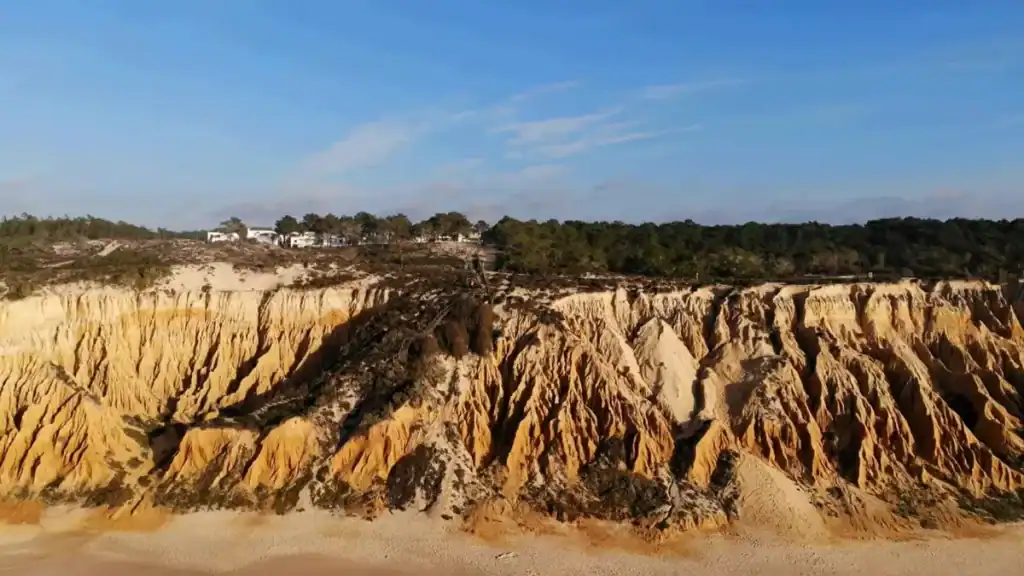
🪨 Are the Fossil Cliffs at Aberta Nova Worth the Walk?
For us, yes. Walking north added something the open beach alone did not: the pale dune landscape gradually turned into exposed ochre and rust-coloured sandstone, giving the shoreline a completely different character. It made the walk feel like part of the visit rather than simply extra distance along the sand.
The Fossil Cliff Is Farther Away Than It Looks
Our mistake was judging the distance by sight. The fossil cliff looked close across the open sand, but reaching it took longer than that first view suggested.
| Feature | What to expect |
|---|---|
| 🥾 Walk from the boardwalk | Around 20 minutes beyond the Fontainhas stream |
| 🪨 Sandstone cliffs | Distinctive layers of ochre and orange |
| 🌊 Beach transition | Aberta Nova becomes Praia da Galé-Fontainhas |
| 📸 Photography | Best in softer morning or late afternoon light |
As we headed north, we watched the dune ridge change from pale sand into exposed sandstone until the cliff began dominating the horizon. Knowing those geological layers formed around five million years ago made the erosion visible in front of us feel far more significant.
Ochre Sandstone Changes the Character of the Coast
We had come primarily for the beach, but standing beneath the sandstone was the point at which the coastline stopped feeling like just another long Atlantic strand.
From beneath the sandstone layers, we saw a completely different side of the coast from the open shoreline farther south. Our guide to The Comporta Coast puts Aberta Nova into that wider landscape of dunes, villages and Atlantic beaches.
🌊 When Would We Choose Aberta Nova Over Other Comporta Beaches?
We would choose Aberta Nova when space, long walks and undeveloped surroundings mattered more to us than convenience. Praia da Comporta, Carvalhal and Pego made different compromises, particularly around access and facilities, whereas Aberta Nova rewarded the extra effort with a stronger sense of isolation.
The Better Beach Depends on the Day You Want
There was no single “best” beach for us because the choice changed with what we wanted from the day.
| Beach | Best for |
|---|---|
| 🏖️ Aberta Nova Beach | Solitude, long walks and wild scenery |
| 🍽️ Carvalhal | Beach clubs and restaurants |
| 🌊 Praia da Comporta | Easy access and classic beach days |
| 🌾 Pego | Relaxed atmosphere with fewer facilities |
Unlike Praia da Comporta or Carvalhal, we found no organised beachfront scene waiting beyond the dunes. That was exactly why we liked it. The enormous shoreline absorbed the visitors who did make the journey, and our The Comporta Coast guide shows how this wilder beach fits among the region’s villages, dunes and rice fields.
Melides Makes the Most Natural Nearby Base
When we wanted to spend longer on this quieter part of the coast, Melides made more sense to us as a base than trying to find those services at the beach itself.
We liked that the village complemented the beach rather than trying to recreate it, giving us restaurants, accommodation and a more traditional atmosphere while the coast stayed open and undeveloped. Our Melides guide explains why we think the two work particularly well together on a longer coastal trip.
⭐ Is Praia da Aberta Nova Worth Visiting?
Yes, for the right kind of beach day. We would return for the space, long walks, fossil-cliff scenery and the feeling that the dunes had cut us off from most of the developed coast. We would not choose it when easy access, restaurants, beach clubs or a more organised day by the sea mattered more.
That trade-off is what defines Aberta Nova. It suited us when we were prepared to make the slower approach and judge the Atlantic conditions for ourselves; travellers wanting maximum convenience or a full beachfront setup would probably be happier farther north.