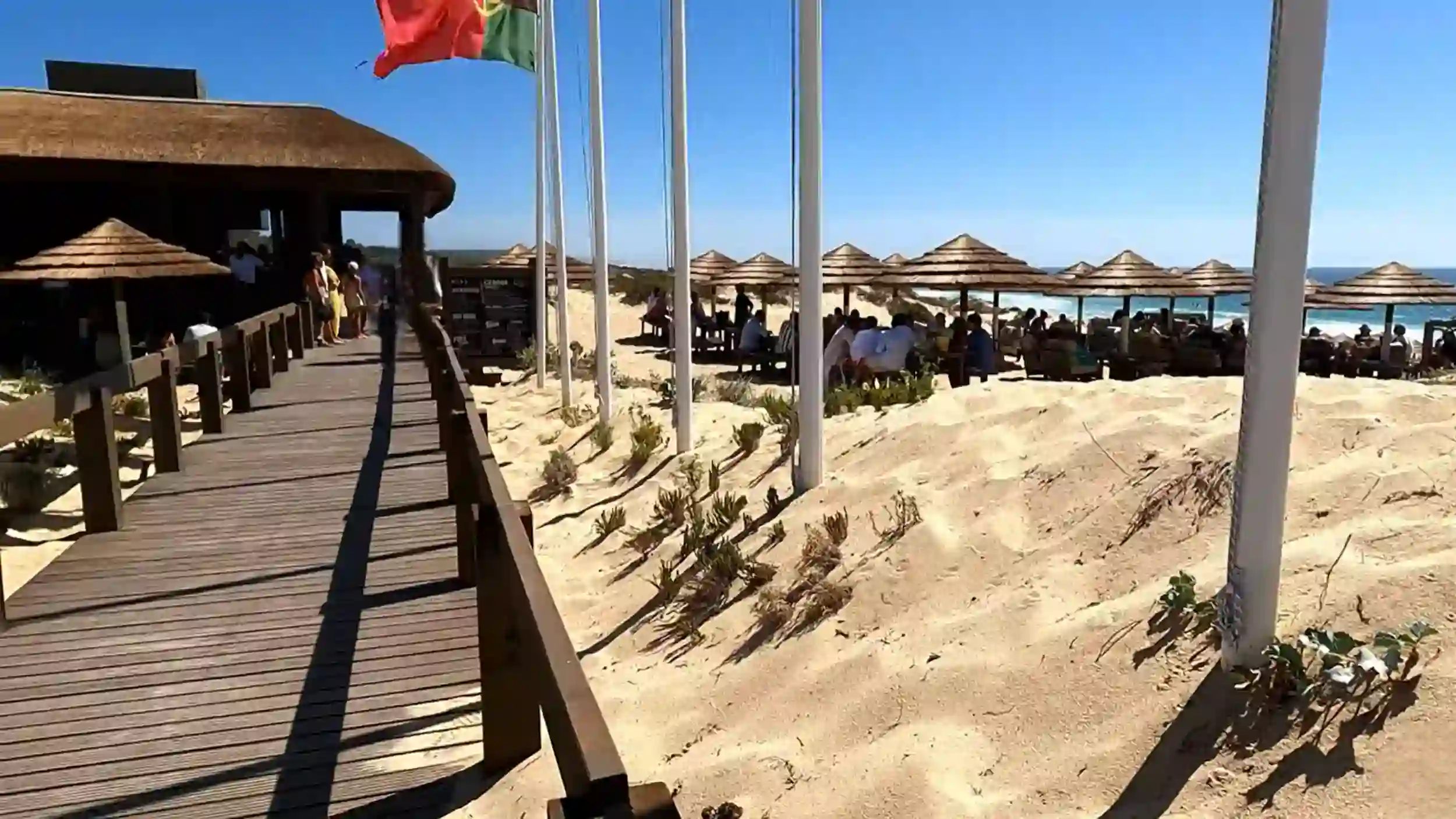
Lisbon to Comporta took us roughly 90 minutes by car when we prioritised the direct route, but we found the journey far more rewarding when we treated it as part of the trip. The motorway wins for convenience; travelling through Setúbal and crossing to Tróia by ferry introduces the scenery and character of the Comporta Coast before you arrive.
We noticed the change soon after Lisbon fell behind. The urban edges disappeared, forested landscapes took over and eventually the broad Sado Estuary became the defining feature of the journey.
For us, taking the slower route meant the Comporta Coast started revealing itself long before we actually reached Comporta.
🛣️ What Is the Best Route From Lisbon to Comporta?
For speed, we would take the direct motorway route and allow roughly ninety minutes. When we had enough time to make the journey part of the holiday, we preferred leaving the fast road near Setúbal, crossing Serra da Arrábida and continuing by ferry to Tróia. The first option was simpler; the second was the journey we remembered.
The two options solve different problems. One saves time. The other gives you a much stronger sense of the landscape you are travelling into.
| Route | Best when… |
|---|---|
| 🚗 Direct motorway | You want the quickest, simplest journey |
| ⛰️ Arrábida + Tróia ferry | You want the drive itself to become part of the trip |
There is no single useful road-distance figure for both journeys because the route changes substantially depending on whether you drive around the estuary or cross it by ferry. In practical terms, the more useful planning figure from our trip was the direct driving time: roughly 90 minutes when we prioritised speed.
🚗 OUR ROUTE CHOICE: direct motorway if we were arriving late or short of time; Arrábida and the Tróia ferry if the day still had room in it.
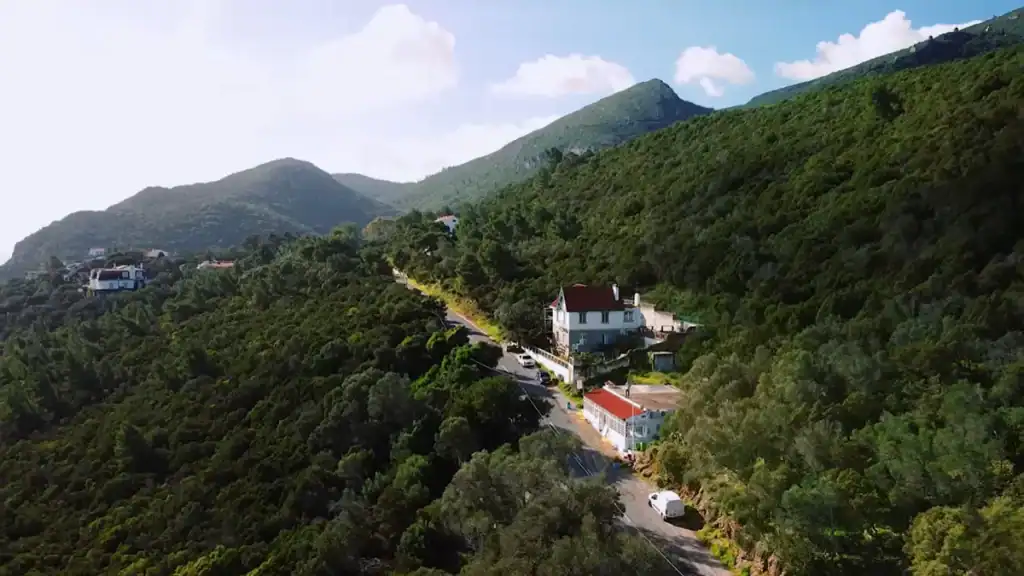
We left the A2 near Setúbal and climbed into the Arrábida hills rather than staying on the motorway all the way south. That decision added time, but it also meant Comporta did not simply appear at the end of a fast road. Mountains gave way to estuary, then the road flattened into pine forest and rice country.
⛰️ Is Serra da Arrábida Worth the Detour?
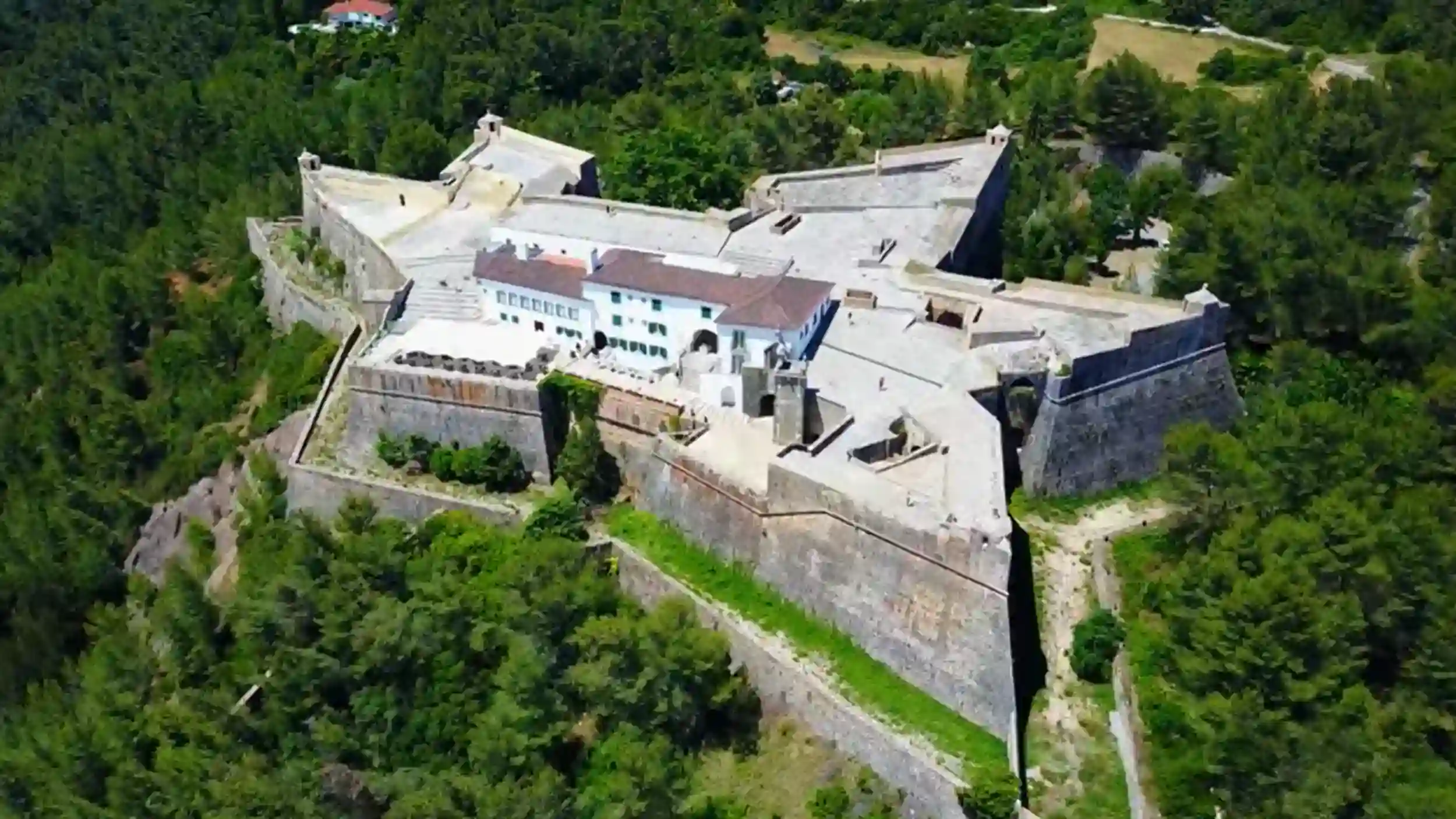
For us, yes, provided we were not working to a strict arrival time. Just south of Setúbal, the protected limestone range replaced motorway driving with winding roads, sudden viewpoints and coastal scenery. We had added the detour to improve the drive, but it ended up being the point where getting to Comporta quickly stopped mattering.
As the road climbed, views opened across the Atlantic, the Sado Estuary and Tróia Peninsula. We stopped rather than trying to make up time, and the small coves below the ridge had exactly the opposite effect on our schedule: they made us wish we had allowed longer.
When we would skip Arrábida
If Comporta were simply the destination at the end of a transfer, we would miss the detour and stay on the faster road. Arrábida only makes sense when you can accept that the journey will take longer than the direct drive.
With that time available, we would make the detour again. It was the point where the trip stopped feeling like transport. If we had even longer, we would also spend time in Setúbal and Palmela before continuing towards the ferry.
⛴️ Can You Take a Ferry From Lisbon to Comporta?
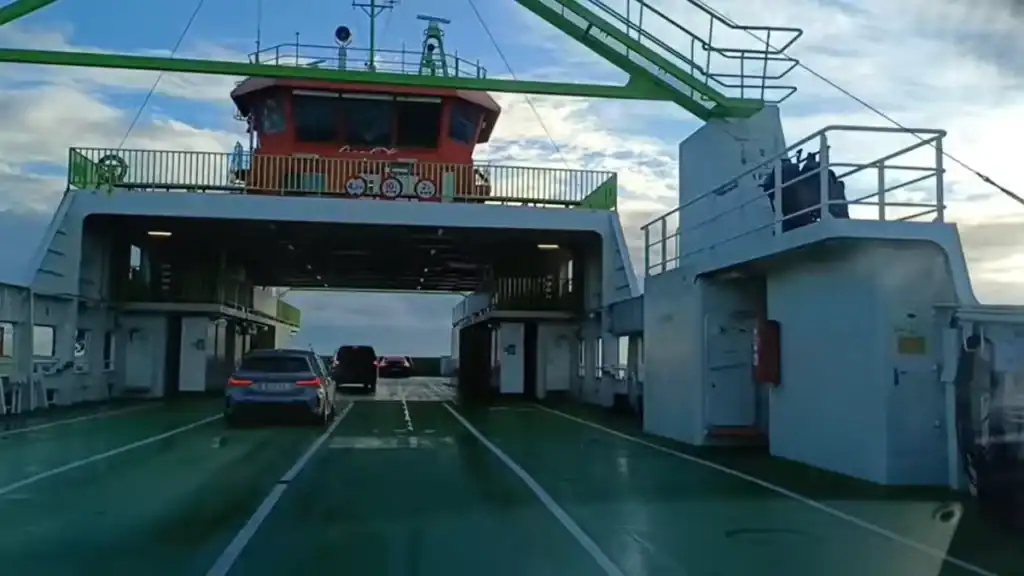
Not directly from Lisbon, but the route we used included the vehicle ferry from Setúbal across the Sado Estuary to the Tróia Peninsula, followed by the drive south to Comporta. The crossing itself took around twenty to twenty-five minutes and gave us a much more memorable approach than staying on the motorway.
Boarding was simpler than we expected once we reached the terminal. Cars and passengers travel together, and the ferry operates throughout the year. On a busy summer weekend, we would arrive fifteen to twenty minutes early rather than assume we could drive straight aboard.
- ⛴️ Crossing: around 20 to 25 minutes.
- 🚗 Vehicle option: cars travel on the ferry with passengers.
- 📅 Service: regular departures operate throughout the day.
- ⏰ Busy periods: allow extra time for vehicle queues in summer.
What changed for us was not the mileage but the rhythm. Standing on the ferry with the Arrábida mountains behind us and the sandy Tróia Peninsula ahead created a clean break between Lisbon and the coast. The motorway is more efficient, but it cannot reproduce that moment.
⛴️ DRIVE OR FERRY? We would drive direct when speed matters. Given enough time, we would drive to Setúbal and take the ferry. It is not the fastest answer to Lisbon to Comporta, but it was the one that made the journey more memorable.
🌾 What Is the Drive From Tróia to Comporta Like?
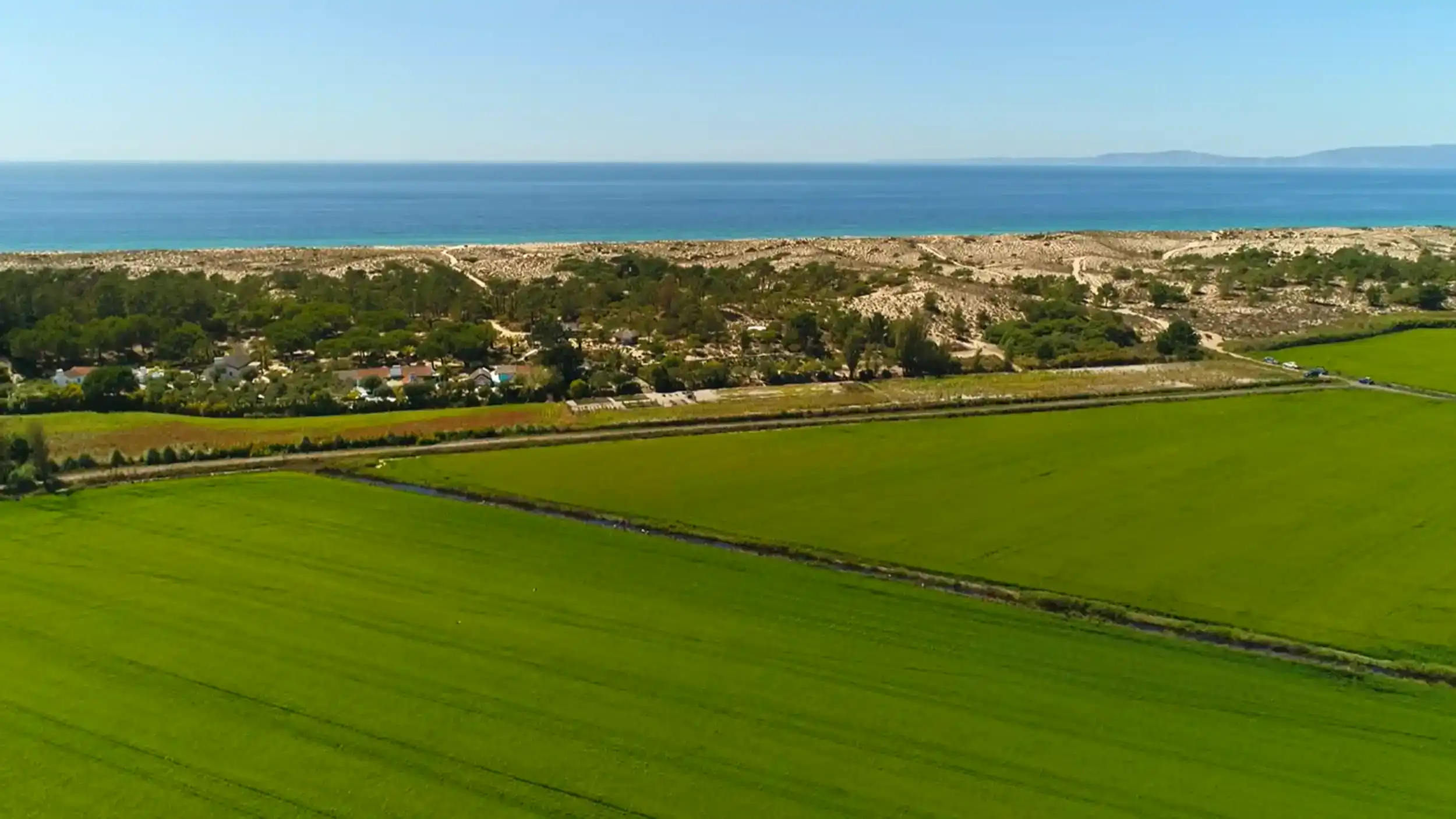
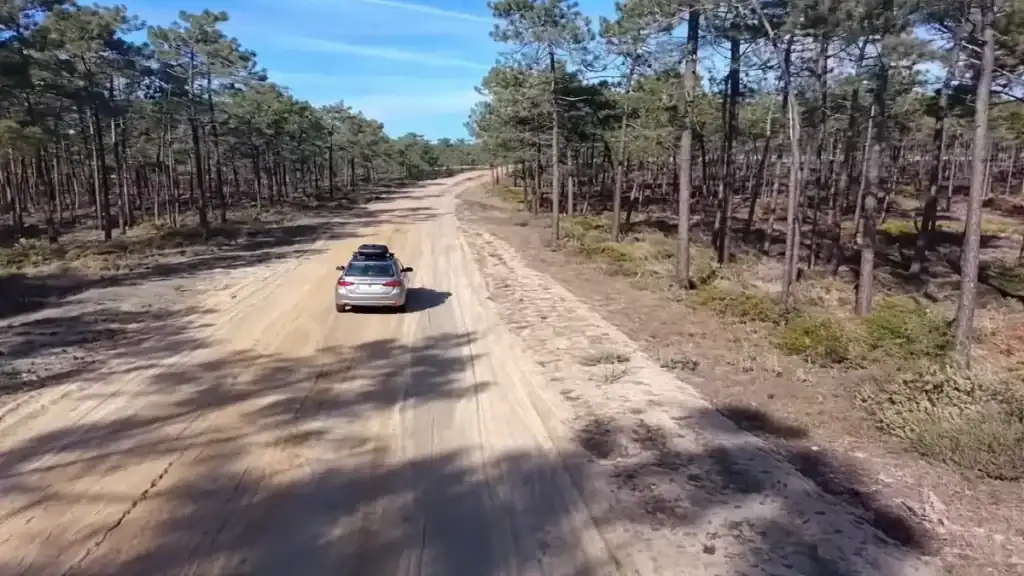
The change was immediate after we left the ferry. The road flattened, traffic thinned and pine forest replaced the busier approach to Setúbal. Soon rice fields and broad estuary landscapes dominated the view, and we felt as though we had entered Comporta before reaching the village itself.
Those final stretches felt completely different from the approach to Setúbal. In spring, flooded paddies can reflect the sky. Later in the year the rice changes from dense green towards autumn gold. Storks and wetland birdlife added to the sense that we were travelling through a working natural landscape rather than approaching a conventional resort.
The slower route explained Comporta before we arrived
That gradual change mattered. Mountains, estuary, pine forest and rice fields gave us context for the coast before we had even parked the car. Our Comporta Rice Fields guide adds more detail to the final stretch, particularly if you want to understand how much the scenery changes with the seasons.
Taking the motorway would still get us to the same village. It just would not explain the landscape in quite the same way.
🏡 What Is It Like Arriving in Comporta?
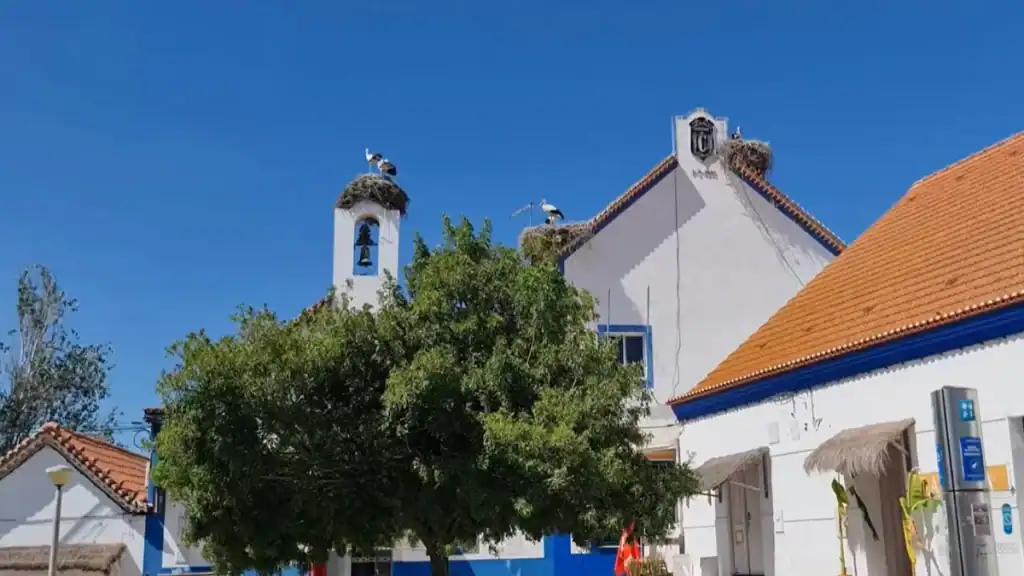
Comporta appeared with remarkably little ceremony after the mountains, viewpoints, ferry crossing and changing coastal plain. There were no large resorts or dramatic entrance roads. We simply reached pine trees and low whitewashed buildings, and the village felt smaller and more understated than we had expected before our first visit.
We resisted rushing straight to the beach. Spending that first hour among the cafés, boutiques and quiet streets made Lisbon’s traffic and city noise feel much farther away than the actual journey suggested.
A relaxed walk around Comporta Village worked better for us than immediately chasing the wider coast. It also reinforced something the scenic route had already begun to teach us: Comporta makes more sense when you stop treating every hour as something to fill.
🚗 Is Comporta a Good Day Trip From Lisbon?
It is possible, especially if you use the faster motorway route, but we would not choose Comporta as a day trip if we had another option. A same-day return made much more sense when we imagined Comporta as a single destination; once we included the scenic route, ferry and wider coastline, the return deadline started working against the kind of trip we wanted.
We could see exactly what would happen to us with a Lisbon return deadline. Arrábida viewpoints would become delays. Waiting for the ferry would feel irritating rather than enjoyable. Time on the coast would be measured against the drive back instead of the beaches, villages and rice fields we had come to see.
⏰ IF YOU ONLY HAVE ONE DAY: use the direct route and keep the itinerary simple. Trying to combine Arrábida, the ferry and a relaxed Comporta visit before returning to Lisbon would undermine the reason we preferred the scenic journey in the first place.
One night is the point where the trip starts to breathe
We would stay at least one night. Two or three would suit us better because there is then no need to treat the region as an excursion. Once settled in, exploring The Comporta Coast at an unhurried pace made far more sense than chasing a list of stops.
⭐ Which Lisbon to Comporta Journey Would We Choose?
If we simply needed to reach Comporta, we would drive the direct motorway route and allow roughly 90 minutes. It is the practical choice and the one we would use when time is tight.
Given a free day, we would choose Setúbal, Serra da Arrábida and the Tróia ferry. It takes longer and requires accepting stops, bends, ferry timing and the possibility of queues. Those are disadvantages if Comporta is only the destination.
For us, they were also what turned Lisbon to Comporta from a transfer into the first part of the trip.