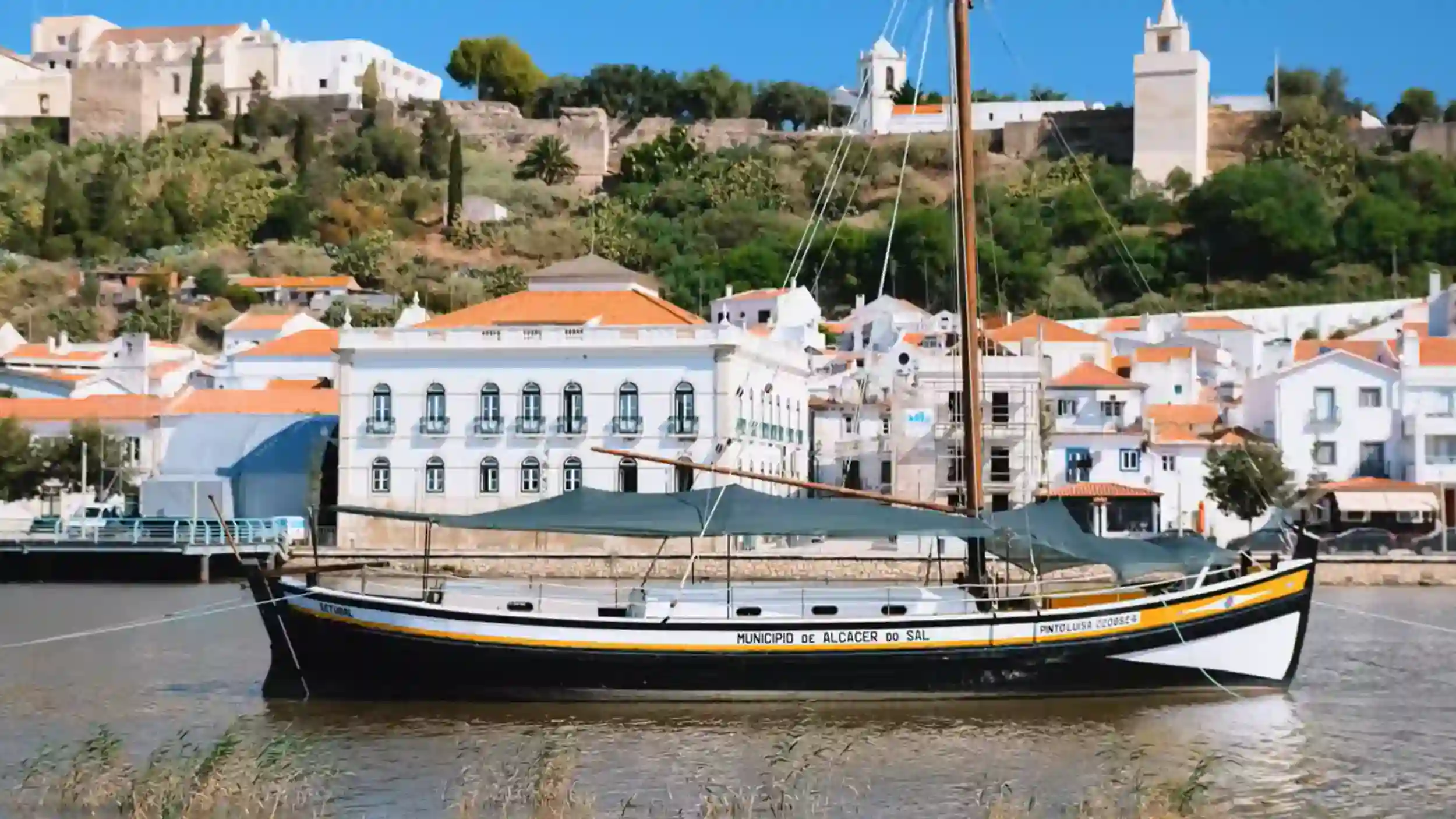
Alcácer do Sal is worth visiting from Comporta if you want a genuine change from beaches and dunes. Our drive inland took around thirty minutes. Yet the River Sado, castle hill and layers of Phoenician, Roman, Moorish and medieval history made it feel like a different part of Portugal.
What surprised us most was how naturally the history fitted around an ordinary riverside town. We parked beside the Sado, walked the waterfront, climbed through cobbled streets to the castle and looked back across the rice fields we had just driven through. Nothing about the day felt like a forced sightseeing detour.
🌉 What Is the Riverfront Like in Alcácer do Sal?
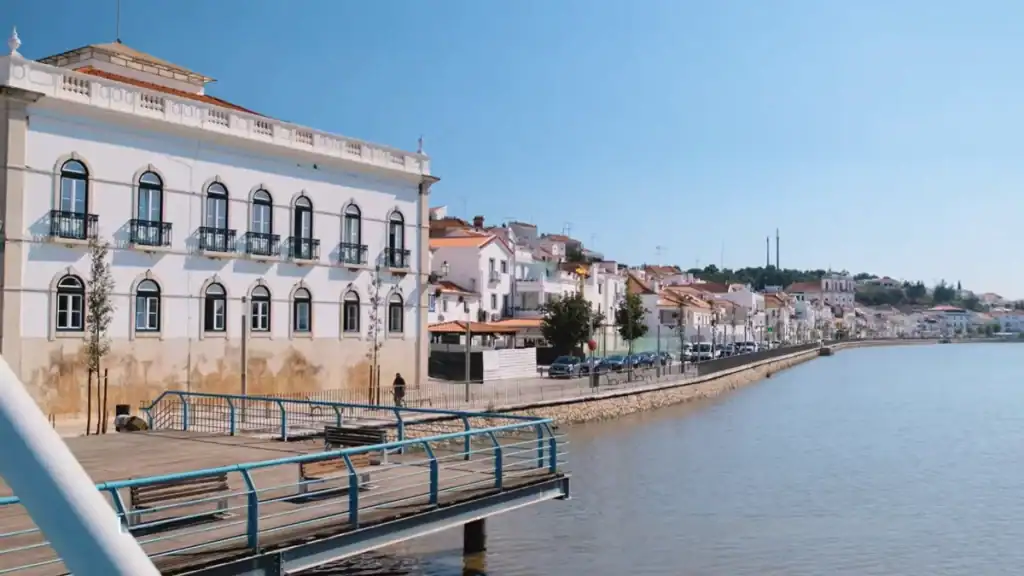
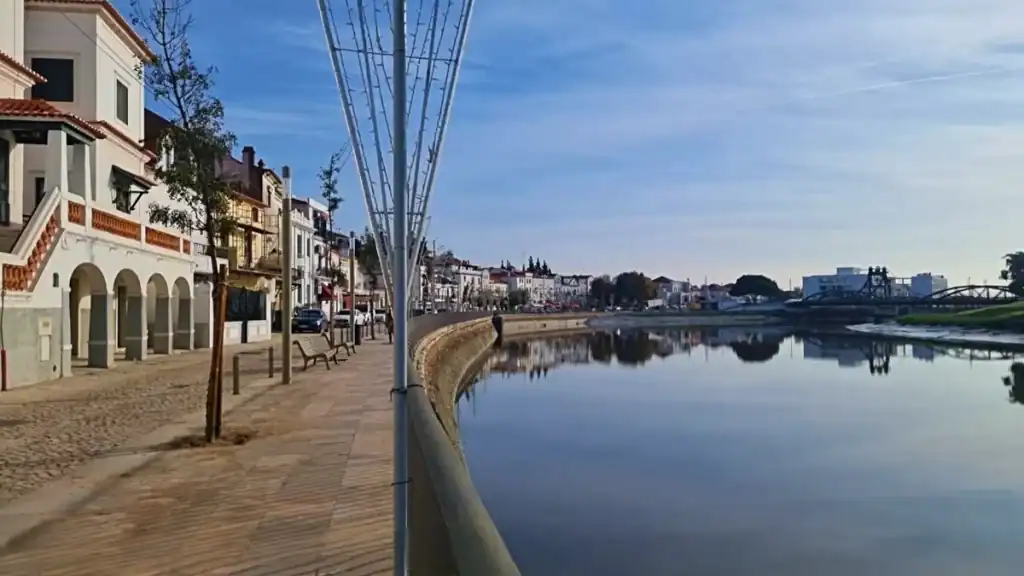
Crossing the Sado Bridge gave us the clearest first impression of Alcácer do Sal: a broad, slow-moving river in front, whitewashed buildings climbing the slope and the castle sitting above them. For a small inland town, the arrival had far more drama than we expected, and starting at river level made the shape of the town immediately understandable.
We parked beside the river and started on foot. The promenade is flat and relaxed, with cafés, small parks and terraces facing the water. Stork nests on pylons and around the castle added another detail that kept pulling our attention upwards.
Why Starting Beside the Sado Worked for Us
What we liked was that the waterfront did not feel preserved purely for visitors. Local businesses and everyday life sat alongside the attractive riverside buildings, which stopped the town feeling staged. With so much history concentrated above the river, that ordinary activity mattered; otherwise Alcácer could easily have become somewhere we simply walked through ticking off old buildings.
- 🌉 Best first view: crossing the Sado Bridge towards the old town.
- 🚶 Easiest walk: the flat riverside promenade before tackling the hill.
- ☕ Slow-down point: waterfront cafés and terraces overlooking the river.
- 🅿️ Practical advantage: we found parking beside the river straightforward.
Starting low also made the shape of the town clearer. We could see the route rising ahead before disappearing into the older streets. Coming from the Comporta Coast, the switch from Atlantic scenery to a town built around a river and hill was immediate.
🏰 Is Alcácer do Sal Castle Worth Visiting?
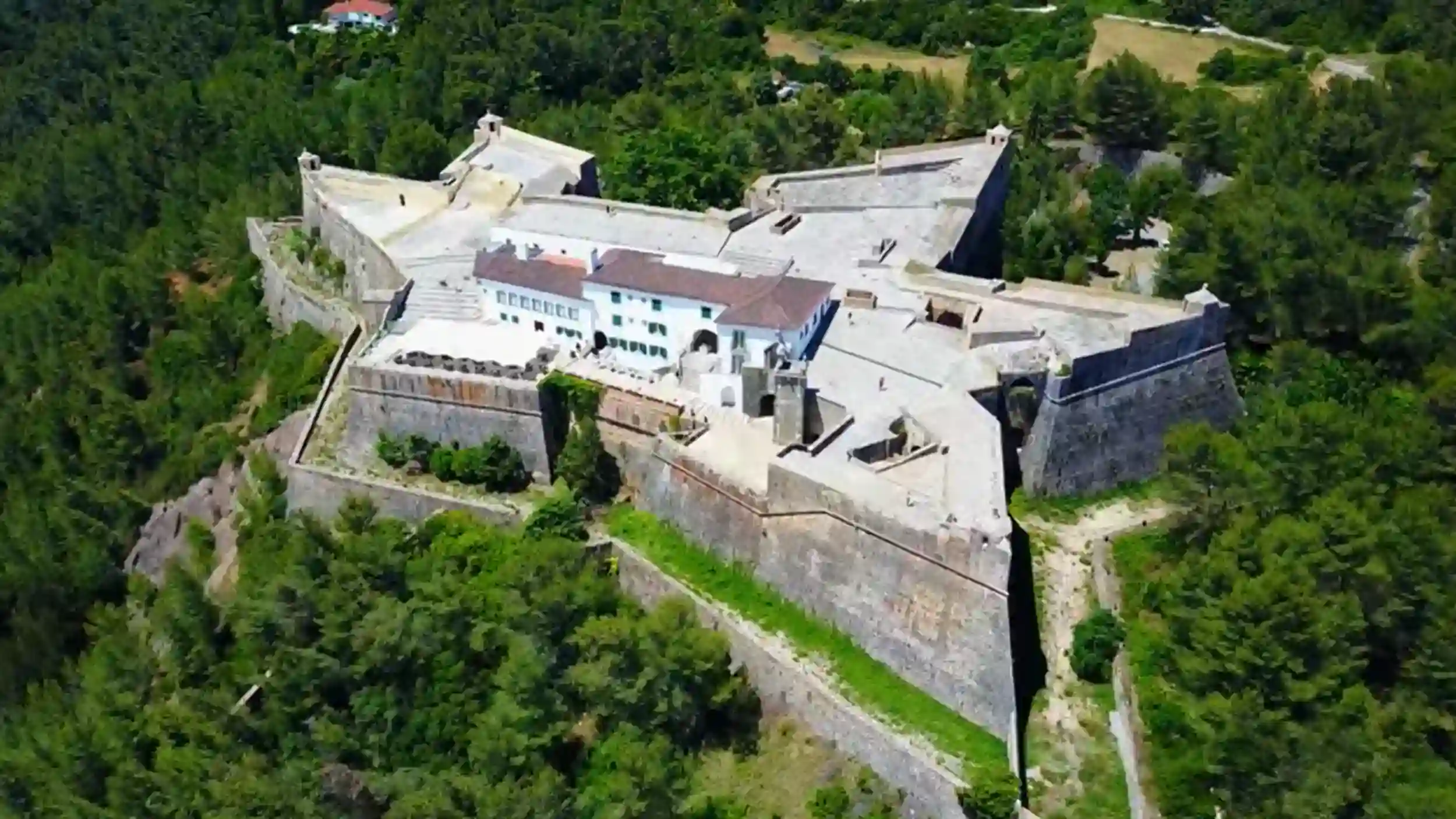
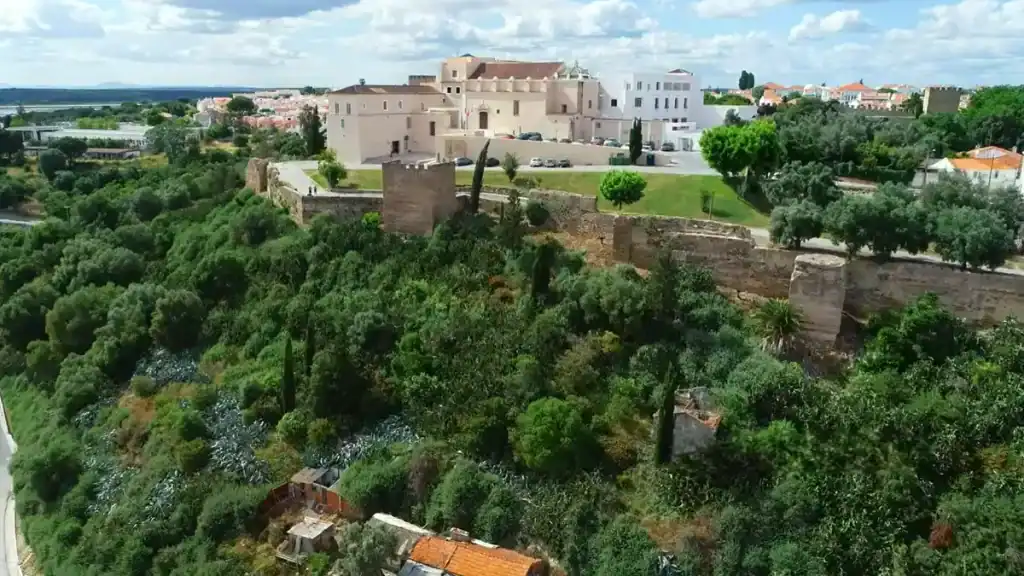
Yes, the castle hill was worth the climb for us, but not simply for the fortress. The route up through narrow cobbled streets, the views across the Sado floodplain and the archaeology beneath the hill made this the part of Alcácer where the town’s long history finally joined up.
The View Justified the Climb
The climb was short enough to take slowly. At the top, the River Sado ran away across the valley and geometric rice fields spread through the floodplain below. Looking back over the landscape we had driven through gave the castle’s position an obvious logic that was harder to appreciate from street level.
Part of the complex is occupied by Pousada Dom Afonso II, a historic convent converted into a hotel, but the surrounding grounds and terraces were still the real reward for us. Public access to the castle grounds meant the hill worked as a viewpoint even before we considered the archaeology.
The Archaeology Changed It From a Viewpoint Into a Story
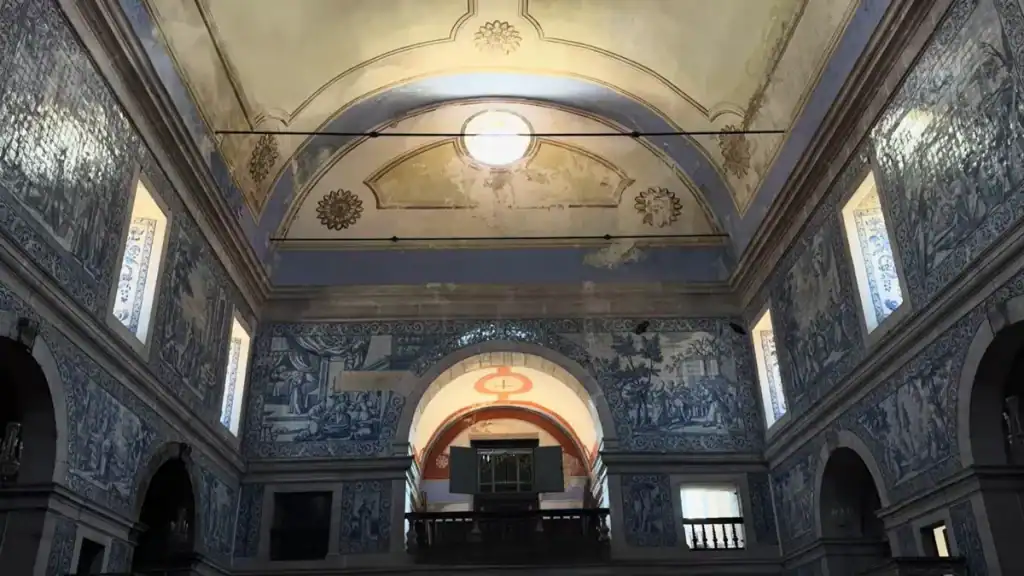
Beneath the hill, the archaeological crypt reveals Phoenician, Roman, Islamic and medieval layers. That sequence changed the visit. Instead of seeing another old castle in another Portuguese town, we could understand why successive civilisations kept choosing exactly the same position above the river.
If steep cobbles and historical remains hold little appeal, the riverfront may be enough. Otherwise, skipping the hill would remove the part of Alcácer that best explains why the town exists where it does.
🏛️ Why Is Alcácer do Sal Historically Important?
Its importance comes from the same strategic position we had just climbed to see. Phoenician traders, Romans, Moors and medieval Christians all recognised the value of controlling the hill and the River Sado below it, leaving Alcácer do Sal with around three thousand years of settlement history. Once we understood that sequence, the town stopped looking like a pretty riverfront with a castle attached.
Four Eras Are Still Legible in the Town
- ⚓ Phoenician: a trading settlement known as Bevipo.
- 🏛️ Roman: Salacia developed as an important river port.
- 🕌 Moorish: the fortress was rebuilt and the town expanded.
- ✝️ Medieval: the Order of Santiago established its headquarters here.
The history was not heavily signposted as we walked. It appeared more quietly through the street layout, churches, castle walls and remains beneath the hill. Even the name carries traces of the fortress and the salt trade that once helped make the settlement prosperous.
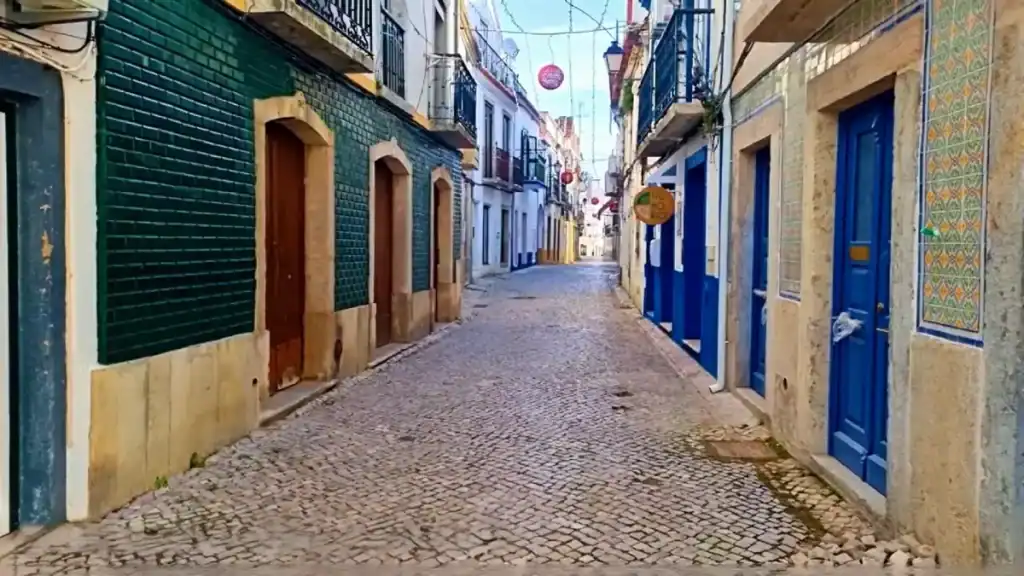
That understated presentation actually suited the place. Alcácer never felt like an open-air museum. Centuries of history remained the backdrop to a working town, while the same river continues west towards the estuary explored in our Sado Estuary Dolphins guide.
🧂 What Are the Salt Pans Near Alcácer do Sal Known For?
They are a surviving reminder of how strongly Alcácer do Sal was shaped by salt production and the Sado floodplain. Most historic pans have disappeared, with rice cultivation replacing many of them over the last two centuries, but Salina da Batalha is one place where traditional salt production still survives.
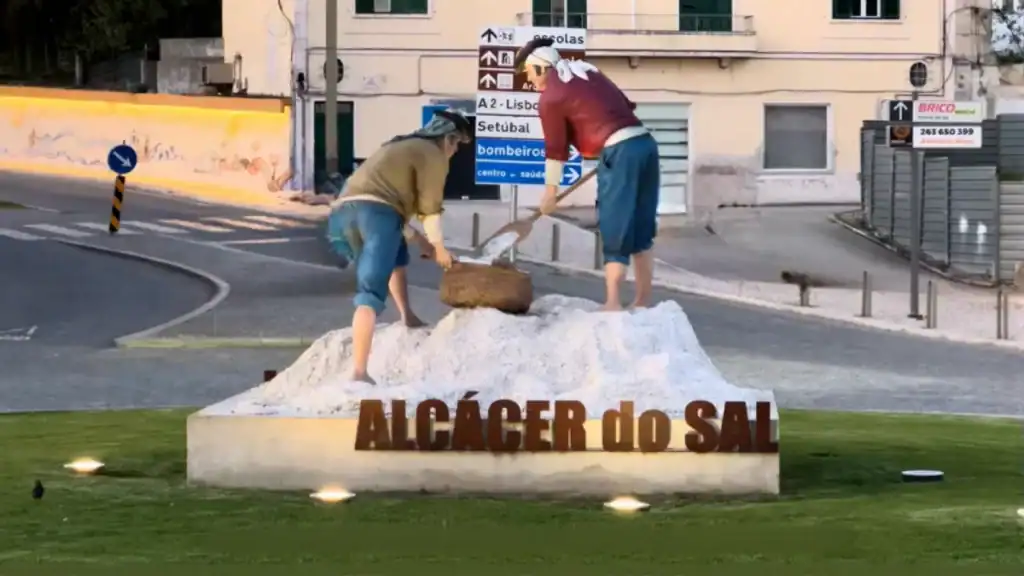
Salt, Rice and Wetlands Belong to the Same Landscape
This was useful context because we had arrived thinking mainly about coast and rice fields. Beyond the surviving salt production are marshes, reed beds and floodplains. They support white storks, flamingos and wading birds. The landscape began to make more sense once we stopped treating salt pans, rice fields and estuary wildlife as separate attractions.
Looking west from the castle, the fertile floodplain continues towards the Comporta Rice Fields and eventually the Atlantic. Following that geography on the ground made the inland town feel connected to Comporta rather than detached from it.
🌾 How Does Alcácer do Sal Compare With Comporta?
The contrast was much stronger than the thirty-minute drive suggested. Comporta gave us beaches, dunes, rice fields and a carefully preserved coastal atmosphere; Alcácer gave the same trip a river, a historic town and the much longer human story behind the region. We would not choose between them as though one made the other unnecessary.
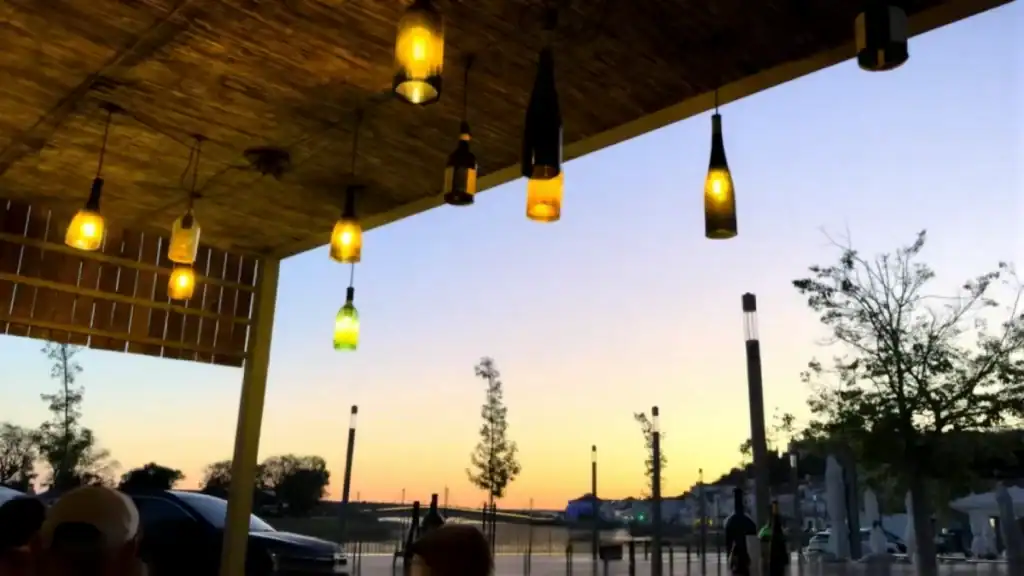
Thirty Minutes Apart, but Different Reasons to Visit
🏖️ Choose Comporta when the day is about Atlantic beaches, dunes, cafés and a relaxed coastal atmosphere.
🏰 Choose Alcácer do Sal when you want history, a castle climb, river views and a town that feels less shaped around coastal tourism.
🌾 Combine them if you have the time. This was the option that worked best for us because each place supplied what the other lacked.
We enjoyed Comporta Village for its boutiques, cafés and relaxed atmosphere, but Alcácer explained more of the region’s past. The contrast was stronger than the short distance suggested.
🚗 How Far Is Alcácer do Sal From Comporta?
It is around 30 kilometres inland from Comporta, and our drive took roughly 30 minutes along the N253. Rice fields and the broad Sado floodplain gradually replaced the coastal scenery, so the journey felt like part of the change rather than simply the transfer between two places.
The Drive Felt Like Part of the Change of Scene
The road was straightforward, but it never felt like dead travel time. Rice fields replaced the dunes, the castle hill gradually appeared above the floodplain and then the Sado came into view. Crossing the bridge completed the transition, with the old town stacked up the slope directly ahead.
🚗 Distance: around 30 kilometres.
⏱️ Our drive: around 30 minutes.
🅿️ Arrival: parking beside the riverfront gave us an easy starting point.
⚠️ Practical consequence: we would consider a car essential for this trip because we found no practical public transport connection from Comporta.
☀️ Is Alcácer do Sal Worth a Day Trip From Comporta?
Yes. We found Alcácer easy enough to justify as a half-day trip from Comporta, which was one of its biggest advantages. A few hours gave us time for the riverfront, the climb to the castle and the historic centre without sacrificing an entire coastal day; we would only extend it if we wanted a slower lunch or more time around the historic sites.
A Coast-and-Inland Day Worked Better Than Choosing One
Our preferred plan would be a morning around Comporta Village or the beaches. Then we would drive inland for lunch and an afternoon in Alcácer. Starting beside the river, climbing to the castle and then returning to the waterfront creates a simple route without trying to squeeze too much into the visit.
The strongest reason to make the trip is contrast. After several days of sand, dunes and Atlantic scenery, thirty minutes in the car replaced them with cobbles, castle walls, river terraces and a landscape whose history stretches back thousands of years. That change made our wider Comporta Coast itinerary feel more complete.
Travellers coming to Comporta purely to slow down beside the sea may prefer to stay on the coast. For anyone curious about what lies behind the beaches, Alcácer do Sal earns the detour. The castle and archaeology provide the history, but the ordinary life along the Sado is what stopped the visit feeling like a box-ticking excursion.