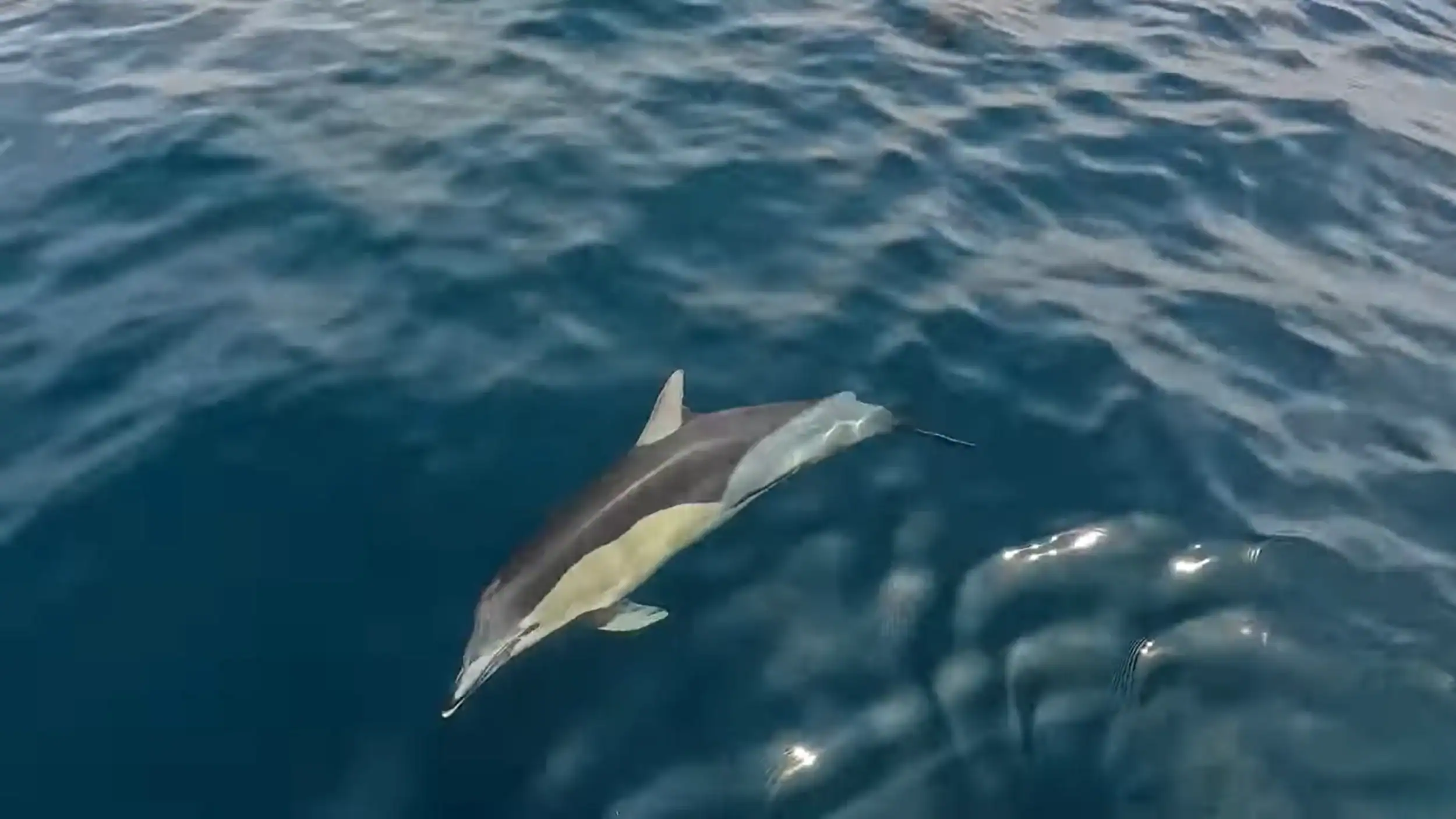
Sado Estuary dolphins are unusual because the bottlenose dolphins found here are resident rather than seasonal visitors. They live and feed within the estuary throughout the year, making dolphin watching possible beyond the limited migration periods associated with many other destinations.
Marina de Tróia, where boat trips depart, is less than 30 minutes by car from Comporta.
These are wildlife trips rather than guaranteed encounters.
🐬 What Makes the Sado Estuary Dolphins Unusual?
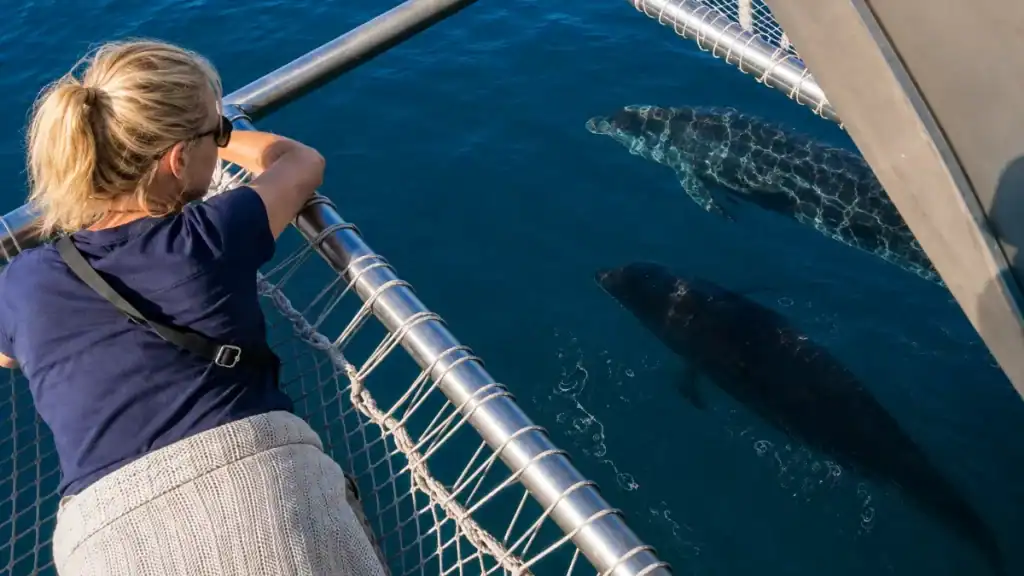
What makes these dolphins unusual is that they are year-round residents rather than seasonal visitors. They live, feed, rest and raise their young within the Sado Estuary and adjacent waters, so we were looking for animals using their normal territory rather than waiting for a migratory pod to pass through. That changed how we thought about the whole trip.
Why Resident Dolphins Make the Search Different
We had expected the search itself to feel like dead time before the sighting. Instead, knowing the guides were working through territory the same dolphins use throughout the year made those quieter stretches feel like part of understanding the estuary.
- 🐬 Resident colony: the dolphins live here all year.
- 🌊 Sheltered estuary: the water is calmer than the open Atlantic.
- 🚤 Local guides: regular feeding areas are familiar territory.
- 📸 Natural encounters: the dolphins decide how much interaction takes place.
That changes the mood on board. Instead of treating every minute without a dolphin as lost time, the search becomes part of watching a familiar estuary. Once the pod appears, the interesting part is not simply how close it comes but what the dolphins are actually doing.
Tróia Is Close Enough to Combine With Comporta
Although tours depart from Tróia rather than Comporta itself, they form one of the region’s signature wildlife experiences.
Visitors exploring The Comporta Coast often combine a dolphin tour with time on the beaches or in the villages, creating a day that balances the Atlantic shoreline with the quieter waters of the Sado Estuary.
🌊 What Is a Sado Dolphin-Watching Trip Actually Like?
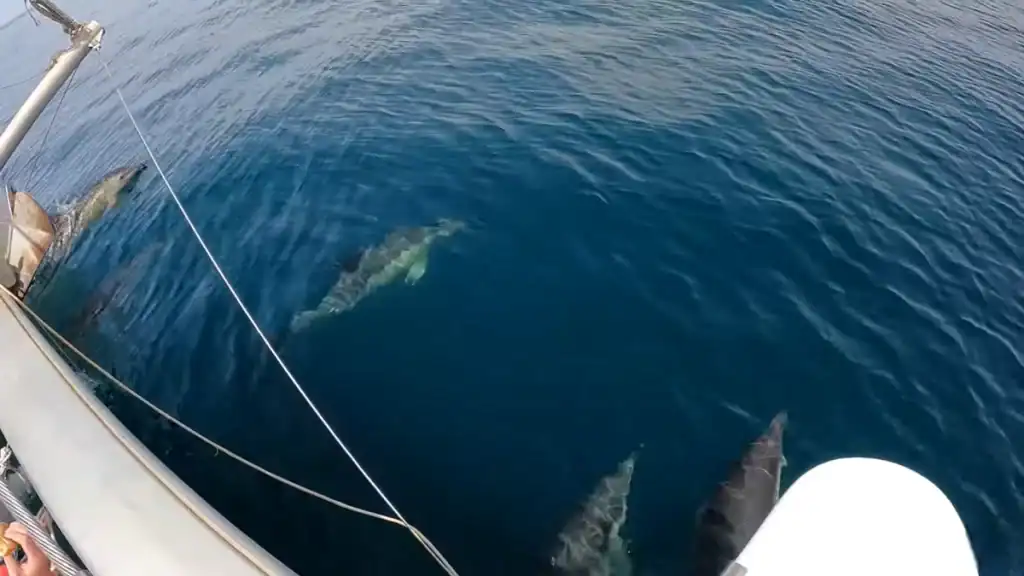
We found the experience quieter and less theatrical than the phrase “dolphin watching” can suggest. There could be a sighting, several minutes of empty water, then another dorsal fin somewhere we were not looking. Once we stopped waiting for constant leaps, travelling, feeding and social behaviour became much more interesting.
The Same Dolphins Return to Familiar Waters
What gave the sightings more depth for us was knowing that researchers and local guides can encounter the same identifiable animals repeatedly.
Typical dolphin trip
Migratory animals can mean larger offshore searches, changing pods and briefer encounters.
Sado Estuary trip
A permanent population uses a known estuary, giving guides and researchers long-term familiarity with individual dolphins and their territory.
Researchers have monitored individual dolphins for decades, identifying many by the unique markings on their dorsal fins. That long-term understanding gives additional depth to the experience, reminding visitors they are observing animals with established territories rather than transient wildlife.
The Dolphins Set the Pace
This is where expectation matters. Anyone waiting for constant leaps and close passes may find the quieter stretches surprisingly uneventful; anyone interested in wild behaviour may find those same gaps are what make the encounter believable.
Boats keep a respectful distance and the pod decides how much interaction takes place. That lack of control is part of the experience rather than a flaw. Pairing the trip with Comporta Village also makes sense because neither part of the day needs to be rushed.
🐬 What Do Sado Estuary Dolphins Actually Do?
Most of what we were watching was ordinary wild behaviour rather than a performance: dolphins travelling together, feeding, socialising, diving and resurfacing as they moved through the estuary. That sounds less dramatic than repeated breaches, but it was precisely what made the encounter feel genuine.
Surfacing, Feeding and Disappearing Again
The most useful thing to know is that the rhythm can change without warning. A few quick surfacings may be followed by several minutes of apparently empty water while the pod forages below.
- 🐬 Travelling: steady surfacing as the pod moves together.
- 🐟 Feeding: short dives and frequent resurfacing.
- 👥 Socialising: dolphins swimming closely alongside one another.
- 🌊 Deep foraging: longer dives before the pod reappears.
A dorsal fin can appear close to the boat and be gone almost immediately. Then comes the uncertain part: watching a different patch of water because the dolphins may stay below for seconds or several minutes. Breaching does happen, but waiting for it misses much of what makes the encounter interesting.
The Quiet Gaps Become Part of the Experience
Some of the most revealing moments came when nothing was visible and we had no idea where the pod would surface next.
There can be a stretch of waiting, a dorsal fin, another disappearance and then the small satisfaction of finding the pod again. That slower rhythm is a useful contrast to the Atlantic side of The Comporta Coast, where the beaches feel far more exposed and energetic.
⛵ Catamaran or Kayak: Which Sado Dolphin Trip Suits You?
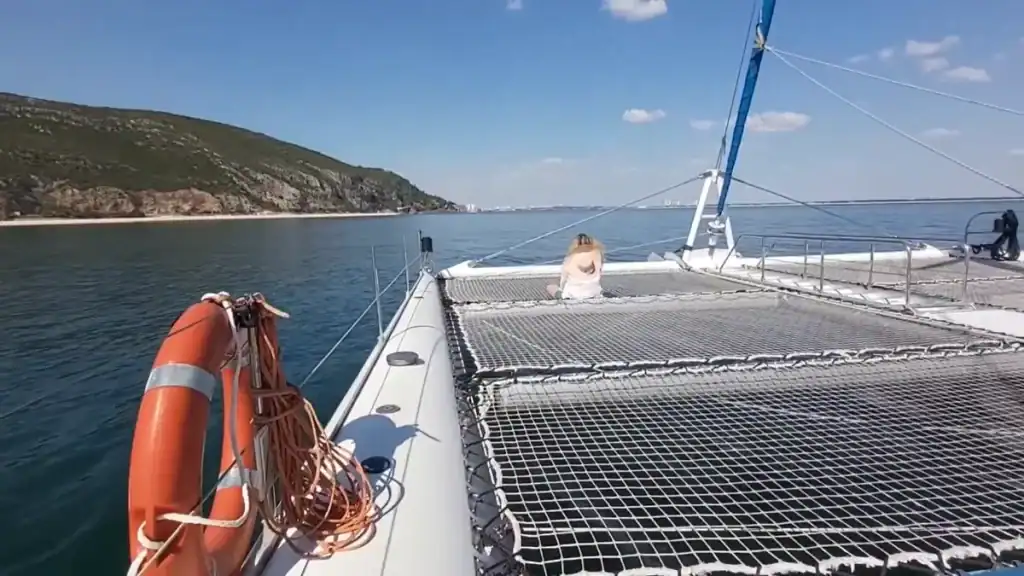
Both options allow you to experience the Sado Estuary dolphins, but they create very different days. Catamaran tours are designed specifically around finding the resident dolphins, while kayaking focuses more on exploring the estuary itself at a slower, quieter pace.
Choose the Catamaran When Dolphins Are the Priority
For us, the choice came down to what we wanted the day to achieve.
⛵ Catamaran
Best for: making dolphin sightings the priority. The greater range lets guides cover more of the estuary and suits families particularly well.
🛶 Kayak
Best for: slower exploration at water level. Choose it when the estuary itself matters more than maximising the chance of finding the pod.
If seeing dolphins is the reason for booking, the catamaran is the stronger choice. It covers much more water, lets guides work through familiar feeding areas and adds commentary that helps explain what is happening rather than leaving every surfacing as an anonymous sighting.
Choose a Kayak for the Estuary Itself
We would only choose the kayak after accepting that finding dolphins was no longer the main objective.
You gain the quieter, water-level perspective but lose the catamaran’s range, so dolphin sightings become less predictable. Choose it because you want to experience the estuary itself, not because you expect a more intimate dolphin encounter. A catamaran trip also combines easily with Comporta Village afterwards.
📅 What Is the Best Time to See Sado Estuary Dolphins?
There is no short dolphin season to plan around because the resident community is present throughout the year. For us, the more useful choice is when we would most enjoy the wider trip: warmer and busier conditions in summer, or a quieter estuary and stronger birdlife as autumn develops.
September Offers a Strong Balance
September would be our compromise if we wanted warmth without committing to the busiest part of summer.
- 🌸 Spring: mild weather and increasing wildlife activity.
- ☀️ Summer: warm conditions, calmer water and the busiest tours.
- 🍂 Autumn: softer light, fewer visitors and excellent birdlife.
- ❄️ Winter: a quieter estuary and peak migratory bird season.
September has one of the strongest combinations. The water remains warm, summer crowds begin to ease and returning migratory birds give you more to watch between dolphin sightings. Summer may suit travellers prioritising warmth and calmer water, while autumn becomes increasingly attractive if birdlife matters too.
Wild Dolphins Still Mean No Guarantees
The point we would not lose sight of is that year-round residency still does not turn wild dolphins into a guaranteed attraction.
Local operators locate the resident pod on most tours, but there is always a possibility of seeing none. That matters when dolphins are the only reason for your day. With several days around The Comporta Coast, keeping some flexibility for calmer weather makes more sense than treating the trip like a fixed attraction.
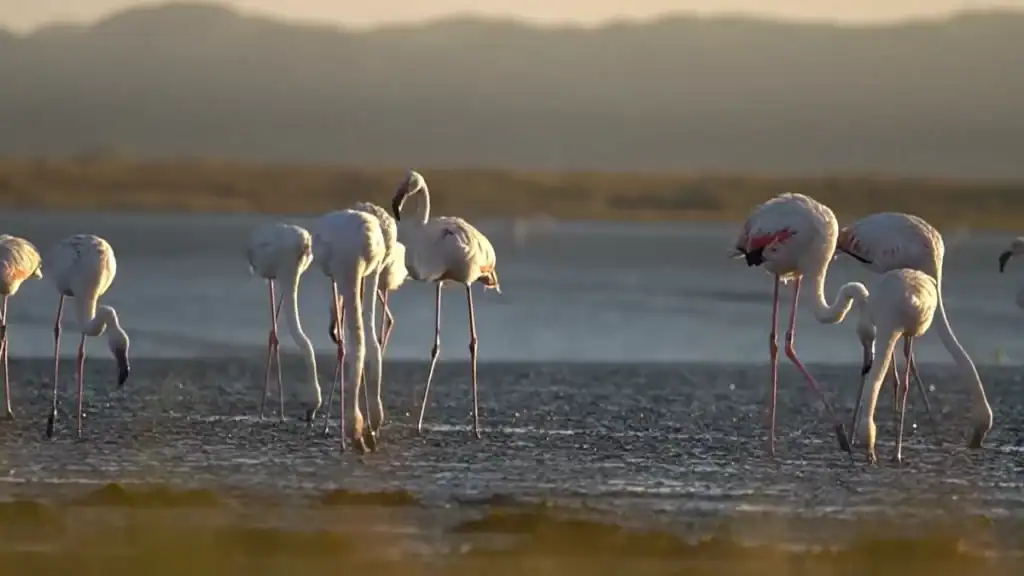
🦩 Is the Sado Dolphin Trip Good for Birdwatching Too?
Yes. We would treat the birdlife as part of the experience rather than something to notice only when the dolphins disappear. Mudflats, saltmarshes and shallow lagoons create opportunities to see flamingos, oystercatchers, herons, egrets and migratory waders during the journey through the estuary.
Flamingos Can Pull Your Attention Away From the Water
Once we started scanning the shallows as well as the open water, the trip stopped feeling centred on a single species.
- 🦩 Flamingos: look for them feeding in the shallow lagoons.
- 🐦 Oystercatchers: often seen on mudflats near the marina.
- 🪶 Herons and egrets: watch the channels and marshes.
- 🦆 Migratory waders: autumn and winter bring the greatest variety.
Flamingos can be the unexpected distraction, standing across the shallows while oystercatchers, herons and egrets work the exposed mudflats. In autumn and winter, returning migratory species add even more movement. A dolphin trip can therefore become a broader wildlife outing without needing a separate birdwatching itinerary.
The Wider Estuary Is Part of the Experience
For us, the wider wildlife stopped the quieter periods between dolphin sightings from feeling like waiting.
Rather than focusing on a single species, the tour reveals an entire estuary ecosystem where dolphins, birds and traditional fishing all exist alongside one another. Visitors interested in the wider setting will also find The Comporta Coast explains how the estuary connects with the beaches, rice fields and villages that define this unique part of Portugal.
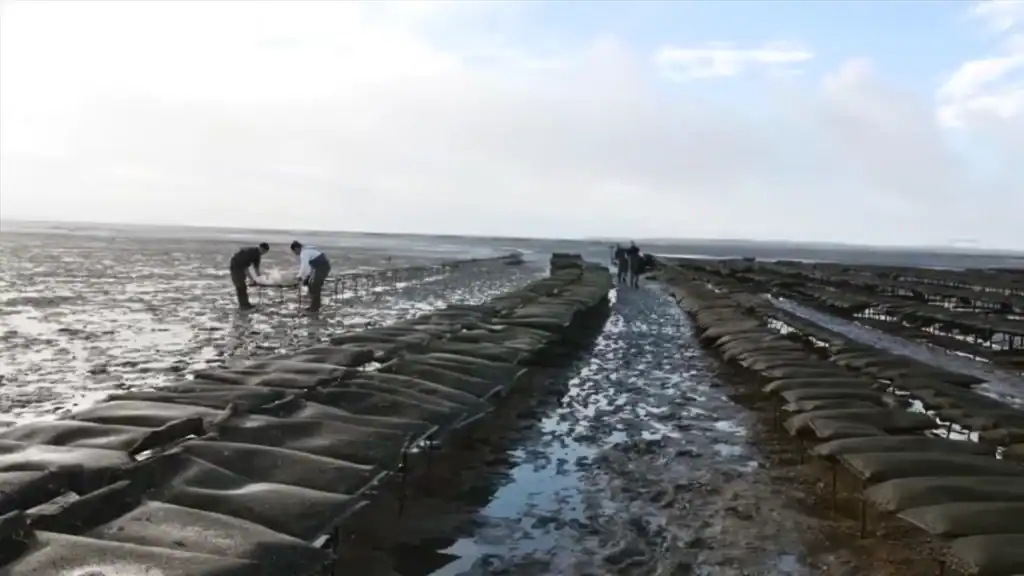
⚓ What Else Do You See Around the Sado Estuary?
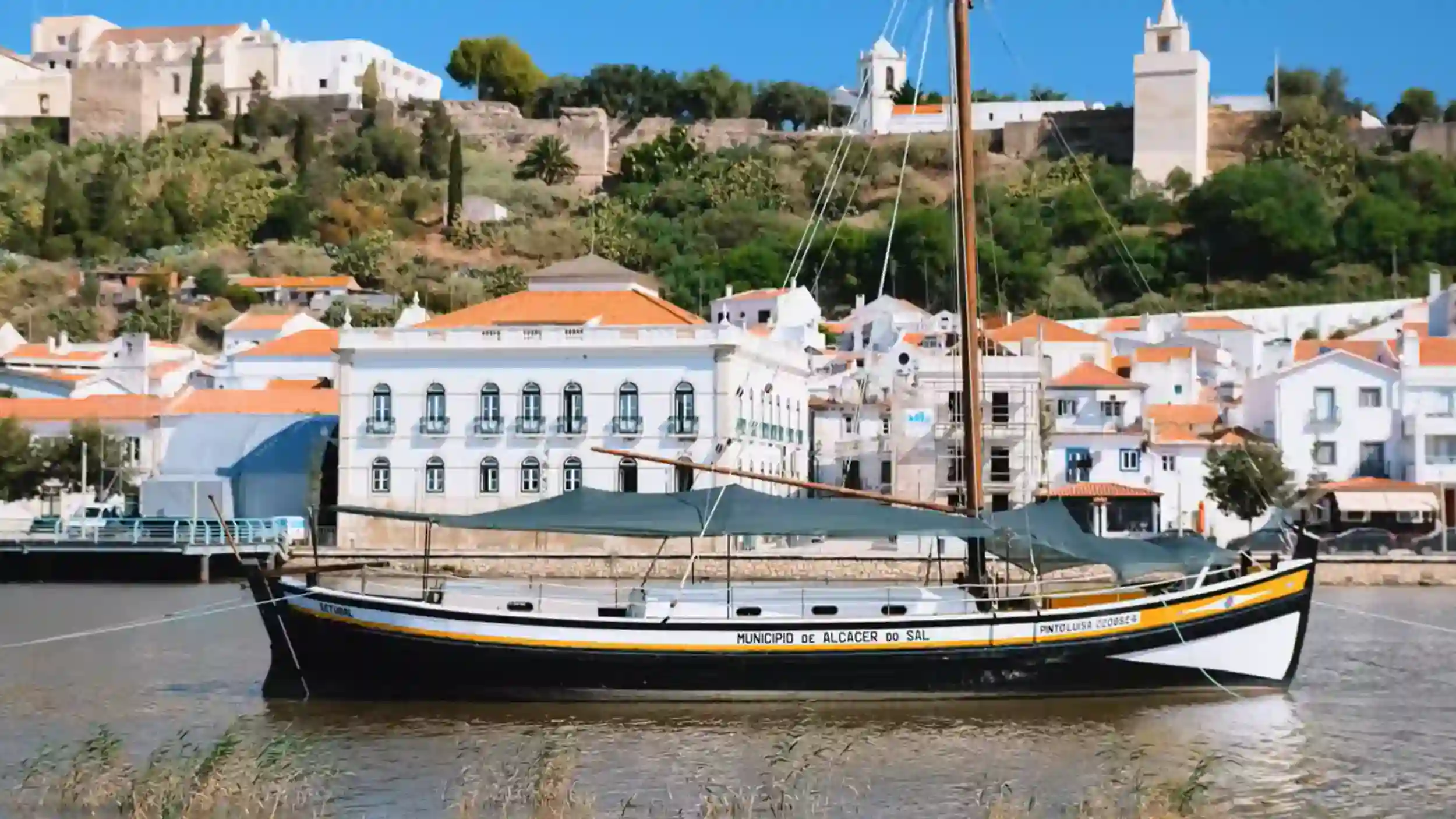
What interested us beyond the wildlife was that the estuary never felt arranged solely for visitors. Fishing boats, oyster farms and working waterways occupied the same landscape as the dolphins and birds, so the trip also showed us how people continue to use the estuary alongside its protected wildlife.
Oyster Farms and Fishing Boats Change the Setting
We were never looking at a landscape sealed off from ordinary life.
- 🎣 Fishing: a long-established local industry.
- 🦪 Oyster farming: visible through the tidal channels.
- 🚤 Dolphin tours: wildlife observation takes place in the same working waterways.
- 🌊 Tidal channels: people and wildlife use the same estuary.
Boats move between oyster beds and fishing areas. The dolphins follow feeding routes through the same channels. That coexistence gives the trip a different texture from a wildlife reserve. The estuary is not arranged around visitors, and that makes the resident colony feel more rooted in the place.
The Working Landscape Gives the Wildlife More Context
By the end, we were thinking of the dolphins as one part of the estuary rather than the only reason the place mattered.
The dolphins are only one part of a landscape shaped by tides, fishing, agriculture and coastal villages. Visitors interested in that broader setting will gain a fuller appreciation by exploring The Comporta Coast, where the estuary, rice fields and Atlantic shoreline come together to define this unique region of Portugal.
⏱️ How Long Does a Sado Estuary Dolphin Tour Take?
Allow roughly two and a half hours for a standard dolphin-watching boat trip, although the exact programme depends on the operator and departure. Current operators serving the Sado Estuary commonly advertise trips of about 2 to 2.5 hours, with some longer experiences reaching around three hours. We would therefore avoid planning the rest of the day too tightly around the advertised return time, especially for a wildlife trip where conditions can affect the experience.