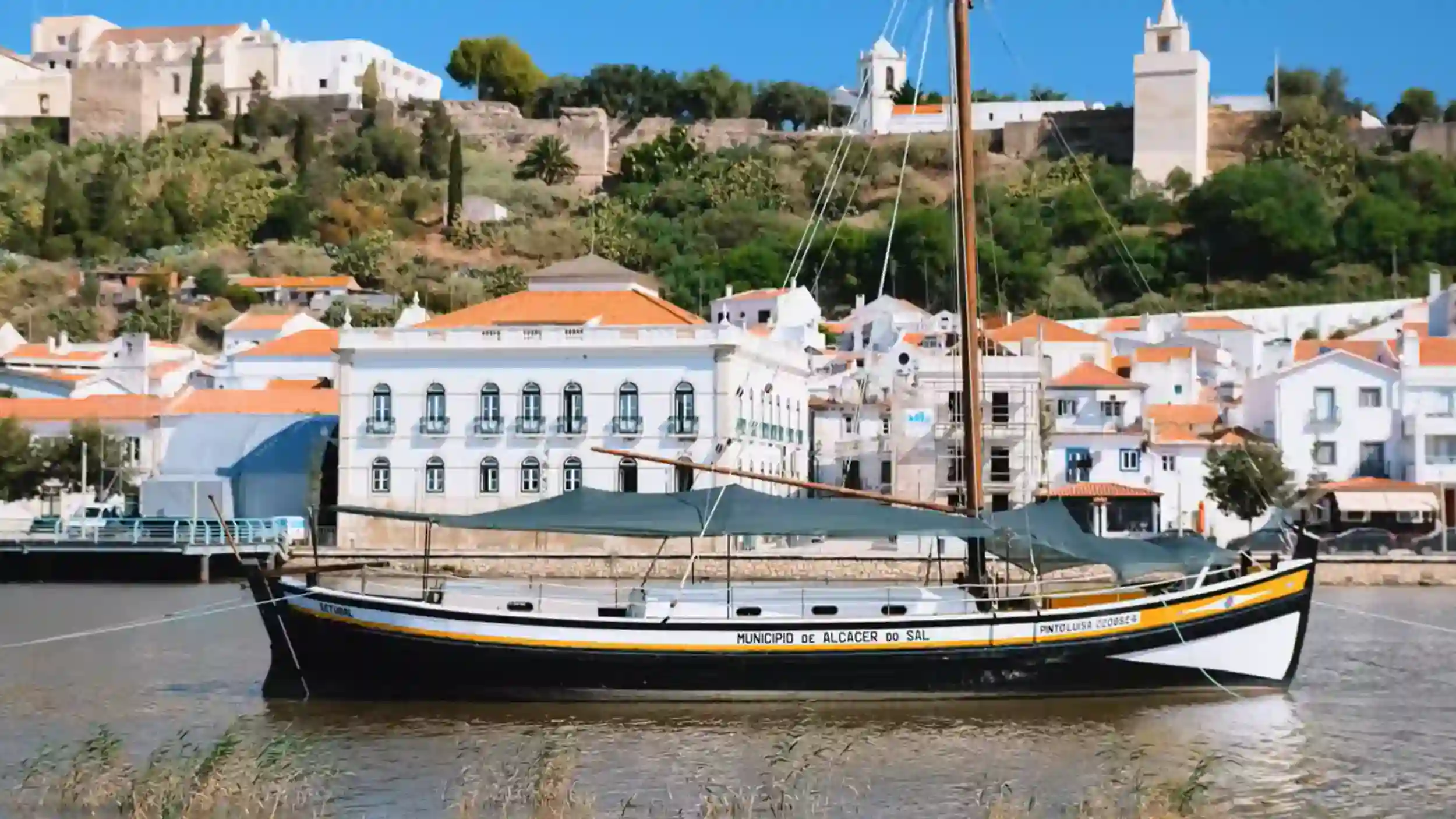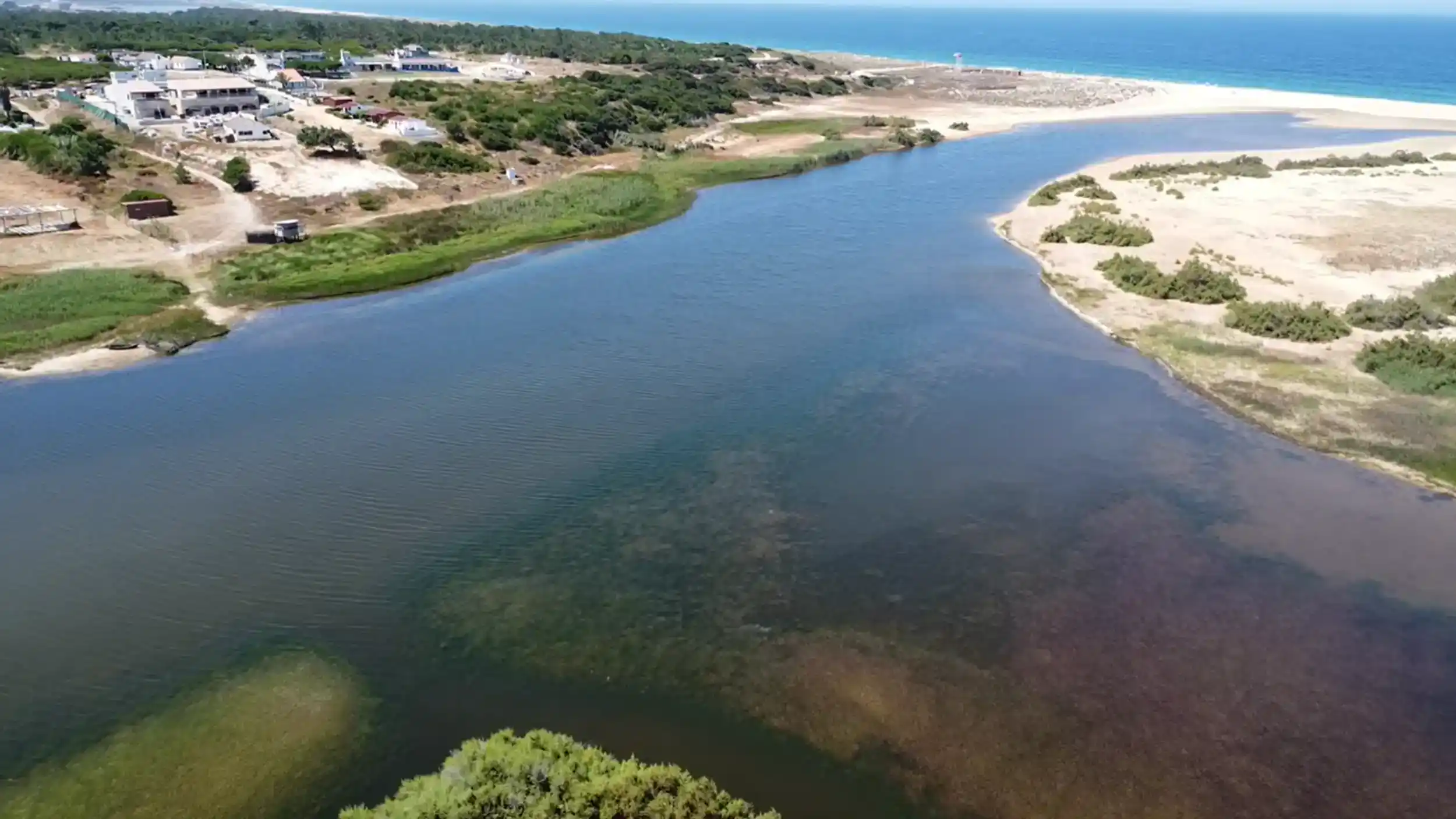
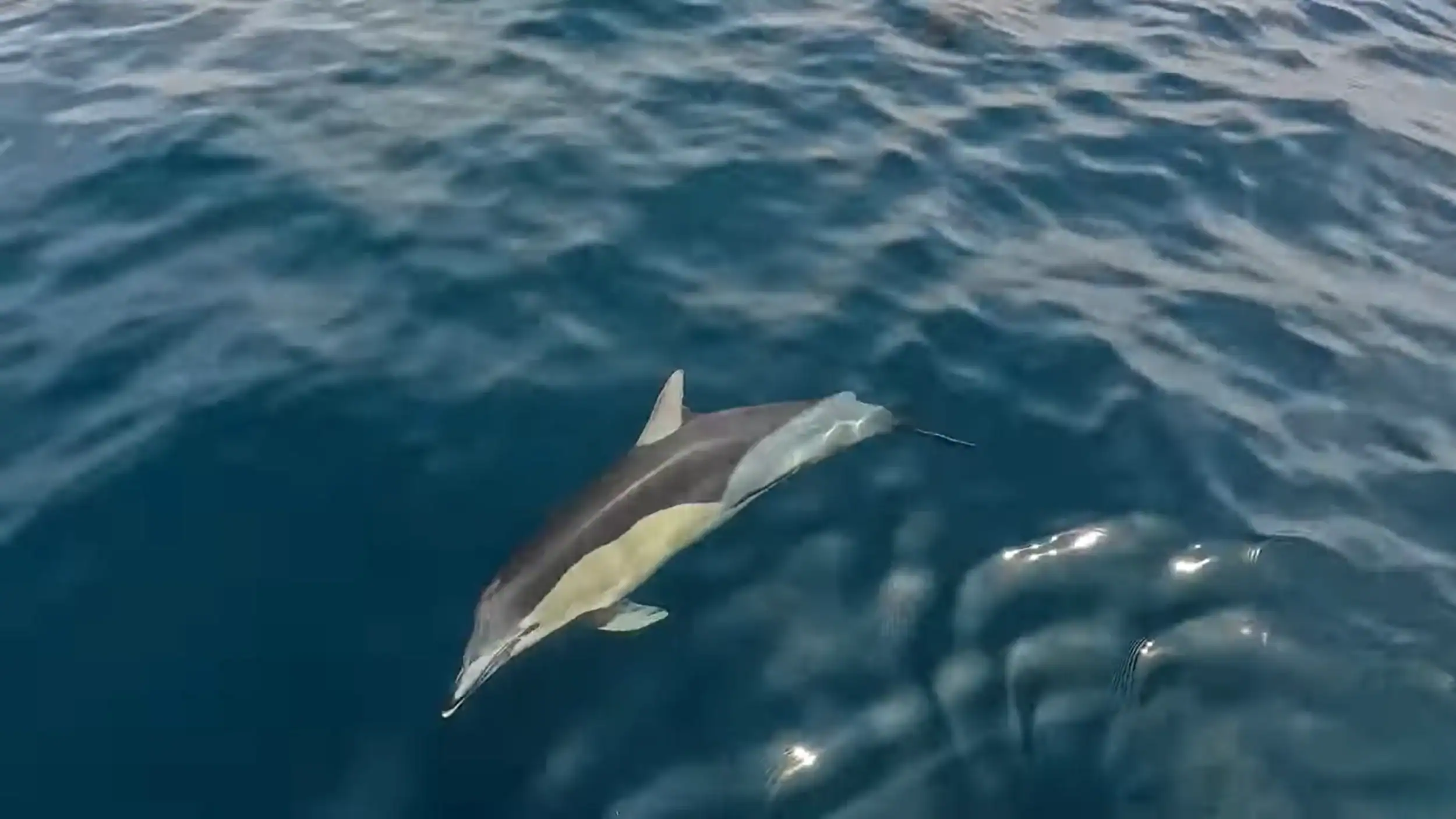
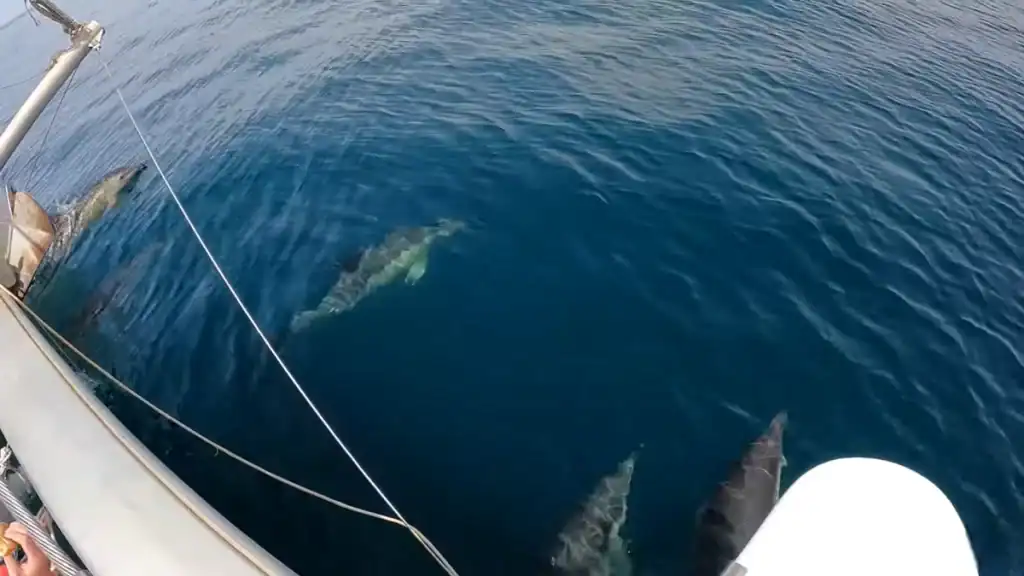
Sado Estuary dolphins are one of the Comporta region’s most memorable wildlife experiences. Unlike many dolphin-watching destinations, this is home to a permanent colony of bottlenose dolphins, giving visitors the chance to observe animals that live in the estuary throughout the year rather than simply passing through.
From Comporta, the drive to Marina de Tróia takes less than thirty minutes, where boat tours head into the calm waters of the estuary. The experience is quieter and more natural than many people expect, with the focus firmly on watching wild dolphins in their own environment.
🐬 A Permanent Colony, Not a Passing Pod
Sado Estuary dolphins are unusual because they don’t simply pass through these waters. They belong to one of Europe’s few permanent resident bottlenose dolphin colonies, living, feeding and raising their young within the estuary throughout the year. That continuity creates a very different experience from most dolphin-watching destinations, where sightings depend on migratory animals.
Why the Sado Estuary Dolphins Are So Special
Their permanent presence changes the way tours operate.
| Feature | Why it matters |
|---|---|
| 🐬 Resident colony | Dolphins live here all year |
| 🌊 Sheltered estuary | Calm water compared with the open Atlantic |
| 🚤 Local guides | Know the dolphins’ regular feeding areas |
| 📸 Natural encounters | Wildlife observed on the dolphins’ terms |
Because the dolphins know these waters intimately, tours focus on quietly locating the pod rather than searching vast areas of open sea. Sightings are often closer and more relaxed, allowing visitors to observe natural behaviour without the pressure of chasing fast-moving animals across the coastline.
Where This Fits on the Comporta Coast
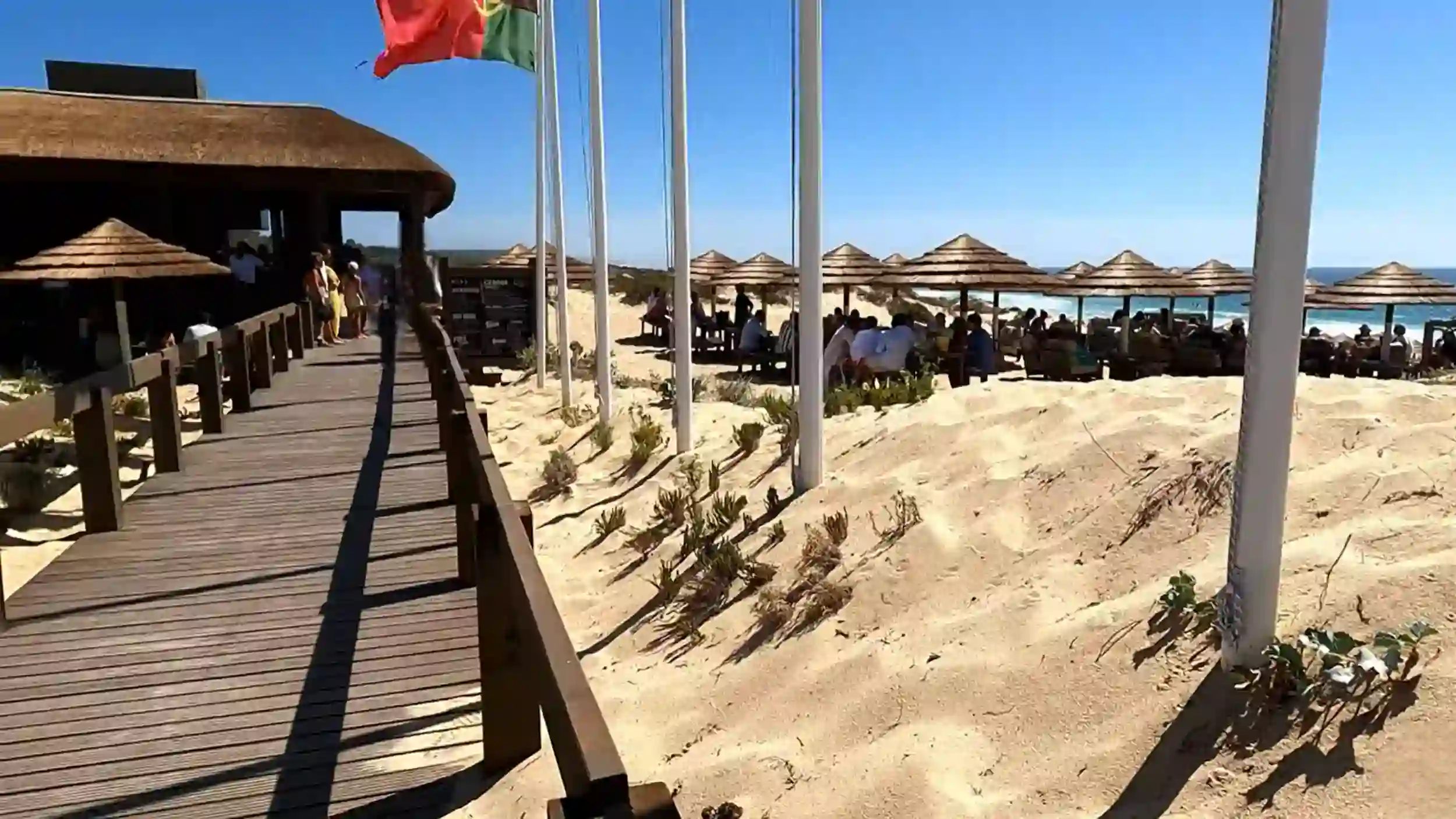
Although tours depart from Tróia rather than Comporta itself, they form one of the region’s signature wildlife experiences.
Visitors exploring The Comporta Coast often combine a dolphin tour with time on the beaches or in the villages, creating a day that balances the Atlantic shoreline with the quieter waters of the Sado Estuary.
🌊 Why Permanence Changes the Experience
Knowing the Sado Estuary dolphins live here all year changes the way most people experience the tour. Rather than racing from one sighting to another, operators spend time observing a resident population that follows familiar feeding routes through the estuary. The pace feels calmer, with the emphasis on watching natural behaviour instead of searching for brief encounters.
Living Alongside the Sado Estuary Dolphins
A resident colony creates a different relationship between people and wildlife.
| Typical dolphin tour | Sado Estuary dolphins |
|---|---|
| 🐬 Often migratory animals | 🐬 Permanent resident colony |
| 🚤 Search large offshore areas | 🌊 Operate within a known estuary |
| 📸 Brief encounters | 👀 Longer periods of observation |
| 🌍 Different pods each season | 🏡 The same resident population |
Researchers have monitored individual dolphins for decades, identifying many by the unique markings on their dorsal fins. That long-term understanding gives additional depth to the experience, reminding visitors they are observing animals with established territories rather than transient wildlife.
A Wildlife Experience Rather Than a Show
The best tours don’t encourage the dolphins to perform.
Instead, boats keep a respectful distance and allow the pod to decide how much interaction takes place. Visitors combining the experience with Comporta Village often find the quieter pace of the estuary reflects the relaxed atmosphere that defines the wider region.
🐬 What the Dolphins Actually Do
Watching Sado Estuary dolphins is less about dramatic displays and more about observing natural behaviour. Most encounters involve the pod surfacing calmly around the boat, travelling together, feeding or socialising as they move through the estuary. Rather than constant leaps or acrobatics, the experience is defined by repeated close sightings over an extended period.
Watching Sado Estuary Dolphins in the Wild
The behaviour you see depends on what the dolphins are doing naturally.
| Behaviour | What you’ll notice |
|---|---|
| 🐬 Travelling | Steady surfacing as the pod moves together |
| 🐟 Feeding | Short dives and frequent resurfacing |
| 👥 Socialising | Dolphins swimming closely alongside one another |
| 🌊 Deep foraging | Longer dives before reappearing |
The dolphins often surface within a short distance of the boat before disappearing beneath the water for a few seconds or several minutes, depending on their activity. Although breaching does happen, it is never the main attraction. The highlight is usually the opportunity to watch wild animals behaving naturally in calm surroundings.
What Most Visitors Remember
Many people leave talking about how peaceful the experience felt rather than how spectacular it was.
The absence of loud engines, crowds and constant movement allows the focus to remain on the dolphins themselves. Travellers spending time around The Comporta Coast often find this slower wildlife encounter provides a welcome contrast to the Atlantic beaches and coastal villages.
⛵ Catamaran vs Kayak: Which Tour Works Better
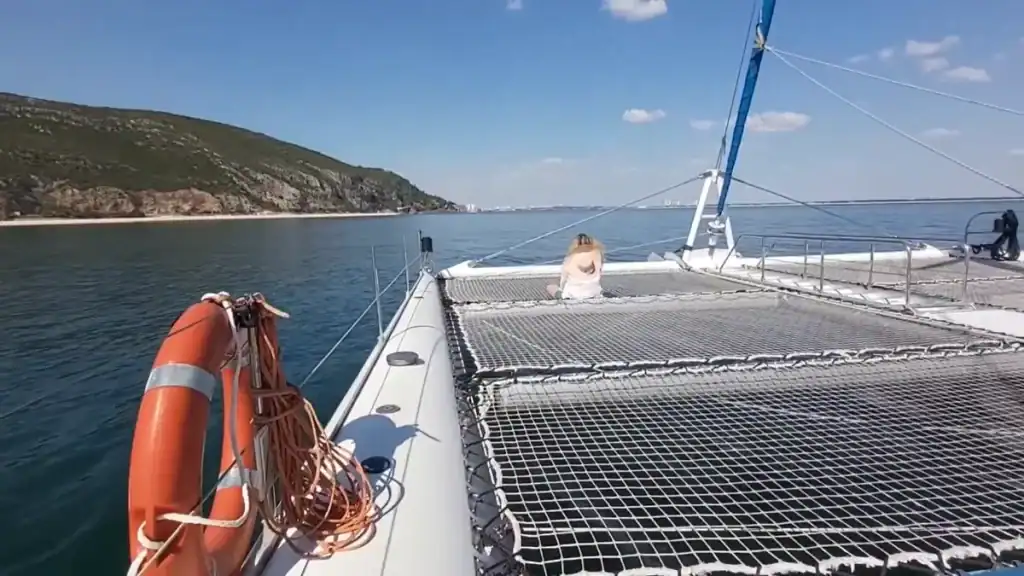
Both options allow you to experience the Sado Estuary dolphins, but they create very different days. Catamaran tours are designed specifically around finding the resident dolphins, while kayaking focuses more on exploring the estuary itself at a slower, quieter pace.
Choosing the Best Sado Estuary Dolphins Tour
The right choice depends on what you want from the experience.
| Option | Best for |
|---|---|
| ⛵ Catamaran | Most reliable dolphin sightings |
| 🛶 Kayak | Exploring the estuary at water level |
| 👨👩👧 Families | Catamaran tours |
| 🌿 Nature lovers | Kayaking and slower exploration |
Catamaran tours generally offer the highest chance of seeing Sado Estuary dolphins because guides know the pod’s regular feeding areas and can cover a much larger section of the estuary. They also provide commentary throughout the trip, helping visitors understand both the dolphins and the wider ecosystem.
When a Kayak Makes More Sense
Kayaking offers a more immersive experience but with different priorities.
Moving quietly through the estuary allows you to appreciate the landscape from water level, although dolphin sightings are naturally less predictable because of the shorter distances covered. Visitors combining the trip with Comporta Village often choose the catamaran for a half-day excursion before returning to explore the village at a more relaxed pace.
📅 When to Go
Sado Estuary dolphins can be seen throughout the year because the resident colony doesn’t migrate. The season doesn’t determine whether the dolphins are present. Instead, it changes the overall atmosphere of the estuary, the birdlife and the number of boats on the water.
Best Time to See Sado Estuary Dolphins
Each season offers a slightly different experience.
| Season | What to expect |
|---|---|
| 🌸 Spring | Mild weather and increasing wildlife activity |
| ☀️ Summer | Calm water, warm conditions and the busiest tours |
| 🍂 Autumn | Softer light, fewer visitors and excellent birdlife |
| ❄️ Winter | Quiet estuary and peak migratory bird season |
September is often one of the most rewarding months to visit. The water remains warm, summer crowds begin to fade and migratory birds start returning to the estuary, adding another dimension to the experience alongside the Sado Estuary dolphins.
Sightings Are Never Guaranteed
The dolphins are wild animals, so every trip is different.
Although local operators successfully locate the resident pod on most tours, there is never a guarantee of a sighting. That unpredictability is part of the appeal, reminding visitors they are observing wildlife rather than visiting a managed attraction. If you’re exploring The Comporta Coast over several days, choosing a calm-weather forecast can help make the overall experience even more enjoyable.
🦩 The Birds That Share the Estuary
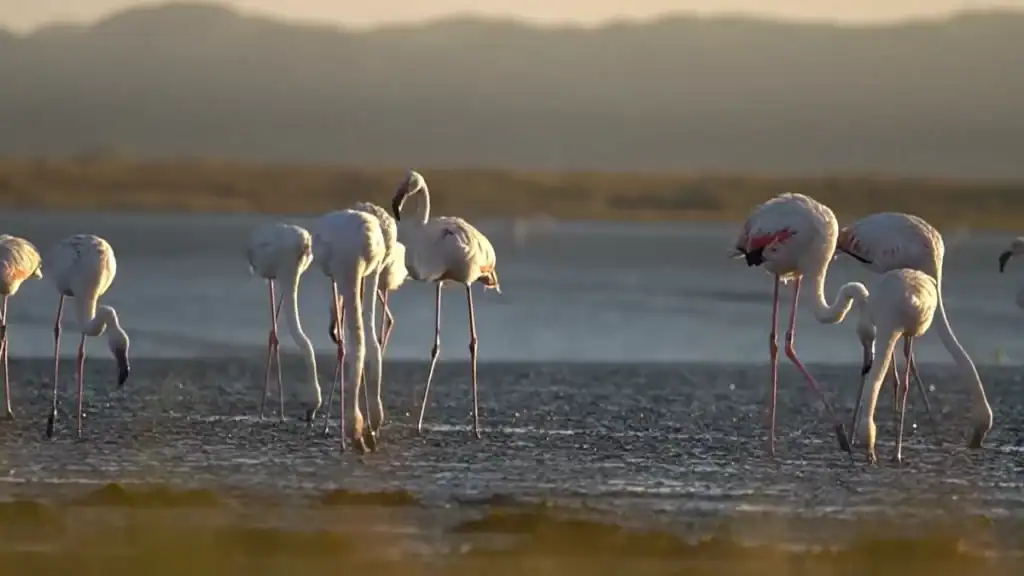
A trip to see the Sado Estuary dolphins almost always becomes a birdwatching experience as well. The estuary’s mudflats, saltmarshes and shallow lagoons support hundreds of bird species, many of which are visible during the journey to and from the dolphin viewing areas.
Birdlife Alongside the Sado Estuary Dolphins
The variety changes with the seasons.
| Bird | Where you’re likely to see it |
|---|---|
| 🦩 Flamingos | Feeding in the shallow lagoons |
| 🐦 Oystercatchers | Mudflats near the marina |
| 🪶 Herons and egrets | Estuary channels and marshes |
| 🦆 Migratory waders | Most common during autumn and winter |
Flamingos are often the unexpected highlight, standing in large groups across the shallows while oystercatchers, herons and egrets work the exposed mudflats. Autumn and winter bring even greater diversity as migratory species arrive, making the estuary one of Portugal’s finest birdwatching locations.
More Than a Dolphin Tour
The combination of marine life and birdlife is what makes this experience so distinctive.
Rather than focusing on a single species, the tour reveals an entire estuary ecosystem where dolphins, birds and traditional fishing all exist alongside one another. Visitors interested in the wider setting will also find The Comporta Coast explains how the estuary connects with the beaches, rice fields and villages that define this unique part of Portugal.
⚓ A Working Estuary, Not a Wildlife Reserve
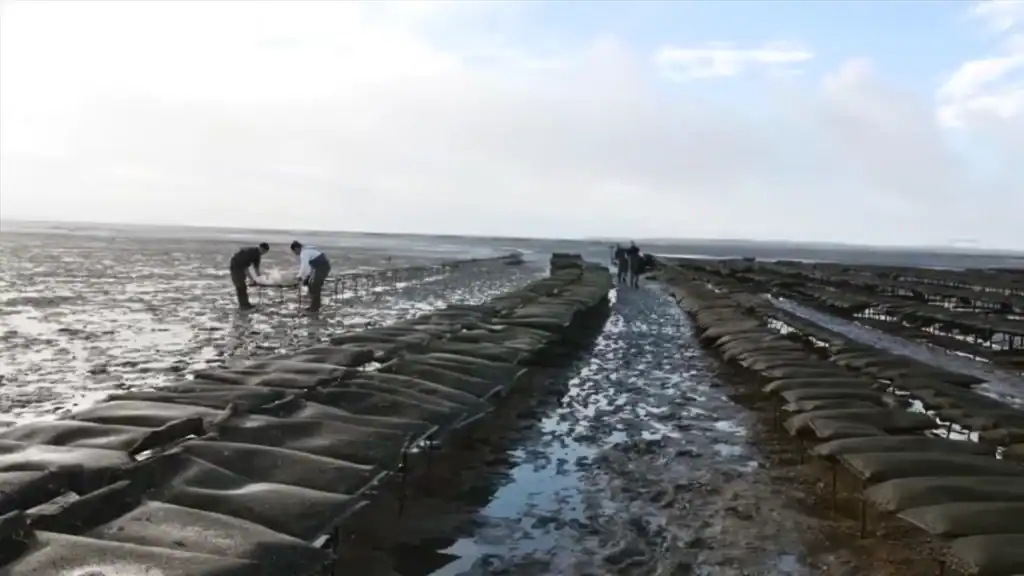
The Sado Estuary dolphins live in an environment that is both natural and working. Fishing boats, oyster farms and commercial activity share the same waterways as the resident dolphin colony, creating a landscape where people and wildlife have coexisted for generations rather than one managed exclusively for conservation.
How the Sado Estuary Dolphins Share the Water
The estuary supports far more than wildlife.
| Activity | Role in the estuary |
|---|---|
| 🎣 Fishing | Long-established local industry |
| 🦪 Oyster farming | Visible throughout the tidal channels |
| 🚤 Dolphin tours | Responsible wildlife observation |
| 🌊 Tidal waterways | Shared by people and wildlife alike |
As boats move between oyster beds and fishing areas, the Sado Estuary dolphins continue following their own feeding routes through the channels. This coexistence is one of the most distinctive aspects of the estuary, showing that an active working landscape can still support remarkable wildlife.
Understanding the Wider Landscape
Seeing the estuary as a living environment rather than simply a tourist attraction adds much more depth to the experience.
The dolphins are only one part of a landscape shaped by tides, fishing, agriculture and coastal villages. Visitors interested in that broader setting will gain a fuller appreciation by exploring The Comporta Coast, where the estuary, rice fields and Atlantic shoreline come together to define this unique region of Portugal.