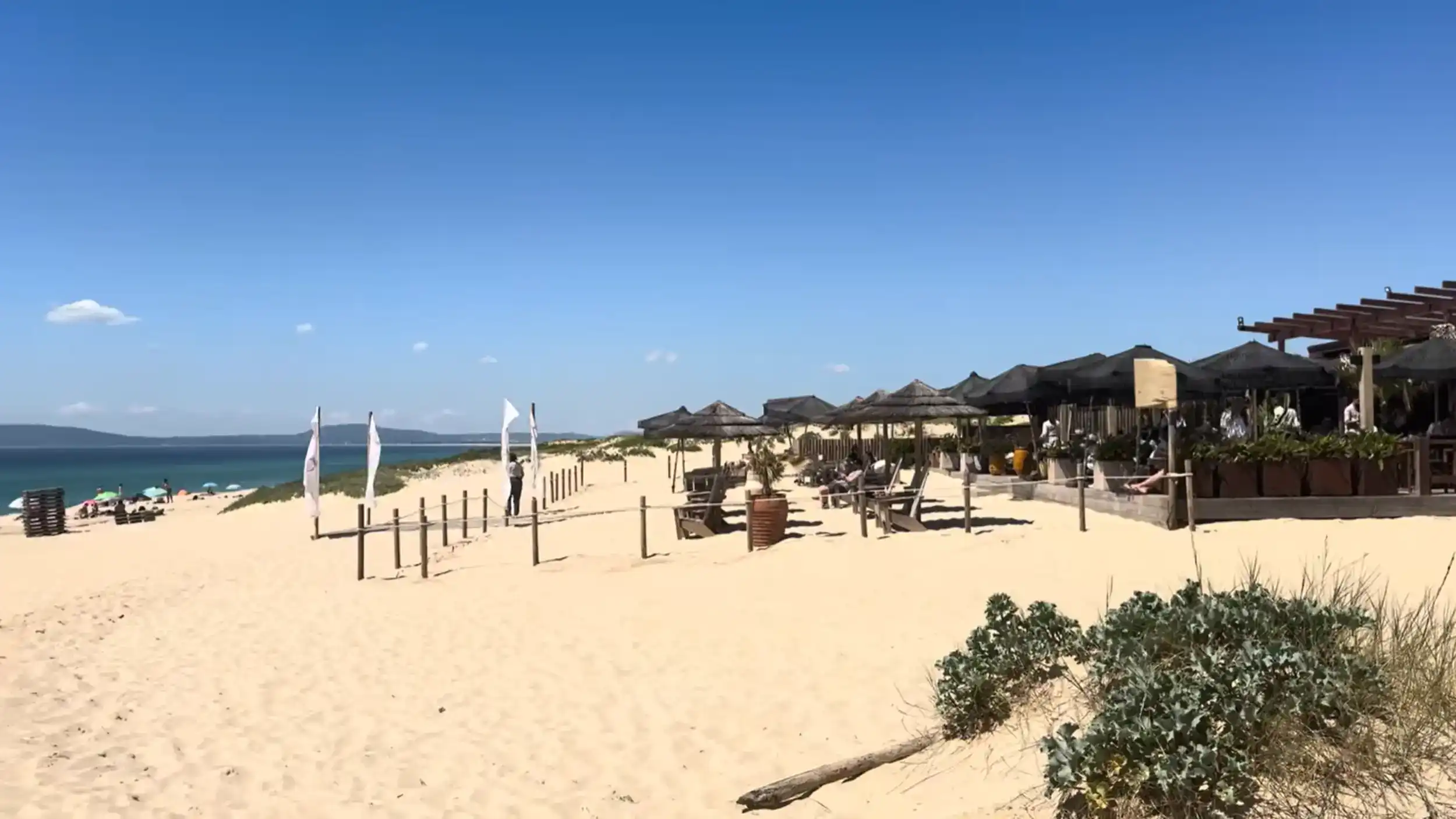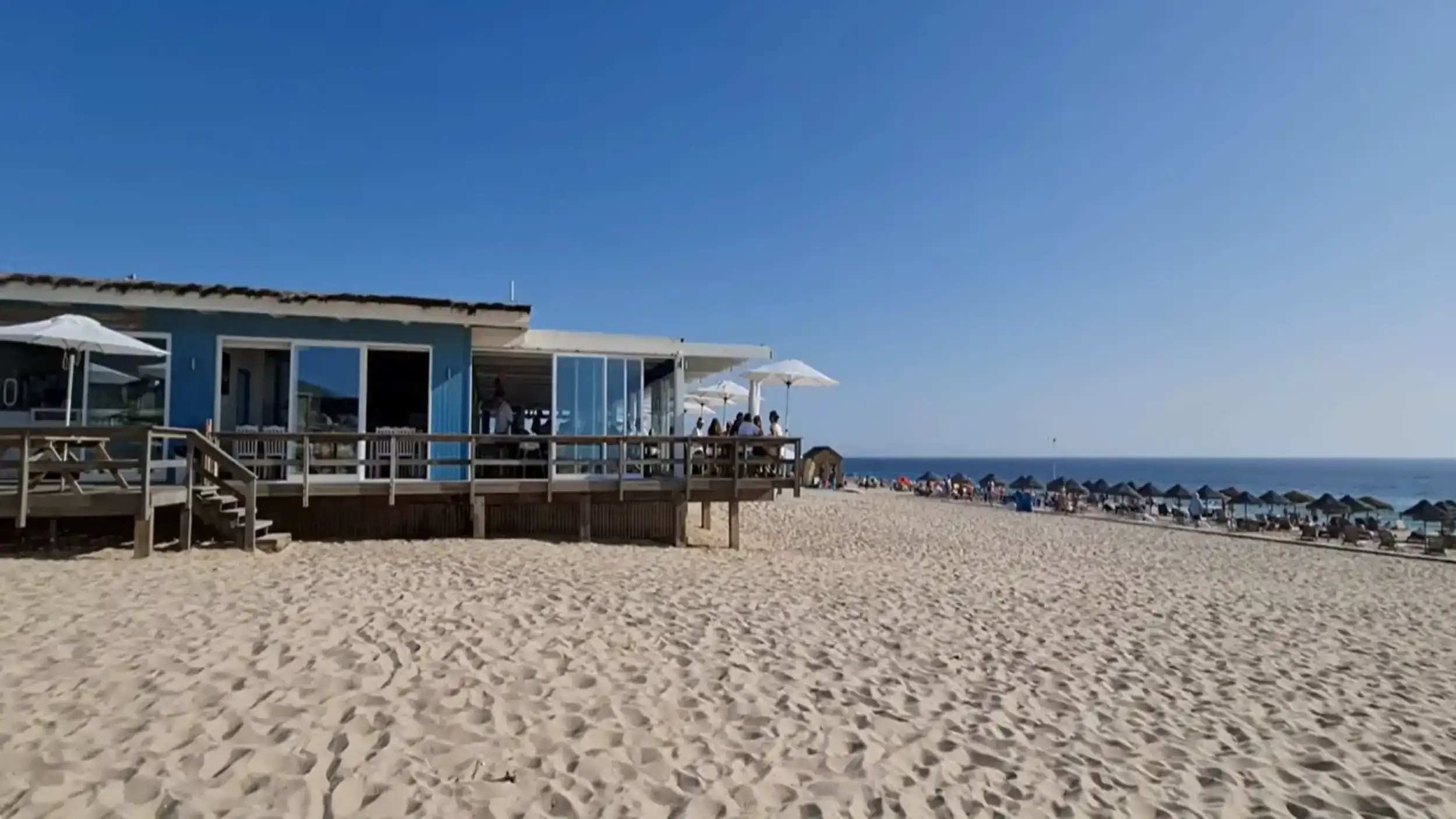
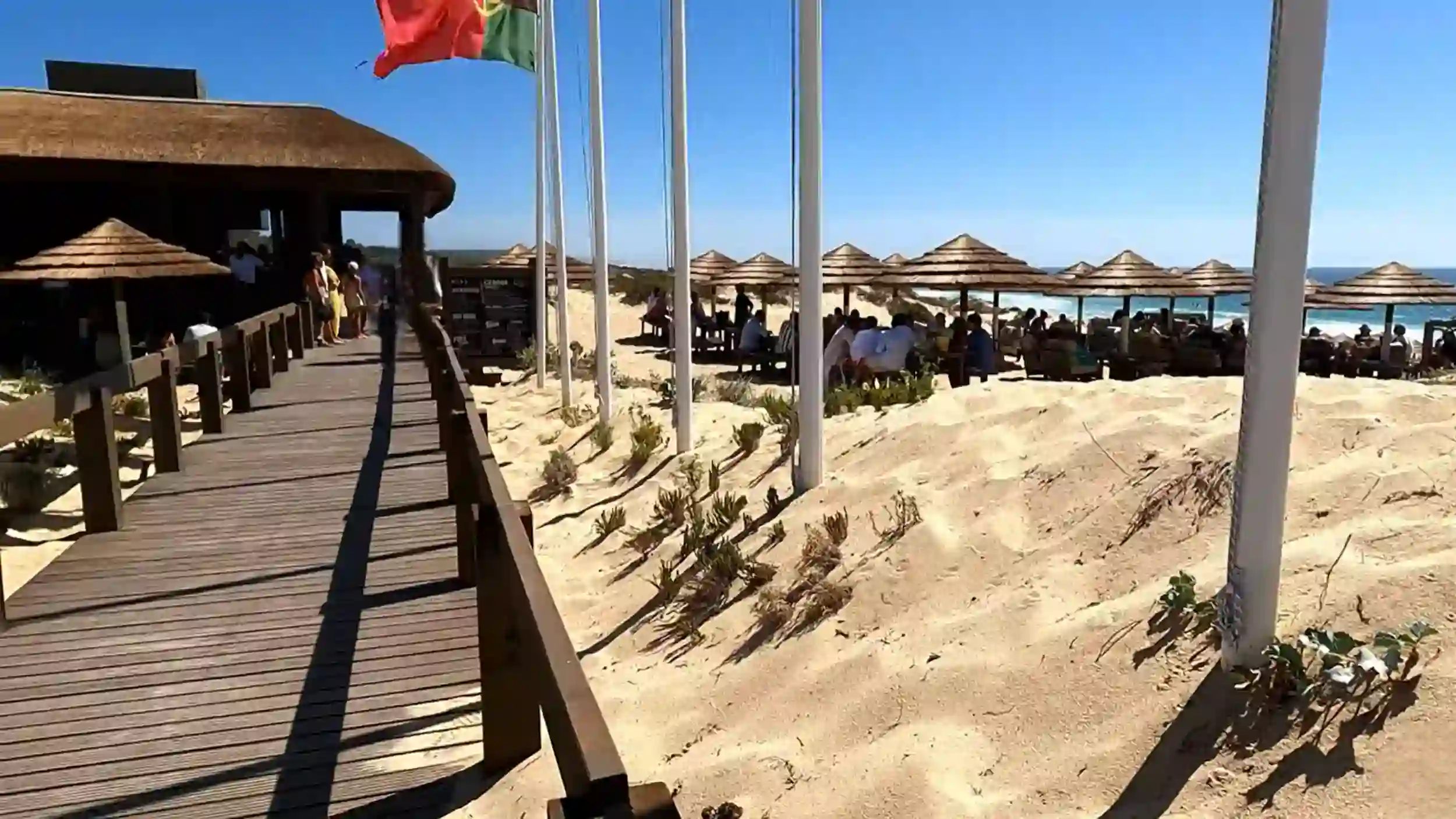
The drive from Lisbon to Comporta is more than a journey between two destinations. Over roughly ninety minutes, the landscape changes almost step by step, from the capital’s urban skyline to forested mountains, broad estuaries, ferry crossings and finally the quiet Atlantic coast.
Choosing the right route makes a noticeable difference. While the direct motorway is quicker, the journey via Setúbal, Serra da Arrábida and the Tróia ferry transforms the drive into part of the experience, revealing many of the landscapes that define the Comporta Coast long before you reach the village.
🛣️ The Route Worth Taking from Lisbon to Comporta
The journey from Lisbon to Comporta can be completed in around ninety minutes via the motorway, but that route misses the landscapes that make this corner of Portugal distinctive. Taking the longer drive through Setúbal, across Serra da Arrábida and onto the Tróia ferry turns the journey itself into part of the holiday.
Why the Scenic Route Is Better
The extra time is rewarded with far more variety.
| Route | What to expect |
|---|---|
| 🚗 Direct motorway | Fastest but least memorable |
| 🌄 Via Serra da Arrábida | Mountain views and coastal scenery |
| ⛴️ Tróia ferry | Scenic crossing of the Sado Estuary |
| 🌾 Coast road | Pine forests, rice fields and dunes |
Instead of staying on the A2 all the way south, the scenic route leaves the motorway near Setúbal before climbing into the Arrábida hills. After crossing the estuary by ferry, the final stretch passes through pine forests and rice fields before reaching Comporta, allowing the landscape to unfold gradually rather than arriving all at once.
Why the Lisbon to Comporta Journey Matters
The drive helps explain the destination before you even arrive.
Moving through mountains, estuary and coastal plain reveals how the wider region fits together. Travellers planning to explore beyond the village will gain even more context by continuing with The Comporta Coast, where those changing landscapes become the defining feature of the destination.
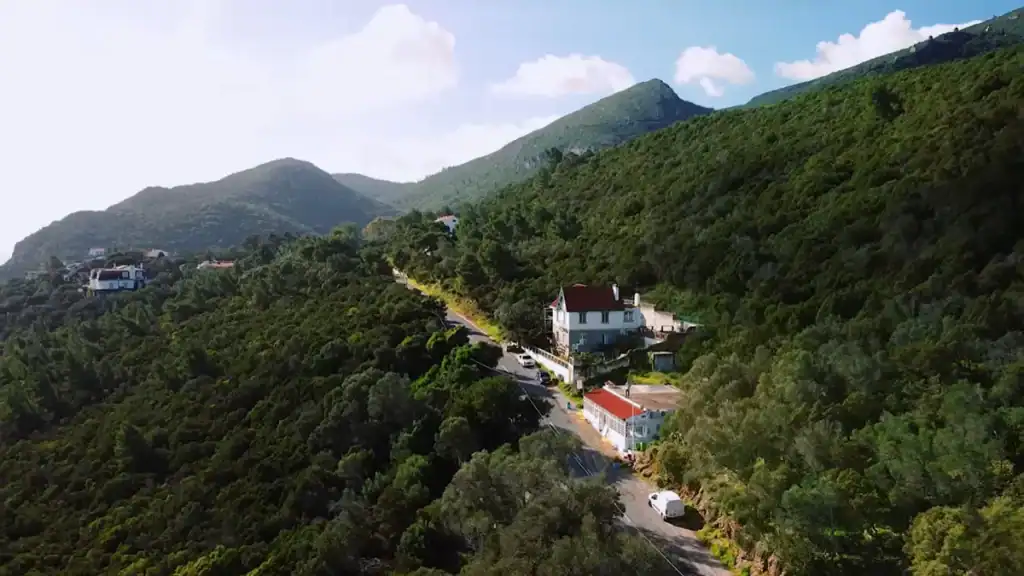
⛰️ Serra da Arrábida on the Lisbon to Comporta Route
Serra da Arrábida is the highlight of the scenic Lisbon to Comporta route. Rising sharply above the Atlantic just south of Setúbal, this protected limestone range replaces the motorway with winding roads, dramatic viewpoints and some of Portugal’s most beautiful coastal scenery.
Driving Through Serra da Arrábida
Allow time to enjoy the road rather than simply driving through it.
| Feature | What to expect |
|---|---|
| ⛰️ Limestone ridge | Spectacular coastal mountain scenery |
| 🌊 Atlantic viewpoints | Panoramic views across the ocean and estuary |
| 🏖️ Hidden coves | Crystal-clear water below the cliffs |
| 🚗 Scenic road | Slow, winding drive through the Natural Park |
The ridge road climbs above Setúbal before revealing sweeping views across the Atlantic, the Sado Estuary and the Tróia Peninsula. Several viewpoints invite short stops, while small coves beneath the cliffs offer some of Portugal’s clearest water for anyone with extra time.
Is Serra da Arrábida Worth Adding to the Drive?
Absolutely, if you aren’t in a hurry.
Adding Serra da Arrábida transforms the journey from a simple transfer into one of Portugal’s finest coastal drives. If time allows, Setúbal and Palmela are also worth exploring before continuing towards the Tróia ferry and the quieter landscapes beyond.
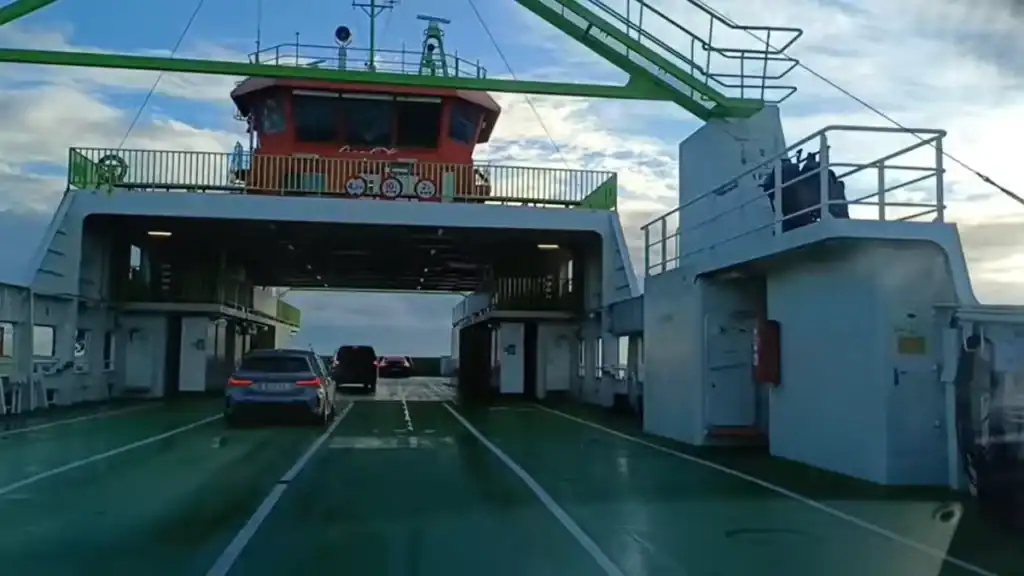
⛴️ The Tróia Ferry on the Lisbon to Comporta Route
The Tróia ferry is one of the defining moments of the Lisbon to Comporta journey. Rather than driving around the estuary, the ferry crosses directly from Setúbal to the Tróia Peninsula in around twenty to twenty-five minutes, turning a practical connection into part of the experience.
How the Tróia Ferry Works on the Journey
Using the ferry is straightforward.
| Feature | What to expect |
|---|---|
| ⛴️ Crossing time | Around 20 to 25 minutes |
| 🚗 Vehicles | Cars and passengers carried together |
| 📅 Service | Regular departures throughout the day |
| ⏰ Summer | Arrive early to avoid queues |
The ferry departs from central Setúbal and operates throughout the year. During the busiest summer weekends it’s worth arriving fifteen to twenty minutes before departure, as vehicle queues can build quickly. Once on board, the crossing offers excellent views of the Arrábida mountains behind you and the sandy Tróia Peninsula ahead.
Is the Tróia Ferry Worth Taking
If time allows, yes.
Although the motorway avoids the ferry completely, the crossing adds a memorable transition between the city and the coast. Once you reach Tróia, the landscape begins to change almost immediately before continuing south towards Comporta Village and the beaches beyond.
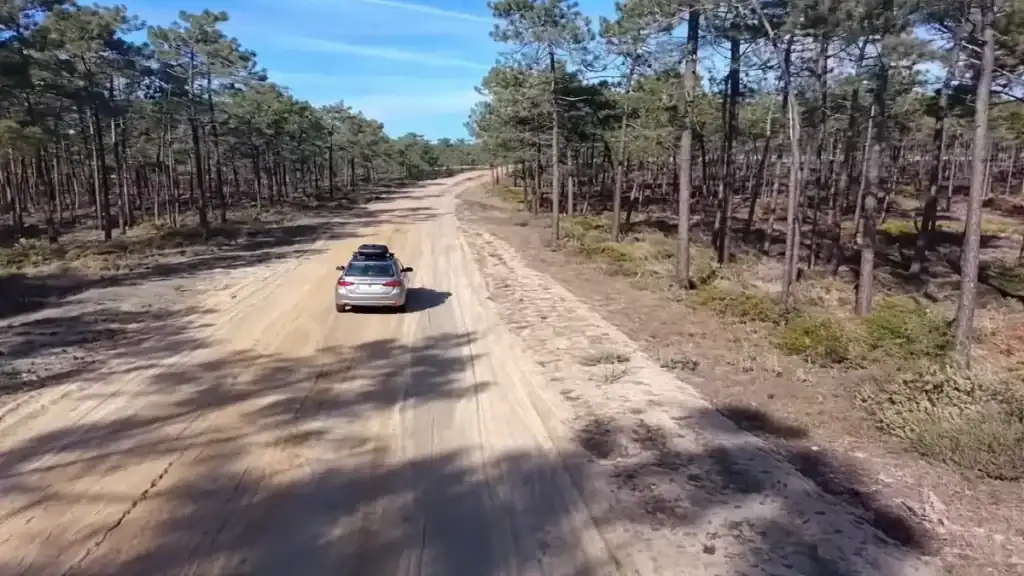
🌾 After the Ferry: When the Landscape Changes on the Lisbon to Comporta Drive
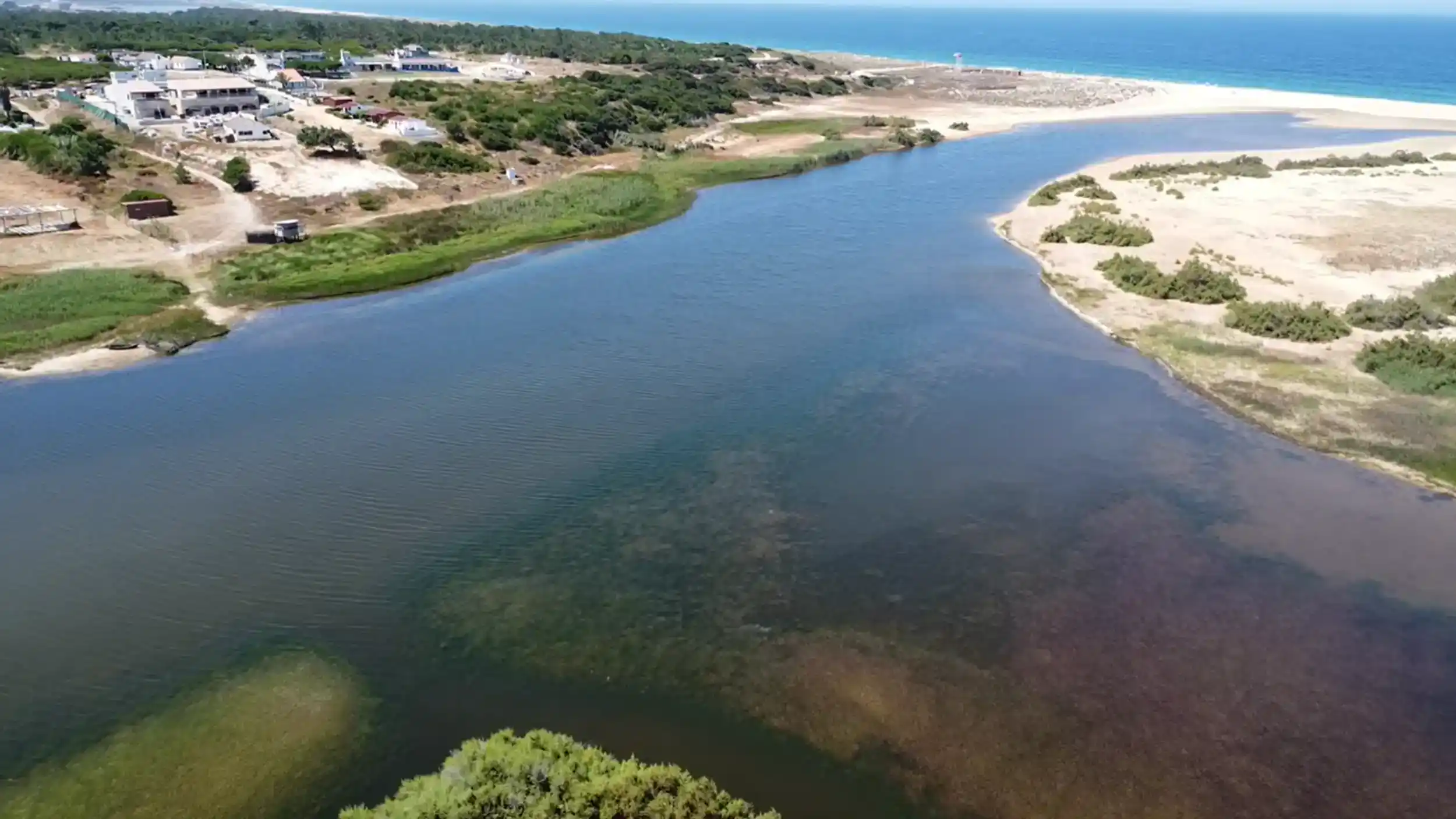
The biggest transformation on the Lisbon to Comporta journey happens immediately after leaving the Tróia ferry. The road flattens, the traffic disappears and the scenery becomes unmistakably Comporta, with pine forests, rice fields and broad estuary views replacing towns and busy roads.
What Changes After the Ferry on the Lisbon to Comporta Route?
The final twenty minutes feel completely different from the rest of the drive.
| Landscape | What you’ll notice |
|---|---|
| 🌲 Pine forests | Quiet roads beneath umbrella pines |
| 🌾 Rice fields | Seasonal colours that change throughout the year |
| 🦩 Estuary views | Wetlands rich in birdlife |
| 🐦 Storks | Frequently seen nesting and feeding beside the road |
Driving south, the atmosphere slows noticeably. In spring, flooded rice fields mirror the sky, while late summer brings dense green crops that turn golden during autumn. The route feels more like a nature reserve than a coastal approach, helping visitors understand why Comporta has remained so different from Portugal’s larger beach destinations.
Why This Part of the Lisbon to Comporta Journey Matters
The final approach prepares you for the destination.
Instead of arriving suddenly, the landscape gradually introduces the beaches, wetlands and villages that define the region. Reading about the Comporta Rice Fields beforehand makes this last stretch even more rewarding, as you’ll understand why the scenery changes so dramatically with each season.
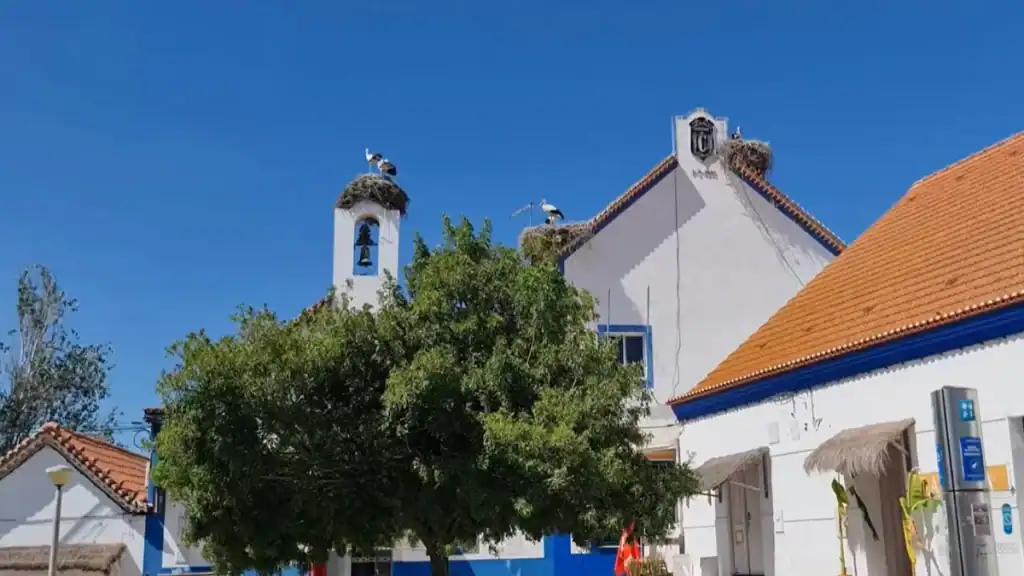
🏡 Arriving in Comporta After the Lisbon to Comporta Drive
Arriving in Comporta feels surprisingly understated after the changing landscapes of the Lisbon to Comporta journey. There are no large resorts, busy commercial areas or dramatic entrance roads. Instead, the village appears quietly among pine trees and low whitewashed buildings, setting the tone for everything that follows.
What to Expect When You Arrive in Comporta from Lisbon
The village is much smaller than many first-time visitors expect.
| Feature | What to expect |
|---|---|
| 🏡 Village centre | Compact and easy to explore on foot |
| 🅿️ Parking | Straightforward outside peak summer weekends |
| ☕ Atmosphere | Relaxed cafés and independent boutiques |
| 🕊️ Landmark | White church with nesting storks nearby |
Rather than rushing straight to the beach, it’s worth spending an hour wandering through the village first. The pace is noticeably slower than Lisbon, with cafés, boutiques and quiet streets replacing traffic and city noise. The contrast makes the journey feel complete.
What Should You Do First After the Lisbon to Comporta Journey?
Take time to slow down before exploring the wider coast.
A relaxed walk around Comporta Village provides the perfect introduction before heading towards the beaches, rice fields or estuary, allowing the atmosphere of the region to sink in naturally.
🚗 Why the Lisbon to Comporta Journey Should Not Be a Day Trip
Although the drive from Lisbon to Comporta looks manageable on a map, treating it as a day trip usually means missing what makes the region special. The journey itself deserves time, and once you arrive the beaches, villages and landscapes reveal themselves slowly rather than through a packed sightseeing schedule.
Why the Lisbon to Comporta Drive Deserves More Than One Day
The experience works best when spread across at least one night.
| Day trip | Overnight stay |
|---|---|
| ⏰ Rushed itinerary | 🌅 Time to enjoy the changing landscape |
| 🚗 Journey becomes transport | 🌊 Journey becomes part of the holiday |
| 🏖️ Limited time on the coast | 🌾 Time for beaches, villages and rice fields |
| 📸 Few opportunities to explore | 🍽️ Relaxed evenings and quieter mornings |
Trying to complete the return journey in a single day often turns the scenic route into a race against the clock. The Arrábida viewpoints are skipped, the Tróia ferry becomes a delay rather than an experience, and there’s little opportunity to appreciate the quieter rhythm that defines the coast.
How Long Should You Allow After the Lisbon to Comporta Journey?
One night should be considered the minimum, while two or three nights allow the region to reveal its full character.
Once you’ve settled in, exploring The Comporta Coast at an unhurried pace makes it much easier to understand why so many visitors return, not for famous attractions, but for the landscape itself.