The Vila do Conde coastal walk follows the Atlantic through a landscape of open beaches, protected dunes and coastal pine woodland. Much of the route uses raised wooden boardwalk, interrupted occasionally by Portuguese calçada and short stretches through small coastal settlements.
From the Ave estuary at Azurara to the Onda river at Labruge, the coastal section runs for roughly 8.5 kilometres each way. The terrain is remarkably flat, making this less about challenging hiking and more about spending several hours immersed in the changing shoreline, dunes and huge Atlantic sky.
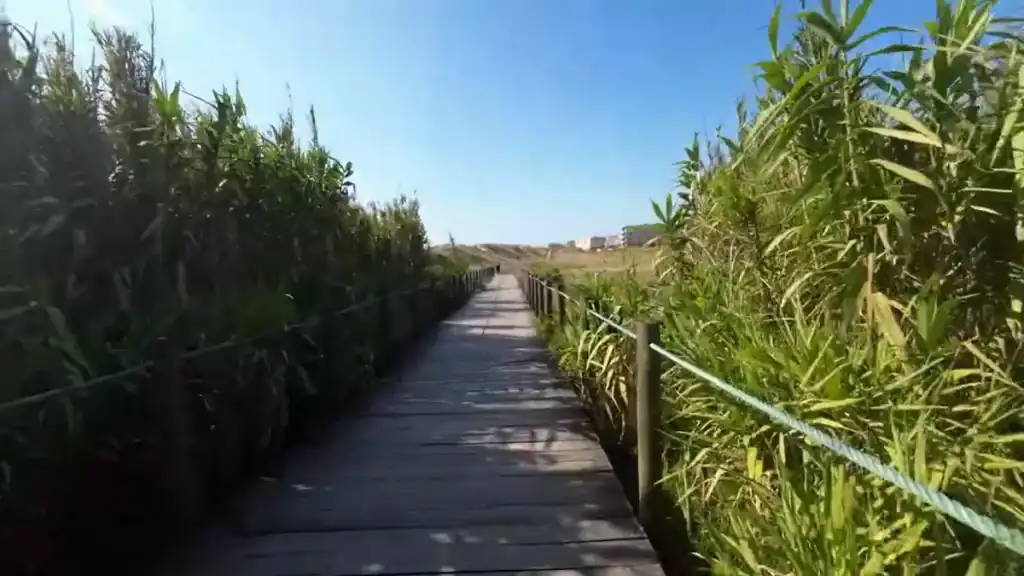
Following the Vila do Conde Coastal Walk
The defining feature of the Vila do Conde coastal walk is how easy the terrain is. Between Azurara and Labruge there are no significant climbs, with the route staying almost completely level as it follows the Atlantic.
Boardwalk, Cobbles and Village Streets
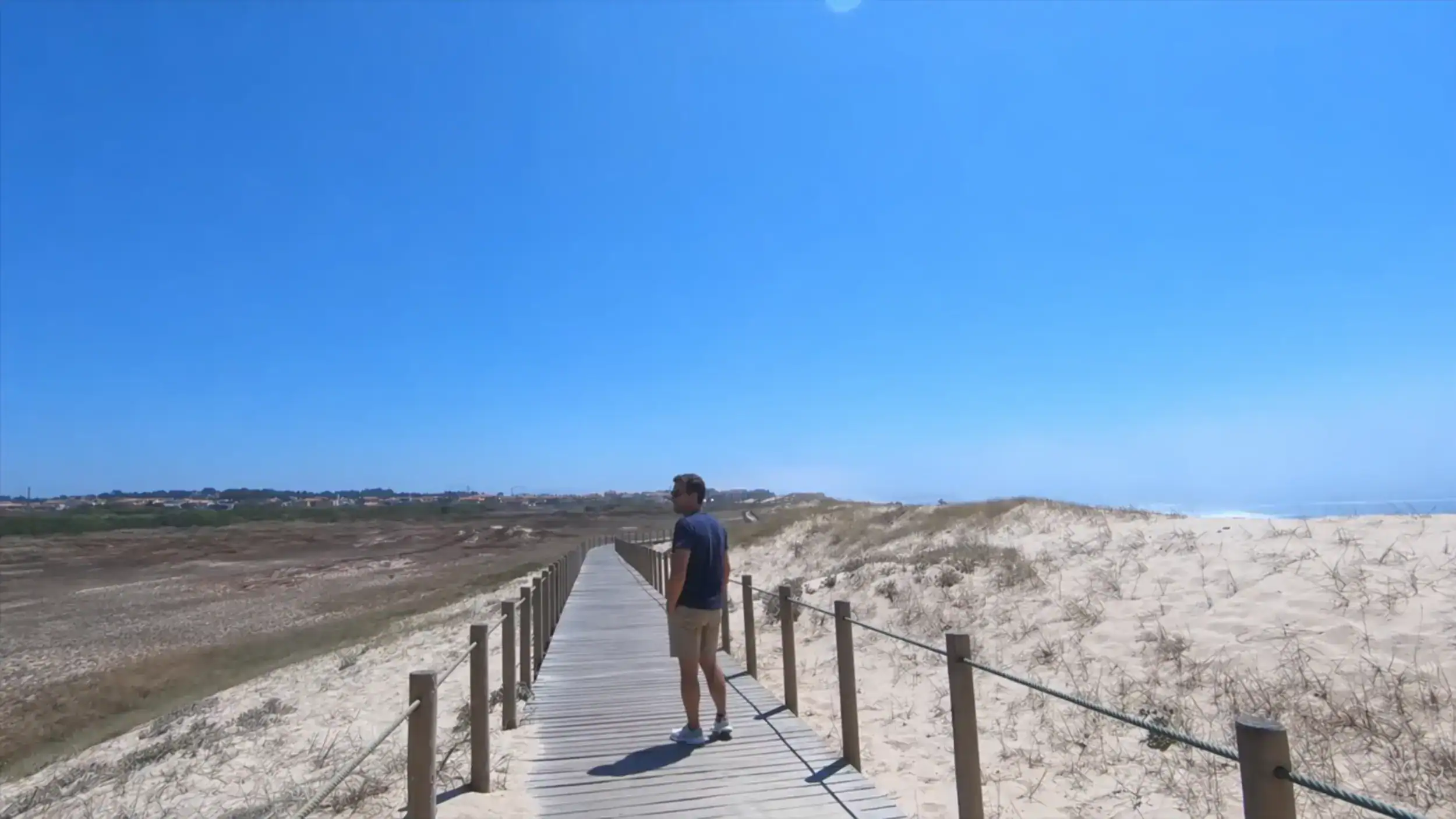
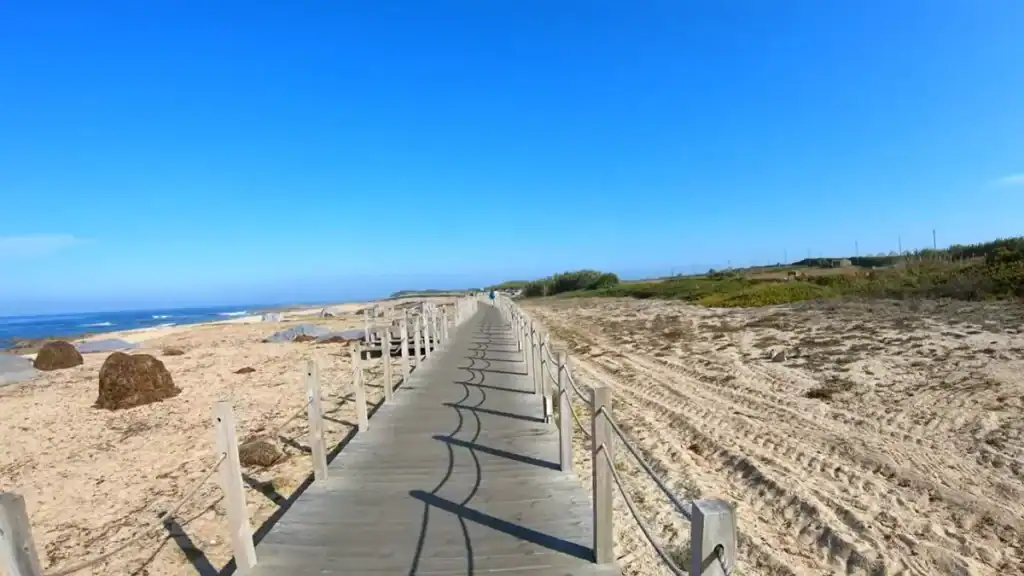
Most of the route follows a broad wooden boardwalk through the dunes. Where the timber ends, the path switches briefly to Portuguese calçada or quiet village streets before another section of boardwalk begins. These changes break up what might otherwise feel like a very long, straight coastal path.
Allow around two and a half hours to walk the 8.5 kilometres one way at a steady pace, excluding stops. A full out-and-back therefore becomes a substantial day on foot despite the lack of hills. The route also overlaps with the Senda Litoral and a stage of the Camino Portugués, so pilgrims share the path with local walkers, runners and families.
Bicycles are restricted on many of the dune boardwalk sections, although they can use some cobbled stretches and parallel roads. For a route designed specifically around two wheels, cycling from Vila do Conde heads inland instead, towards the countryside and Vinho Verde vineyards.
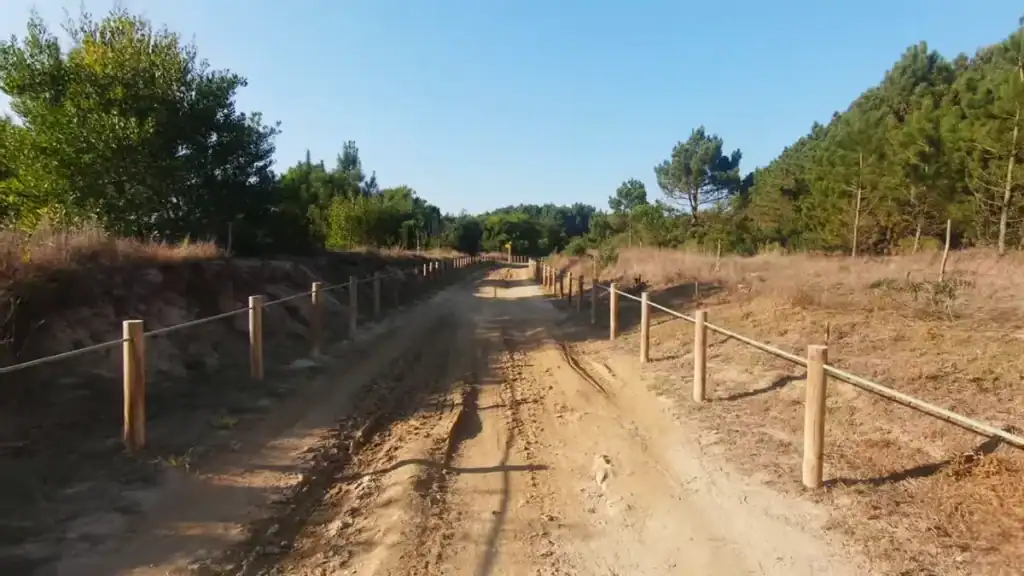
The Dunes and Mindelo Reserve
The southern half of the route runs alongside the Mindelo Ornithological Reserve, an unusual mixture of dunes, wetlands and coastal pine woodland. Created in 1957, it was Portugal’s first protected area and now forms part of the wider Vila do Conde Coastal Regional Protected Landscape.
Walking Between the Dunes and Pines
This isn’t always a walk with uninterrupted sea views. In places, the dunes rise high enough to hide the beach completely, creating a corridor of low vegetation on the seaward side and increasingly dense pine woodland inland.
The boardwalk is raised to protect the fragile dune surface, with designated timber crossings providing access to the beach. Staying on these routes matters, both for protecting the dunes and because the landscape itself is an important part of the walk rather than simply something separating the path from the sea.
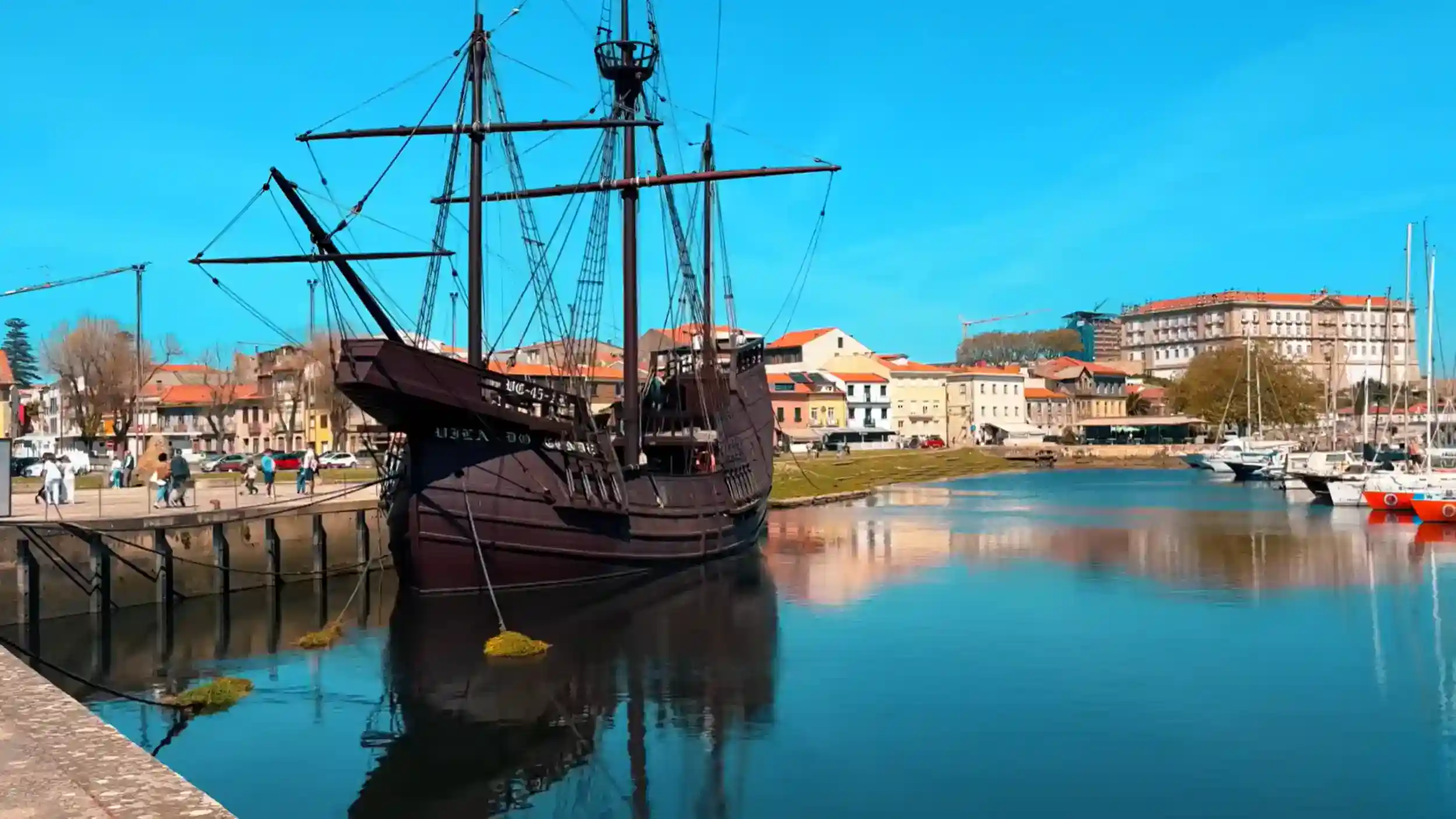
Birdlife is particularly rewarding around the Ave estuary and the nearby beach and marsh habitats. For a broader understanding of how this protected coastline relates to the town, the main Vila do Conde guide puts the coast, river and historic centre into context.
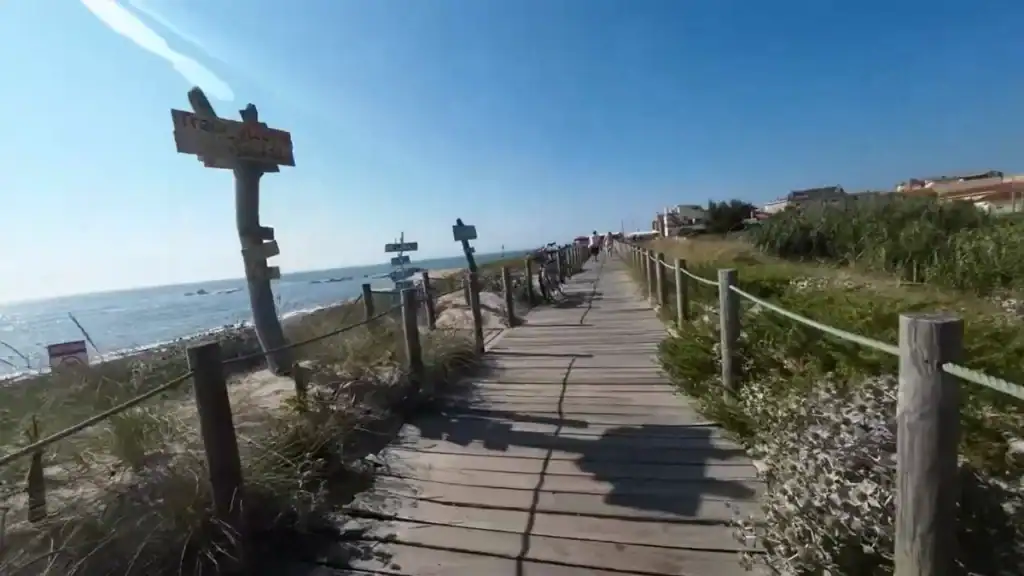
Light and Sky Along the Coastal Walk
With no cliffs enclosing the shoreline, the sky becomes one of the defining features of the Vila do Conde coastal walk. The horizon remains almost completely straight, and Atlantic weather can often be seen approaching long before it reaches the coast.
When Is the Best Light for the Walk?
Summer mornings can begin with haze over the water, softening the horizon and flattening the landscape. As that clears, the coast becomes brighter and more exposed, with relatively little shade except where pine trees grow close to the boardwalk.
Late afternoon is arguably the more rewarding time. The temperature begins to ease and, because this coast faces west, the sun gradually drops towards the Atlantic. In high summer, sunset can be around 9:00 to 9:15 pm, creating a long evening window for walking.
If you want to combine the walk with time on the sand, Vila do Conde beach explains how the exposed Atlantic setting, wind and tides affect the beach experience.
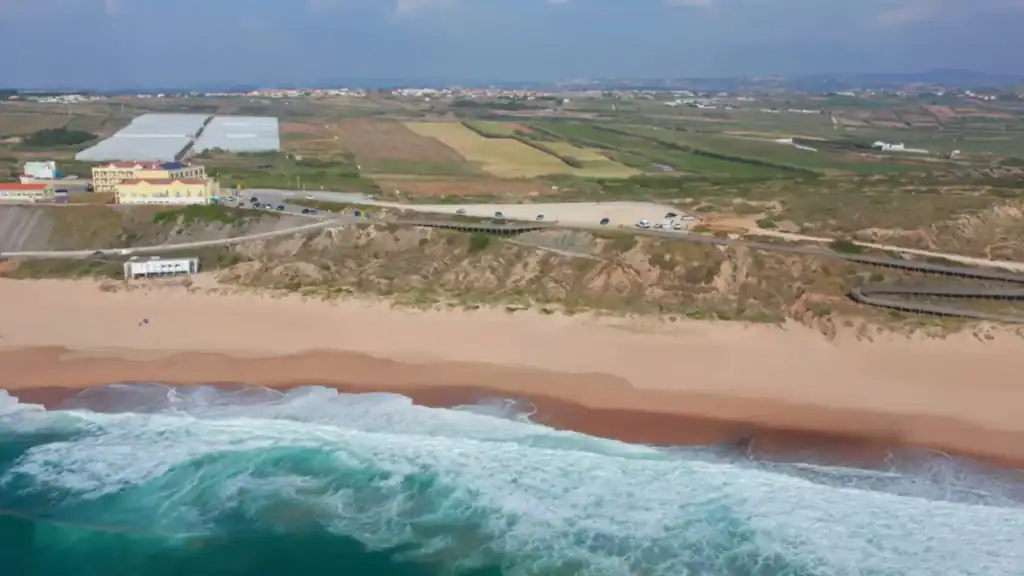
Crossing the Ave and Rejoining the Route
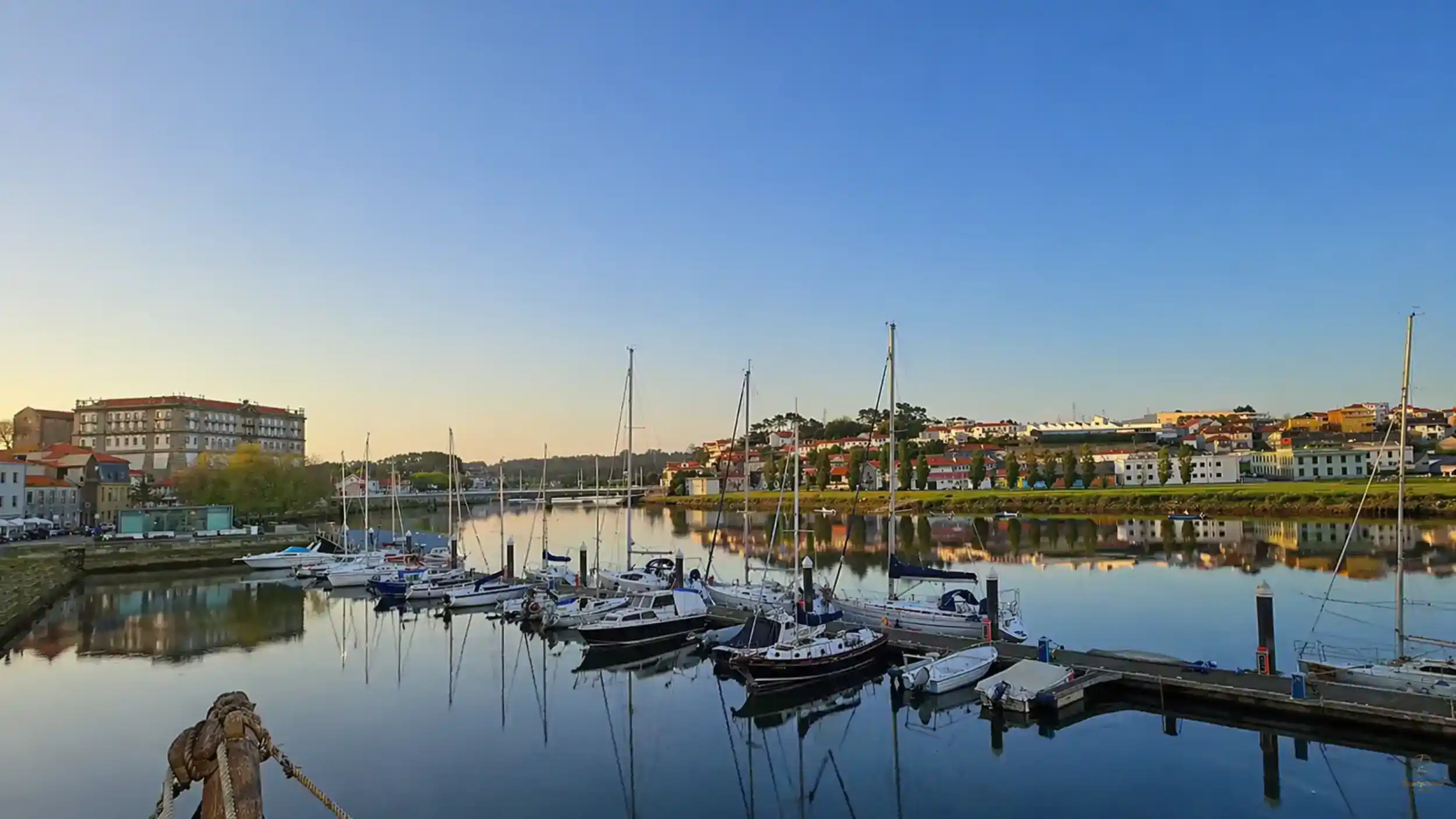
The River Ave creates a natural break in the coastal route. On the southern side, the dune boardwalk reaches the estuary at Azurara and stops beside the jetty. It does not continue directly across the river.
How to Continue North
To continue towards Vila do Conde, you need to cross the Ave using the N13 bridge or follow the local roads into town. The coastal route then resumes around Praia Azul rather than immediately at the northern side of the river mouth.
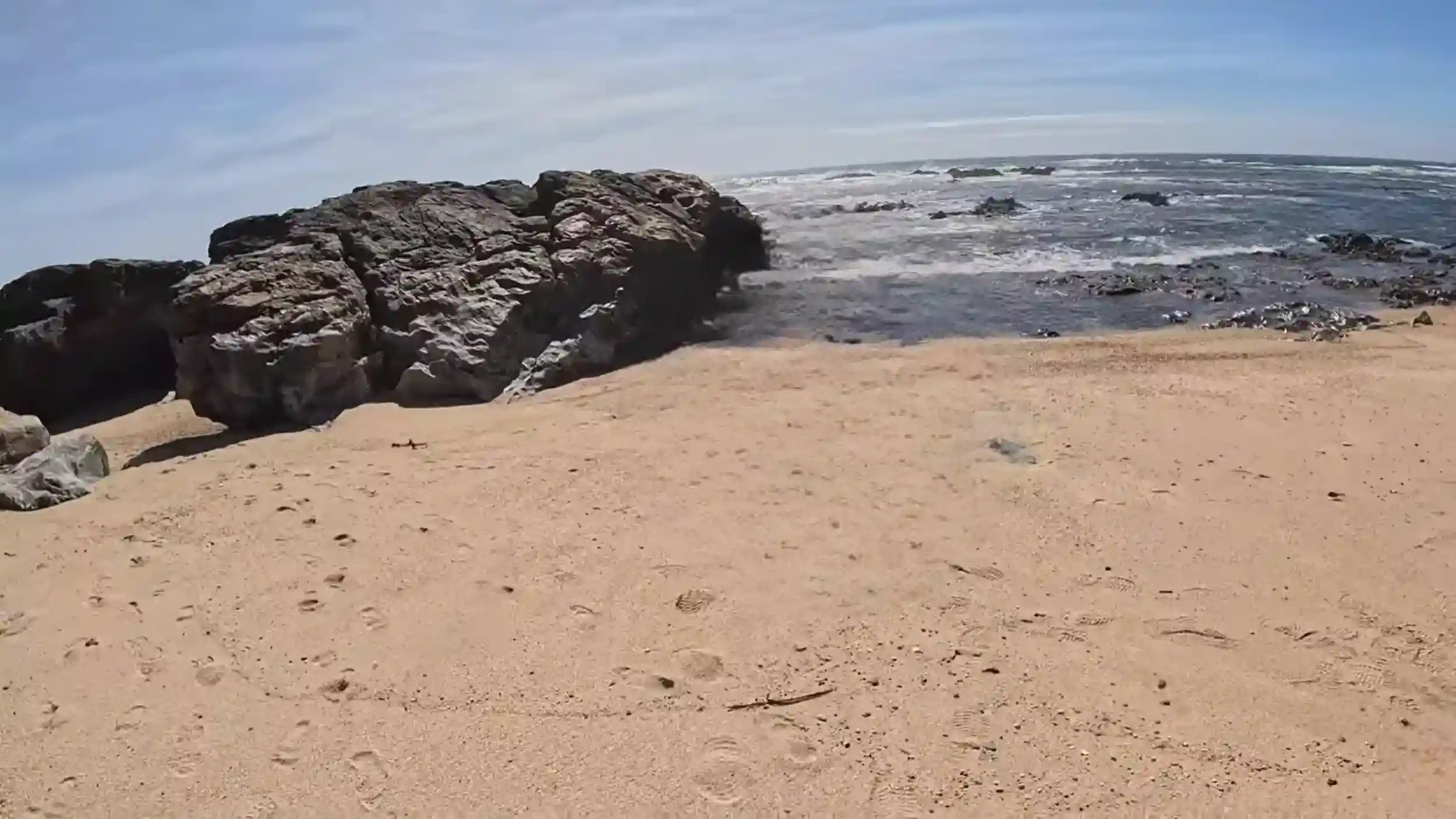
From Praia Azul, the seafront continues north towards Póvoa de Varzim. This short interruption also gives you two very different coastal environments within a small area: the relatively calm waters of the Ave estuary and the exposed Atlantic shoreline beyond it.
Walking the Coast Through the Seasons
The Vila do Conde coastal walk remains accessible throughout the year, but the experience changes considerably with the seasons. Summer brings longer days, more activity around beach access points and better café availability, while quieter stretches of boardwalk can still be found away from the main entrances.
Summer or Winter?
In summer, conditions can be surprisingly comfortable when an onshore breeze keeps temperatures down. Even during July, the busiest areas tend to cluster around car parks and cafés, with walker numbers thinning considerably as you continue towards Labruge.
Winter is much more exposed. There are no cliffs to provide shelter from Atlantic wind and rain, although the raised boardwalk drains quickly and remains walkable. Cafés may operate reduced hours, and long sections of the route can become extremely quiet.
For a wider picture of the town during the colder months, Vila do Conde in winter looks at how the coast and everyday life change outside the main season.
The choice is therefore fairly simple: summer for longer light, easier stops and more people around; winter for solitude, dramatic Atlantic weather and a much quieter coastline.