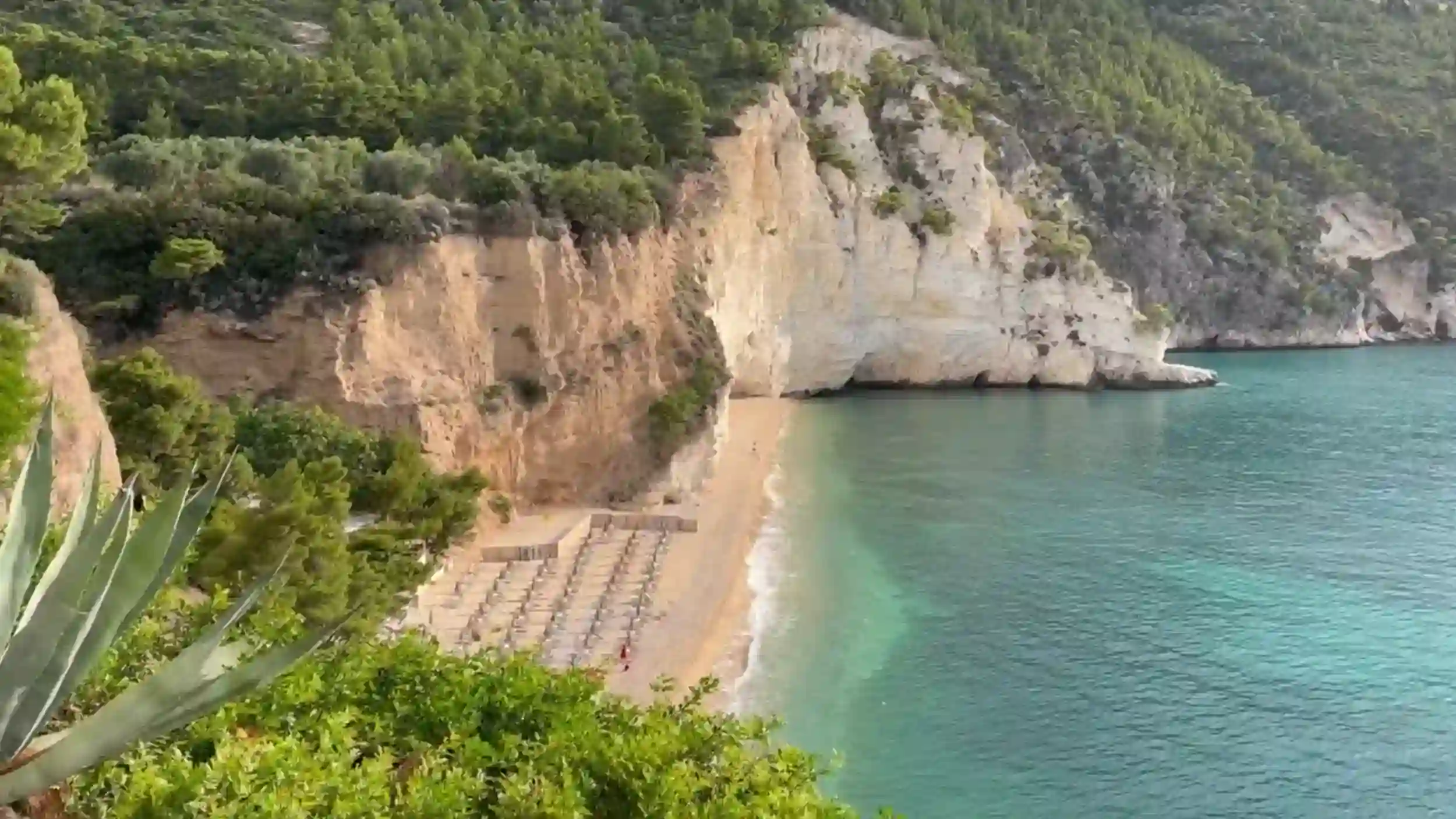
Baia delle Zagare is worth visiting for its towering limestone cliffs, Faraglioni and unusually dramatic setting, especially in quieter October. Swimming can still be possible, but I would treat it as a bonus rather than the reason for going. Access needs planning, and the high cliffs mean the beach loses direct sun earlier than a more open stretch of coast.
I arrived thinking first about the sea. Once I was down at shoreline level, that changed. The beach itself became secondary to the scale of the cliffs, and I spent far longer walking, stopping and looking back at the rock formations than I had expected.
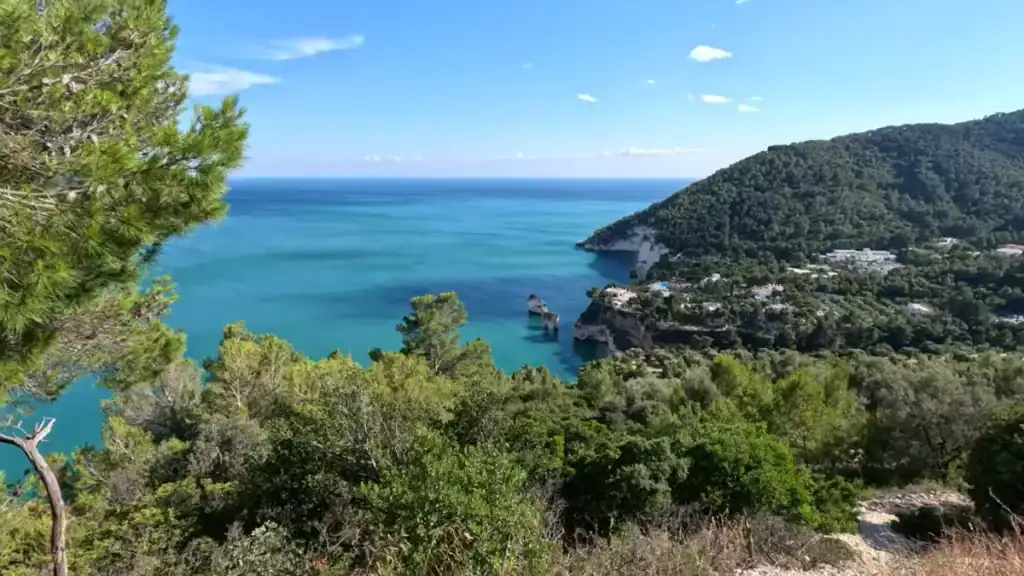
🚶 How Do You Get Down to Baia delle Zagare?
I would plan the access before leaving rather than treat Baia delle Zagare as an easy roadside beach stop. The bay sits below high cliffs on the coastal road between Mattinata and Vieste, and public access can be regulated. That made reaching it more involved than dropping into the easier beaches around Vieste or Peschici.
What Should You Check Before Setting Out?
In the main season, access to the free beach has operated with a limited daily pass system through Mattinata. The hotels above the bay have their own access, including lifts or steps, while arriving by boat is another possibility. Because arrangements can change with the season, I would check the current access and parking situation before committing to the drive.
That matters even more in October. Seasonal hotel facilities and access arrangements may not operate exactly as they do in summer, so I would not assume that a lift, beach service or particular route will be available simply because it appears in a summer guide.
- 🚗 By road: approach on the coastal road between Mattinata and Vieste.
- 🎟️ Before leaving: check the current public-access and parking arrangements.
- 👟 On foot: expect a descent rather than an effortless roadside beach stop.
- ⛵ Alternative: seeing the bay from the sea avoids the cliff descent and gives a completely different view of the Faraglioni.
Once I had made the effort to get there, rushing away after a quick swim no longer made much sense. I would allow several hours and let the access become part of the day rather than squeezing the bay into an already crowded coastal itinerary.
🚶 BEFORE I WOULD SET OUT
Check the current public-access route, parking arrangements and any seasonal hotel or lift operation. This is not a beach I would drive towards assuming access will sort itself out when I arrive.
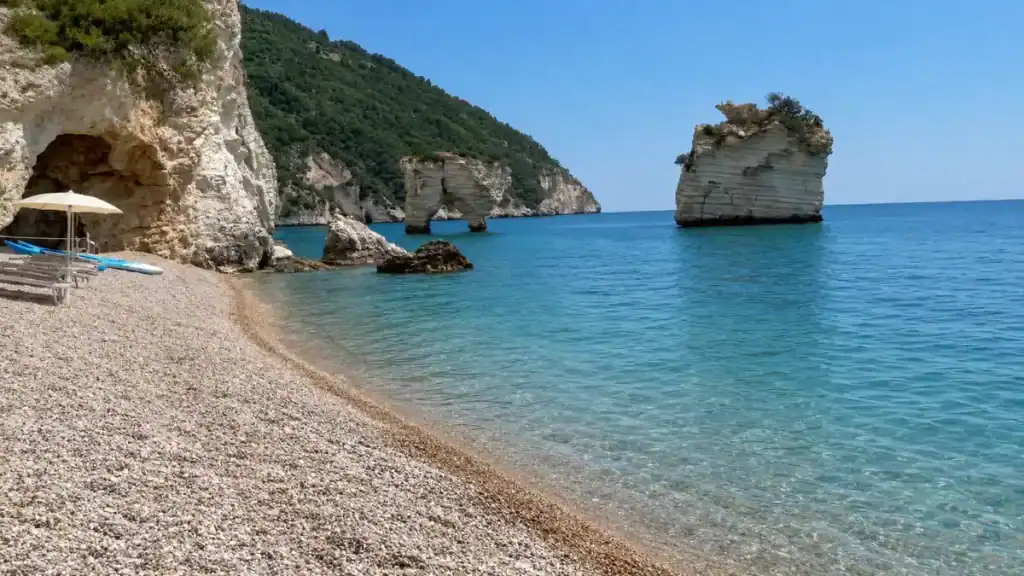
🪨 What Makes Baia delle Zagare Worth Visiting?
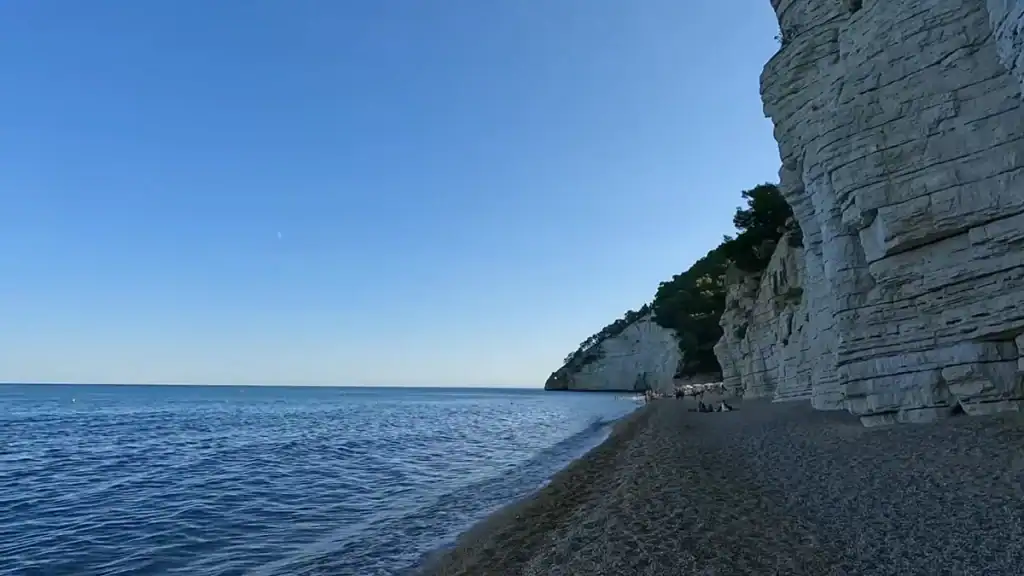
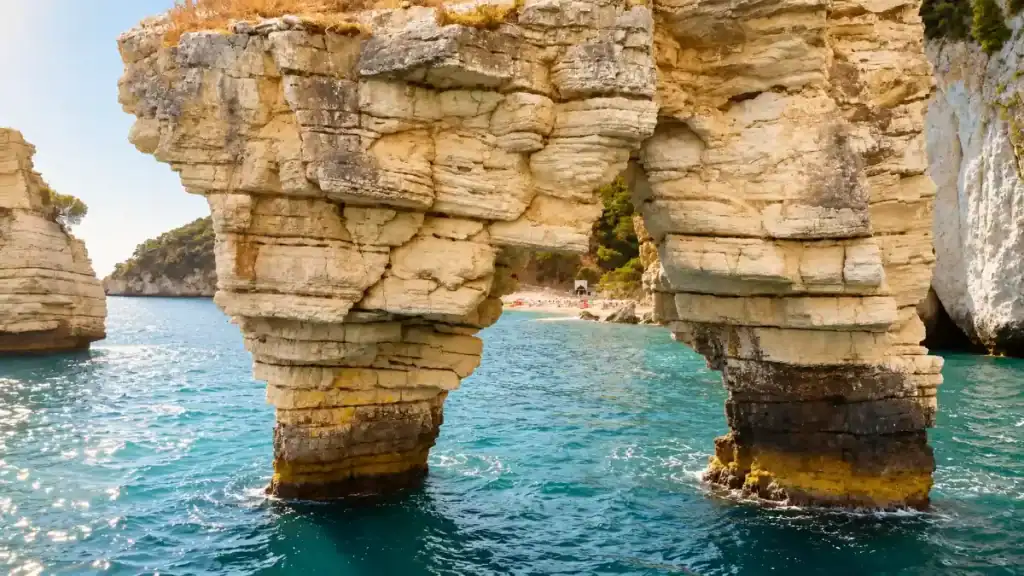
For me, the cliffs and Faraglioni justified the effort even before swimming came into the equation. From shoreline level, the white limestone walls and sea stacks dominated the bay in a way photographs from the coast road had not quite prepared me for.
I did not stay on my towel for long.
What Is the Beach Actually Like?
The shoreline is pale pebble rather than the sort of soft sandy beach where I would settle for hours. Walking along it kept shifting the relationship between the cliffs, sea and stacks. I would stop, move farther along, then realise the Faraglioni had separated visually or one of the rock faces had opened into a completely different angle. Photography stopped feeling like something I was doing between swims and became part of the visit itself.
That was the surprise for me. I had expected the water to dominate the day, yet the cliffs gave the bay its real identity. Even if the sea had been too unsettled for swimming, I would still have considered the journey worthwhile.
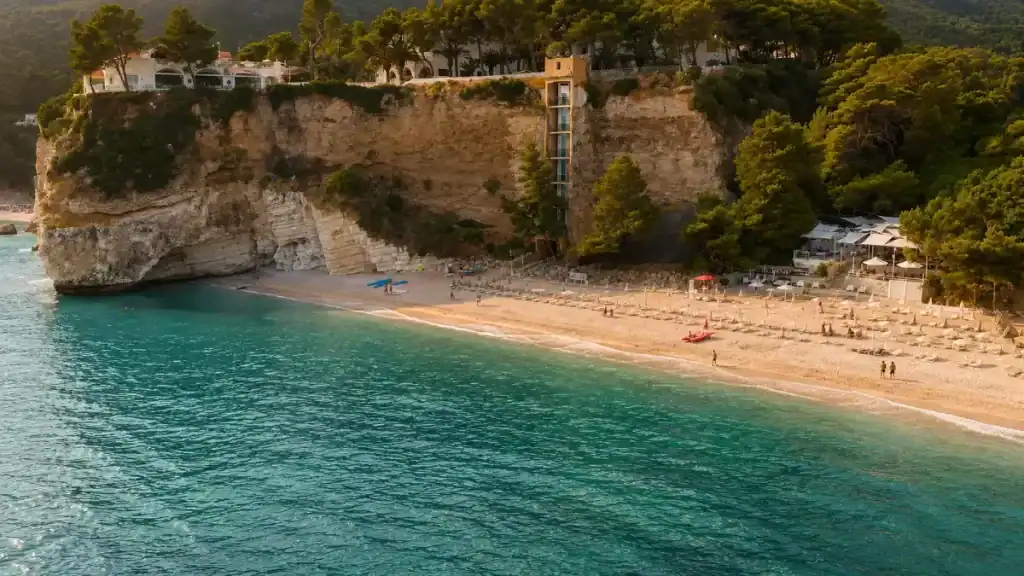
☀️ What Is the Best Time of Day to Visit Baia delle Zagare?
For beach time and swimming, I would favour morning into early afternoon. The cliffs are so high that parts of the shoreline can fall into shade surprisingly early. I would only trade those sunnier hours for later light if photography and a quieter atmosphere mattered more to me than warmth.
Is Late Afternoon Still Worth It?
I liked the landscape more as the October light softened. Earlier, the limestone looked cooler and paler. Later, warmer light picked out the rock and the bay felt less stark, although the trade-off was losing direct sun at beach level.
The atmosphere changed too. As people began leaving, the bay became quieter and my attention shifted even further from the water towards the cliffs. It echoed what I experienced elsewhere in Gargano in October: fewer people made it easier to slow down rather than keep moving to the next sight.
📌 MY TIMING CHOICE
Arrive earlier if swimming and sunshine matter most. Stay later only if changing light, photography and a quieter shoreline matter more than warmth.
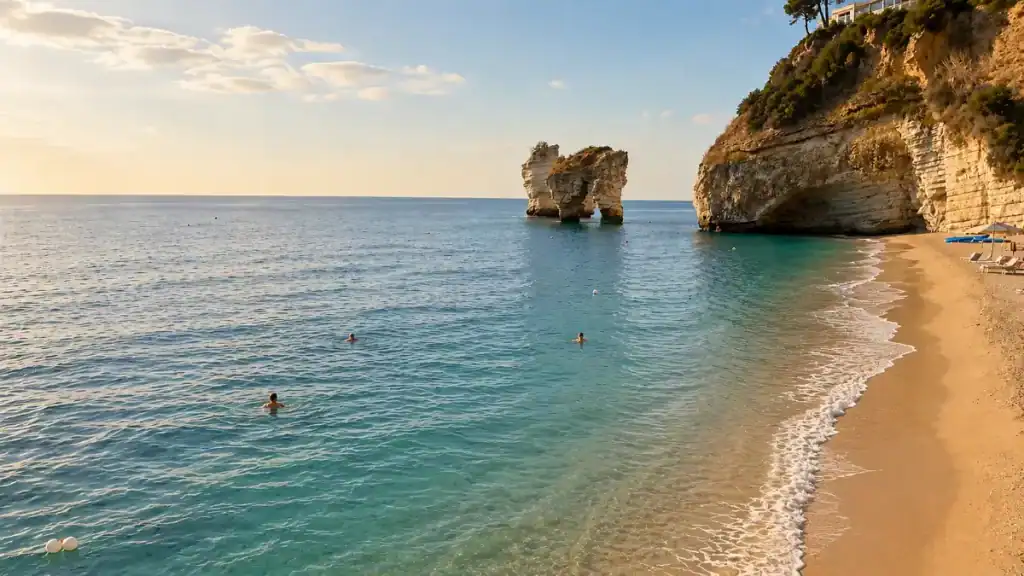
🌊 Can You Swim at Baia delle Zagare in October?
Yes, swimming can still be possible in October, particularly earlier in the month, but I would never build the visit around it. Conditions mattered more than the calendar. A calm, sunny day could make the water inviting, while wind, cloud and a beach already falling into cliff shadow made the same temperature feel far less appealing.
How Much Do Conditions Matter for Swimming?
I would check the forecast because wind direction can change Gargano beach conditions quickly. The useful test came at shoreline level. If the water felt good, I swam. If it did not, there was enough else around me that I never felt obliged to prove the day had been a beach day.
That flexibility is important in October. When swimming stopped being tempting, walking beneath the cliffs and looking towards the Faraglioni simply took over. The visit did not feel diminished by it.
🌊 HOW I WOULD TREAT SWIMMING
As a bonus, not the test of whether the trip was worthwhile. If the sea, wind or shade made swimming unappealing, the cliffs and Faraglioni still gave me a reason to stay.
🍂 What Is Baia delle Zagare Like in October?
October suited the way I wanted to experience the bay. I was not trying to find space among a peak-summer crowd or treating every minute beside the water as precious swimming time. The pace felt looser, although I would accept less certainty about swimming and seasonal facilities in exchange.
That does not mean October guarantees an empty beach. Weather, weekends and access arrangements can all affect numbers. What changes is the wider seasonal pressure: the intense summer beach rhythm has eased, and that suits a place where the landscape deserves as much attention as the sea.
How Long Would I Allow at Baia delle Zagare?
I would allow several hours rather than treat Baia delle Zagare as a quick photo stop. By late afternoon I had walked the shoreline, photographed the cliffs and fitted in some Gargano beach time. That felt enough. With the beach slipping into shadow, leaving before the return felt rushed was the more natural ending.
✅ Is Baia delle Zagare Worth Visiting in October?
Yes, if dramatic scenery matters more to you than guaranteed swimming. The cliffs and Faraglioni are the reason I would go back. Quieter October conditions gave me more space to appreciate them without feeling that I should be spending the whole visit in the sea.
- 🪨 Go for: the cliffs, Faraglioni and unusual coastal setting.
- 🌊 Treat swimming as: a weather-dependent bonus in October.
- ☀️ Choose morning for: more reliable sun at beach level.
- 📷 Stay later for: softer light and a quieter atmosphere.
- 🚶 Plan first: access is more complicated than at many Gargano beaches.
🪨 WHO I WOULD SEND HERE
Go for the landscape, photography and one of Gargano’s most dramatic coastal settings. If what you really want is an effortless sandy beach day with reliable facilities and hours in the water, I would choose somewhere easier.
If you want a lively beach day built around cafés, water sports and hours in the sea, I would choose somewhere easier. After several Gargano beach days, this one stayed with me for a different reason: I went down expecting a beach and came away remembering the rock.