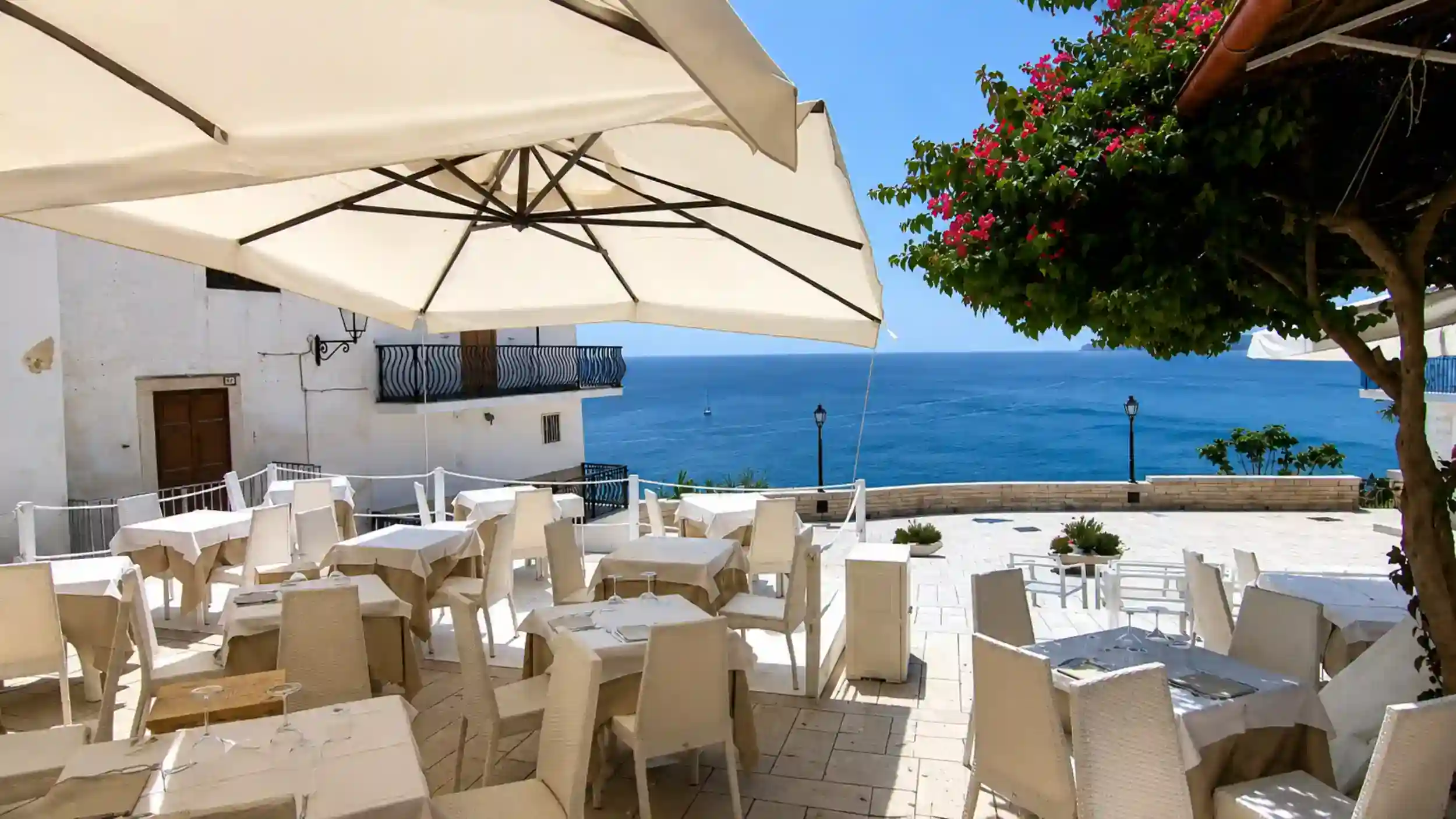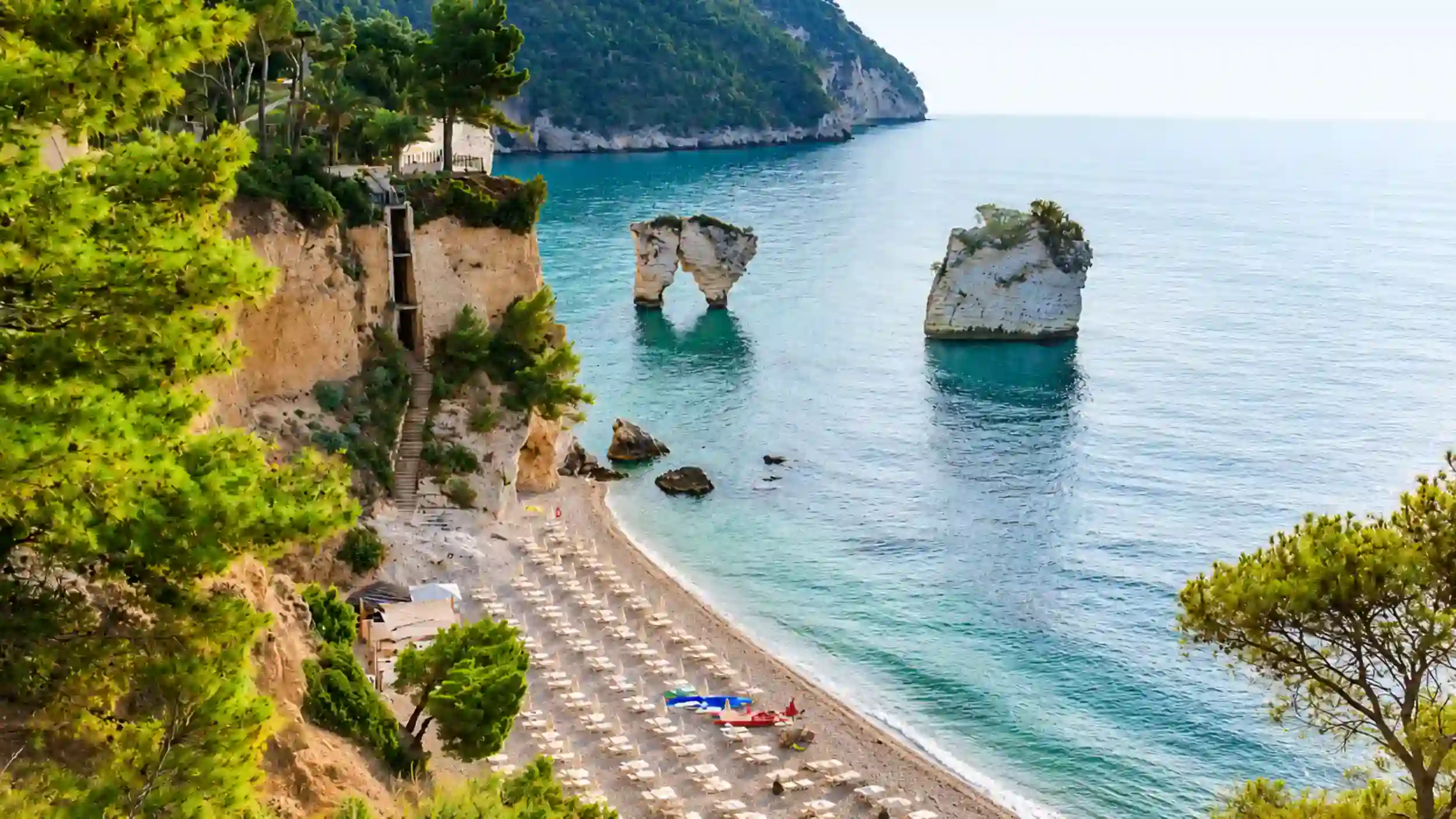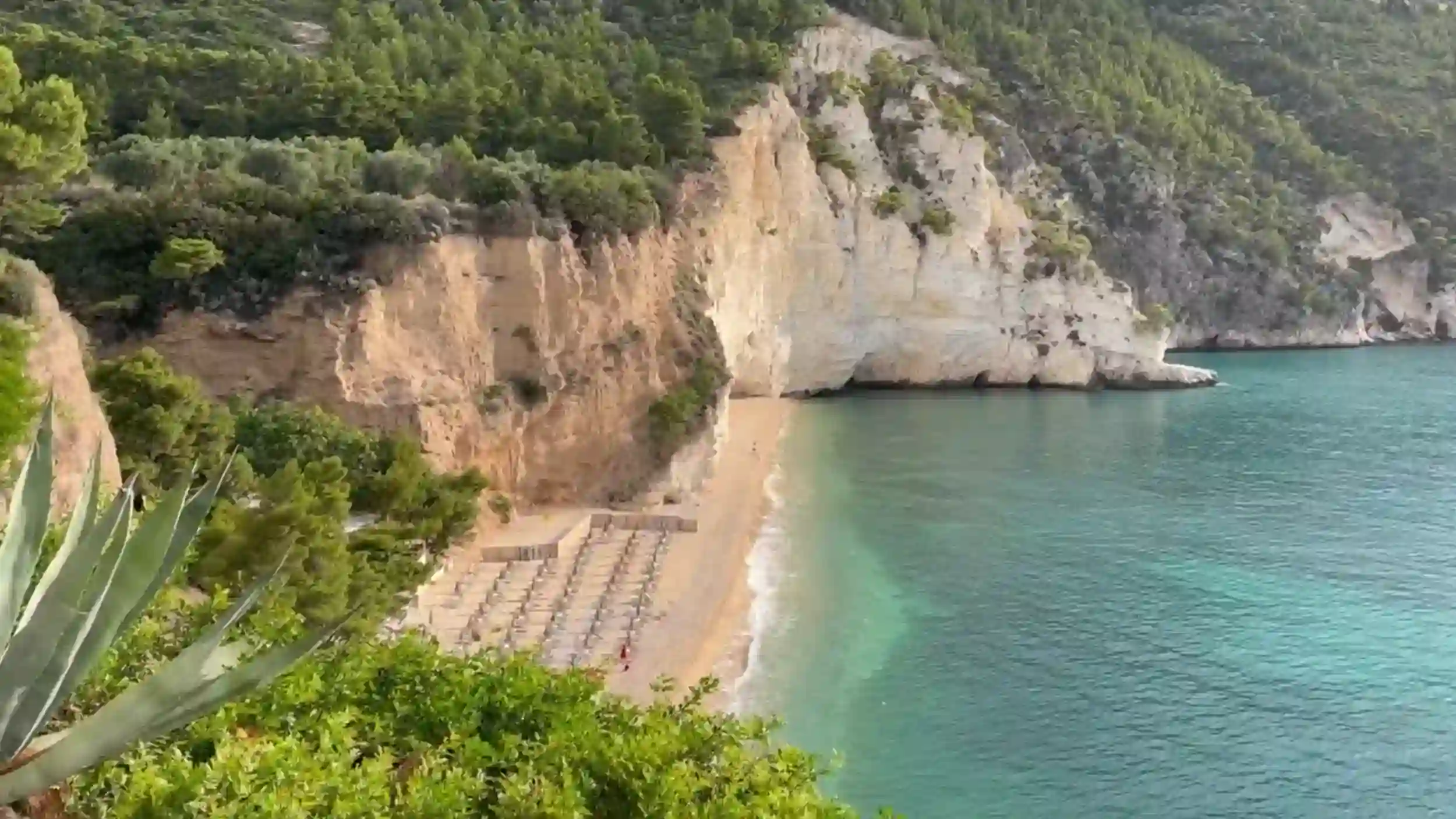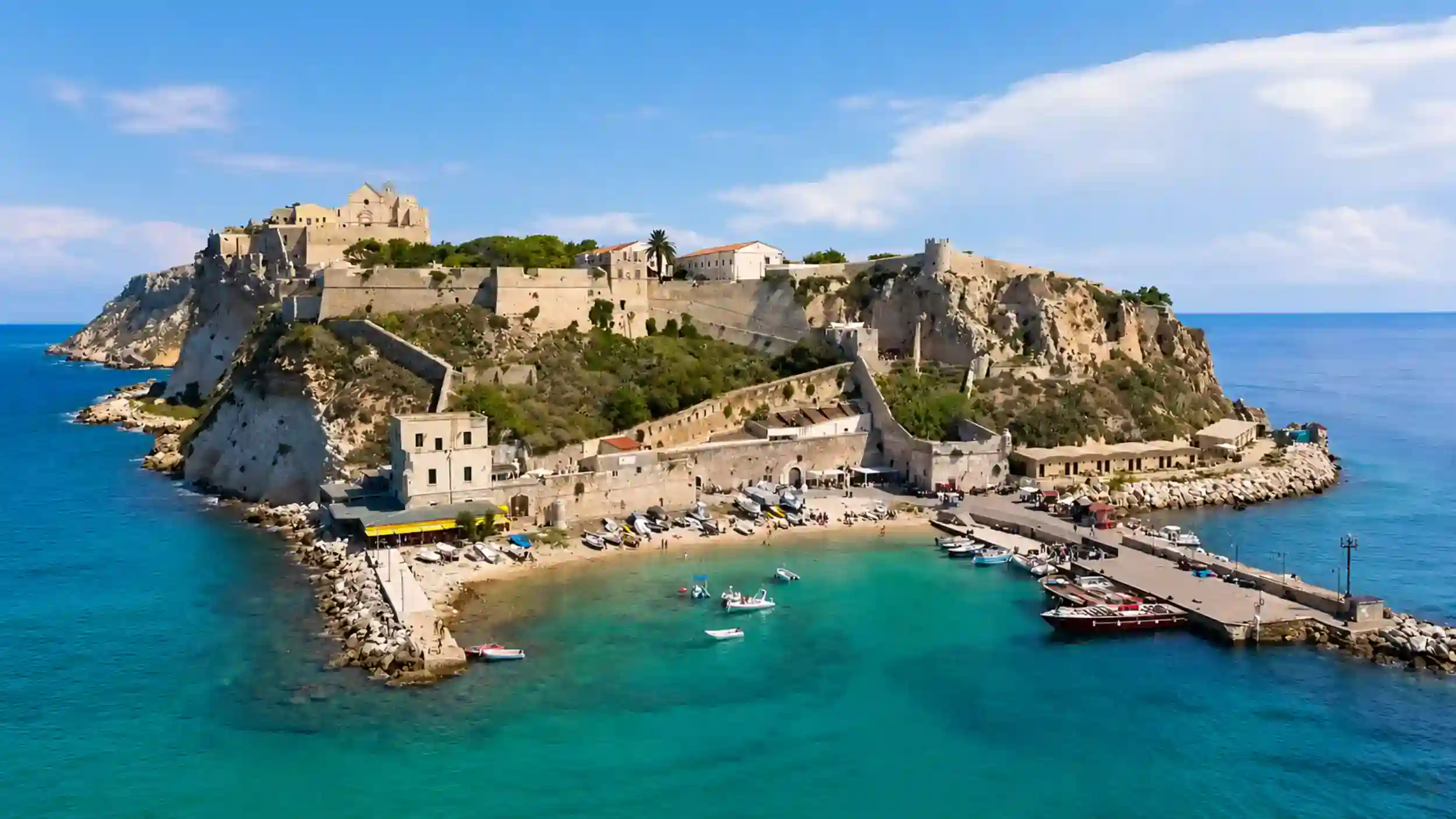
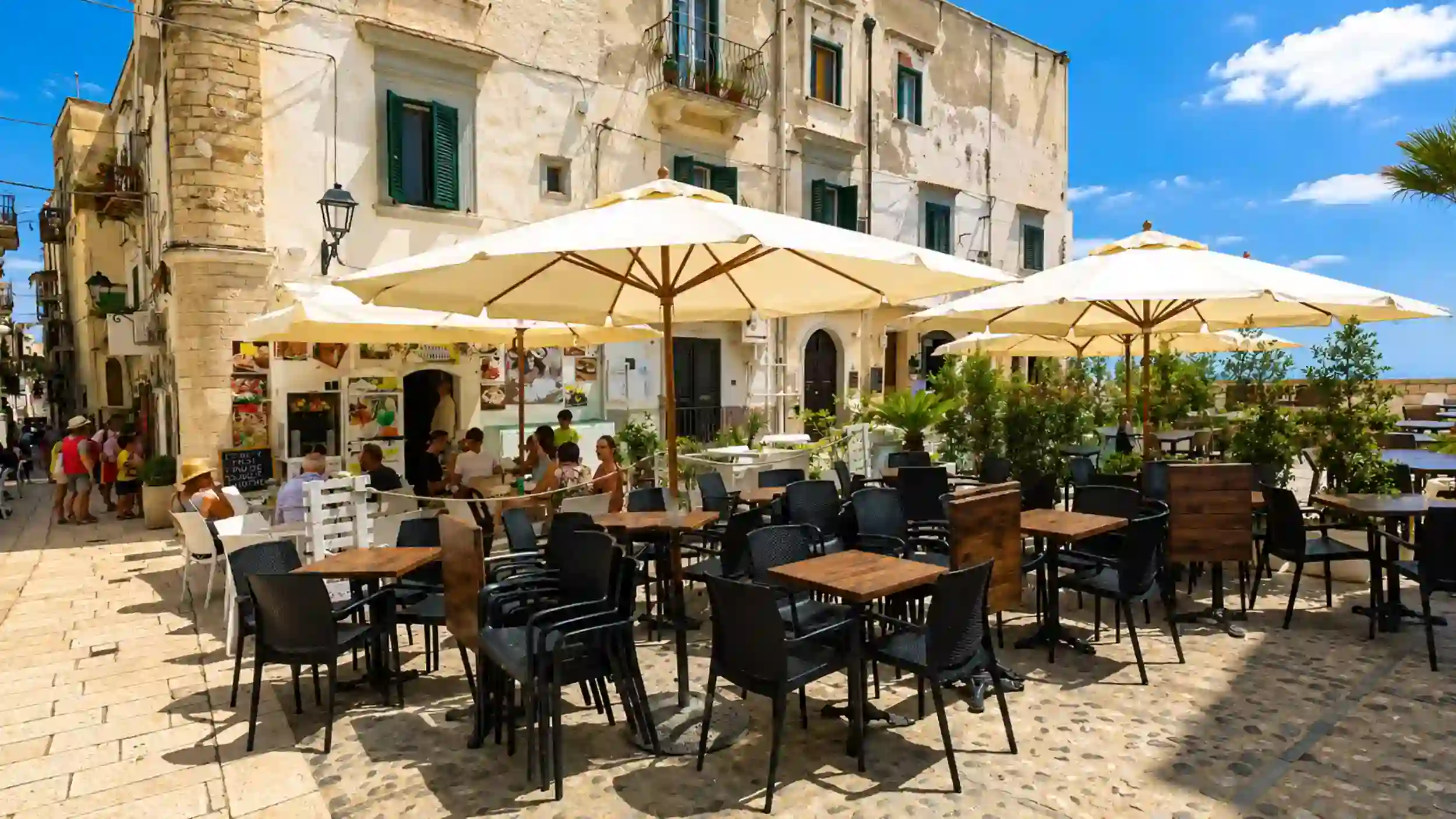
Gargano Puglia beach hopping is great for the first few days, but I found it became repetitive when I tried to make the coast the focus every day. Mixing the beaches with inland towns, forest walks and boat trips gave the holiday much more variety without sacrificing much time beside the Adriatic.
For me, a morning swim followed by an inland afternoon often worked better than committing the whole day to another beach.
Boat days helped too. Seeing the coves and cliffs from sea level made a coastline I thought I knew suddenly look unfamiliar again.
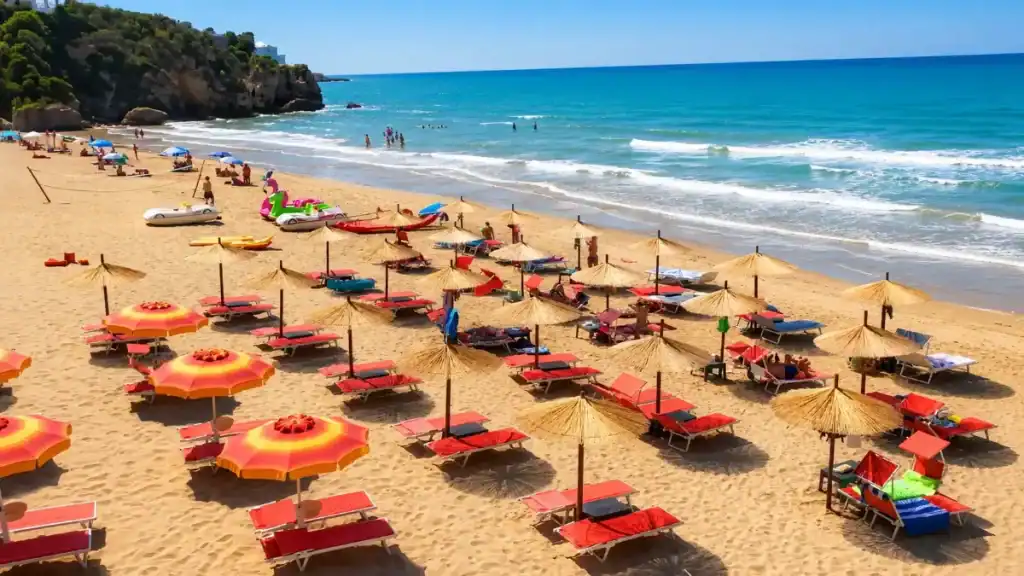
🏖️ How Many Beach Days Do You Need in Gargano?
Two or three beach-focused days felt like the sweet spot for me before I wanted more variety. Few coastlines have made as strong a first impression on me as Gargano. One day I was looking down at a broad sandy bay below Vieste; the next, I was following a winding road towards a small cove beneath white limestone cliffs. During those first few days, finding another beach genuinely felt like part of the adventure.
I kept wanting to see what was around the next headland because the setting changed so quickly.
Why Did the First Few Beach Days Feel So Different?
At the beginning of my stay, I barely noticed the routine. Packing the car, choosing another beach and following the coast road still felt exciting. I was happy to stop at two or three places in a day simply because each new view seemed to justify another detour.
When Does Beach Hopping Start to Feel Repetitive?
The beaches did not become less impressive. What changed was my enthusiasm for everything around them. After several days, packing bags, hunting for parking, checking the wind and carrying things down another access path no longer felt like part of the discovery.
That was the point when I realised Gargano beach hopping worked better for me as part of the holiday, not as the whole holiday.
🏖️ BEACH-HOPPING SWEET SPOT
Two or three beach-focused days gave me enough variety without letting the routine take over the holiday.
🌅 What Is the Best Time of Day for Gargano Beaches?
Morning was consistently the easiest time for me. The roads were quieter, parking was easier and the sea often looked calmer, which is why Gargano beach mornings work particularly well. During my first couple of days, that early start still felt effortless because the promise of another stretch of coastline was enough motivation to pack quickly.
After several consecutive beach days, I could feel that enthusiasm slipping.
Why Did Beach Mornings Start Feeling Like Work?
By the middle of the holiday, I was asking the same questions each morning. Which beach today? Would parking be awkward? Was the wind going to build? Did I really want to carry everything down another steep path?
The preparation had become part of the effort rather than simply the start of the day.
Why Do Small Beach Transfers Add Up?
None of those decisions mattered much on its own, but together they slowed me down. I noticed it most when I was moving between several beaches during the same stay: the repetition had begun before I had even reached the coast.
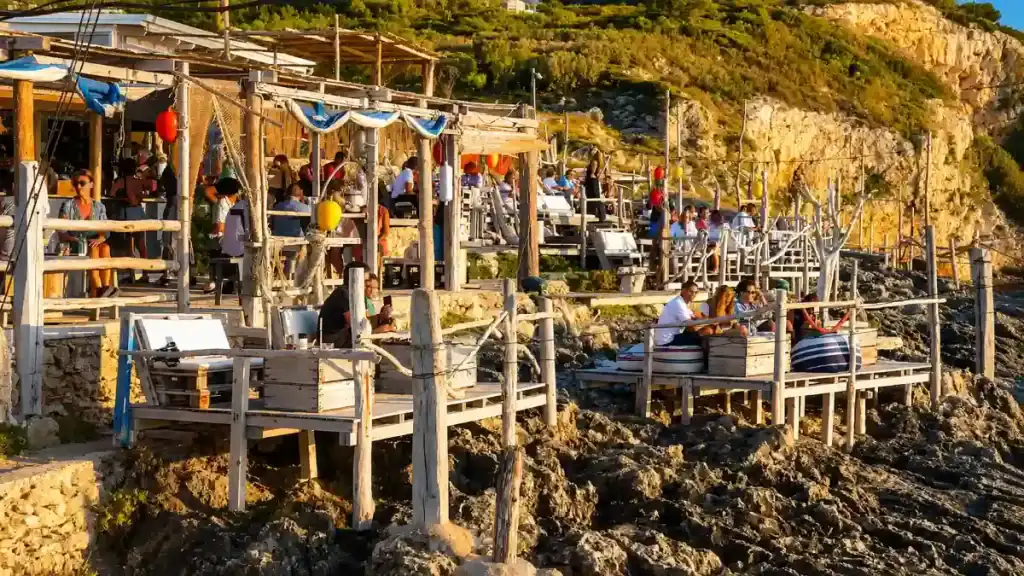
🏝️ Is It Worth Visiting a Different Gargano Beach Every Day?
Not for me. The coastline never stopped impressing me, but visiting a different beach every day eventually produced a surprisingly familiar routine: drive the coast road, find a space, walk down, swim, then reassess once Gargano’s weather changed the beach conditions or more people arrived.
It was the routine, not the scenery, that started repeating itself.
Why Can Different Beaches Start Feeling Similar?
I could be beneath dramatic cliffs one day and below an old town the next, yet my behaviour was becoming remarkably similar: arrive, unpack, swim, sit for a while, then start thinking about the next stop.
The beaches were still beautiful. My daily rhythm was the part that had stopped changing.
How I Knew the Novelty Was Fading
I knew the novelty was fading when my stops became shorter. I was moving on more quickly, not because I disliked the beaches, but because another cove no longer felt as different as it had at the beginning of the trip.
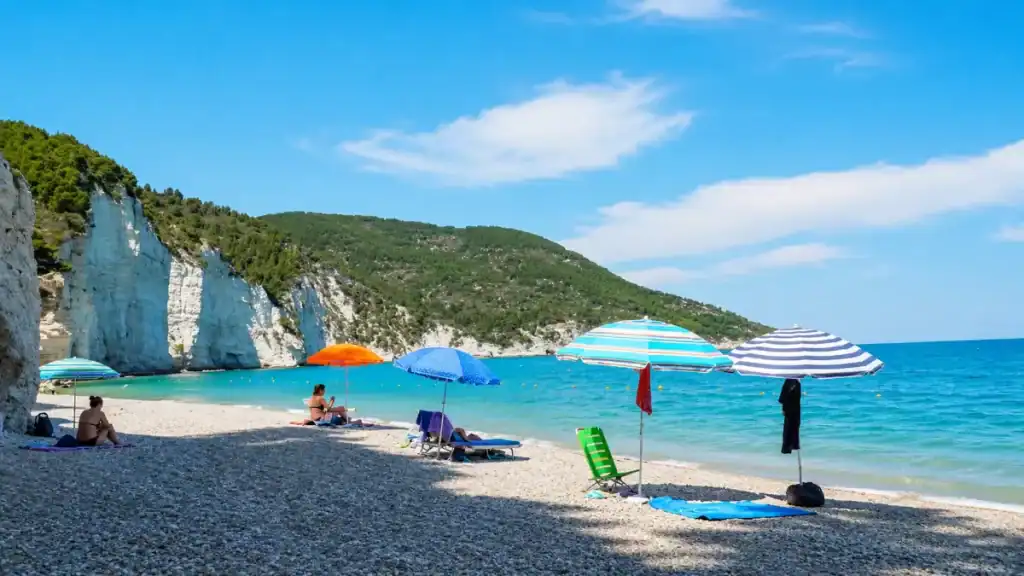
🌬️ How Much Does Wind Affect Gargano Beach Days?
Enough that I stopped treating every beach as an all-day destination. I could arrive to calm water in the morning and find the whole mood had changed by early or mid-afternoon.
It was not only the sea. Towels started lifting, sand moved across bags and I found myself wondering whether staying another hour was actually worth it.
Are All-Day Beach Stays a Good Idea?
After the same thing happened several times, I stopped treating every beach as an all-day destination. I unpacked less, stayed ready to move and paid much more attention to the conditions.
When Comfort Started Dictating My Beach Choices
Eventually I realised I was sometimes choosing the next beach less for discovery and more to avoid another uncomfortable afternoon. That was a good sign that I needed to break the routine.
The beaches had not changed. Repeating the same pattern was what made them begin to feel more similar.
🌬️ WHEN THE WIND BUILDS
A beach that works beautifully in the morning can be far less comfortable later. I would keep the afternoon flexible rather than plan every stop in advance.
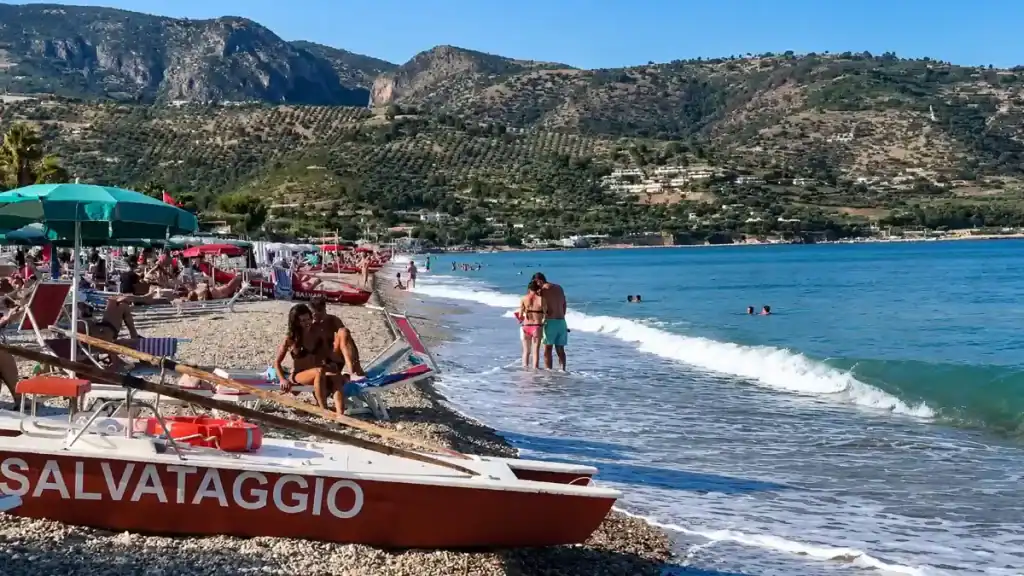
🚗 Is Driving Between Gargano Beaches Tiring?
Yes, when I repeated the coastal drives day after day. Gargano’s roads were one of the highlights for me, but I underestimated how much the effort would accumulate. The bends that felt exciting on the first morning demanded noticeably more concentration later in the trip.
The scenery never lost its appeal. The effort of moving between beaches simply accumulated in the background.
Why Do Short Gargano Drives Feel Longer?
Repeated bends, limited parking, viewpoint pull-ins and careful manoeuvring on narrow sections all required attention. I particularly noticed it on the Vieste to Peschici drive, where relatively short distances could feel longer after several consecutive days on the road.
Short Distances Started Feeling Longer
I noticed the same thing along the northern Gargano coast. Beaches can look close on a map, but getting between them still takes concentration. The mileage had not changed; my appetite for another transfer had.
That was when I started looking inland for a change of pace.
🚗 WORTH REMEMBERING
Short coastal distances can still feel tiring after several days of bends, parking searches and repeated beach transfers.
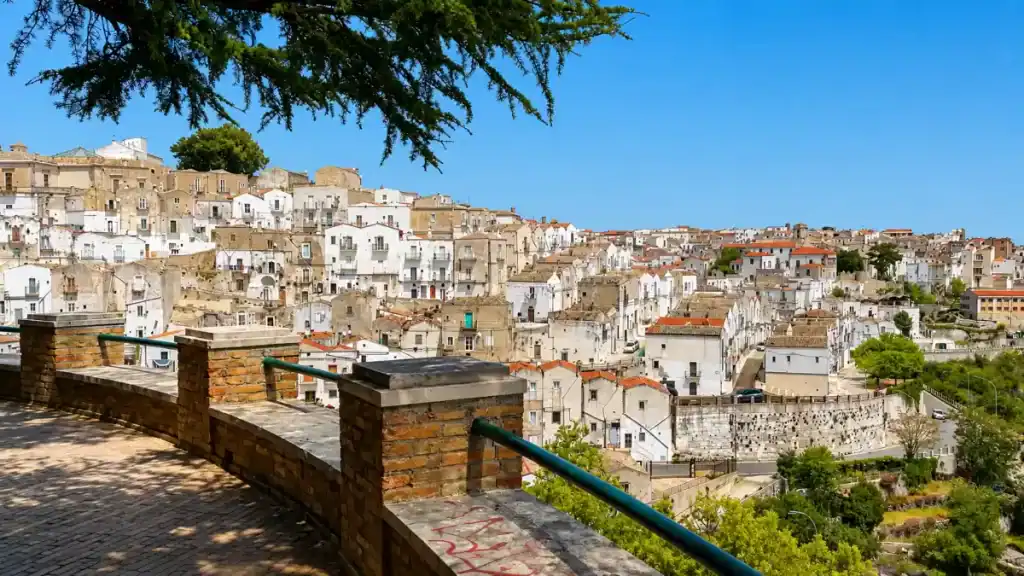
🌄 What Should You Do Between Gargano Beach Days?
I would use an inland town or forest day to break the coastal routine. By the middle of my Gargano stay, those trips were becoming more appealing than another full day beside the sea. It was not because the beaches had disappointed me. I simply wanted the day to feel different.
At that point, a change of scenery felt more rewarding than another beach search.
Which Inland Stops Work Best as a Reset?
Hill towns, quieter roads and longer lunches gave me a completely different rhythm. Monte Sant’Angelo encouraged me to slow down, while inland drives replaced repeated coastal transfers with olive groves, woodland and wide viewpoints.
Even one inland day made the rest of my trip feel better balanced.
Why an Inland Day Made Me Want the Coast Again
Stepping away from the sea actually made me appreciate it more when I returned. Foresta Umbra was the clearest reset because the woodland felt so removed from the bright, exposed coast.
Inland Gargano did not replace the beaches for me. It made the next coastal day feel fresh again.
🌲 GOOD RESET
Monte Sant’Angelo and Foresta Umbra are useful alternatives when another beach day starts feeling repetitive.
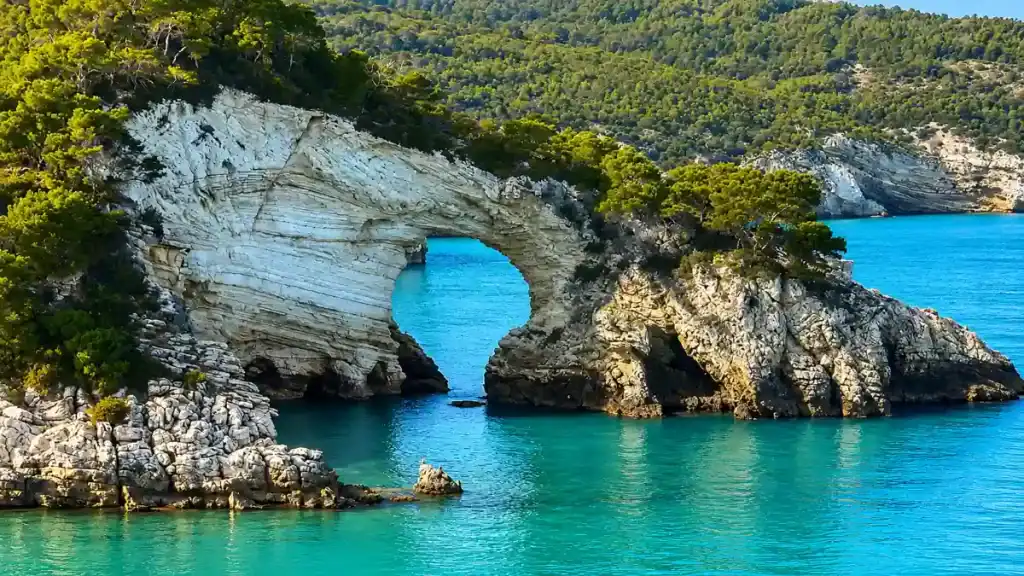
⛵ Is a Boat Trip Worth Adding to a Gargano Beach Holiday?
Yes. After several days of beach hopping, a boat trip gave me exactly the change of perspective I needed. There was no coast-road parking or another path down to a cove. From the water, the cliffs, sea caves and hidden bays revealed a side of Gargano I could not properly see from the road.
The coastline suddenly felt unfamiliar again.
Why Gargano Looks Different from the Water
At sea level, limestone cliffs, trabucchi and secluded coves replaced the familiar sequence of roads and viewpoints. A Tremiti Islands day trip took that change even further and brought back the sense of discovery I had felt at the beginning of the holiday.
The Coast Felt Fresher When I Returned
The biggest benefit came afterwards. Returning to the familiar coast felt different because I had finally seen its scale from the water.
I would not use a boat trip to replace Gargano’s beaches. I would use it to break the routine before the beaches themselves begin to feel repetitive.
⛵ BOAT-DAY VERDICT
Yes. Seeing the cliffs, caves and coves from sea level adds something genuinely different rather than simply giving you another way to reach a beach.
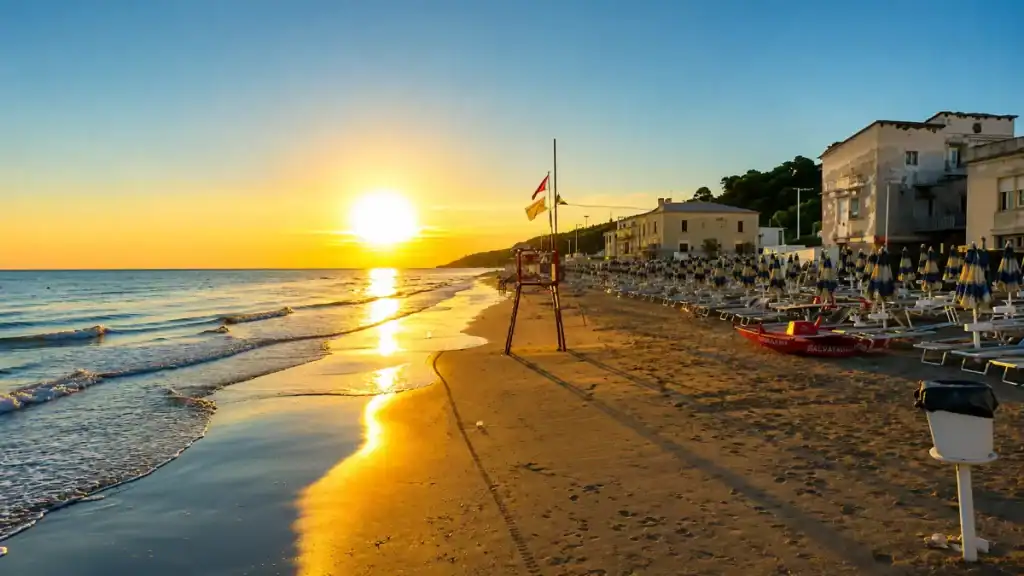
✅ Is Gargano Beach Hopping Worth It?
Yes, but I enjoyed Gargano’s beaches more once I stopped trying to make every day a beach day. A different cove each morning sounded ideal on paper; in practice, inland towns, forest walks and time on the water made the coastline more enjoyable when I returned.
For me, balance was what kept the coastline feeling fresh.
Why Variety Improved My Beach Days
Mixing the coast with different experiences changed the rhythm completely. Inland villages, scenic drives and quieter days away from the sea stopped the routine becoming stale, and each return to the beach felt more deliberate.
I Would Choose Fewer Beaches, Not More
I enjoyed Gargano more once I stopped trying to see every beach. Staying longer at fewer places, leaving room for inland discoveries and adding a boat trip gave me a richer holiday than constantly searching for the next cove.
The coastline remained one of my highlights, but my Gargano beach holiday became much more memorable once I allowed the experience to expand beyond beach hopping alone.