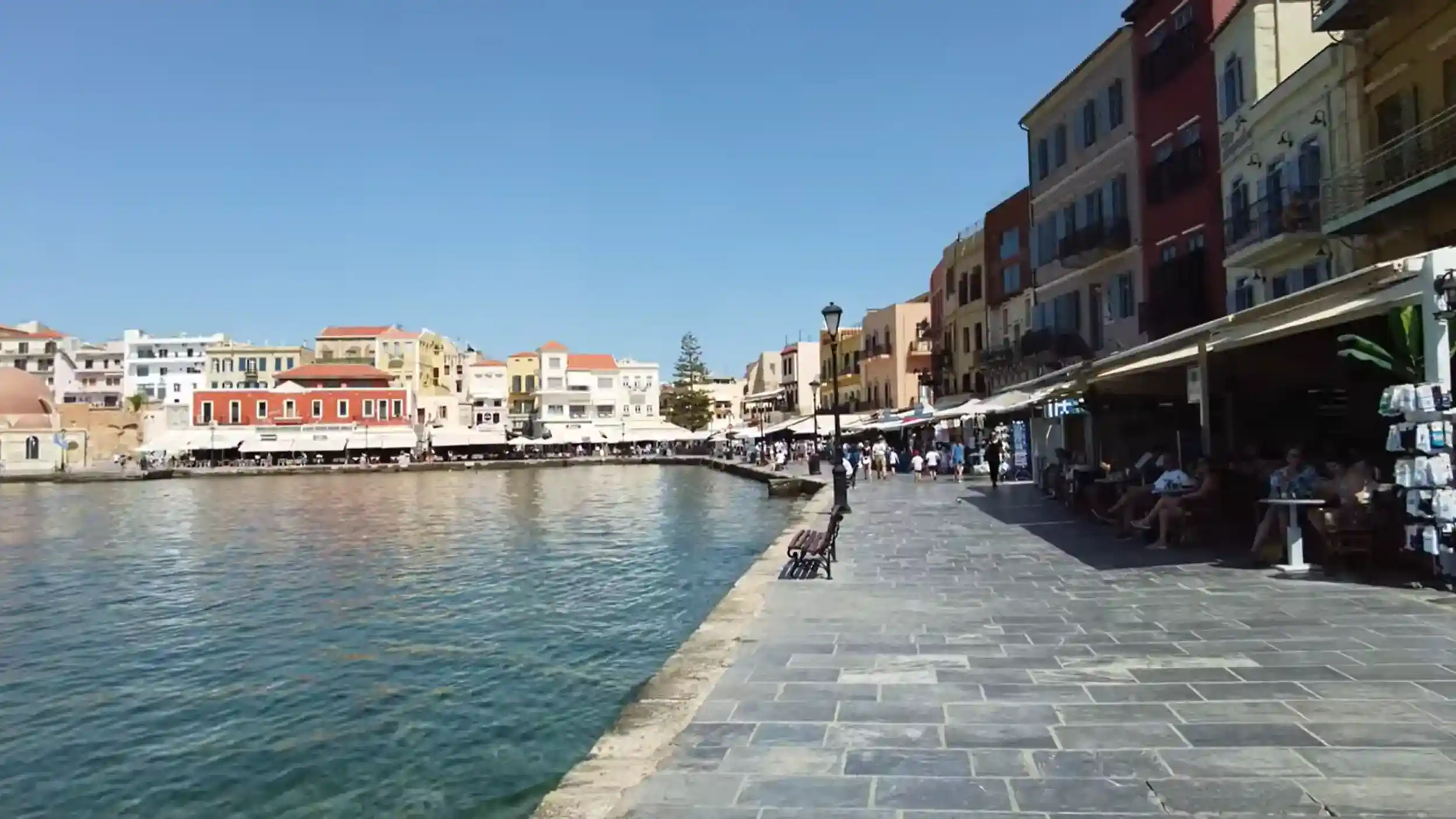

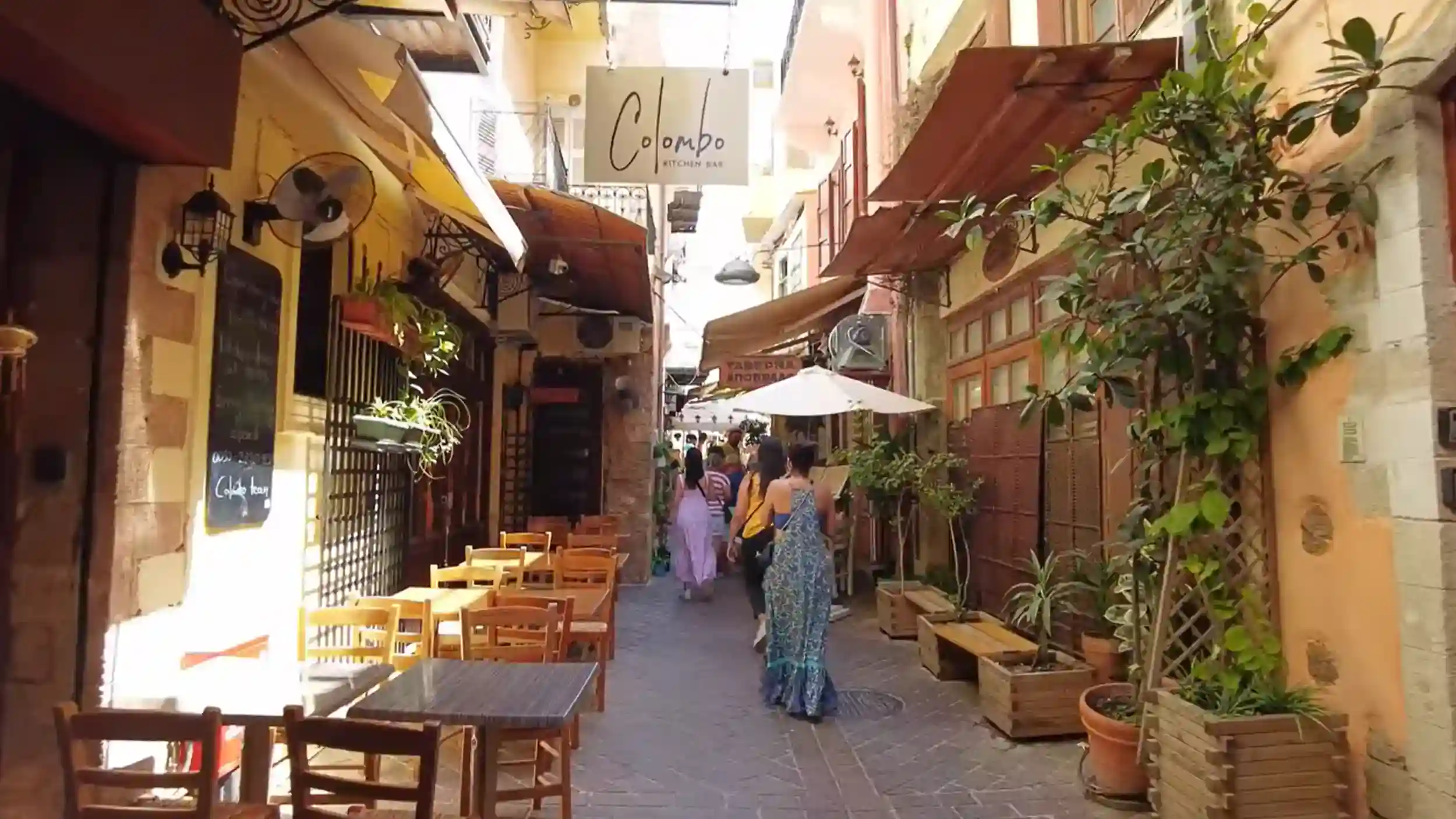
You turn left without thinking and find the alley narrowing around you. Light drops, walls close in, and suddenly you are somewhere entirely different from where you started. That is the rhythm of walking Chania. Most visitors linger at the Venetian Harbor, which is understandable. Morning light hits the water flat, the lighthouse stands at the breakwater’s end, and the mountains behind the old town seem fixed in place. It is beautiful, and it is where cruise ships stop. What they rarely find is the rest of the town.
The Alleys That Don’t Announce Themselves
Old town Chania was not designed for efficiency. Venetians built over Ottoman layers, Ottomans over Venetian, and the result is a street plan that treats logic as optional. Alleys curve for no reason, open suddenly onto tiny squares, end at walls that explain nothing. Depending on your temperament, this can be frustrating or exactly the point.
Walk inland from the harbor and a different version of Chania emerges. Quieter, less performed. Laundry hangs between windows. Cats station themselves on steps with authoritative stillness. Women arrange herbs outside doors that may or may not be shops. Cobblestones are worn unevenly, textured enough to register beneath thin soles but rarely treacherous. None of these streets announce themselves. You drift in or you don’t. The town rewards drift.
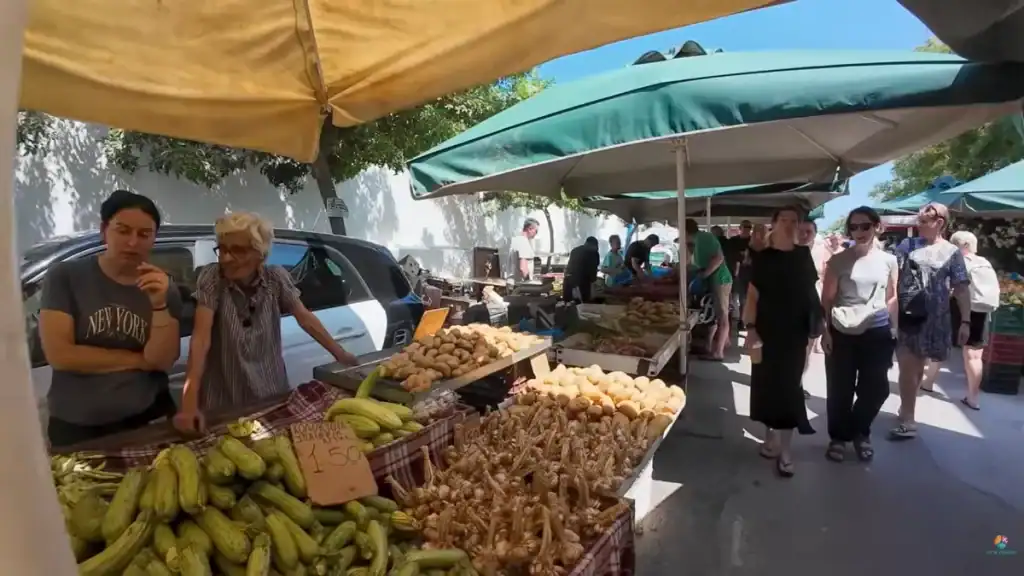
Saturday’s farmers market sits a short walk into this quieter hinterland. Olives, cheeses, dried herbs wrapped in paper bags. Go early. Not because the vendors will run out – though some do – but because the meditative quality of the morning softens as the crowd grows. What is calm at seven becomes almost a festival by nine. Timing subtly changes the experience.
Architecture That Speaks Without Words
Venetian harborfront buildings are the obvious draw: tall, faded, three centuries of salt air baked into their surfaces. Beyond the waterline, the layering deepens. A Venetian loggia leans next to an Ottoman minaret that is neither mosque nor tower anymore but simply exists. Doorways with pointed arches, windows bricked and reopened, rooftops that seem improvised yet coherent. Some buildings operate as boutique hotels preserving original stonework. Others are plainly domestic, laundry on lines, geraniums on sills. Jewelry workshops occupy old structures, benches visible from the street. Glass cases in front, small tools and magnification equipment behind. Mass tourism and slow craft occupy the same twenty square metres, silently negotiating space and time.
Walk east along the harbor’s boardwalk, and cafés face outward, inviting the sea into attention rather than crowds. Even a short stay there offers perspective. Walking west along the coastal path, the town recedes gradually. Several beaches appear – sandy, rocky, some with hire chairs already in place by mid-morning, others still empty. The bird sanctuary section changes the acoustic entirely. Silence deepens, and the sound of wings passing overhead replaces tourist chatter. Returning through old town from this side rewards subtle shifts in perspective and understanding.
The Town’s Sensory Layering
Chania has a distinct morning smell. Stone that cooled overnight, coffee from the first open cafés, something faintly herbal – thyme or oregano – drifting from market stalls. Afternoon heat shifts it: warmer, drier, faintly marine. In May, temperatures are almost ideal. Shade is preferable, walking effortless. Water is swimmable, refreshing, though beaches rarely empty by late morning even in shoulder season.
November strips the same streets back to something quieter – the morning smell is still there, the cobblestones still uneven, but the foot traffic thins enough that the architecture becomes legible in ways that high season compresses away.
Light at the harbor in the early evening defines Chania’s reputation. Sun drops behind hills. Warm reflection off windows, pale stone, and water creates a glow that seems graded in post-production but is entirely natural. Walk out to the lighthouse if inclined. The breakwater is uneven but manageable. From there, the reverse view – harbor, old town, mountains holding it all – surpasses any photograph. Presence is required to absorb it.
The people who appreciate Chania most walk without fixed itineraries. Museums and historical sites are accessible without planning. Restaurants that serve raki and dessert without prompting sit just far enough from the harbor to remain quiet. Walking uncovers them.
What the City Reveals to Walkers
Chania is louder and more expensive than it appears, yet more layered. The front-room harbor is real. The alleys, back end of the market, architecture that can’t decide which century it belongs to, take longer to reveal themselves. That is not a complaint. It is the reason to go further.
The hidden corners that lie beyond the old town’s obvious circuit – the western seafront at dawn, the neighbourhood beach at Nea Hora, the streets where locals eat without a harbour view – require only the willingness to keep walking when the obvious path ends.