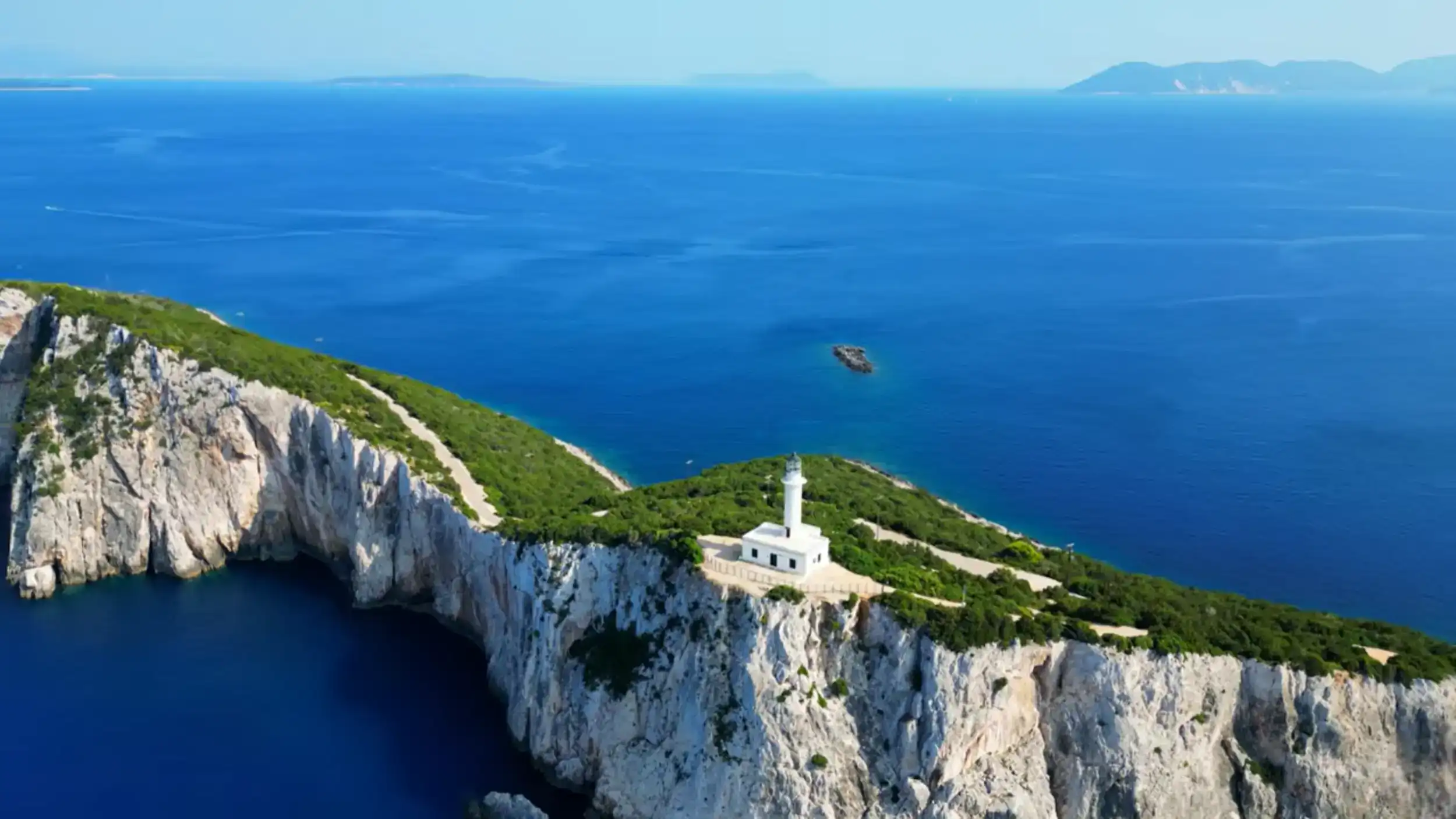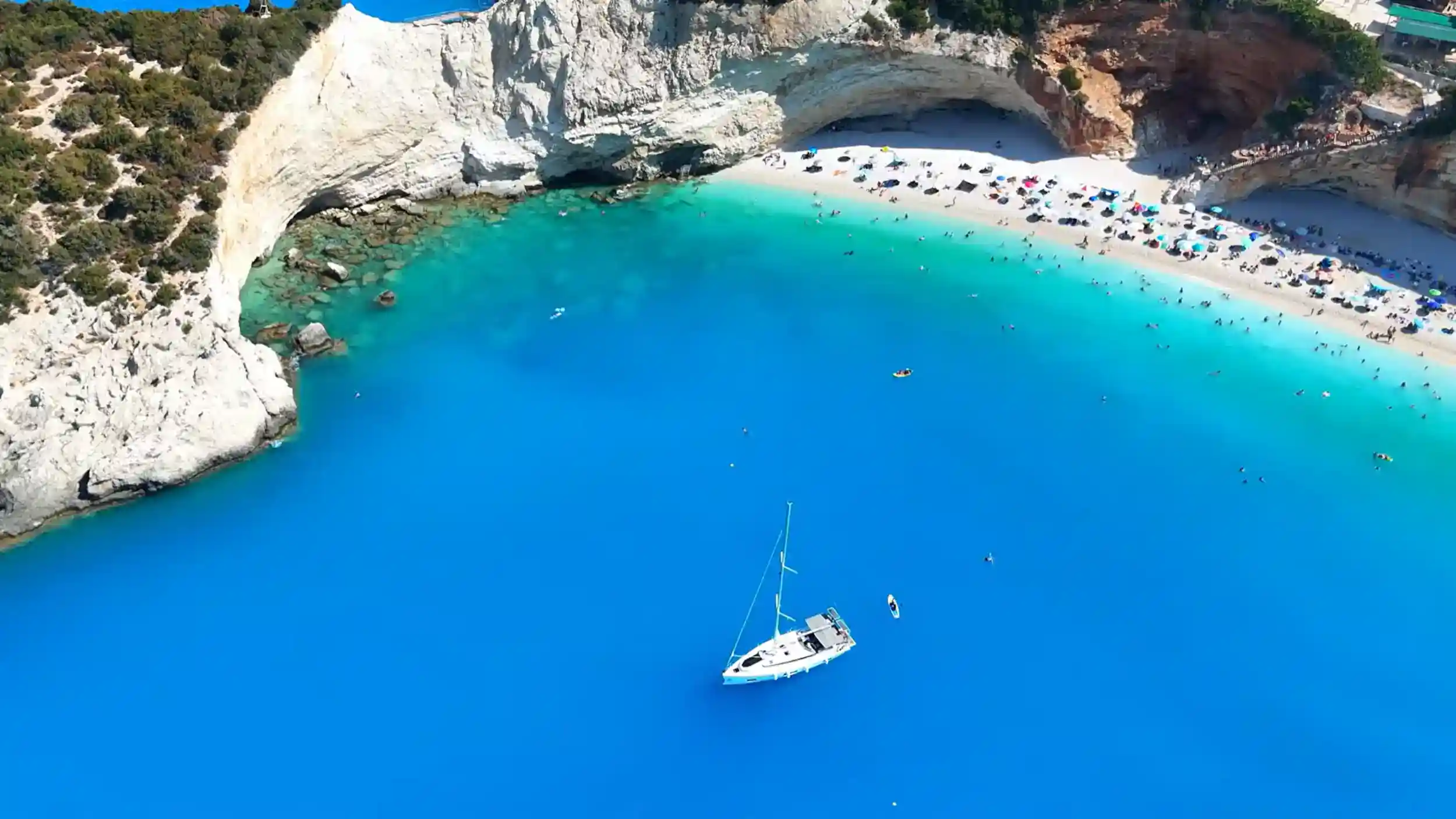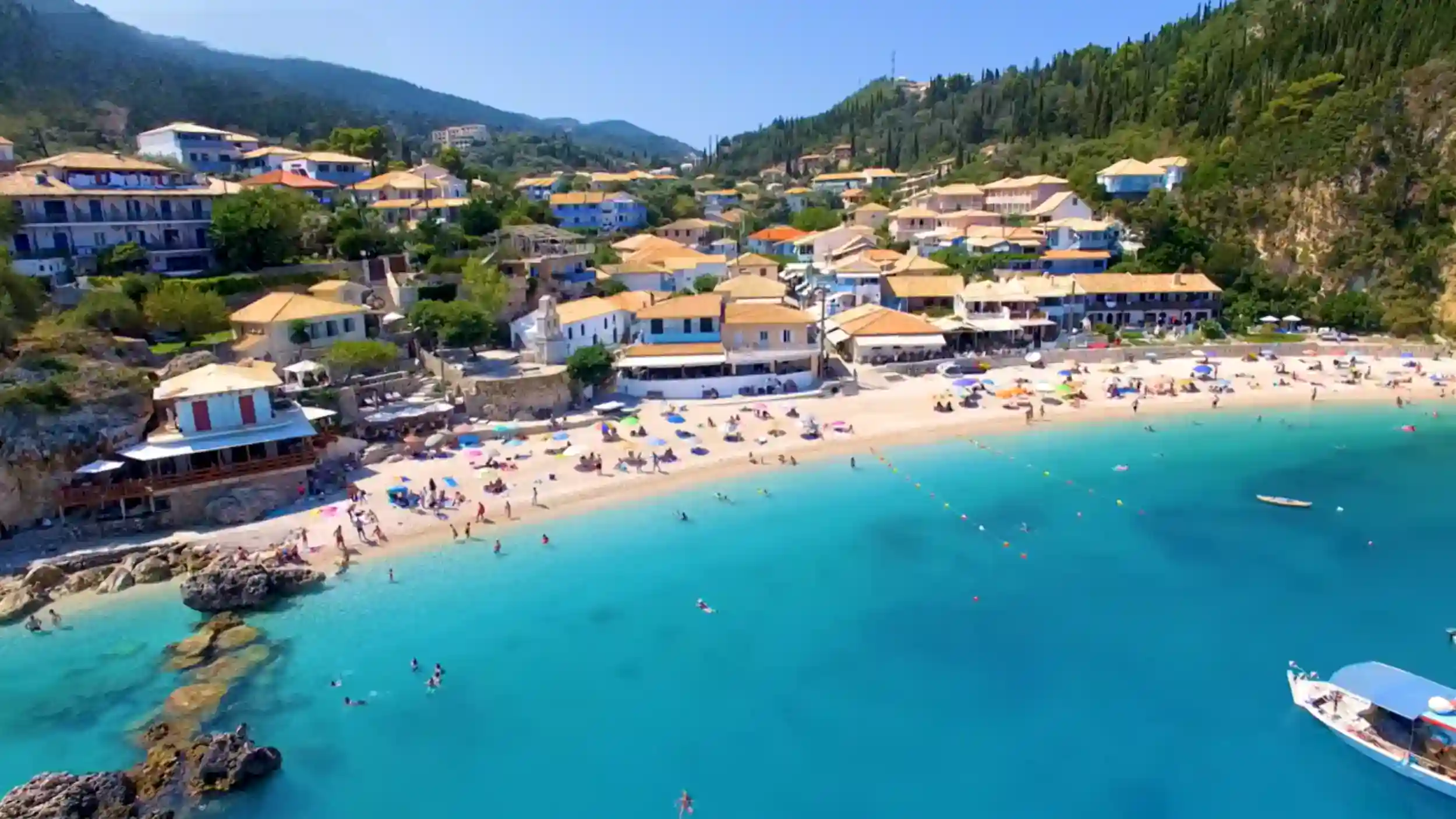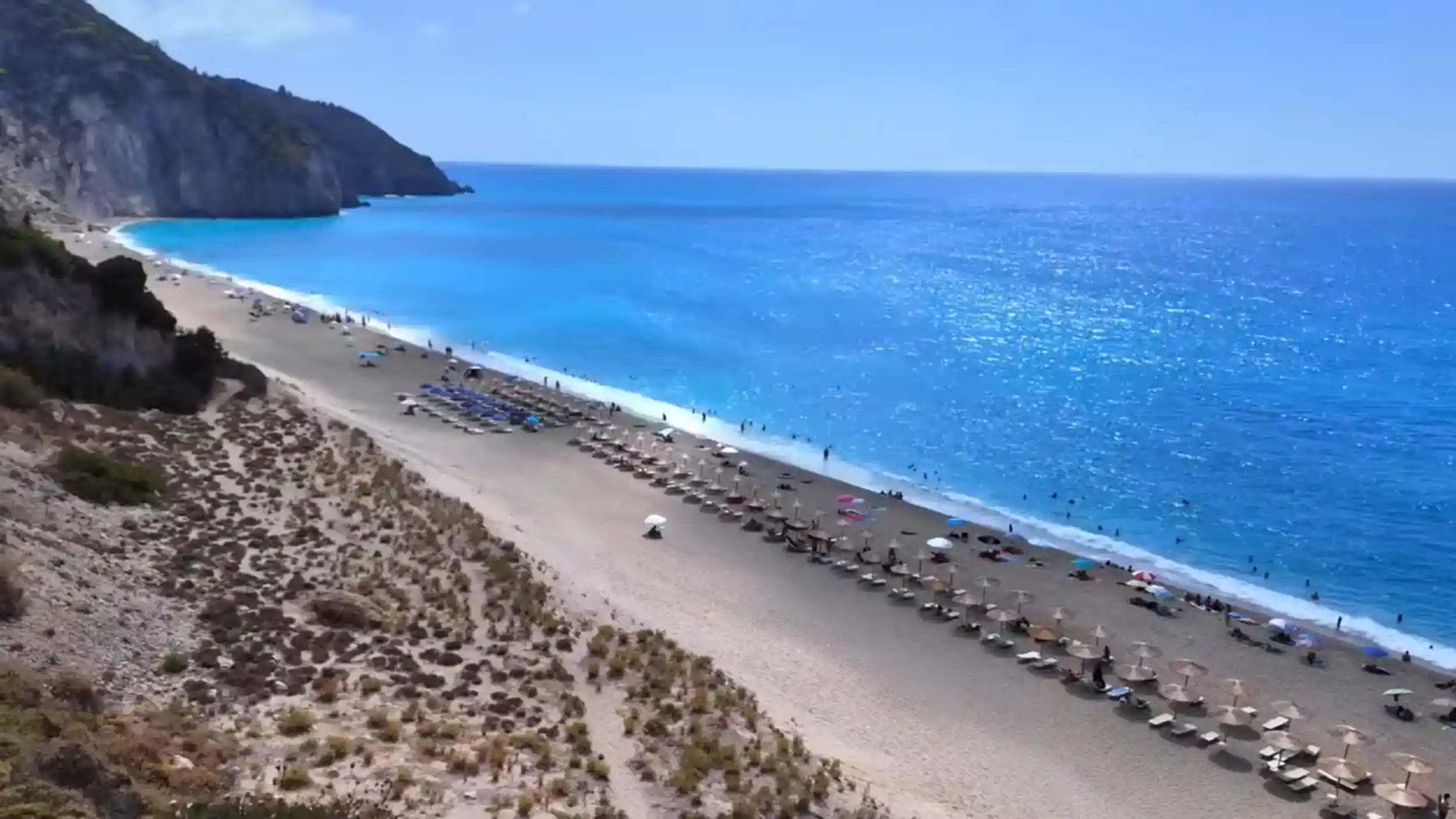
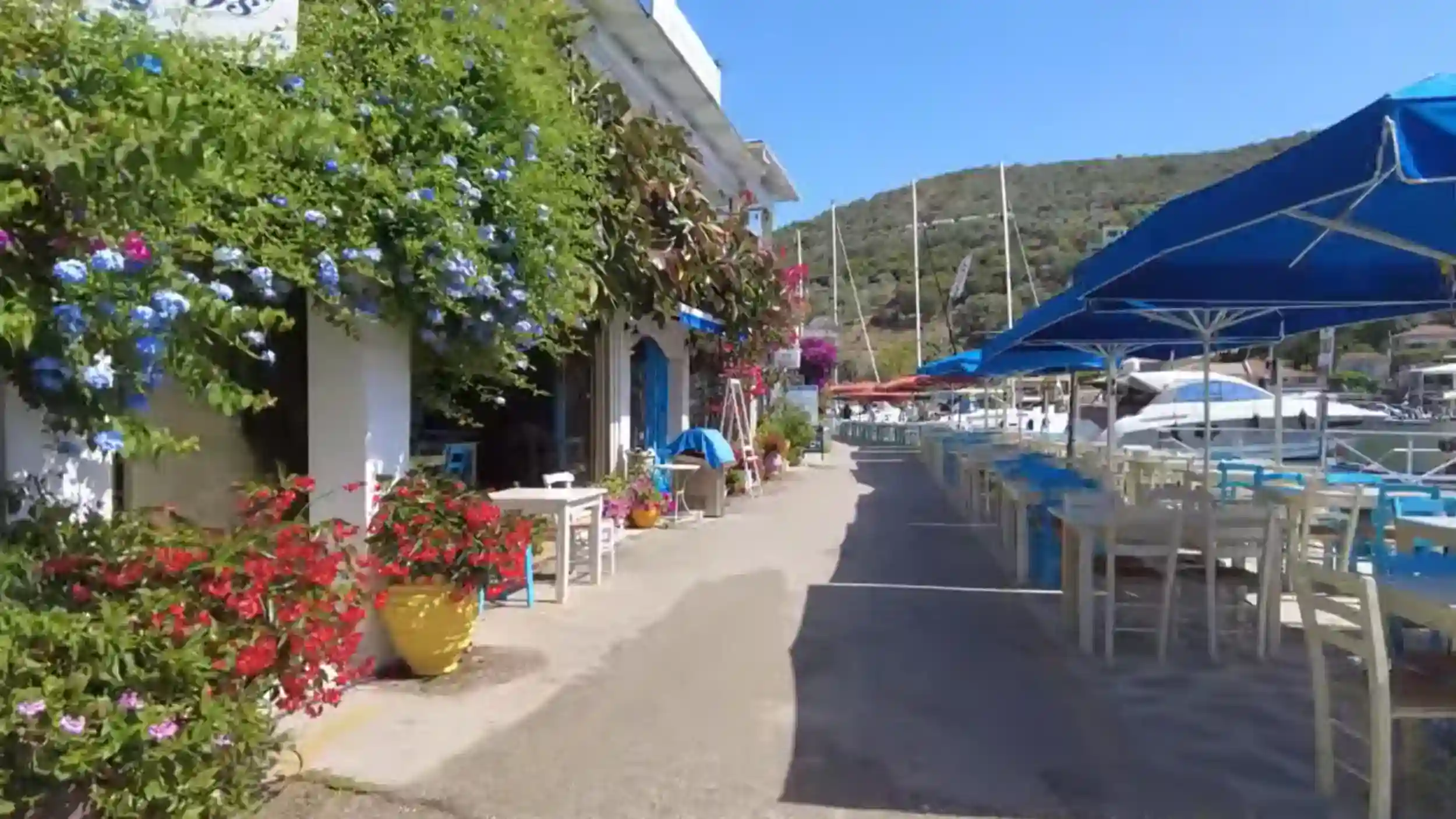
Lefkada in May offers warm spring weather, quiet beaches and lush green landscapes before the peak summer season begins. Most attractions are open, the roads remain uncrowded and the island feels far more relaxed than it does in July or August, making May one of the best months to explore Lefkada at a slower pace.
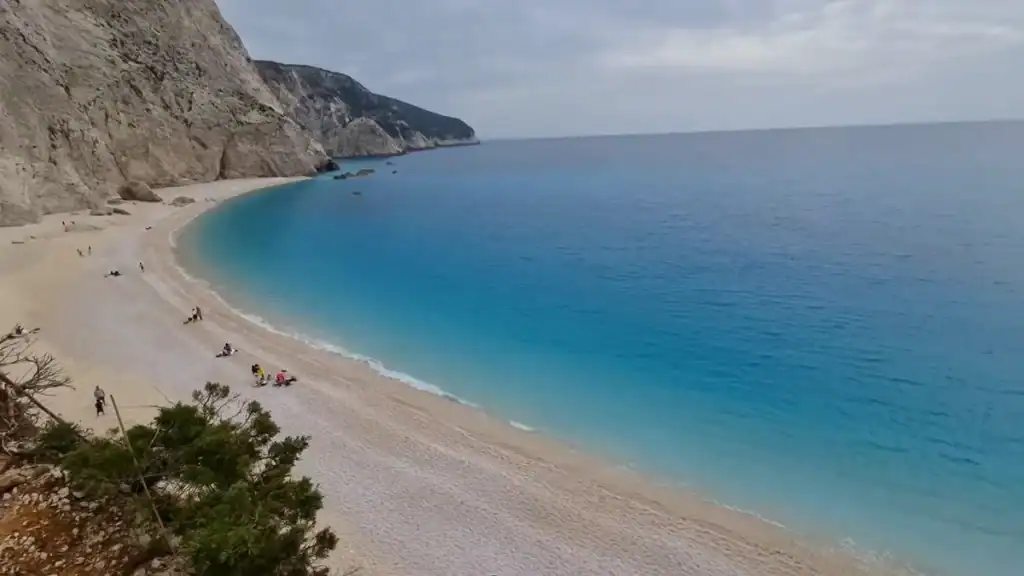
🌤️ What Lefkada Actually Feels Like in May
The numbers only tell part of the story.
What most visitors remember about Lefkada in May is how comfortable everything feels.
The days are warm without becoming oppressive, evenings are pleasant enough for outdoor dining and the island is still at its greenest after the winter rains. It feels much more like late spring than the intense Mediterranean heat many people associate with Greece.
Swimming during Lefkada in May
The sea is usually the biggest surprise.
Although daytime temperatures often reach the low to mid-20s°C, the Ionian Sea sits closer to 19 to 20°C. Most visitors are happy to swim, but the water feels noticeably cooler than it does later in the summer.
| Typical May conditions | What to expect |
|---|---|
| 🌡️ Daytime | Around 23 to 24°C |
| 🌙 Evenings | Mild, often comfortable outdoors |
| 🌊 Sea temperature | Around 19 to 20°C |
| 🌿 Landscape | Green hillsides and spring wildflowers |
Short showers remain possible, particularly early in the month, but they rarely dominate the day. In return, May rewards visitors with vibrant scenery that gradually fades as the hotter, drier months arrive, making it one of the most visually attractive times to explore the island.
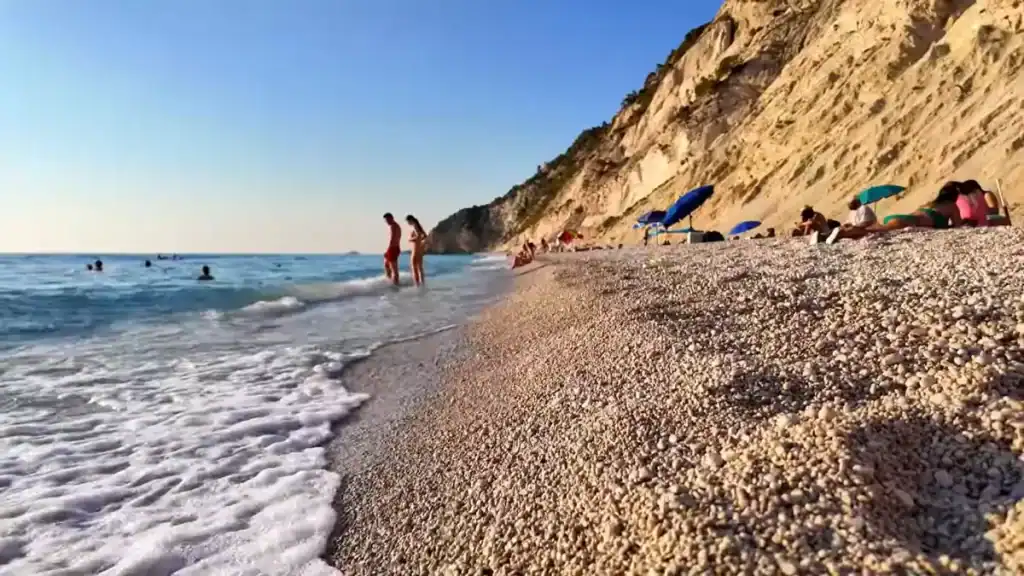
🏖️ The West Coast Beaches Without the Summer Pressure
The west coast is where Lefkada in May feels most different.
These are the island’s headline beaches, yet before summer arrives they remain remarkably easy to enjoy.
Parking is simpler, the roads are quieter and there’s far more space on the shoreline. Instead of planning your day around avoiding crowds, you can simply choose the beach that suits you.
The west coast during Lefkada in May
Every beach benefits from the quieter season, but each offers a different experience.
| Beach | 📌 Why visit in May? |
|---|---|
| 🏞️ Porto Katsiki | Easier parking and quieter stairway access |
| 🌊 Egremni Beach | Cooler temperatures make the climb much easier |
| 🏖️ Kathisma Beach | Full facilities without peak-season crowds |
| 🥾 Milos Beach | Pleasant walking conditions before the summer heat |
One of May’s biggest advantages is flexibility. You can visit Porto Katsiki in the morning, stop at another beach during the afternoon and rarely feel rushed by traffic or overcrowded car parks. The dramatic scenery is exactly the same as in August, but the overall experience is noticeably more relaxed.
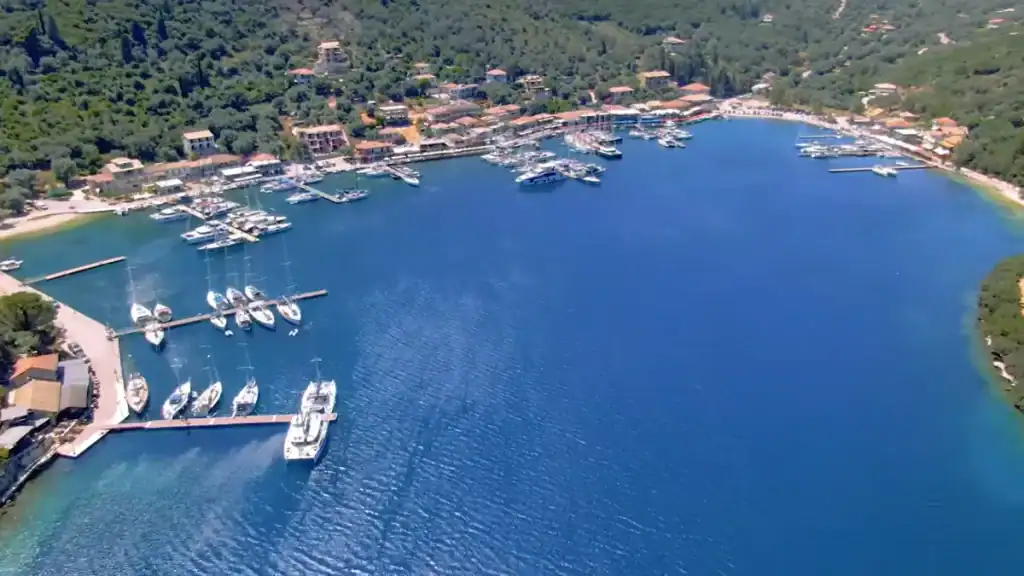
🌅 The East Coast of Lefkada in May
The east coast feels very different from the west.
While the famous beaches face the open Ionian Sea, the eastern shoreline is calmer, more sheltered and built around harbours rather than towering cliffs.
For many visitors, Lefkada in May is the perfect time to experience this quieter side of the island before sailing activity and summer tourism reach their peak.
Exploring the east coast in May
The slower pace makes it easier to appreciate the villages and natural attractions rather than simply passing The slower pace makes it easier to appreciate the villages and natural attractions rather than simply passing through them.
| Place | 📌 Why visit in May? |
|---|---|
| ⚓ Nidri | Quieter boat trips and a relaxed waterfront |
| 💦 Dimosari Waterfalls | Strong spring water flow and comfortable walking temperatures |
| ⛵ Sivota Lefkada | Peaceful harbour before the main sailing season |
| 🌊 Vasiliki Lefkada | Gentle beaches and early-season watersports |
Boat excursions also feel different in May.
With fewer passengers on board, cruises leave at a more relaxed pace and popular swimming stops are far less crowded. Combined with the island’s greener landscape and lighter traffic, the east coast offers a noticeably calmer experience than visitors encounter during the height of summer.
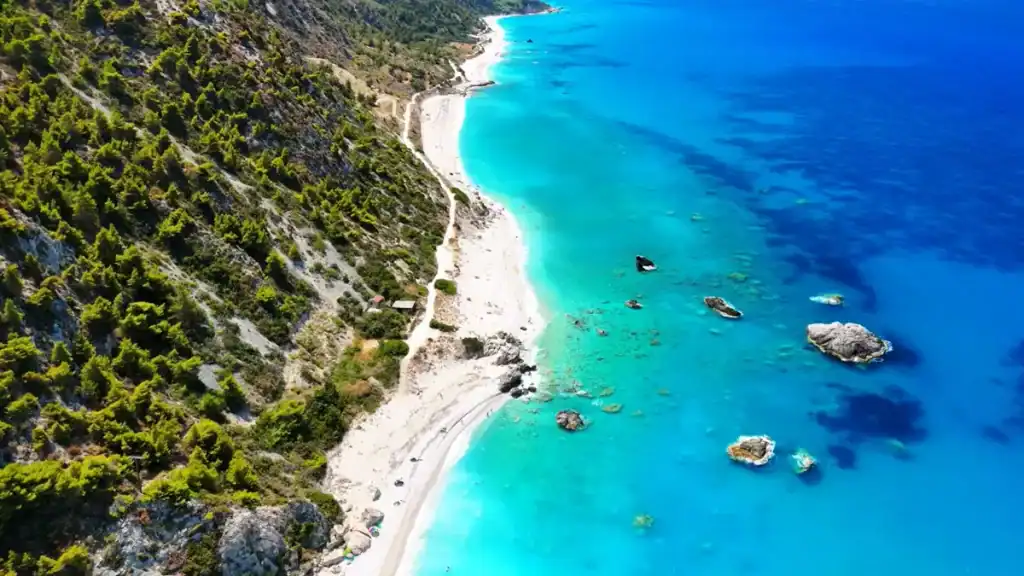
🏖️ The Accessible Beaches
Not every beach on Lefkada requires a long staircase or a challenging walk.
One of the biggest advantages of Lefkada in May is that the island’s easiest beaches remain pleasantly uncrowded, allowing you to enjoy the scenery without sacrificing convenience.
Easy beach days in Lefkada in May
If your priority is a relaxed day by theIf your priority is a relaxed day by the sea rather than an adventure getting there, May is an excellent time to visit.
| Beach | 📌 Why it’s easy to visit |
|---|---|
| 🚗 Kathisma Beach | Large car park, organised facilities and direct access |
| 🌲 Pefkoulia Beach | Roadside parking with natural shade from pine trees |
| 🌊 Agiofili Beach | Short walk from the car park or seasonal water taxi |
These beaches remove much of the planning needed for places like Porto Katsiki or Milos. You can arrive later in the morning, find parking without difficulty and still enjoy plenty of space on the beach.
For visitors who simply want clear water, beautiful scenery and an easy day by the sea, May offers the best balance of accessibility and tranquillity before the busiest weeks of summer begin.
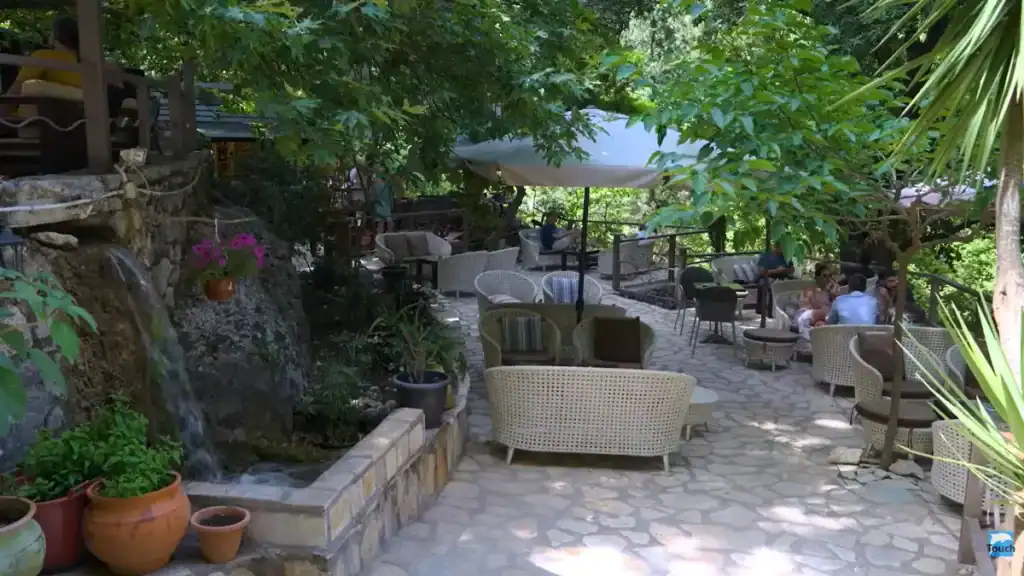
🌿 The Interior: Where May Makes the Biggest Difference
The coastline gets most of the attention.
Lefkada’s interior is where May quietly becomes the island’s best season.
Spring rain has already transformed the mountains into a patchwork of green hills, wildflowers and terraced olive groves. By midsummer, much of that colour has faded beneath the stronger sun.
Exploring the mountains in May
The cooler temperatures make inland drives and short walks far more enjoyable than they are later in the season.
| Inland experience | Why May stands out |
|---|---|
| ⛰️ Mountain villages | Cool air and clear panoramic views |
| 🌼 Spring wildflowers | Landscapes at their greenest |
| 🚶 Walking trails | Comfortable temperatures for exploring |
| 💧 Springs and streams | Higher water levels after winter rainfall |
Higher villages such as Englouvi feel almost like a different island, with noticeably cooler air and sweeping views towards the Ionian Sea. The quieter roads also make it easier to stop at viewpoints that many summer visitors simply drive past.
If your trip focuses only on the beaches, you’ll miss one of the biggest advantages of Lefkada in May. The interior offers a slower, greener and more traditional side of the island that is at its absolute best before the summer heat arrives.
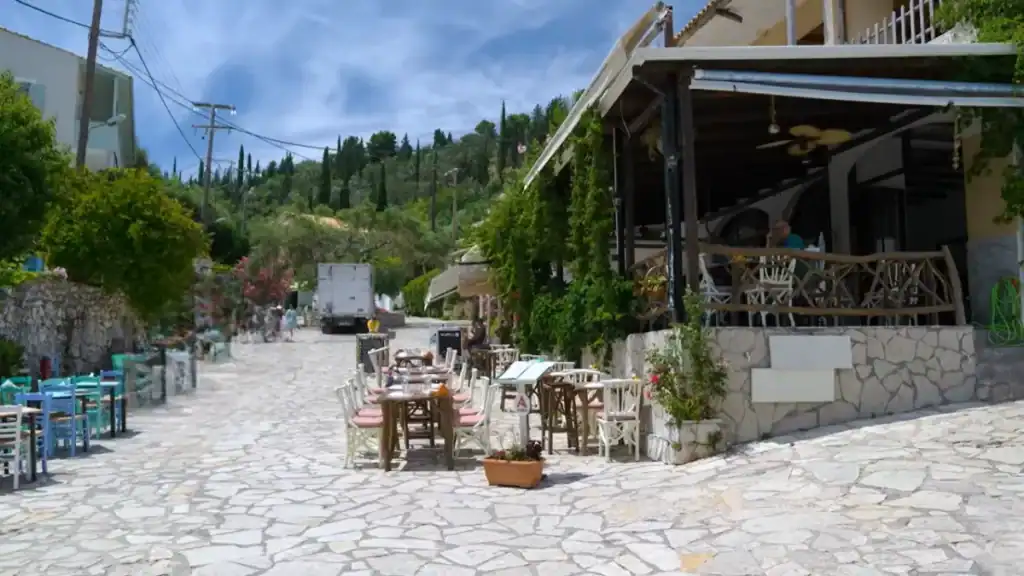
⚖️ What May Doesn’t Give You
May is one of the best months to visit Lefkada.
It just isn’t the perfect month for everyone.
Understanding the compromises before you travel helps avoid disappointment and makes it much easier to decide whether Lefkada in May matches the kind of holiday you’re planning.
Is Lefkada in May right for your trip?
The answer depends on your priorities rather than the weather alone.
| Trade-off | What to expect |
|---|---|
| 🌊 Cooler sea | Refreshing rather than warm for long swims |
| ⛵ Boat services | Reduced schedules compared with summer |
| 🍹 Seasonal businesses | Some operate shorter hours early in the month |
| 🌇 Evenings | Comfortable, but occasionally cool after sunset |
Visitors expecting the energy of July or August may find the island quieter than anticipated. Beach bars are less lively, organised excursions run less frequently and some seasonal businesses only reach full operation towards the end of May.
Those same differences are exactly why many travellers choose this time of year. Easier parking, quieter roads and a greener landscape create an experience that’s difficult to find during the height of summer. If you’re comparing seasons, Lefkada in September offers a useful contrast, with warmer sea temperatures but a noticeably busier island.