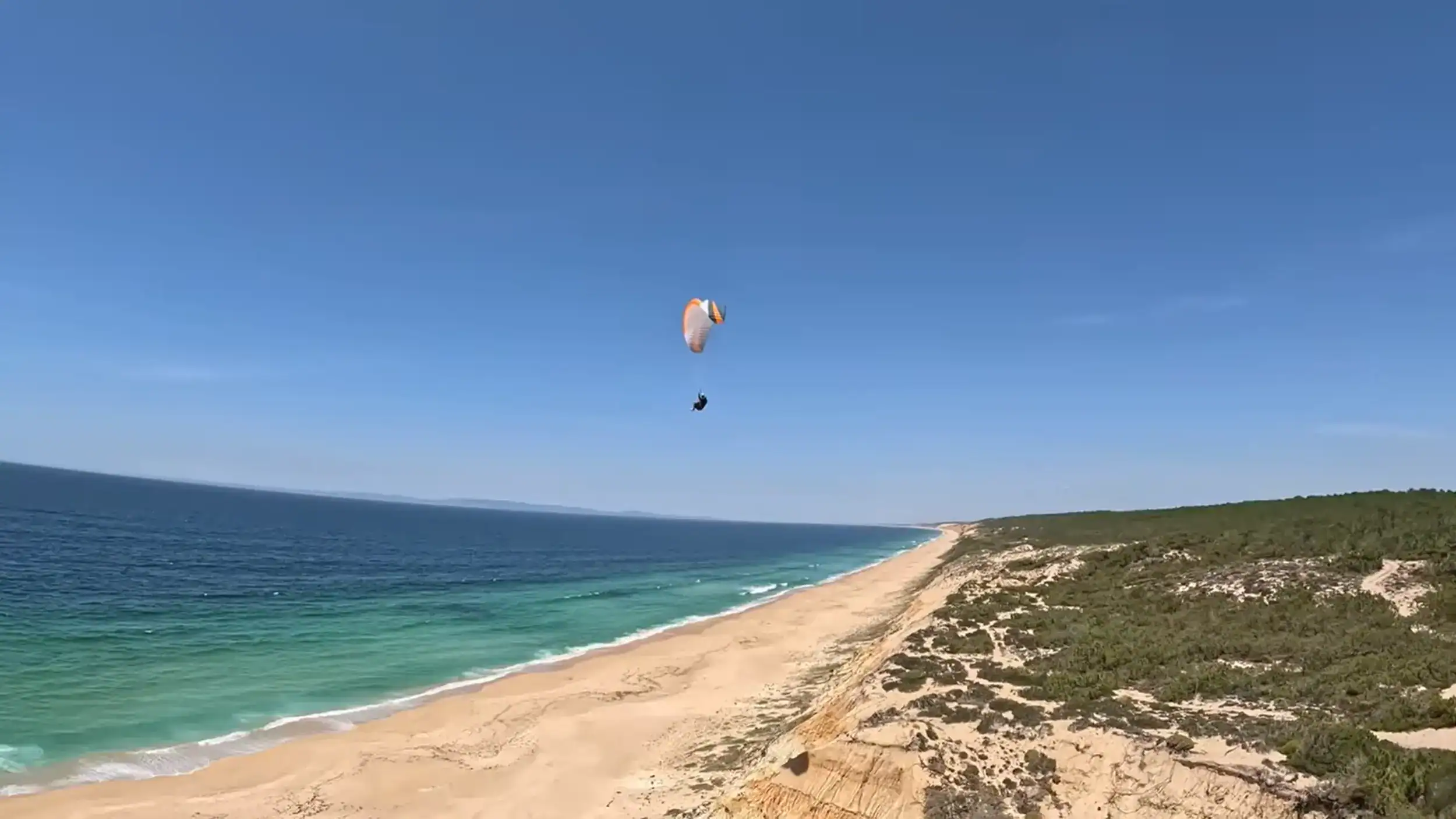
Aberta Nova beach is one of the most secluded stretches of the Alentejo coast, lying south of Carvalhal between towering dunes and the remarkable Arriba Fóssil da Galé. Its vast shoreline, limited facilities and remote location create a noticeably different experience from the more accessible beaches elsewhere on the Comporta Coast.
Reaching Aberta Nova beach is part of what makes it special. The final approach follows an unpaved track through pine forest, naturally limiting visitor numbers and helping preserve the sense of space and tranquillity that defines this remarkable Atlantic beach.
🏖️ What the Beach Is Actually Like
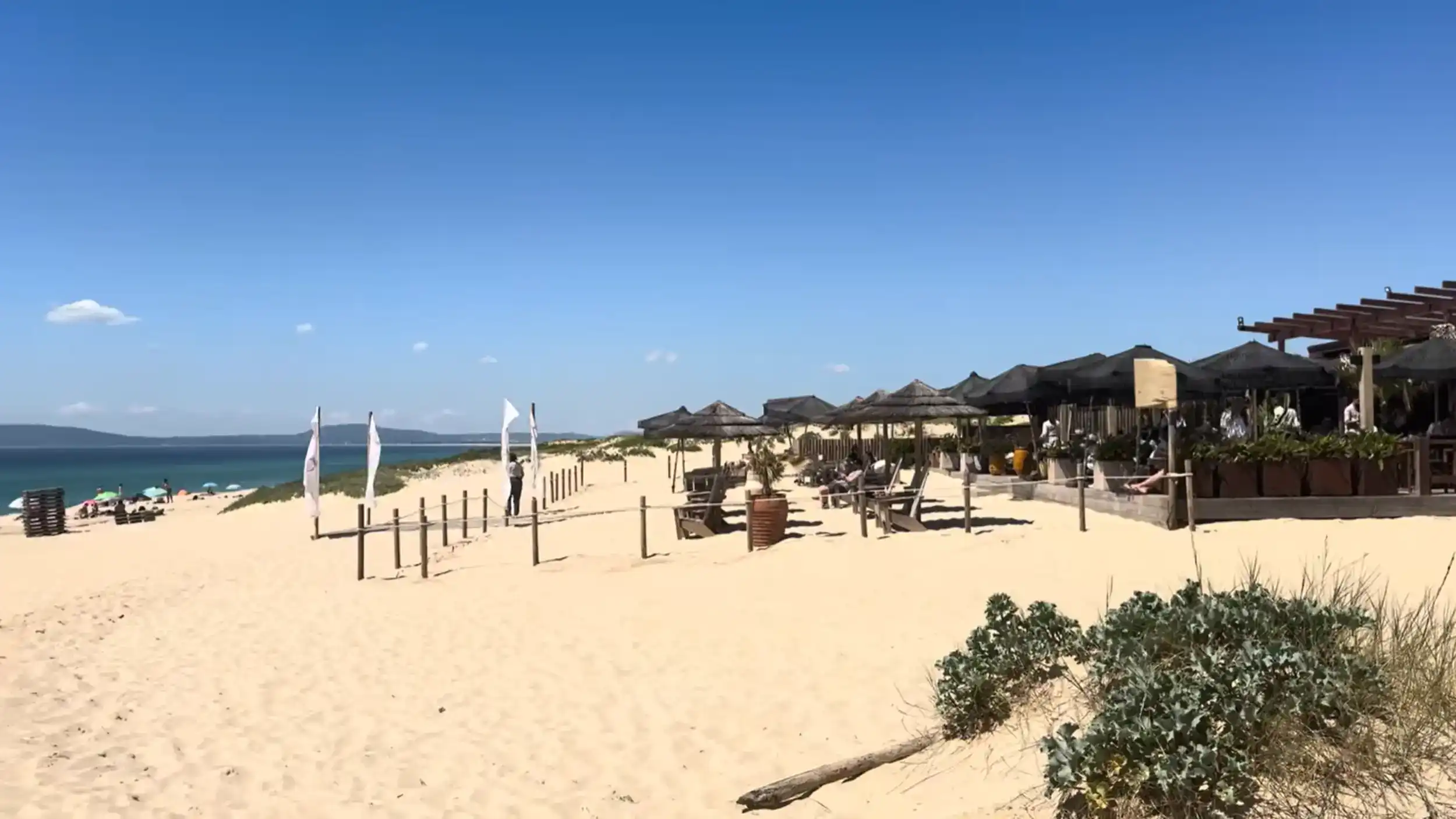
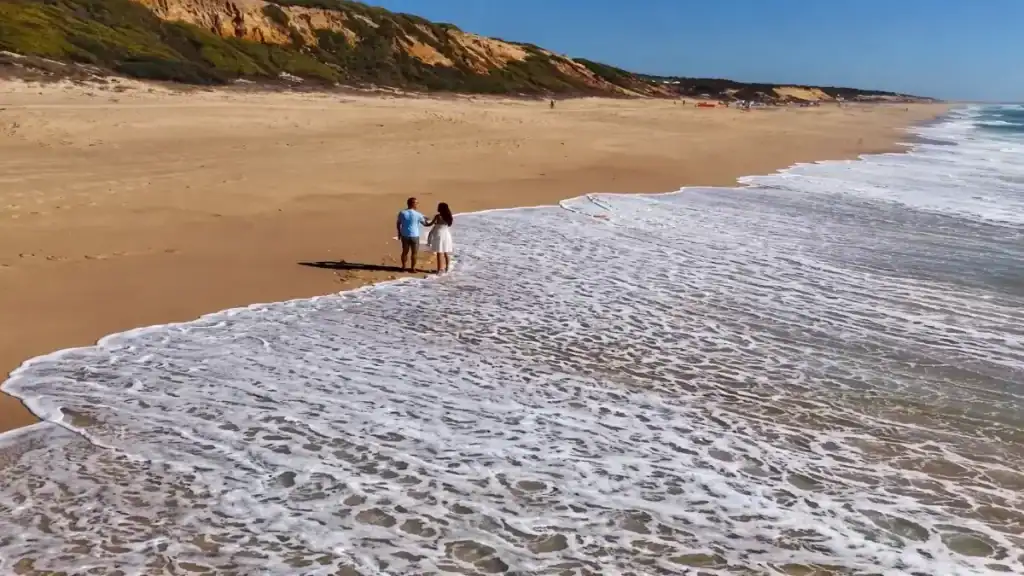
Aberta Nova beach feels larger than its measurements suggest. Standing at the end of the boardwalk, the shoreline seems to disappear into the distance in both directions, with the dunes hiding almost every sign of development behind you. The result is a remarkable sense of space that is increasingly difficult to find elsewhere on Portugal’s Atlantic coast.
Why Aberta Nova Beach Feels So Remote
The landscape creates an impression of complete isolation.
| Feature | What to expect |
|---|---|
| 🏖️ 3.5 km of sand | Plenty of room, even in summer |
| 🌾 High dune ridge | Hides roads, buildings and parking |
| 🌊 Atlantic surf | Constant waves and changing conditions |
| 🌿 Fontainhas stream | A natural landmark across the beach |
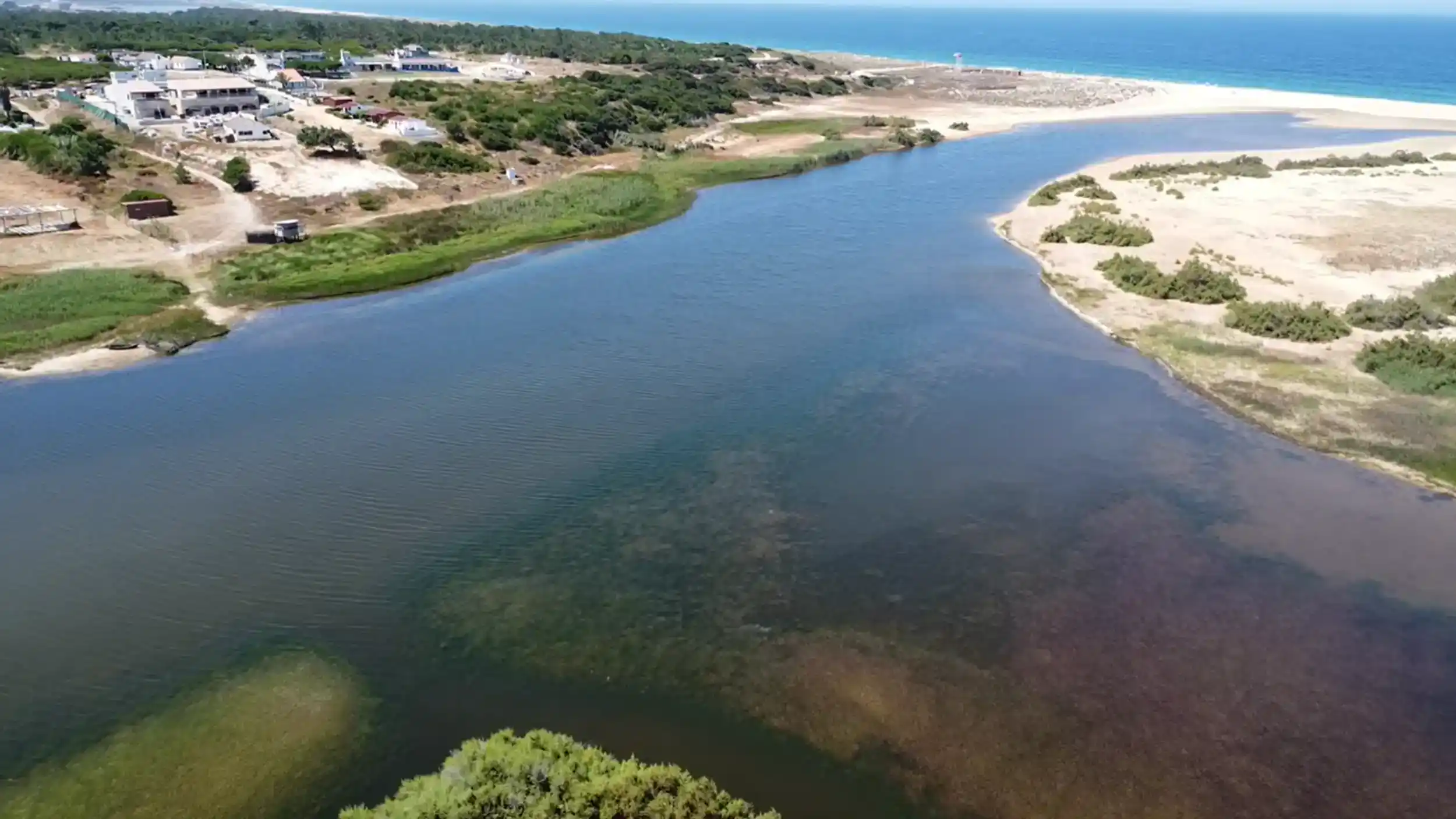
One reason Aberta Nova beach feels so wild is that the dune ridge blocks almost everything inland. Once you leave the boardwalk, the road, car park and pine forest disappear from view, leaving only sand, sea and the sound of the Atlantic. The Fontainhas stream provides one of the few visible landmarks, changing width with the seasons as it crosses the beach towards the ocean.
Swimming at Aberta Nova Beach
Swimming conditions depend entirely on the Atlantic.
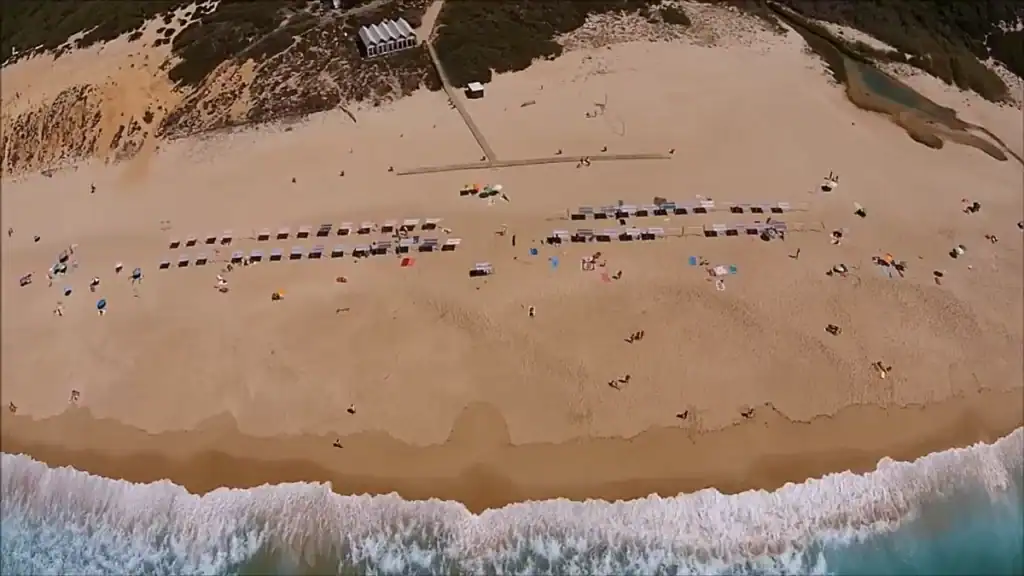
The seabed shelves gradually, making entry relatively gentle on calmer days, but wave conditions can change quickly as successive sets roll in from offshore. There are no marked swimming zones, so visitors should always assess the sea before entering. Travellers exploring several beaches along the Comporta Coast will quickly notice that Aberta Nova beach feels significantly quieter and less developed than its neighbours.
🚗 Getting There: Why the Road Does the Filtering
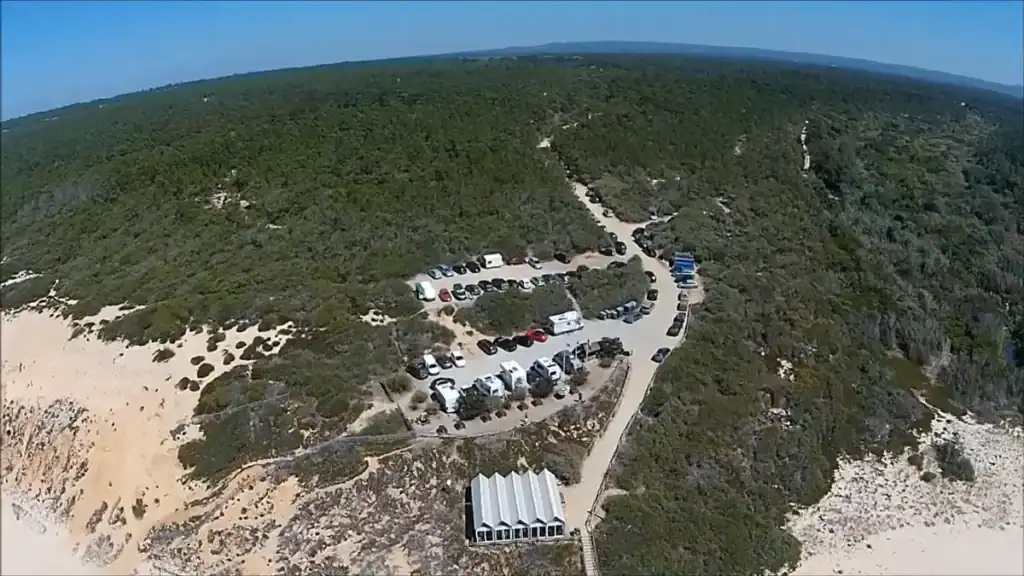
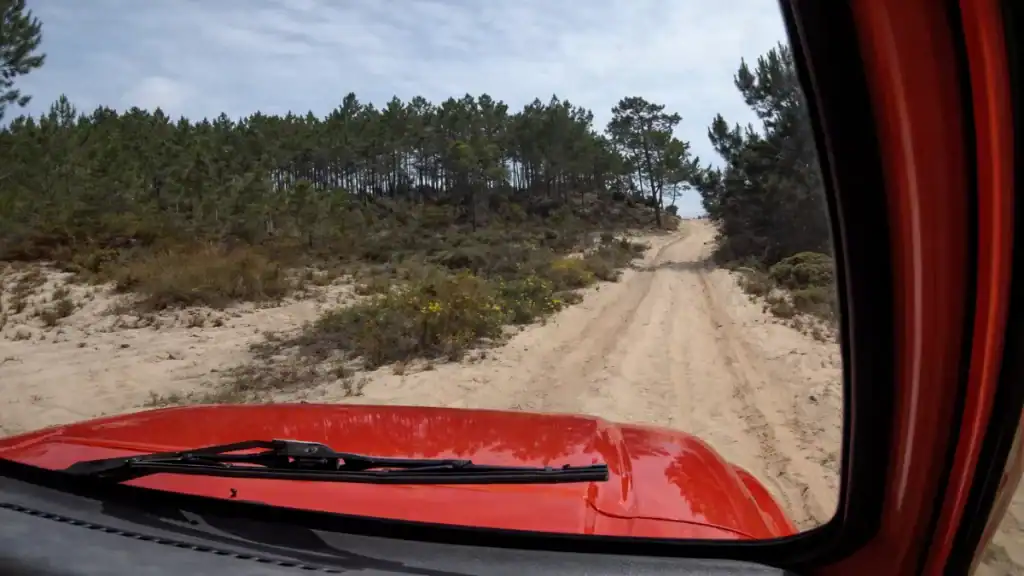
Reaching Aberta Nova beach requires a little more commitment than most beaches along this stretch of coast. After leaving the main road near Melides, the final five kilometres follow an unpaved forest track that winds through pine woodland before eventually opening onto the dunes.
Driving to Aberta Nova Beach
The journey itself helps preserve the beach’s peaceful atmosphere.
| Stage | What to expect |
|---|---|
| 🚗 Main road | Easy approach from Melides |
| 🌲 Forest track | Around 5 km of unpaved road |
| 🅿️ Parking area | Informal clearing beside the dunes |
| 🚶 Boardwalk | Short walk across the dune ridge |
The narrow dirt road naturally discourages casual visitors, meaning far fewer people reach Aberta Nova beach than the more accessible beaches further north. By the time you arrive, the slower journey has already created a sense of leaving the busier coastline behind.
Facilities at the Entrance
Facilities remain deliberately simple.
An informal parking area sits behind the dunes, with a seasonal beach bar operating nearby depending on the time of year. Beyond that, there is very little infrastructure, reinforcing the undeveloped character that makes Aberta Nova beach stand apart. Visitors continuing further south may also enjoy Melides, where the beaches remain wild but the village provides a convenient base with restaurants, accommodation and local services.
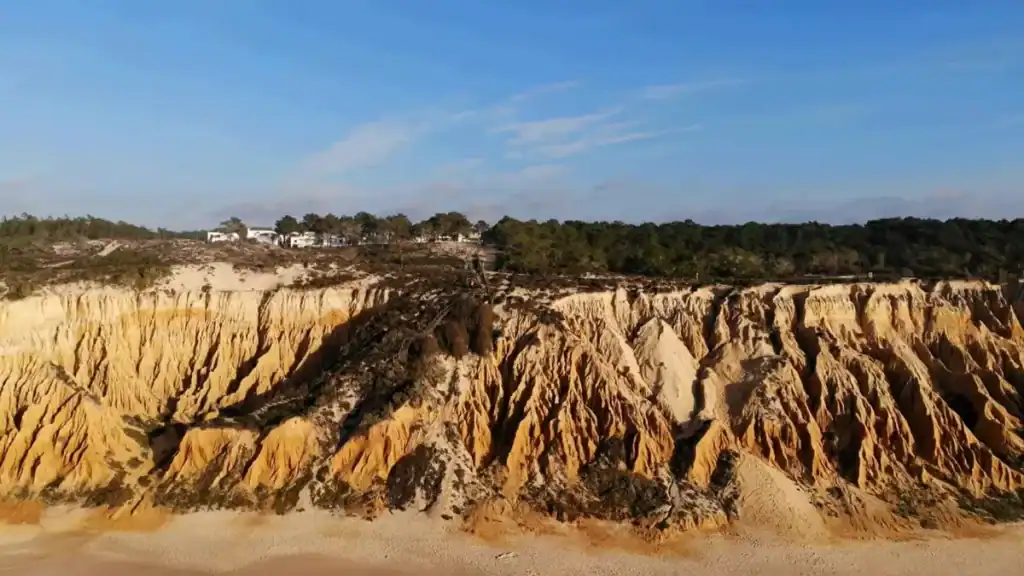
🪨 The Fossil Cliff at the Northern End
The northern end of Aberta Nova beach reveals one of the most unusual geological features on the Alentejo coast. As the dunes gradually give way to exposed sandstone, the Arriba Fóssil da Galé emerges in striking shades of ochre and rust, marking a dramatic change in both the landscape and the character of the shoreline.
Walking to the Fossil Cliff from Aberta Nova Beach
The cliff is farther away than it first appears.
| Feature | What to expect |
|---|---|
| 🥾 Walk from the boardwalk | Around 20 minutes beyond the Fontainhas stream |
| 🪨 Sandstone cliffs | Distinctive layers of ochre and orange |
| 🌊 Beach transition | Aberta Nova becomes Praia da Galé-Fontainhas |
| 📸 Photography | Best in softer morning or late afternoon light |
As you head north, the dune ridge slowly changes from pale sand to exposed sandstone before the cliff dominates the horizon. The geological layers were formed around five million years ago and have gradually been revealed by coastal erosion, making this one of the most distinctive natural landmarks along the coast.
A Different Side of the Coast
The fossil cliff provides a reminder that this coastline is about far more than beaches.
Standing beneath the sandstone layers gives a completely different perspective from the open shoreline, highlighting the geological history that shaped this part of Portugal. Travellers interested in exploring more of the surrounding coastline will also find The Comporta Coast explains how Aberta Nova beach fits within the wider landscape of dunes, villages and Atlantic shoreline.
🌊 How Aberta Nova Beach Compares to Comporta’s Other Beaches
Aberta Nova beach shares the same Atlantic coastline as Praia da Comporta, Carvalhal and Pego, yet it offers a noticeably different experience. While those beaches provide easier access and more facilities, The beach remains defined by its isolation, long walks and undeveloped surroundings.
Aberta Nova Beach Compared
Each beach suits a different type of visitor.
| Beach | Best for |
|---|---|
| 🏖️ Aberta Nova Beach | Solitude, long walks and wild scenery |
| 🍽️ Carvalhal | Beach clubs and restaurants |
| 🌊 Praia da Comporta | Easy access and classic beach days |
| 🌾 Pego | Relaxed atmosphere with fewer facilities |
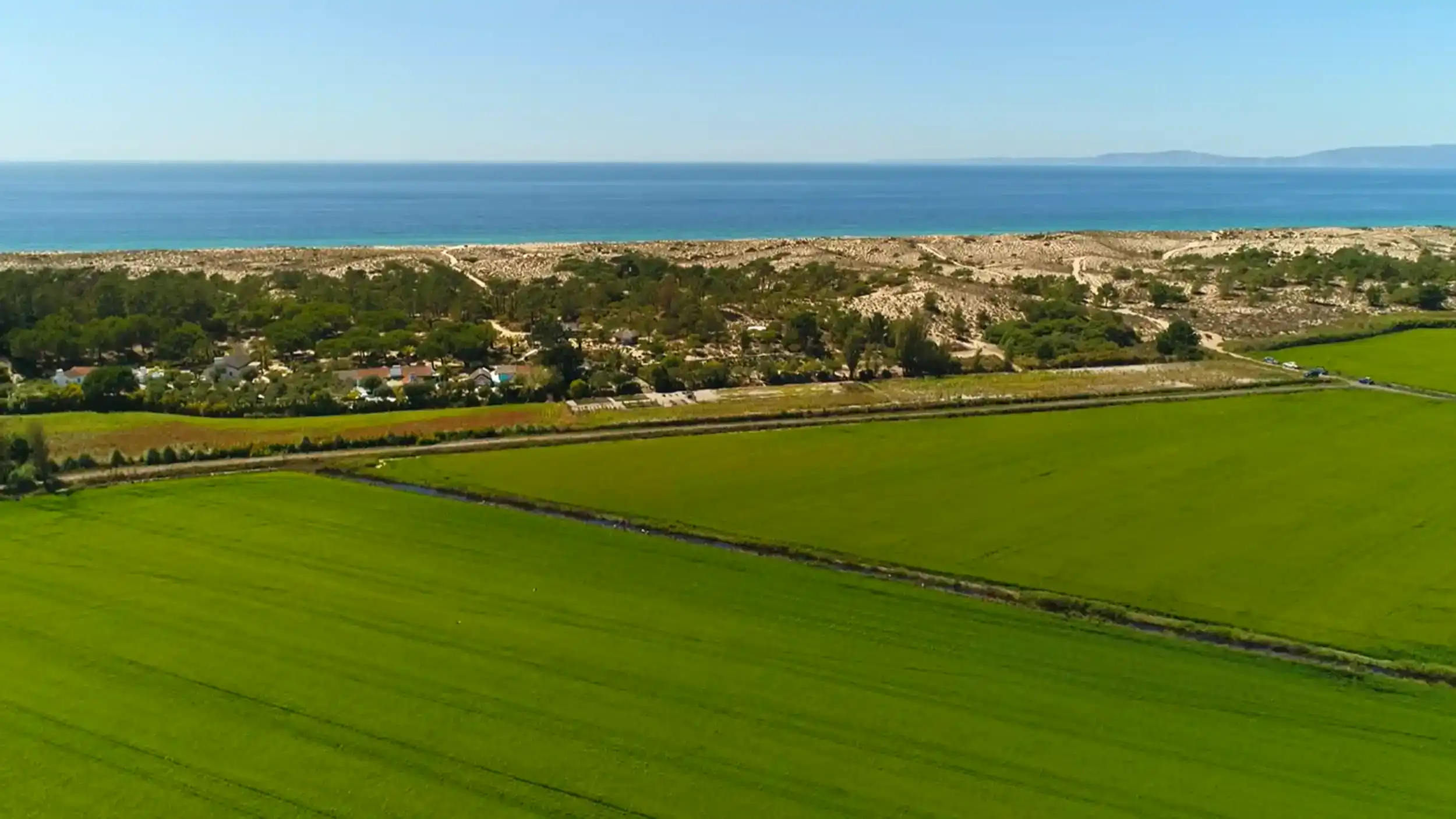
Unlike Praia da Comporta or Carvalhal, there is no organised beachfront scene waiting beyond the dunes. Instead, Aberta Nova rewards visitors looking for uninterrupted Atlantic scenery, where the sheer length of the shoreline absorbs people without ever feeling crowded. The wider setting is explored in The Comporta Coast, which explains how each beach fits into the region’s connected landscape of villages, dunes and rice fields.
Where Melides Fits In
Just south of Aberta Nova beach, Melides provides a natural base for exploring this quieter stretch of coastline.
The village complements the beach rather than competing with it, offering restaurants, accommodation and a more traditional village atmosphere while preserving the same sense of space that defines this part of the Alentejo. Visitors planning a longer stay will find Melides explains why the village and the beach work so well together as part of a wider coastal itinerary.