Alcácer do Sal offers a completely different perspective on the Comporta region. While most visitors head west towards the Atlantic, this historic riverside town lies thirty kilometres inland, where a castle, the River Sado and three thousand years of history replace beaches and dunes.
The drive from Comporta takes around thirty minutes through rice fields and the Sado floodplain before the hilltop town comes into view. For anyone exploring beyond the coast, Alcácer do Sal provides the historical depth that perfectly complements the landscapes of the Comporta Coast.
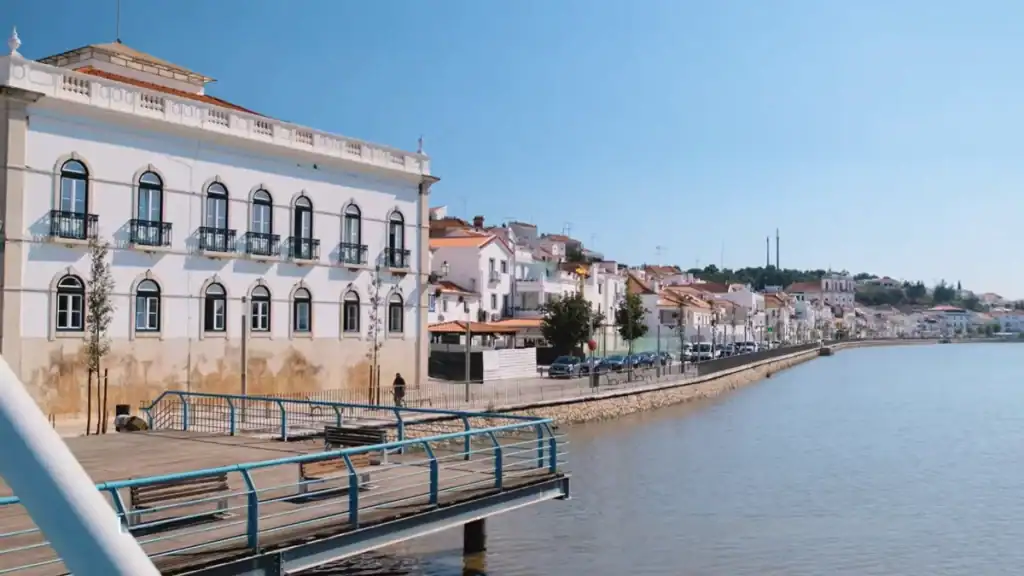
🌉 The Bridge and the Riverfront in Alcácer do Sal
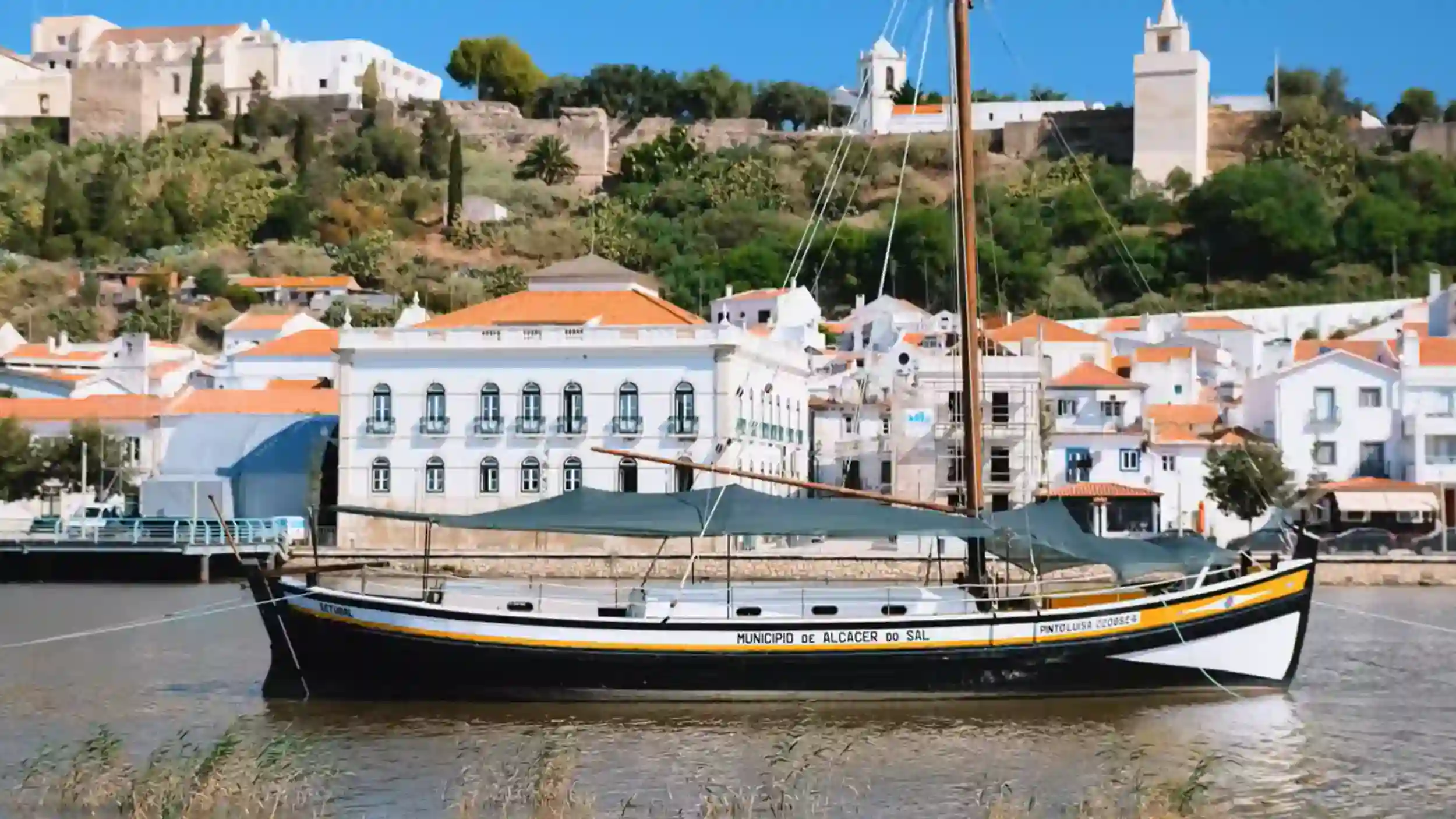
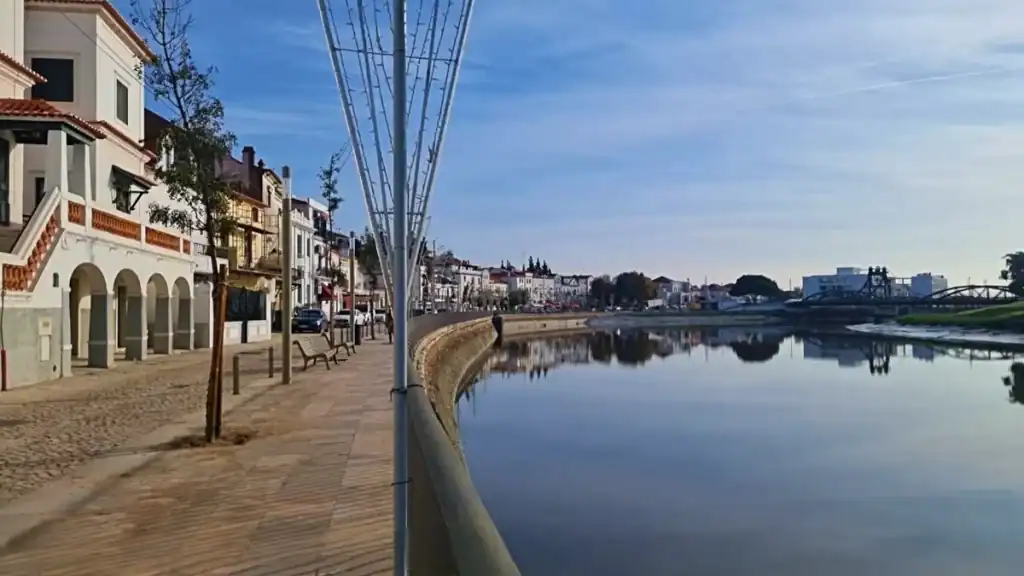
The River Sado is the first thing that gives Alcácer do Sal its character. Crossing the bridge reveals a broad, slow-moving river bordered by whitewashed buildings climbing the hillside towards the castle, creating one of the most distinctive townscapes in the Alentejo.
Walking the Riverfront in Alcácer
The waterfront is best explored on foot after parking beside the river.
| Feature | What to expect |
|---|---|
| 🌉 Sado Bridge | The best first view of the town |
| 🚶 Riverside promenade | Flat, relaxed walk beside the river |
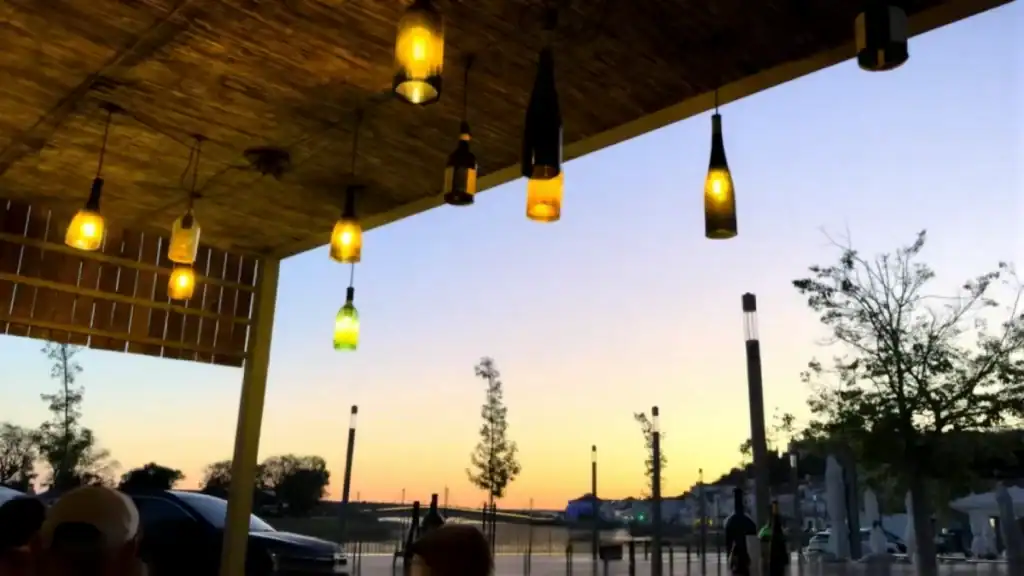
| ☕ Waterfront cafés | Outdoor terraces overlooking the Sado |
| 🕊️ Stork nests | Visible on pylons and castle walls |
Unlike many historic towns, Alcácer do Sal doesn’t feel preserved purely for visitors. Alongside cafés and attractive riverside buildings you’ll find small parks, local businesses and everyday life unfolding at an unhurried pace, giving the town an authentic atmosphere that sets it apart from purpose-built tourist destinations.
Where to Start Your Visit
Most visitors begin beside the river before climbing towards the castle.
Starting at the waterfront allows you to appreciate how the town rises naturally from the Sado before exploring the older streets above. Travellers spending several days exploring the Comporta Coast often find Alcácer do Sal provides the perfect contrast to the beaches, replacing Atlantic scenery with centuries of riverside history.
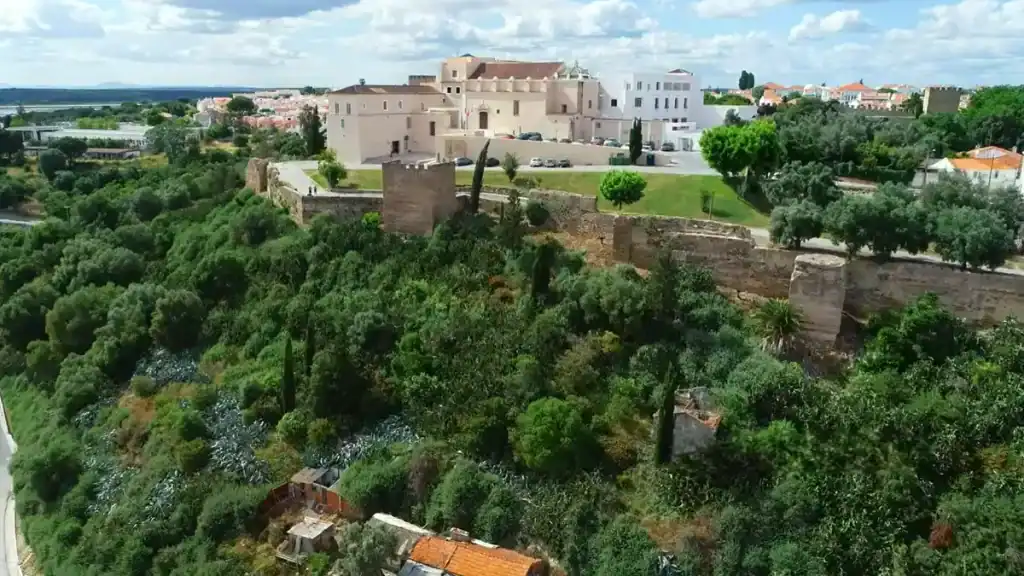
🏰 The Castle Hill in Alcácer do Sal
The castle hill is the highest point in Alcácer do Sal and the place where the town’s long history becomes most visible. A short walk uphill from the riverfront leads through narrow cobbled streets to the former Moorish fortress, where sweeping views stretch across the Sado valley and surrounding rice fields.
Visiting the Castle Hill
The climb is short but rewards you with the town’s finest views.
| Feature | What to expect |
|---|---|
| 🏰 Castle grounds | Historic hilltop setting with free public access |
| 🌄 Valley views | Panoramas across the Sado floodplain |
| 🏨 Pousada | Historic convent converted into a hotel |
| 🏺 Archaeological Crypt | Layers of history beneath the castle |
The castle complex is now partly occupied by the Pousada Dom Afonso II, but visitors can freely explore the surrounding grounds and terraces. From here, the River Sado winds west towards the estuary while the geometric pattern of rice fields spreads across the floodplain below, revealing how closely Alcácer do Sal is connected to the surrounding landscape.
Why the Castle Hill Matters in Alcácer do Sal
The castle is more than a viewpoint.
Beneath the hill lies an archaeological crypt revealing successive layers of Phoenician, Roman, Islamic and medieval occupation, showing why this strategic location remained important for thousands of years. Visitors interested in the landscape beyond the town will also enjoy Comporta Rice Fields, where the same fertile floodplain continues west towards the Atlantic coast.
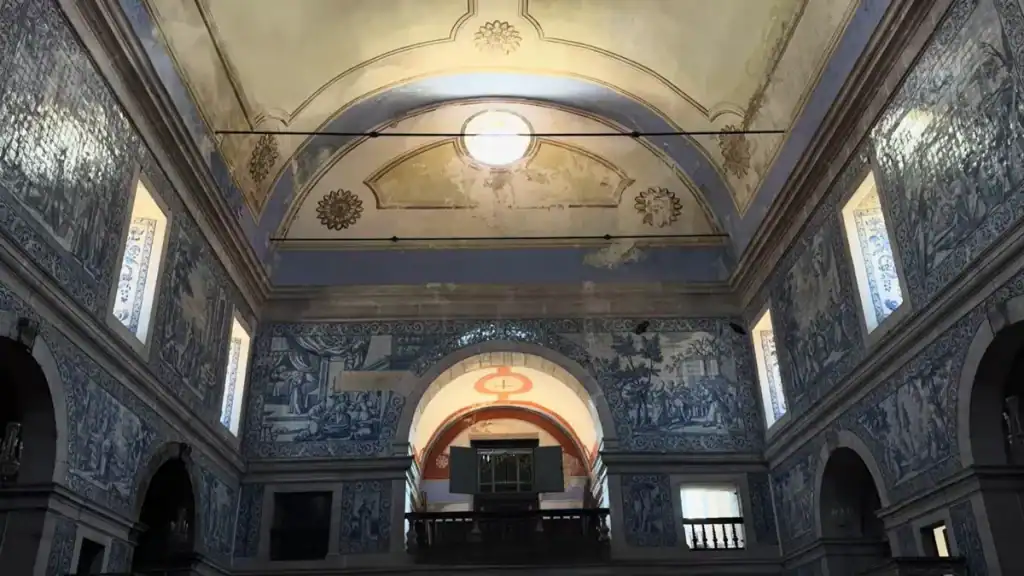
🏛️ Three Thousand Years Beneath the Streets of Alcácer do Sal
Alcácer do Sal is one of Portugal’s oldest continuously inhabited settlements. Long before the beaches of Comporta became known to travellers, Phoenician traders, Romans, Moors and medieval Christians had all recognised the strategic importance of this hill above the River Sado.
The History of Alcácer do Sal
Successive civilisations built upon the same location rather than replacing it.
| Period | Legacy |
|---|---|
| ⚓ Phoenician | Trading settlement known as Bevipo |
| 🏛️ Roman | Salacia, an important river port |
| 🕌 Moorish | Rebuilt the fortress and expanded the town |
| ✝️ Medieval | Order of Santiago established its headquarters |
Walking through Alcácer do Sal today, very little of this history is heavily signposted. Instead, it quietly reveals itself through the layout of the streets, the churches, the castle walls and the archaeological remains beneath the hill. The town’s name itself reflects its past, combining Arabic and Latin references to the fortress and the salt that once made the settlement prosperous.
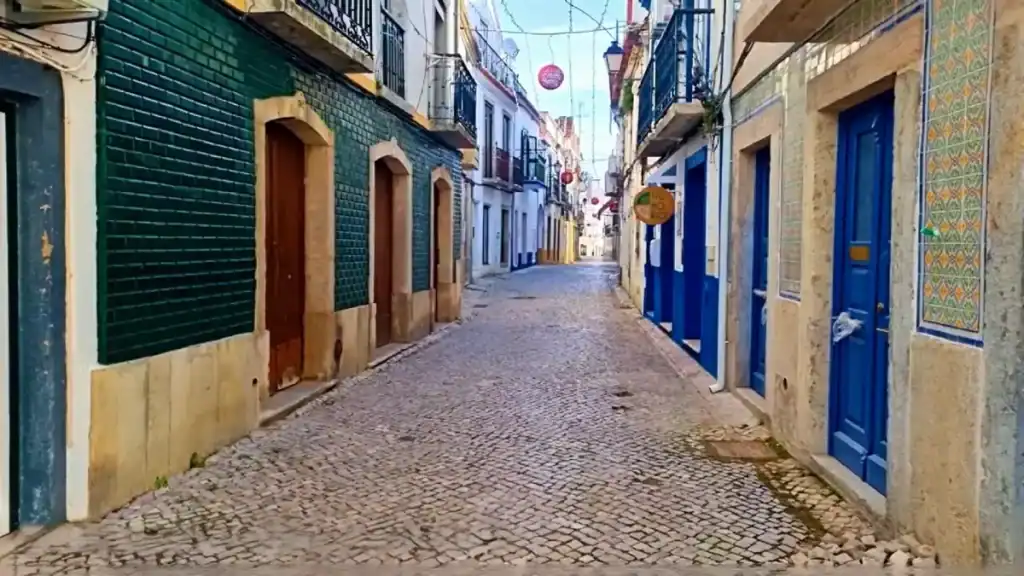
Why the History of Alcácer do Sal Still Matters
The town feels different because its history remains part of everyday life.
Rather than existing as an open-air museum, Alcácer do Sal continues to function as a working riverside town where centuries of history simply form the backdrop to daily routines. Visitors looking for a broader understanding of the surrounding landscape can continue with Sado Estuary Dolphins to see how the same river system continues west towards the estuary and the Atlantic.

🧂 The Salt Pans and the Estuary in Alcácer do Sal
The landscape around Alcácer do Sal has always been shaped by salt and water. Although most of the historic salt pans have disappeared, replaced by rice cultivation over the last two centuries, the estuary still defines the character of the town and supports an exceptionally rich natural environment.
Exploring the Estuary Around Alcácer do Sal
The surrounding wetlands reveal another side of the region.
| Feature | What to expect |
|---|---|
| 🧂 Salina da Batalha | One of the last traditional salt pans |
| 🌾 Rice fields | Former salt pans converted for agriculture |
| 🦩 Estuary wetlands | Seasonal flamingos and abundant birdlife |
| 🌊 River Sado | Connects the town to the Atlantic coast |
Today, Salina da Batalha provides a rare opportunity to see traditional salt production still taking place. Beyond it, the estuary opens into marshes, reed beds and floodplains where white storks, flamingos and numerous wading birds feed throughout the year. The same waterways eventually widen into the Sado Estuary before reaching the Atlantic.
Wildlife Around Alcácer do Sal
The estuary links Alcácer do Sal directly with one of Portugal’s richest wildlife habitats.
Many visitors combine time in the town with Sado Estuary Dolphins, where boat trips explore the lower estuary in search of the resident bottlenose dolphin colony. Together, the two experiences reveal how the River Sado connects the inland landscape with the coast.
🌾 What Comporta Doesn’t Have That Alcácer Does
Comporta and Alcácer do Sal complement one another rather than compete. Comporta is known for beaches, dunes and a carefully preserved coastal atmosphere, while Alcácer offers the historical depth that the coast deliberately lacks. Together they provide two very different ways of experiencing the same landscape.
Why Alcácer Feels Different from Comporta
The contrast becomes obvious after visiting both places.
| Comporta | Alcácer do Sal |
|---|---|
| 🏖️ Atlantic beaches | 🏰 Historic castle hill |
| 🌾 Rice fields | 🏛️ Three thousand years of history |
| ☕ Boutique village atmosphere | 🌉 Authentic riverside town |
| 🌊 Coastal landscape | 🧂 River, estuary and salt heritage |
While Comporta Village charms visitors with its boutiques, cafés and relaxed atmosphere, Alcácer tells the much longer story behind the region. Successive civilisations settled here because the River Sado, fertile floodplain and salt production created an ideal place to live centuries before modern tourism arrived.
Why Visit Both Alcácer do Sal and Comporta?
Experiencing both destinations creates a much fuller understanding of the region.
One reveals the Atlantic lifestyle that attracts visitors today, while the other explains how the surrounding landscape evolved over thousands of years. Together they show that the wider Comporta Coast is about far more than beaches alone.
🚗 Getting Here from Comporta to Alcácer do Sal
Alcácer is an easy half-day trip from Comporta. The drive takes around thirty minutes along the N253, gradually leaving the coastal dunes behind as the landscape opens into rice fields and the broad floodplain of the River Sado.
Driving from Comporta to Alcácer do Sal
The journey is straightforward and scenic.
| Journey | What to expect |
|---|---|
| 🚗 Drive time | Around 30 minutes |
| 🌾 Landscape | Rice fields and Sado floodplain |
| 🌉 Arrival | Cross the Sado Bridge into the town |
| 🅿️ Parking | Easy parking beside the riverfront |
The castle hill gradually rises above the floodplain before the River Sado comes into view. Crossing the bridge provides the town’s most memorable first impression, with whitewashed buildings climbing the hillside above the waterfront.
Planning a Day Trip to Alcácer do Sal
A car is essential, as there is no practical public transport connection from Comporta.
Many visitors spend the morning exploring Comporta Village or the beaches before driving inland for lunch and an afternoon of discovery. The contrast between Atlantic coastline and historic riverside town makes the two destinations a natural pairing within a wider Comporta Coast itinerary.