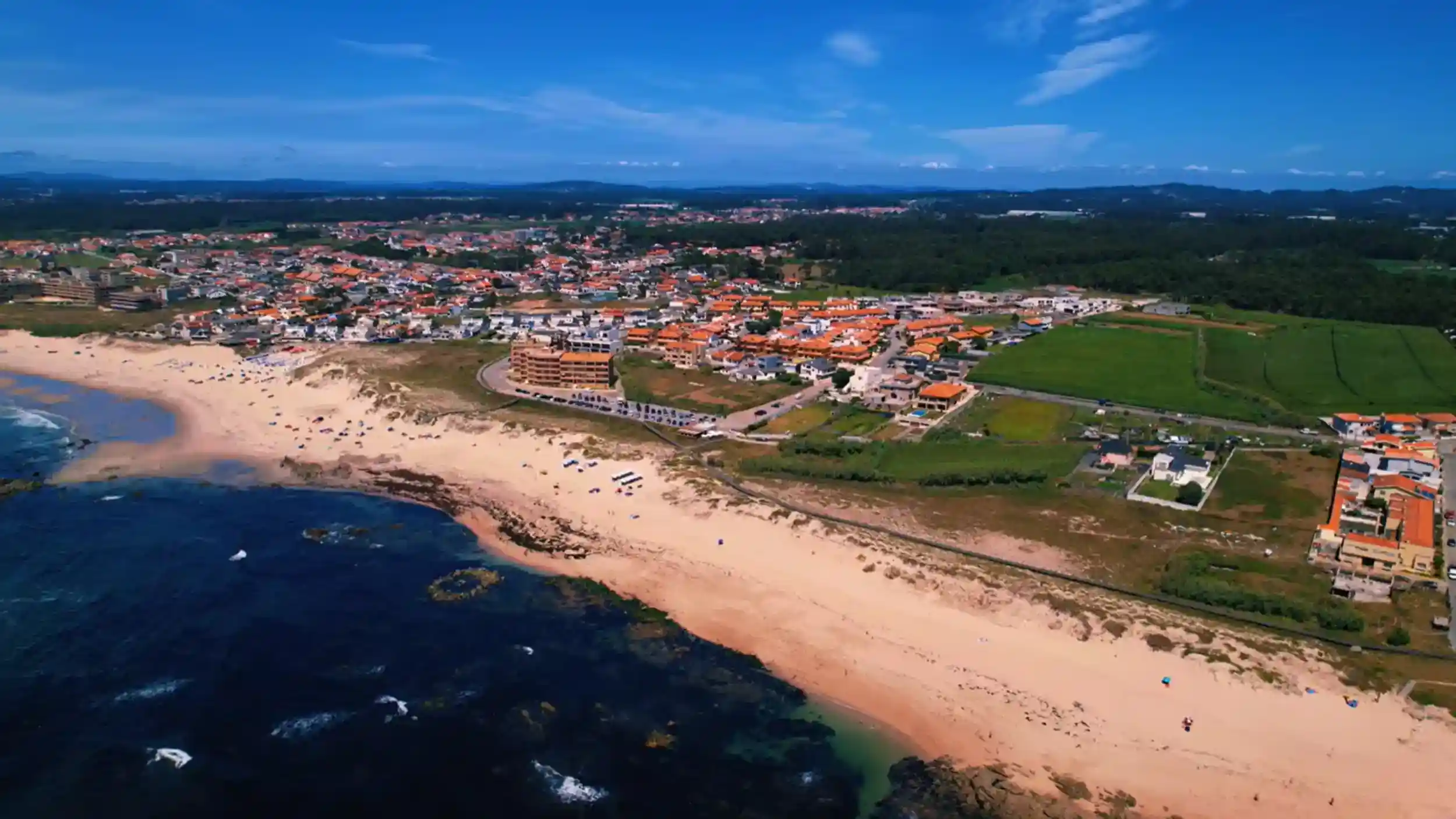
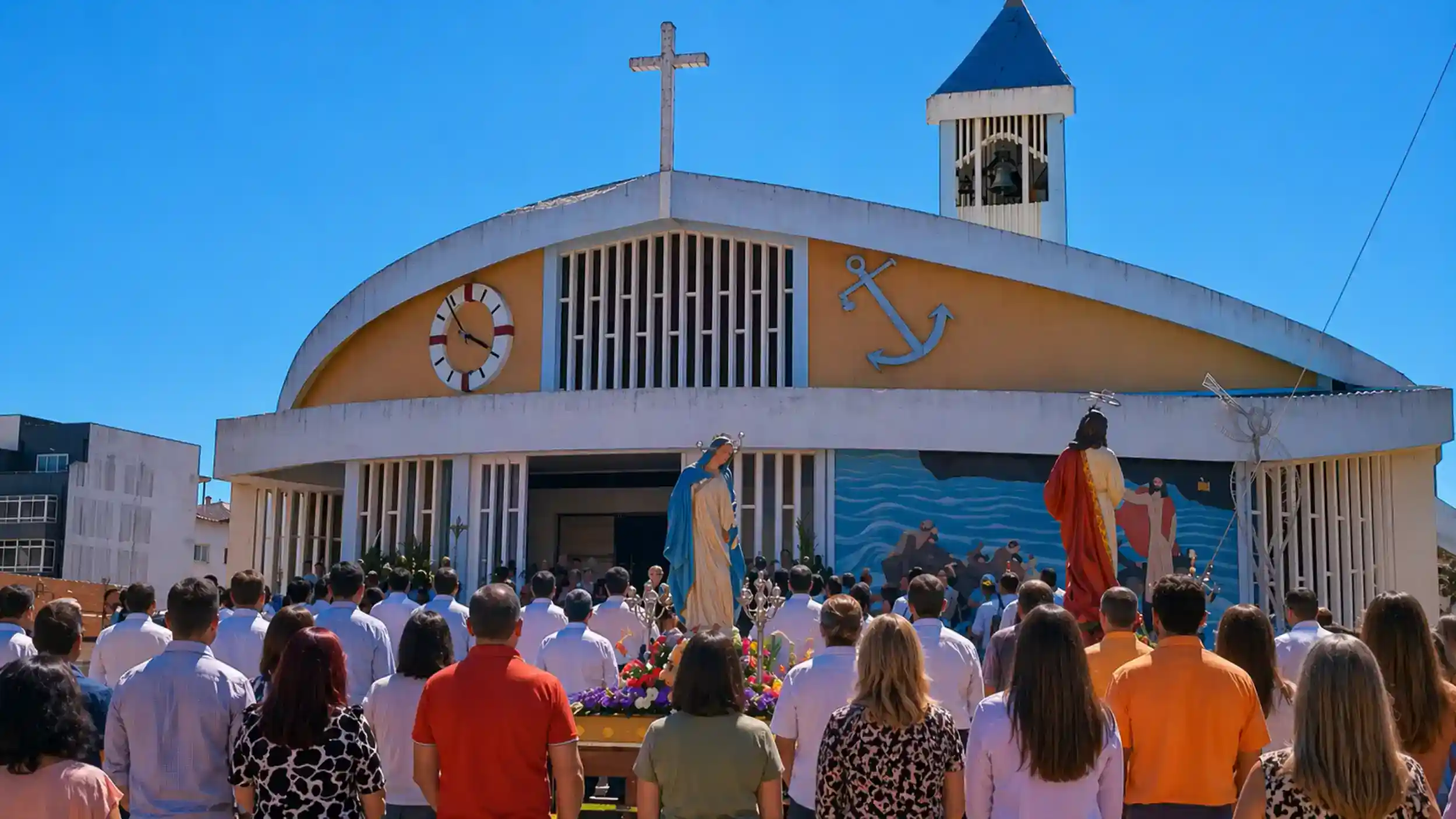
The Vila do Conde festival of Nossa Senhora dos Navegantes takes place in Caxinas, the working fishing parish on the town’s northern edge. On the first Sunday of August, local fishermen carry a religious procession through the parish streets.
Sixteen decorated andores take part, including the principal platform dedicated to Senhor dos Navegantes, the patron of the parish. This isn’t simply a summer event for visitors. Local fishing families organise, fund and carry the procession, continuing a tradition closely tied to the boats and fishermen who still work from the seafront.
Getting to the Vila do Conde Festival
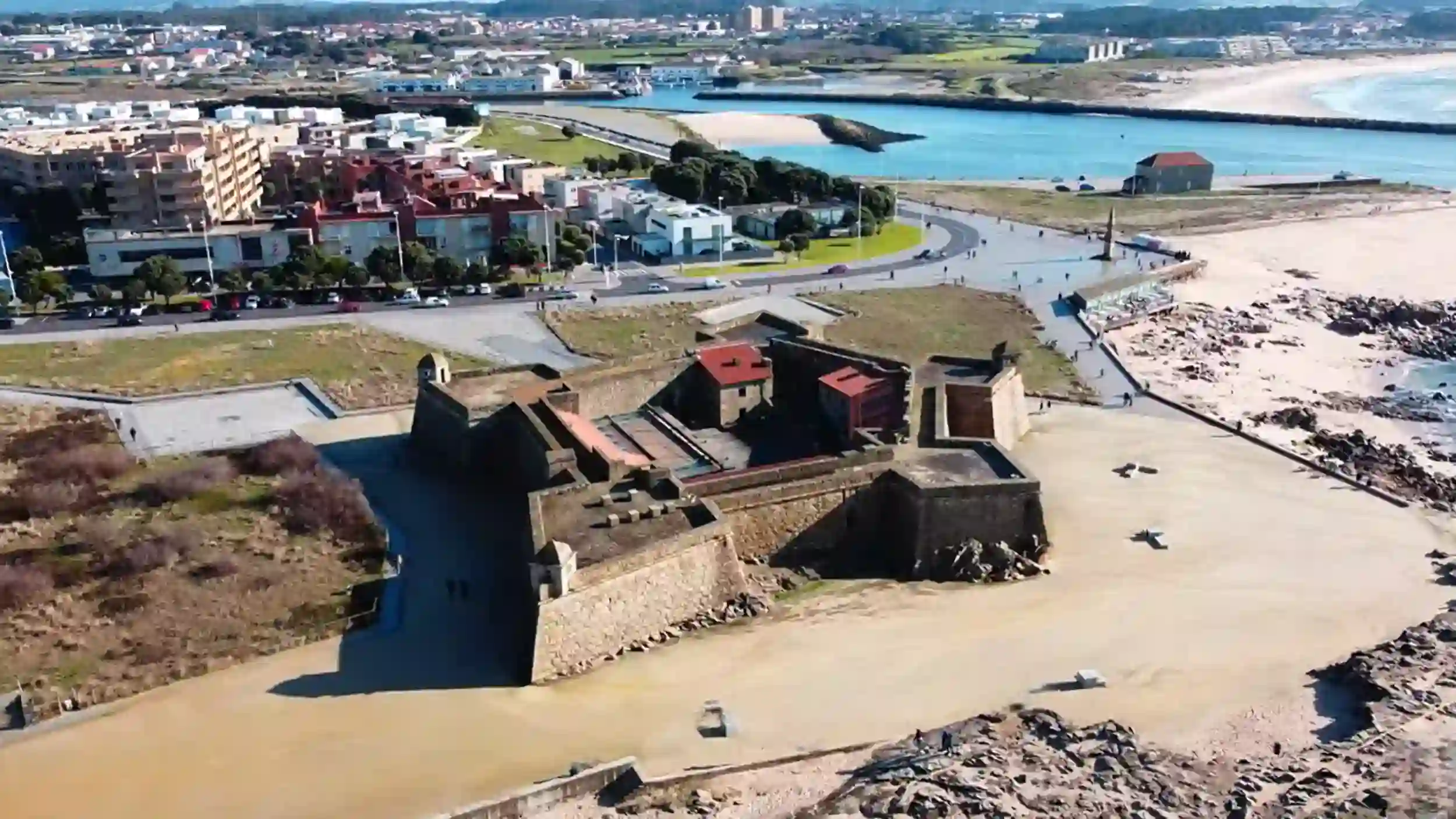
The procession takes place in Caxinas, just north of central Vila do Conde. Porto’s Metro Line B runs directly to Vila do Conde, and the station is only a couple of minutes on foot from the Igreja do Senhor dos Navegantes.
Where to Watch the Procession
The procession begins at 16:00 and follows a roughly three-kilometre route through the residential streets of Caxinas, lasting around two and a half hours. Arriving at least an hour early gives you a much better chance of choosing a good position.
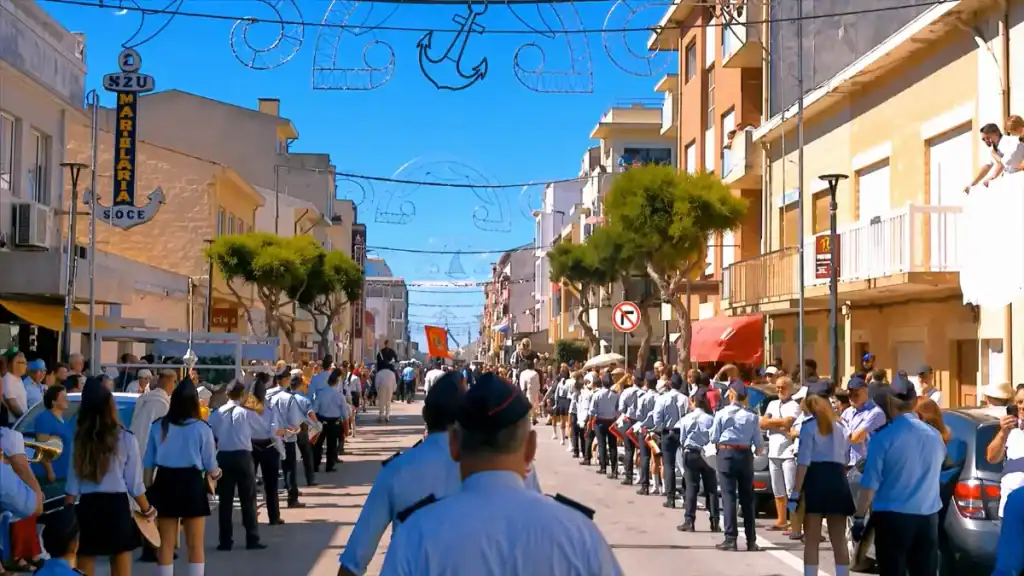
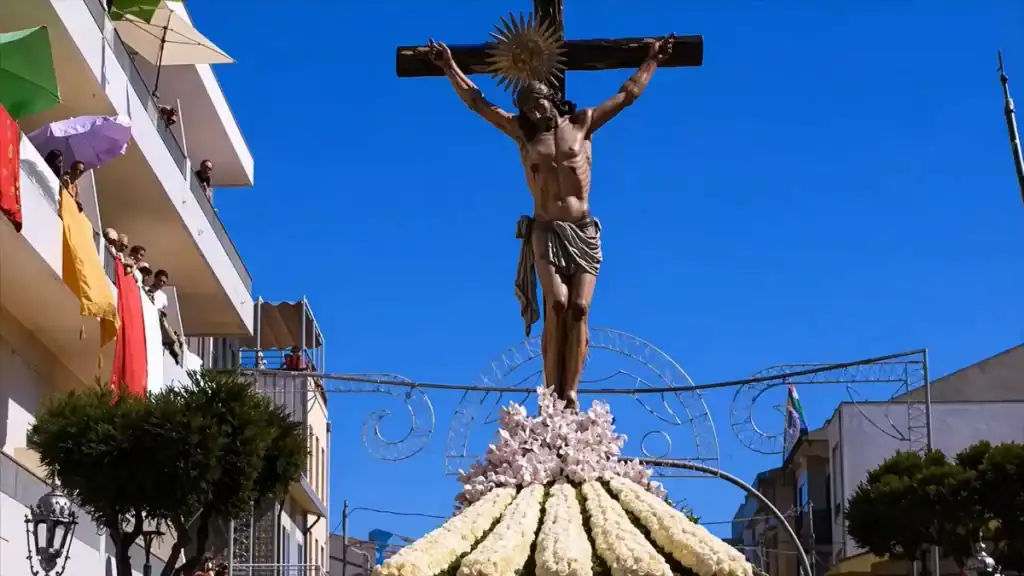
The narrow streets provide the closest views, with residents decorating balconies with cloths and flowers and throwing petals onto the andores below. Wider sections near the church provide more space but put you slightly further from the procession itself.
If you’re arriving from Porto or combining the festival with time elsewhere in town, the main Vila do Conde guide provides the broader orientation for getting around and understanding the different areas.
The Nossa Senhora dos Navegantes Procession
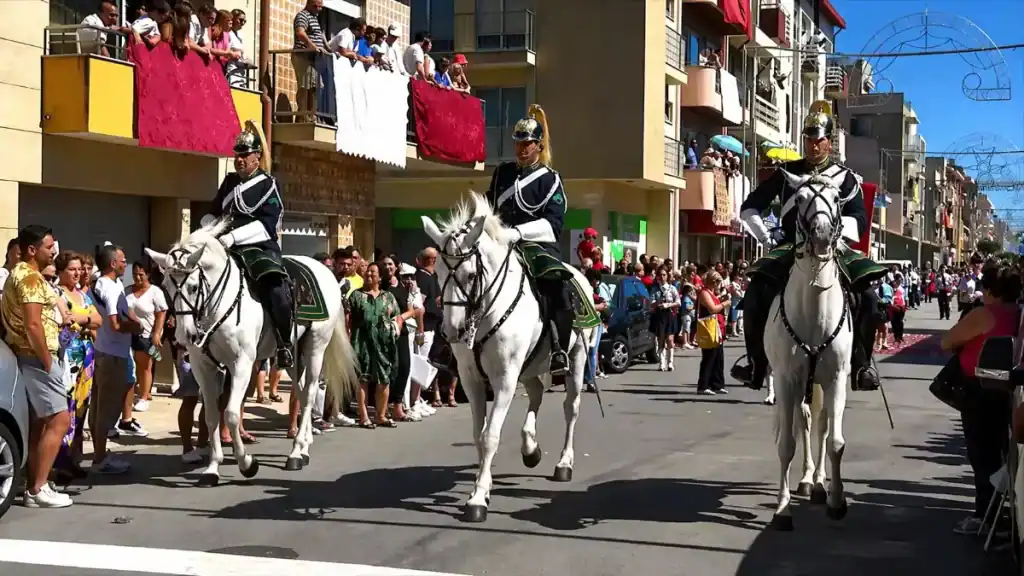
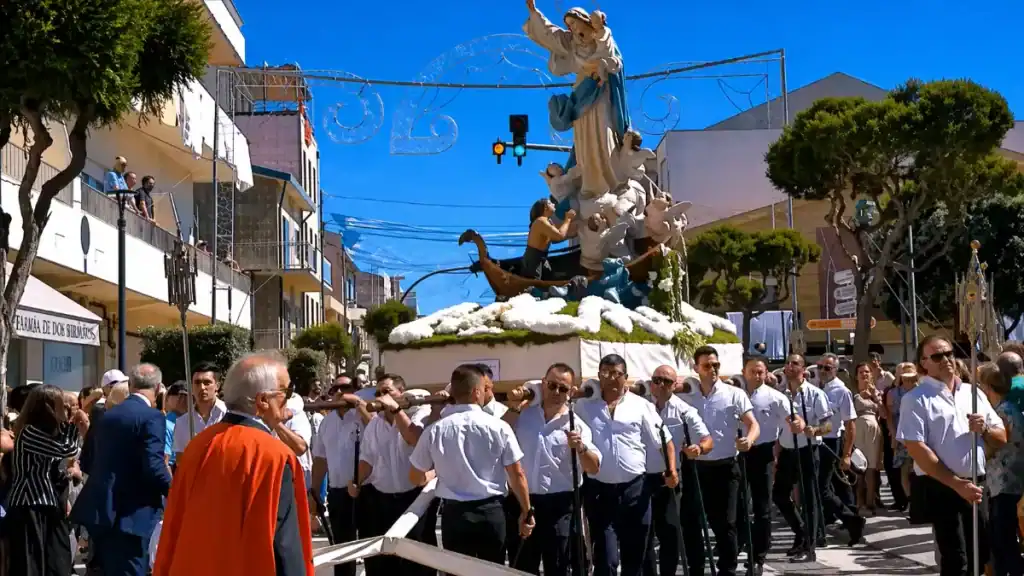
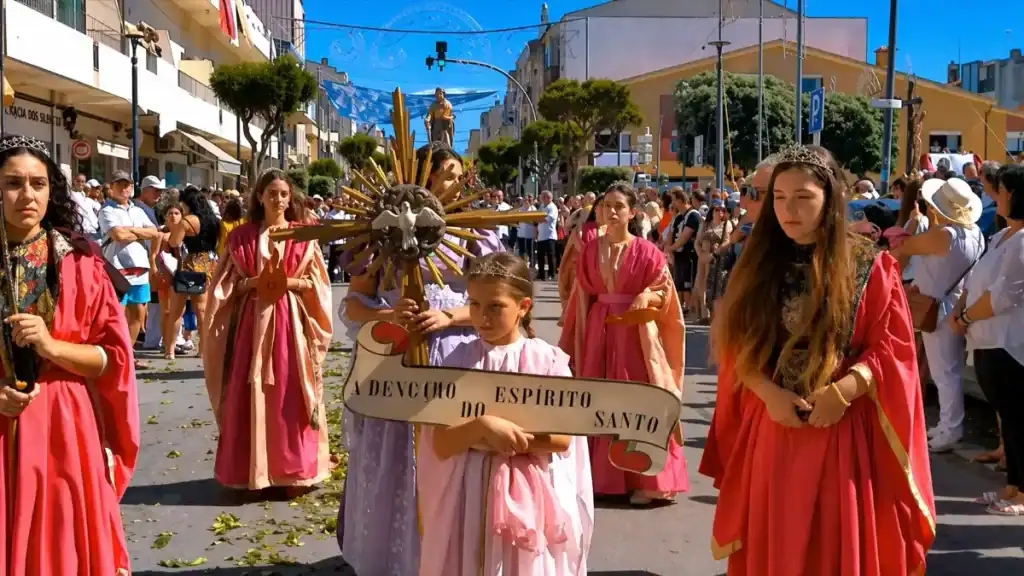
The procession is the centrepiece of the Vila do Conde festival. It opens with mounted GNR officers and a band, followed by sixteen andores, each carrying a religious figure and decorated in the days beforehand with fresh flowers, candles and embroidered cloths.
Carried by the Fishermen of Caxinas
Some of the largest andores weigh more than 1,000 kg and require teams of twenty to thirty men. The people beneath them aren’t hired procession carriers. They are fishermen from the local community, which gives the event a direct connection to the working life of Caxinas.
The traditional Quartos do Senhor system determines which crews carry the principal andores. Crew members contribute part of their earnings to the parish, and the boat making the largest contribution earns the right to carry the principal andor of Senhor dos Navegantes.
As the procession moves through the narrow streets, the scale of the platforms, the bands and the decorated balconies turn what might initially look like a religious parade into something much more closely tied to the maritime identity of Vila do Conde.
The Locals Behind the Vila do Conde Festival
What gives the Vila do Conde festival its character is the involvement of people who have grown up with it. For many families in Caxinas, taking part isn’t a one-off event but a tradition that passes between generations.
A Festival That Belongs to the Community
One fisherman described carrying an andor for the first time after years of walking in the procession. He joined a team of seven friends from the fishing fleet, already expecting another friend to join them the following year.
A local woman told me she had come to the procession since her mother first brought her as a baby. Now approaching 67, she still occasionally goes out to sea and returns to the festival each year because of her connection to Caxinas, her faith and what the day means to her.
Visitors aren’t shut out from that side of the festival. People in the crowd are often willing to explain what is happening and why particular traditions matter, making conversation one of the best ways to understand an event that otherwise can seem overwhelmingly visual.
How Caxinas Changes on Festival Day
Festival Sunday changes the rhythm of Caxinas well beyond the procession itself. Streets around the church close to traffic, food stalls appear along the route and cafés and tascas fill with people arriving for the afternoon. Grilled sardines, bifanas and drinks are readily available, but anyone wanting a sit-down meal should arrive well before midday or book ahead.
The Festival Continues Into the Evening
The procession normally finishes around 18:30, but the parish doesn’t immediately return to normal. A philharmonic band typically plays in the church courtyard at around 19:00, followed by further music, food and eventually fireworks later in the evening.
The wider celebrations extend for roughly two weeks, with religious services, fado on the church steps, traditional games and other community events. If you only have one day, however, the procession Sunday is the one to choose.
If you have time before the procession begins, things to do in Vila do Conde gives you some useful options for exploring the town earlier in the day.
Practical Tips for Visiting the Festival
The procession takes place on an August afternoon, and the residential streets of Caxinas can hold the heat. Bring water and a hat, and expect to spend two to three hours standing if you want to remain in the same position for the full procession.
Plan for Crowds and Limited Facilities
Public toilets are limited along the route. Cafés generally allow paying customers to use their facilities, but they become busy as the procession approaches. The seafront is immediately beside the church, making it a useful place to take a break before the later stages of the event.
Try to position yourself close enough to see one of the larger andores pass. Watching the carrying team adjust beneath a platform weighing more than a tonne, with the band ahead and local families lining the street, reveals how closely the festival remains connected to Caxinas and its fishing community.
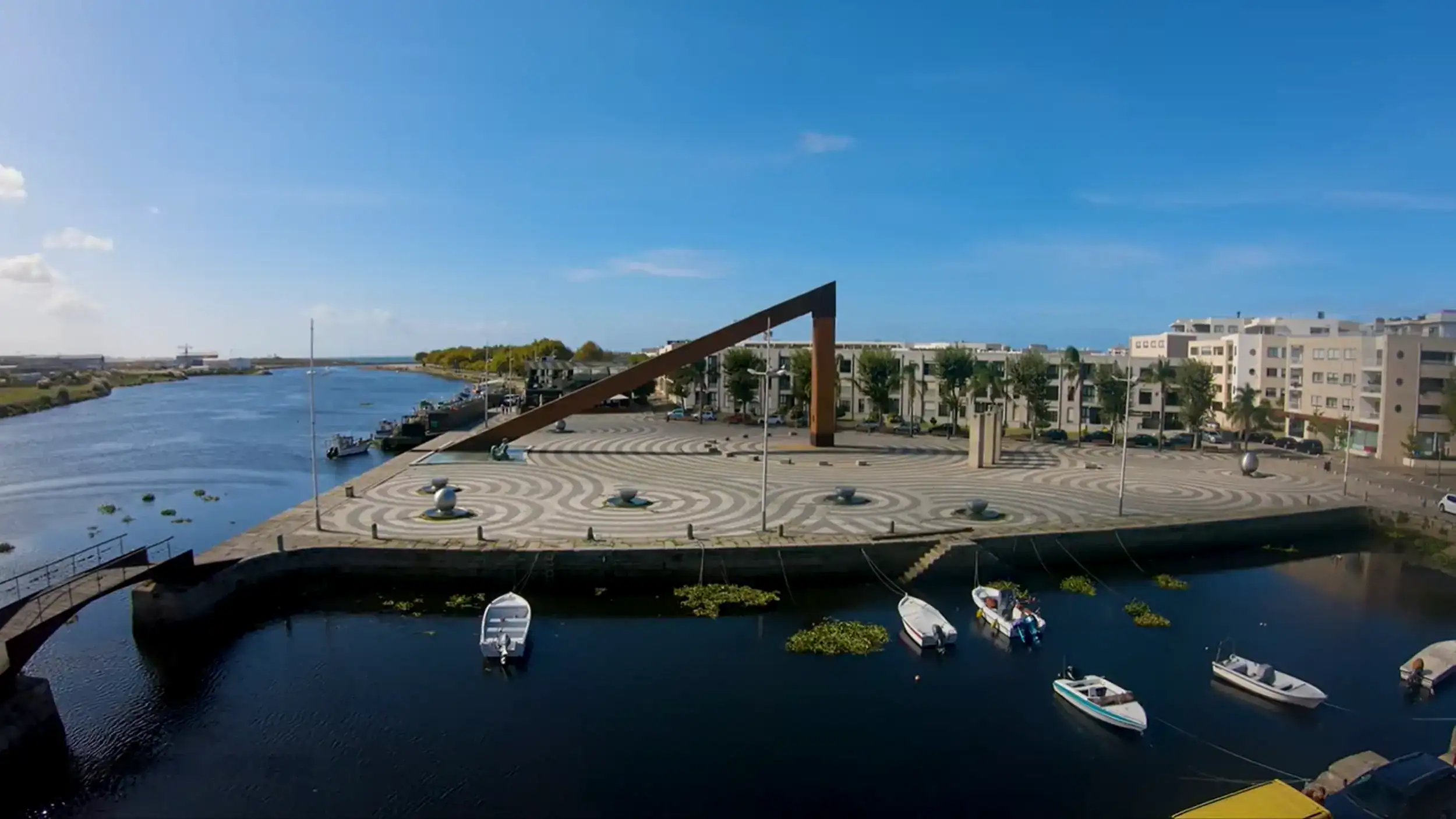
That connection becomes clearer if you also explore Vila do Conde harbour, where the town’s relationship with the river, Atlantic and working maritime traditions is still visible.