
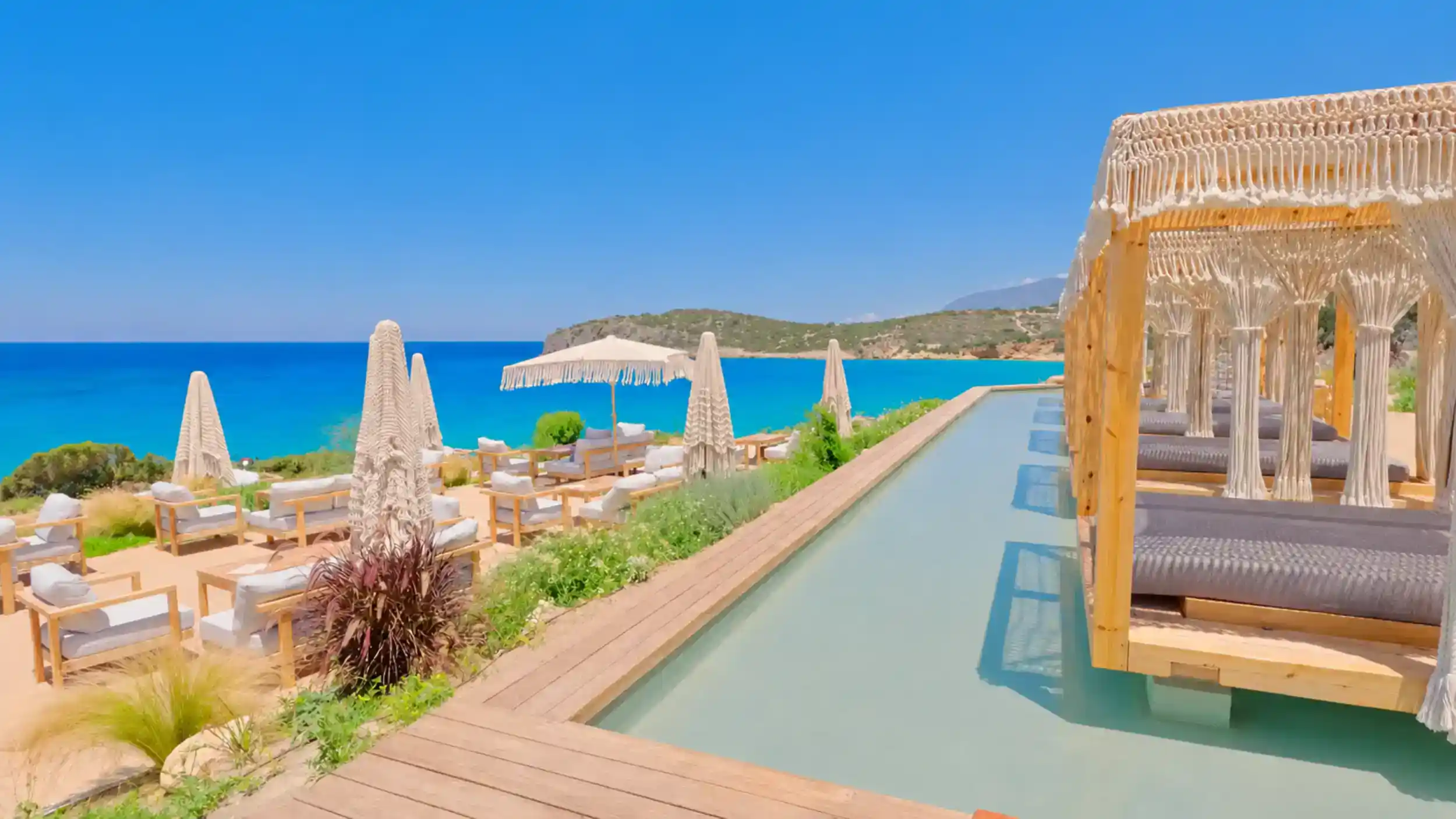
East Crete is not one single holiday zone. That is the first thing to understand when reading any East Crete Travel Guide or booking anywhere.
This side of Crete stretches out into separate coastal pockets, with mountain roads, long dry inland sections, and towns that feel completely unrelated to each other once you are on the ground. You can land in Heraklion or Sitia, hire a car, and start moving east, but you should not expect the experience to feel like one continuous resort coast. It is a region of distinct bases, each with its own pace and personality.
For most visitors, the natural western entry point is Agios Nikolaos. Further north sits the polished Elounda and Plaka bay. Beyond that, the roads become quieter, villages smaller, and distances start mattering. Sitia, Palekastro, the far eastern beaches, the south coast around Ierapetra, and the long Makry Gialos stretch each function as their own micro-region.
If you want East Crete properly, you need a car.
Agios Nikolaos: the easiest place to understand the region
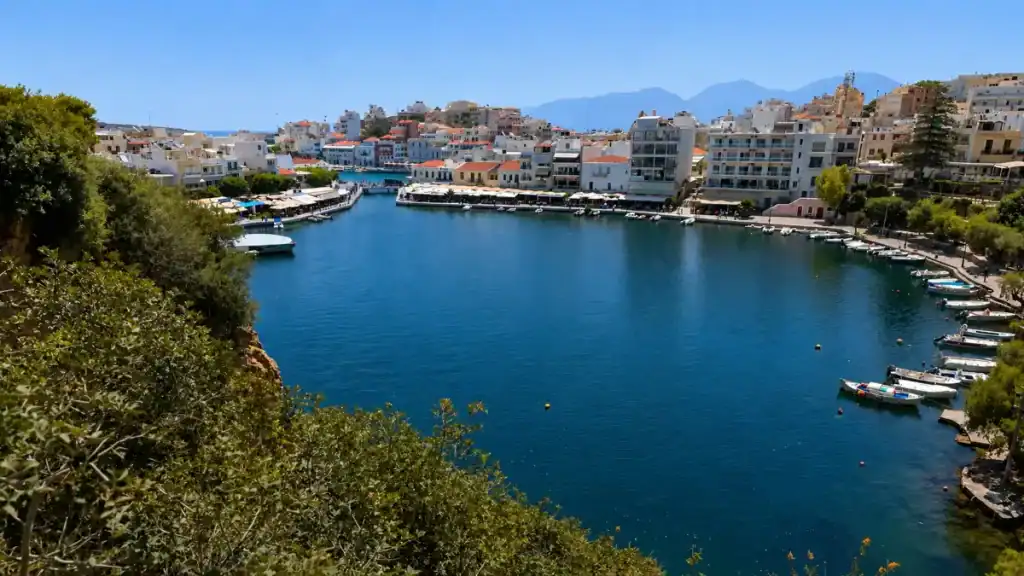
Agios Nikolaos is where East Crete first feels organised.
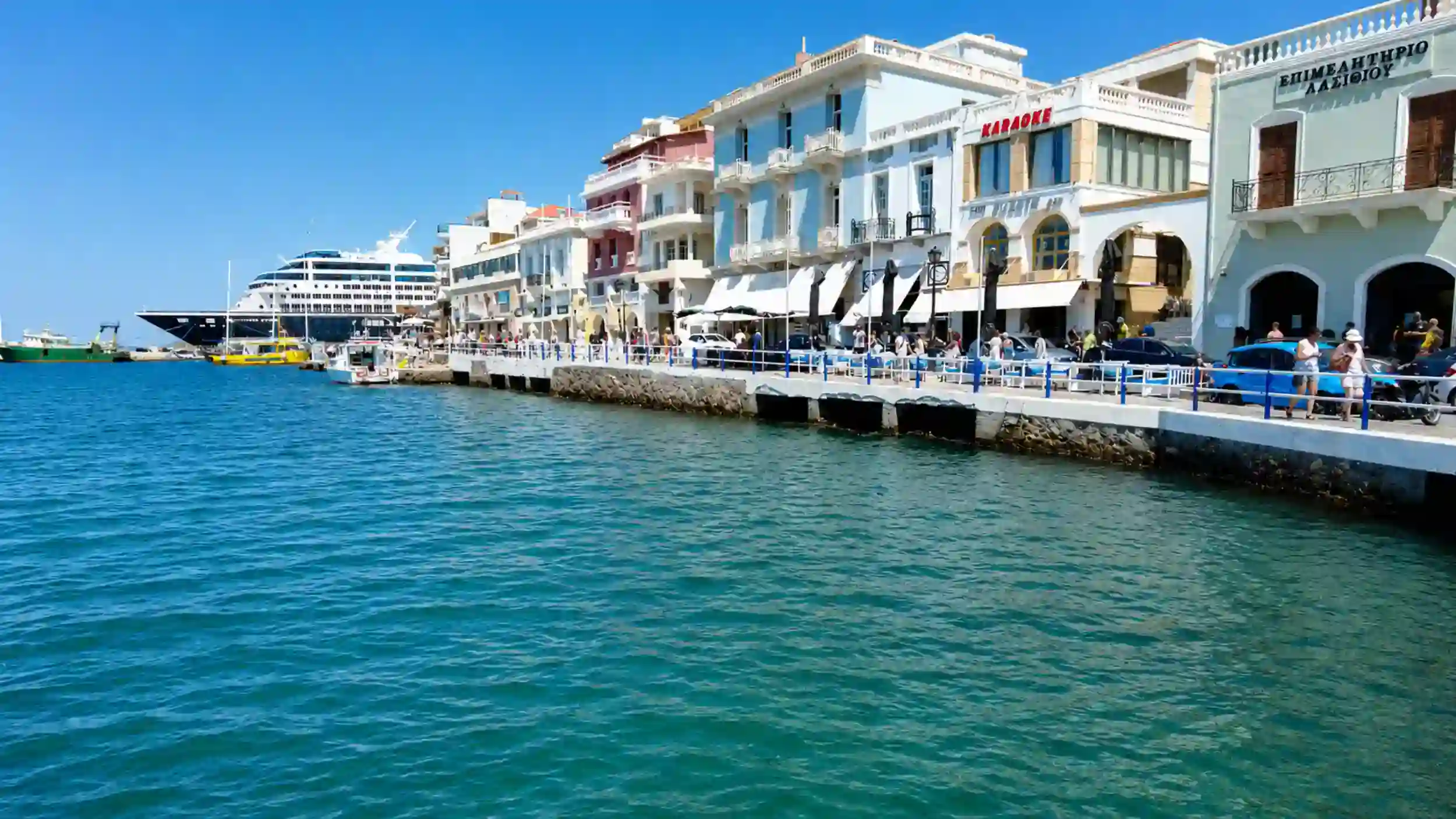
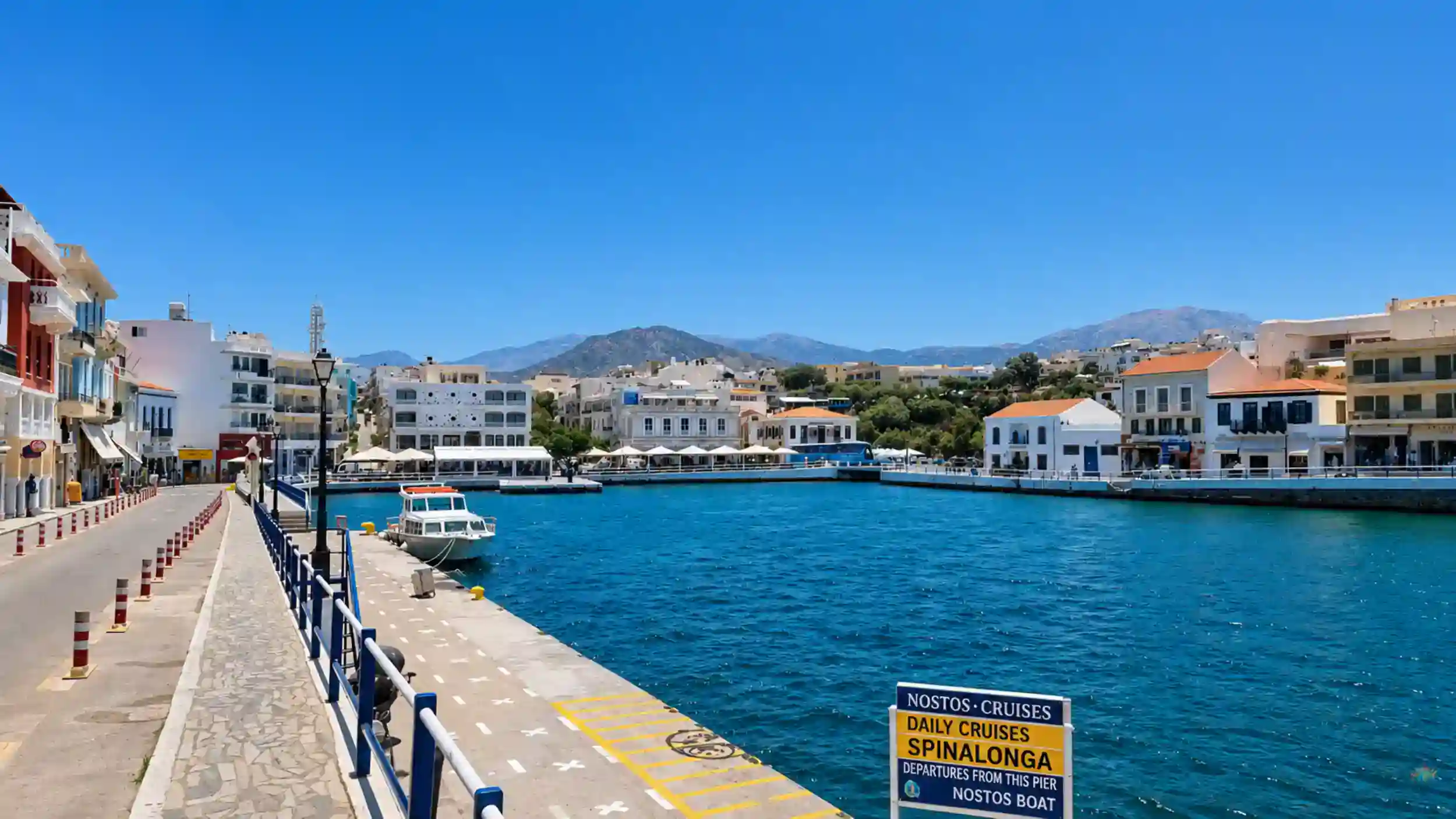
It is a proper town, not a village, with supermarkets, pharmacies, a marina, shops, rental offices, and enough restaurants to make it a useful arrival base for two or three nights. The circular lake in the centre is the visual anchor, but the working part of the town is the harbour, where the water taxis leave and the evening crowd builds.
I found Agios Nikolaos practical rather than romantic. That matters. You can land here, get your bearings, park without too much pain if you stay slightly outside the tight centre, and make day trips in three different directions without driving more than an hour.
Use it as your orientation point.
Ancient Lato inland is one of the strongest archaeological stops in this part of Crete, and the road network from Agios Nikolaos gives you clean access north to Elounda, east toward Sitia, or south toward Ierapetra. The easy beach run along Mirabello Bay also sits within minutes, which makes the town an obvious base for visitors who do not want to commit to one quiet village.
Elounda and Plaka: the polished north coast bay
Twenty minutes north, the coast changes tone.
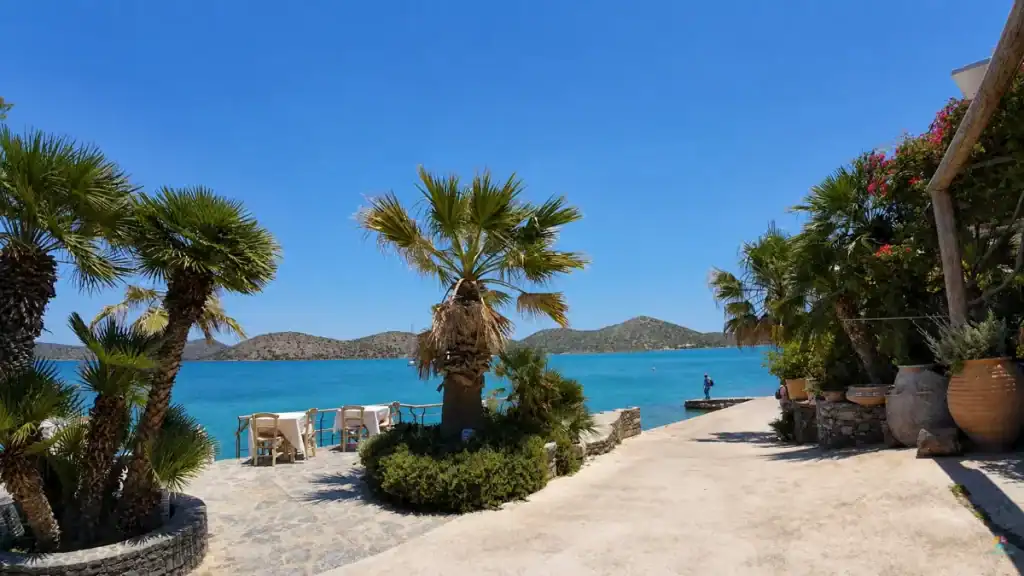
Elounda feels more developed, more expensive, and much more accommodation-led. Large hotels climb the slopes, the bay is calm, and the shoreline is built for slow waterfront walking rather than town energy. This is where many couples and slower travellers prefer to stay.
The town itself is easy. You have a central square, an accessible beach, excursion boats, and a long seafront path. This is the part of East Crete people choose when they want comfortable days without compromise.
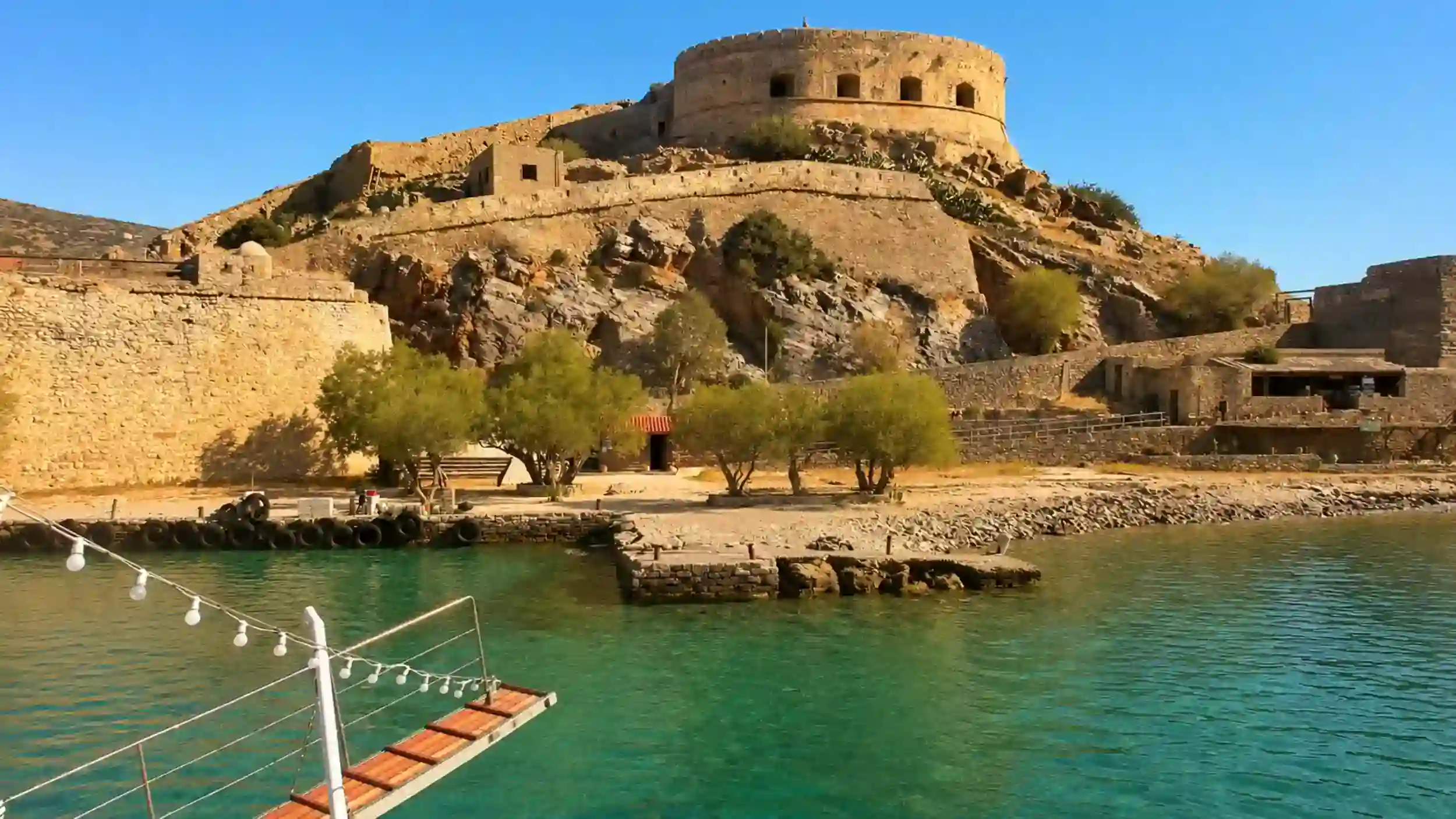
Plaka is smaller and tighter, about ten minutes further on, but visually stronger. The parking sits close to the water, and within a minute of stepping out you are facing Spinalonga across the channel. Boats from Plaka to the Spinalonga fortress take only a few minutes, which is why the village is the more efficient base for that excursion.
I would not treat Elounda and Plaka as fully separate day-planning destinations. They function as one north coast cluster.
Stay here if:
- you want polished seafront dining
- you want easy Spinalonga access
- you are not looking for isolated beaches every day
Mochlos: the small detour that slows everything down
Mochlos is one of the easiest places in East Crete to underrate on a map.
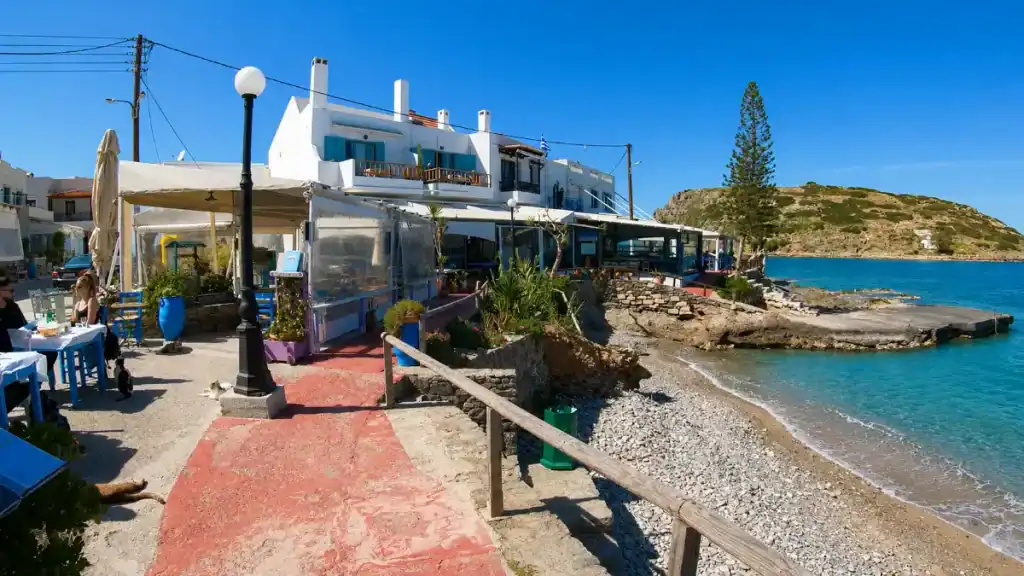
It looks tiny, and it is tiny, but the road down to it immediately removes you from the busier north coast circuit. You arrive at a fishing village with a handful of waterfront tavernas, a narrow beach, and a small offshore Minoan island a short swim from the rocks.
This is not somewhere with lots to do.
That is exactly why it works.
I would come here for a long lunch, a swim, and two or three unhurried hours. If you are driving from Agios Nikolaos toward Sitia, it is one of the best places to break the journey because the whole atmosphere shifts as soon as you leave the main road.
Do not expect a resort. Expect a pause.
Sitia: the eastern service town
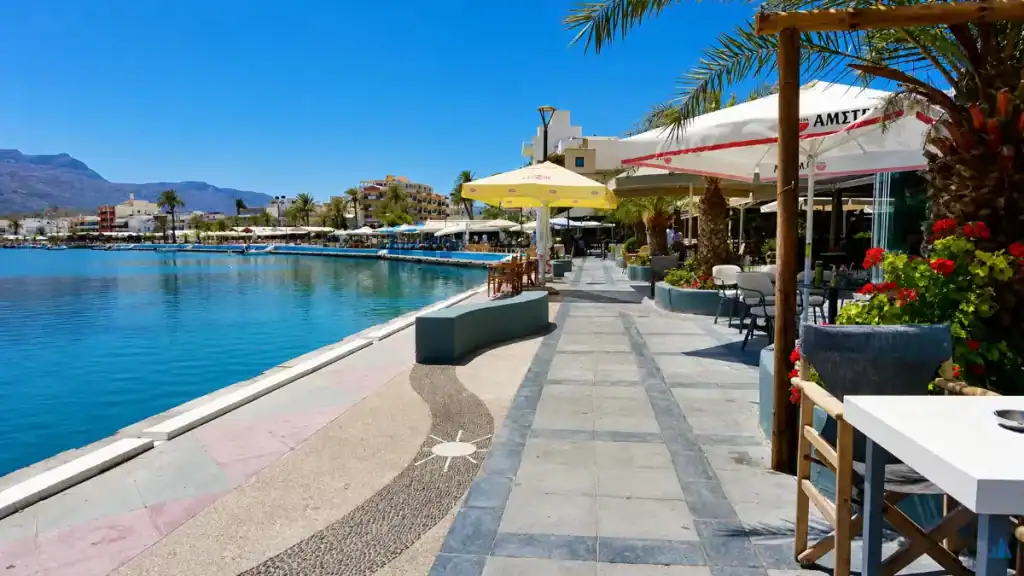
Sitia is the point where East Crete starts feeling less touristed and more local.
It has a long harbour front, ferry links, its own small airport, practical shops, and a broad promenade that fills in the evening without becoming hectic. I found it much looser than Agios Nikolaos. The pace is slower, the prices are lower, and the locals dominate the seafront more than the tourists do.
That makes it a very good base.
From here you can comfortably reach Toplou, Vai, Itanos, Palekastro, and the Zakros side of the far east without doing punishing return drives. The old fortress above the harbour gives a visual landmark, and the evening tavernas along the promenade are some of the most relaxed in East Crete.
If you stay in East Crete for a week and want to split your nights, Sitia deserves part of that plan.
Palekastro: where the far east starts opening up
East of Sitia, the roads thin out fast.
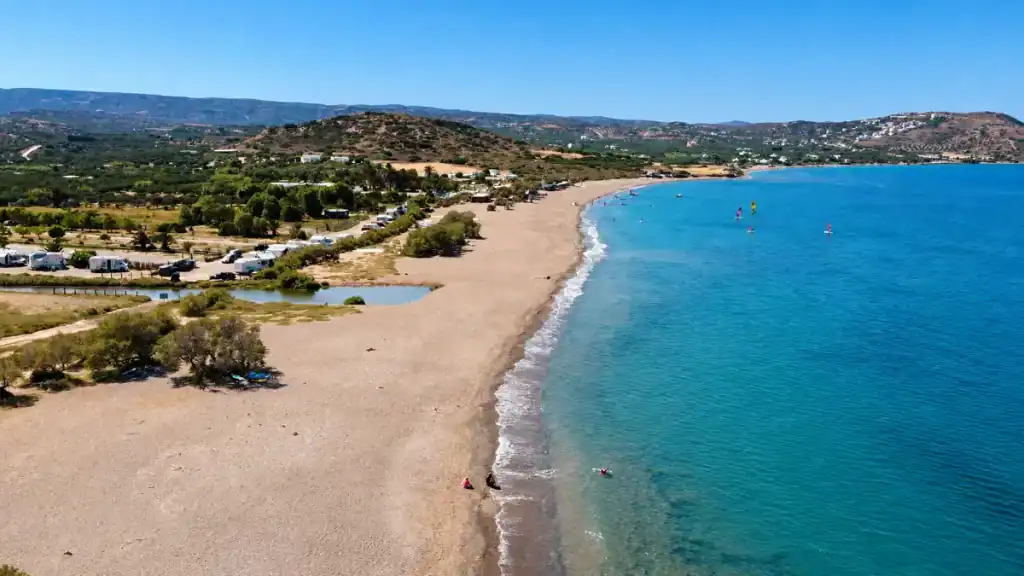
Palekastro is the village that makes this manageable. It is inland by a few minutes rather than directly on the sea, which means it feels functional rather than picturesque, but it sits in exactly the right spot to reach the eastern beaches without long return drives.
Kouremenos is the big obvious stretch nearby. It is long, open, and catches wind regularly, which is why windsurfers use it. Chiona is calmer and easier for a straightforward swim and lunch. Vai is the famous palm grove beach a short drive north, but the cluster of beaches around Vai itself rewards a planned sequence rather than a single long stop.
Palekastro works because you can sleep in a normal village, eat in tavernas that are not trying too hard, and spend your days choosing between exposed coast, archaeological stops, and remote eastern bays.
This is also where East Crete begins feeling sparse. Once you leave the Sitia orbit, there are fewer shops, fewer built-up strips, and much longer quiet sections between villages.
Ierapetra: the south coast anchor
Cross to the south and East Crete changes again.
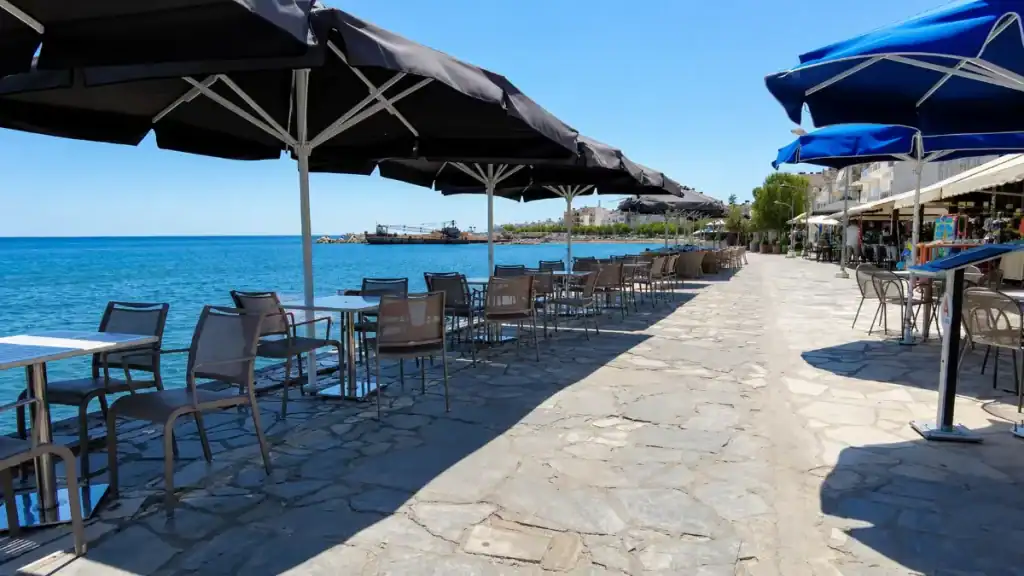
Ierapetra is the only place on this side that feels like a proper south coast city. It has a working waterfront, multiple port areas, a long evening promenade, practical shopping streets behind the seafront, and a strong local population using the town daily.
I liked it more each hour I spent there.
The Venetian fortress gives the seafront a clear landmark, boats leave for Chrissi Island when conditions allow from the kiosks along the harbour, and the line of tavernas along the water makes this one of the easiest evening dinner zones in East Crete.
Just as important, Ierapetra is a practical hub for the south coast beaches west and east of town.
Makry Gialos: the easier southeast stay
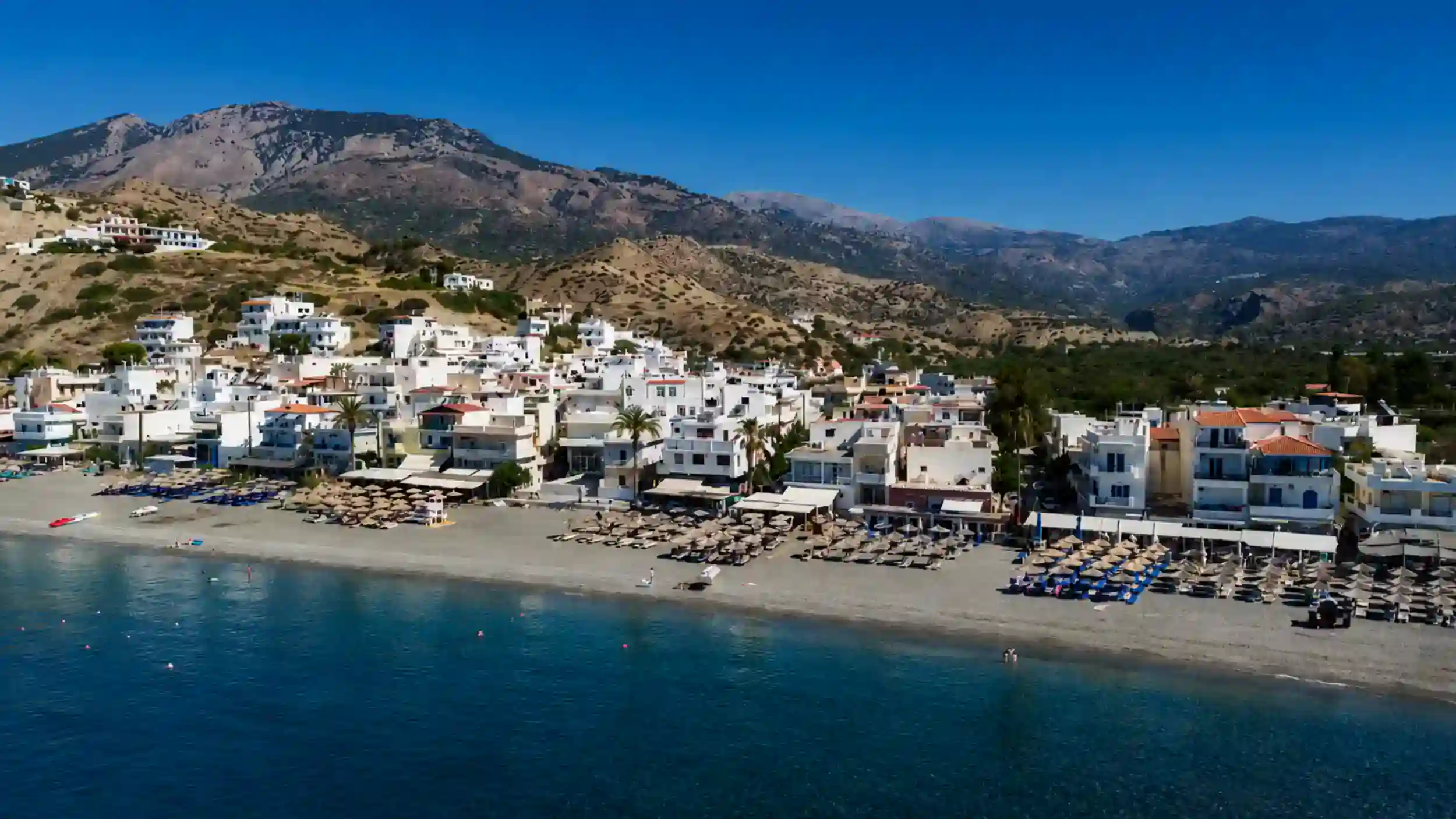
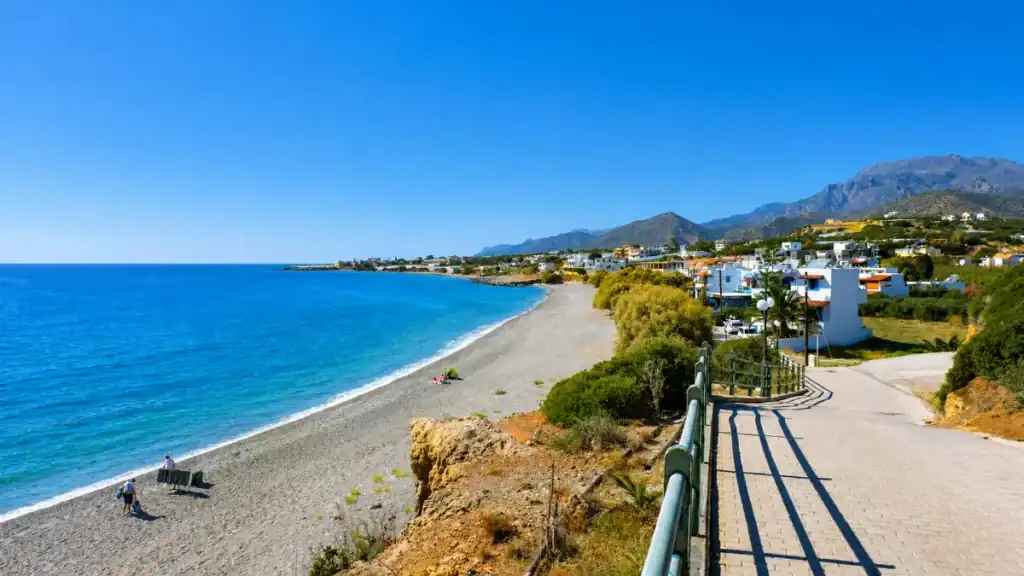
About thirty minutes east of Ierapetra, Makry Gialos gives you a softer version of the south coast.
The bay is broad, sandy, and shallow. Parts of it are organised, but large sections remain open enough that it never feels overpacked. Behind the beach are tavernas, apartments, municipal parking, and a small harbour that doubles as the village centre.
What makes Makry Gialos useful is balance.
It is quieter than Ierapetra, prettier for direct beach stays, but not so remote that you feel stranded. You can swim in the morning, walk to dinner, rent a boat from the little harbour, and still use it as a base for the wider south coast villages between Myrtos and Diaskari.
I would choose Makry Gialos if the trip priority is beach time first, exploring second.
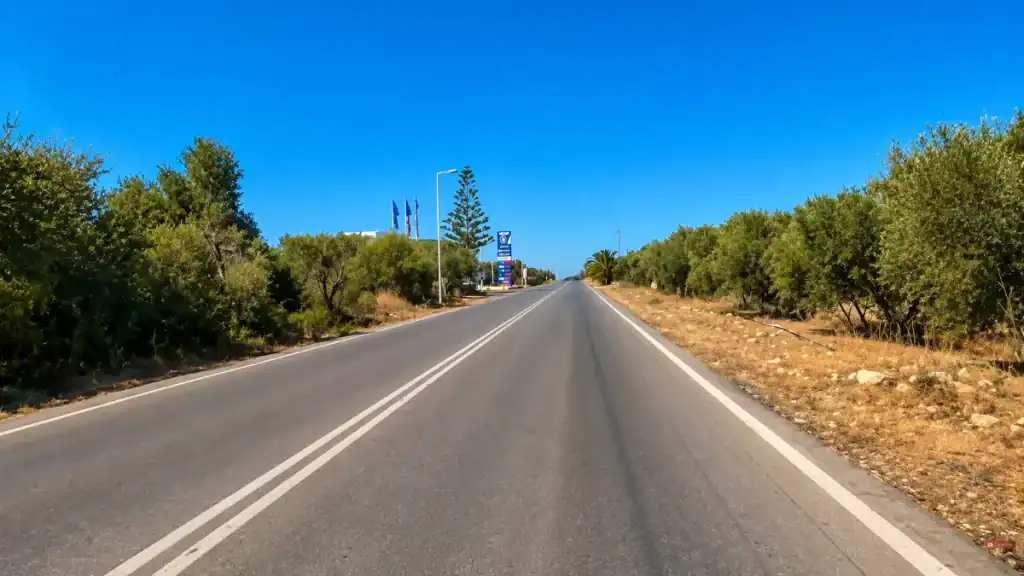
The drives matter more than people expect
This region looks manageable online. In reality, East Crete spreads you out.
North to south crossings are mountain drives. Eastward progress often means long open roads with very little on them. You are not dealing with motorway convenience once you move beyond Agios Nikolaos.
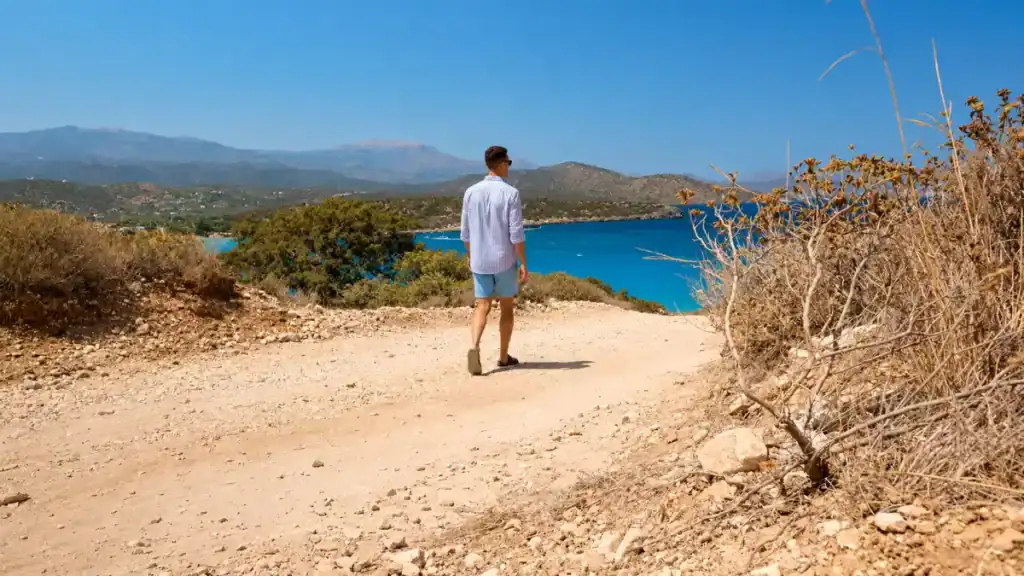
Some of the best beaches and far eastern coves also involve rougher final approaches.
None of this is difficult, but it does slow the pace. That is why picking the right base for each part of the trip usually matters more than picking the perfect single hotel. Trying to base in one place for the entire region usually leads to too much repetitive driving.
So what is East Crete actually best for?
East Crete suits visitors who do not need one central resort strip entertaining them every day.
It is better for:
- split-base road trips
- quieter beach hunting
- fishing villages
- archaeological detours
- evening waterfront towns without heavy nightlife
It is not the best part of Crete if you want everything tightly packed and walkable.
I would plan it as a progression: Agios Nikolaos or Elounda first, Sitia or Palekastro for the far east, then Ierapetra or Makry Gialos for the south. Once you approach it that way, the region stops feeling spread out and starts feeling layered. The honest question of whether East Crete suits the kind of traveller you are is worth asking before committing, but for the right visitor it becomes one of the most rewarding parts of the island.