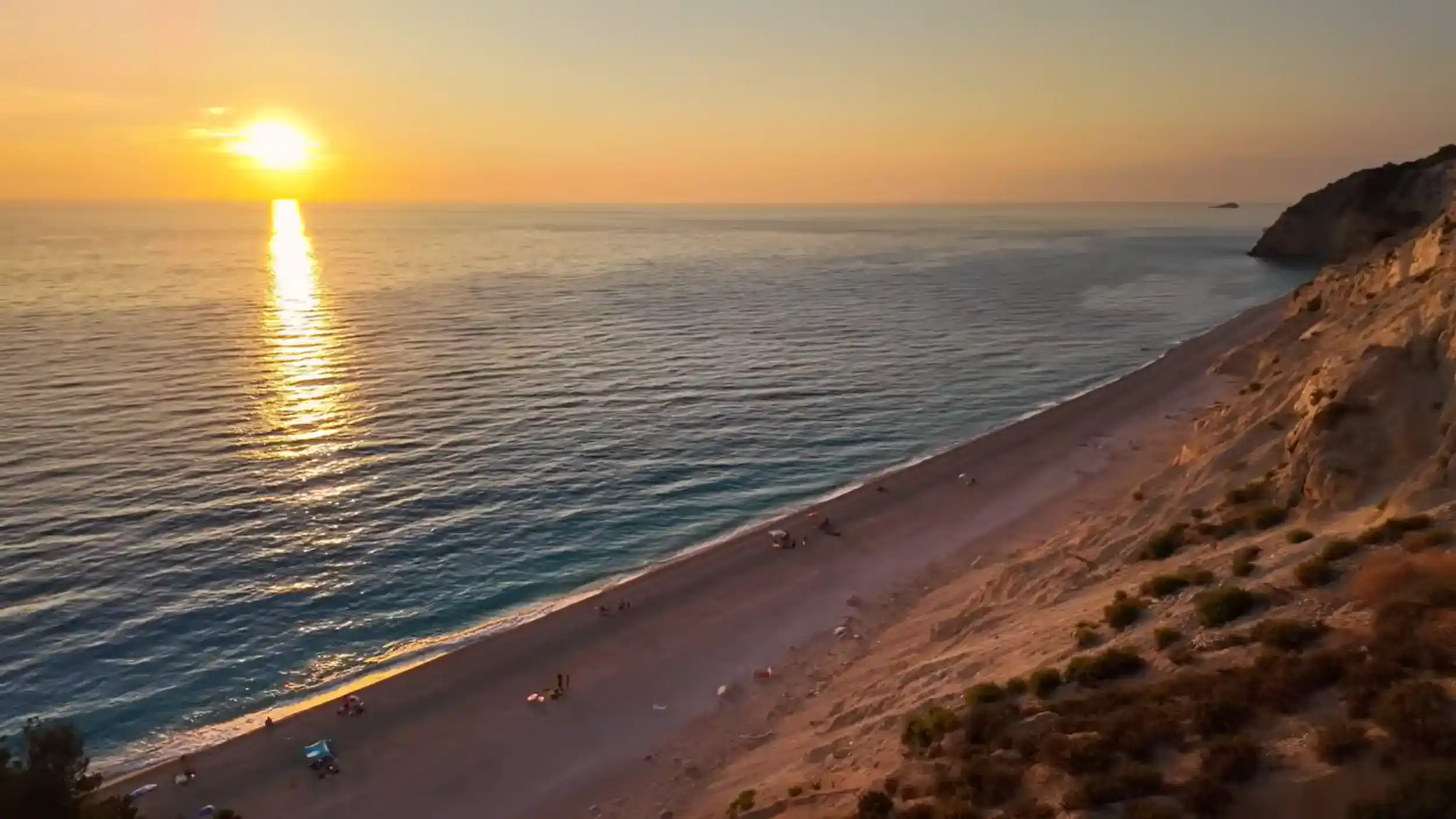
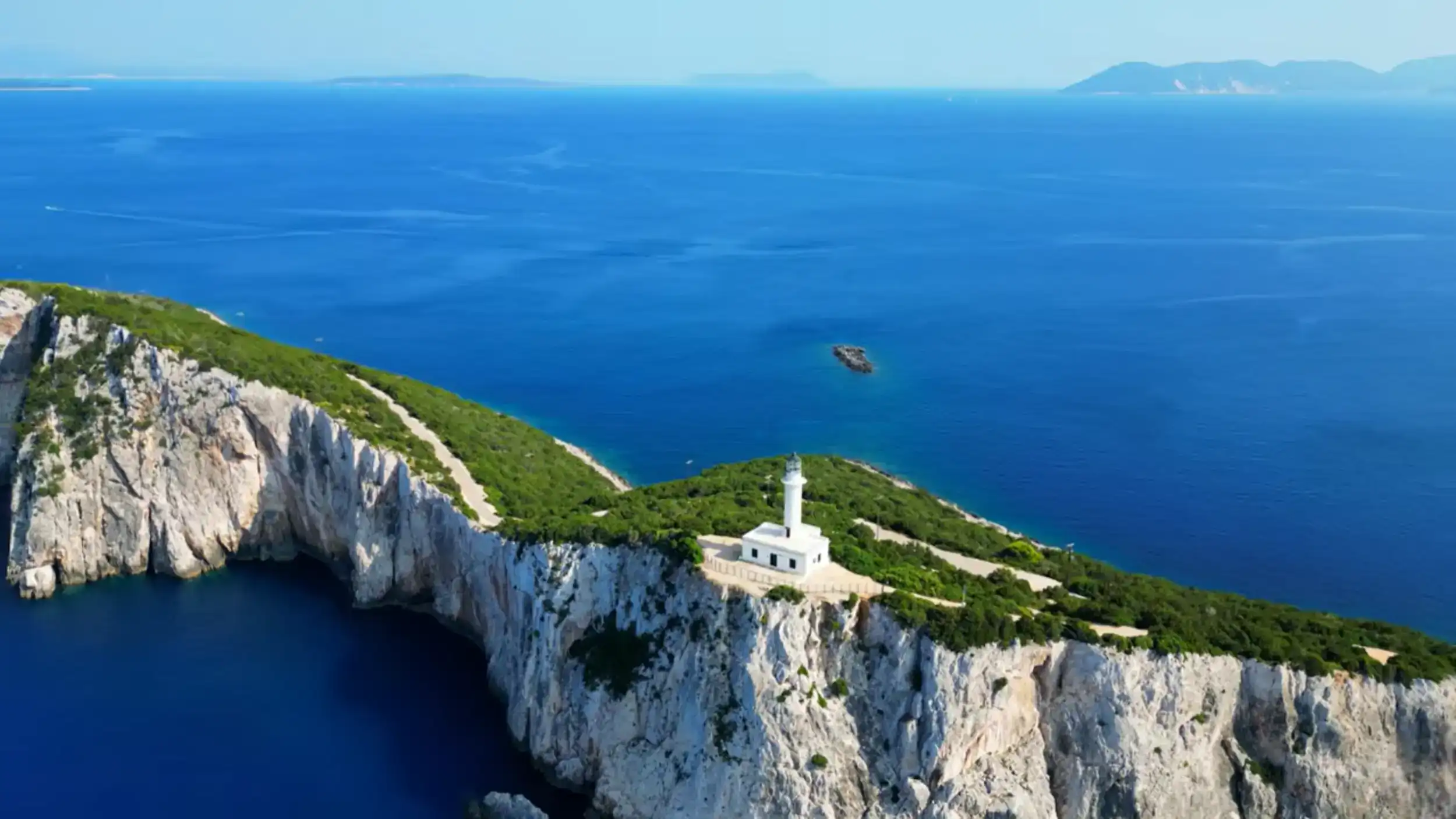
Cape Lefkatas marks the southernmost point of Lefkada, where towering white limestone cliffs plunge into the Ionian Sea and the island’s road simply comes to an end. There are no beaches, cafés or resorts here, only dramatic scenery, a historic lighthouse and one of the most spectacular viewpoints on the island.
🚗 The Drive to Cape Lefkatas
Reaching Cape Lefkatas is part of the experience.
The final stretch feels less like a journey to an attraction and more like travelling to the end of the island itself.
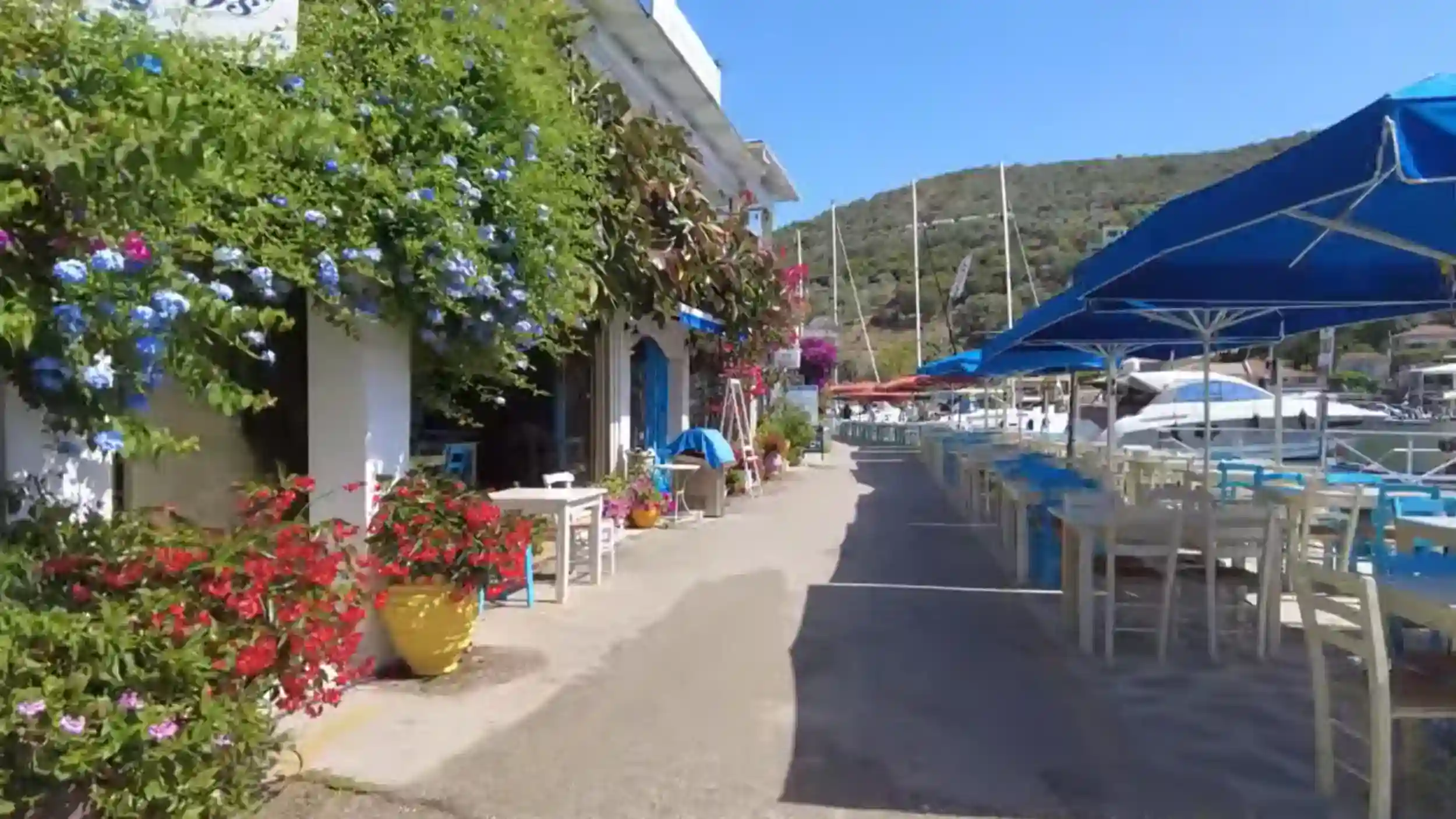
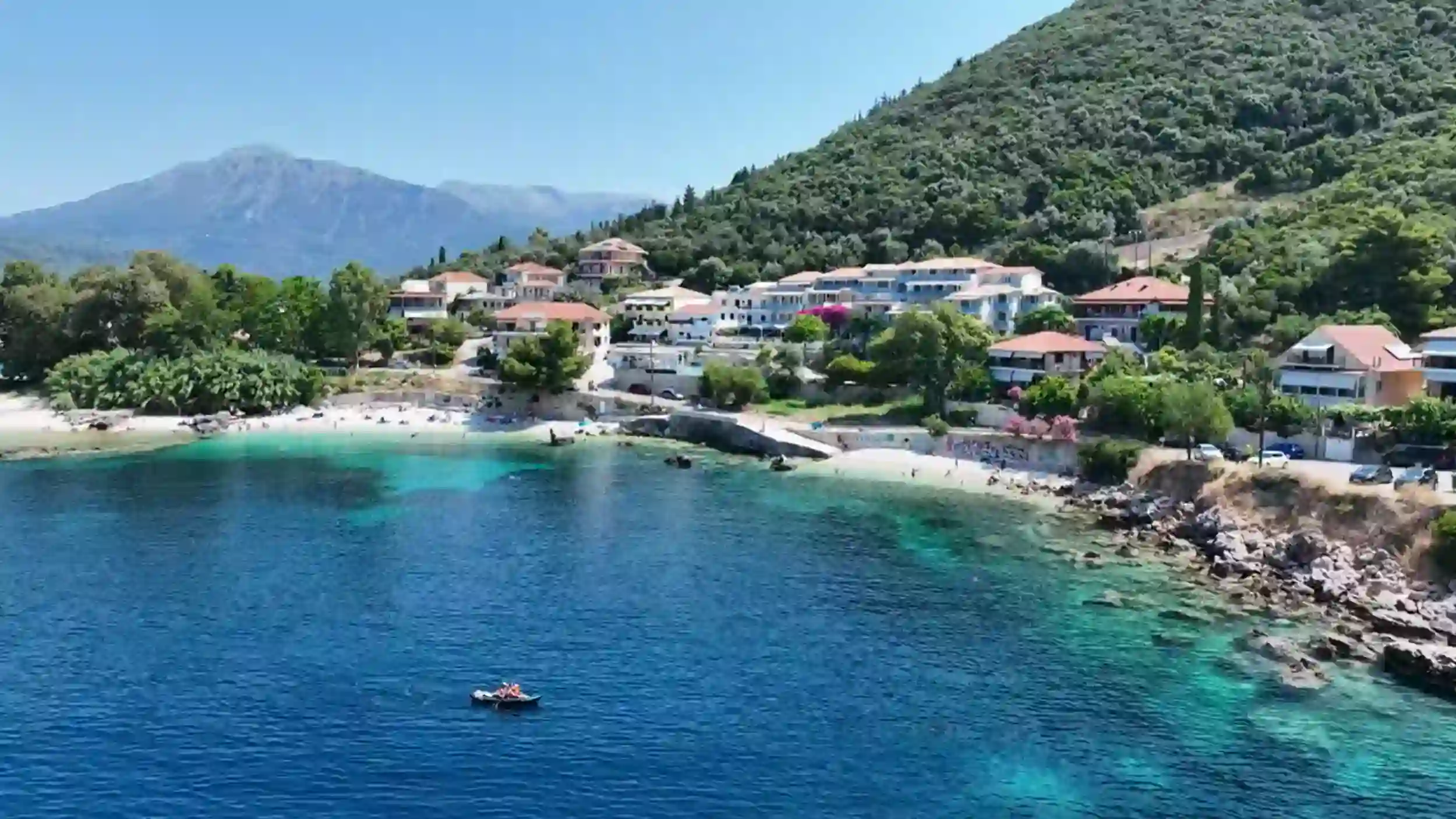
Leaving Vasiliki Lefkada, the road climbs steadily through dry hillsides where olive trees gradually give way to low scrub and exposed limestone. With every bend, the landscape becomes more rugged and the sea appears in brief, dramatic glimpses.
How the landscape changes before the cape
Although the drive takes less than ten minutes from Vasiliki, the scenery changes surprisingly quickly.
The vegetation thins, the ground becomes paler and the wind grows noticeably stronger, hinting at the exposed headland waiting ahead.
| Along the drive | What you’ll notice |
|---|---|
| 🌿 Leaving Vasiliki | Olive groves and sheltered hills |
| 🪨 Midway | Rockier slopes and wider sea views |
| 🌬️ Final approach | Stronger winds and open limestone landscape |
| 🅿️ Arrival | Small parking area at the island’s southern tip |
Nothing has been overdeveloped for tourism.
The modest car park, dirt path and open landscape all reinforce the feeling that you’ve reached a place valued for its natural setting rather than visitor facilities. By the time you step out of the car, Cape Lefkatas has already revealed much of its character.
🏔️ The Cliffs and What Makes Them Striking
The cliffs are the reason most people come to the cape.
Everything else is secondary.
Unlike the beaches further north, where limestone eventually gives way to pebbles or sand, the rock face at the southern tip drops almost vertically into the Ionian Sea. The result is a landscape that feels raw, exposed and unmistakably wild.
Why the cliffs look so white
The limestone contains very little vegetation, allowing the pale rock to dominate the landscape.
In bright sunshine it appears almost white, creating a striking contrast with the deep blue sea below and explaining why the island’s name has long been associated with its distinctive cliffs.
| Cliff feature | What makes it memorable |
|---|---|
| ⛰️ Near-vertical limestone | Creates a dramatic sense of height |
| 🤍 Pale rock | Brilliant contrast with the Ionian Sea |
| 🌊 Deep water below | Intensifies the colour of the sea |
| 📷 Open viewpoints | Panoramic photography in every direction |
The cliffs change character throughout the day.
Strong midday light emphasises their brilliant colour, while later in the afternoon the lower sun reveals layers and textures that are less obvious earlier on. The scenery never feels static, even though the landscape itself has changed very little for centuries.
🏛️ The Lighthouse at the Southernmost Point
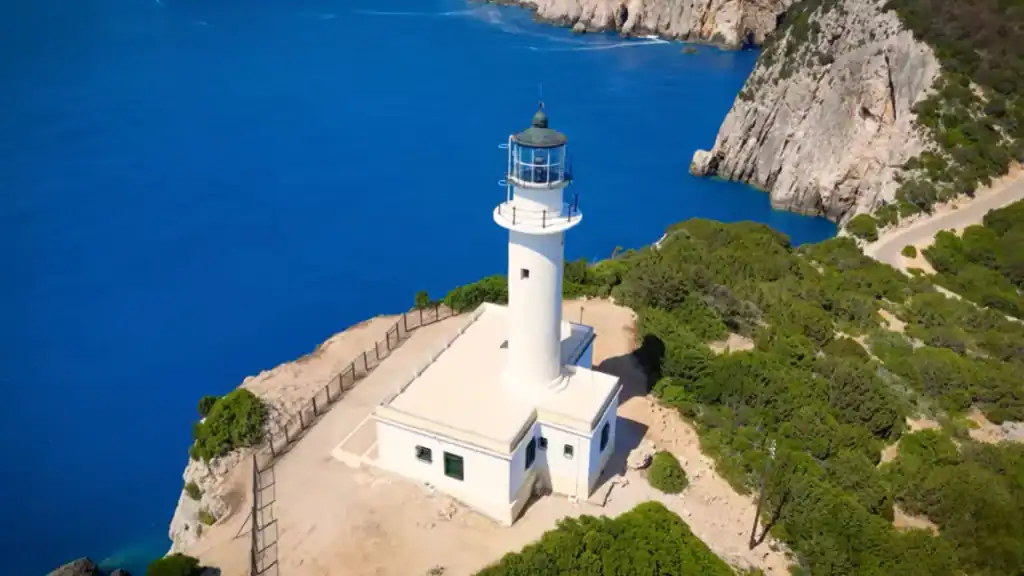
The lighthouse gives the cape its defining landmark.
Without it, this would still be one of Lefkada’s most dramatic viewpoints, but the white tower adds a sense of history and purpose to the rugged headland.
Built in 1890 on the site of an ancient sanctuary dedicated to Apollo, the lighthouse has guided ships through the southern Ionian for well over a century.
Visiting the lighthouse
From the parking area, it’s only a short walk along a dirt path.
The route takes less than five minutes, although the final section is slightly uneven and often exposed to strong winds. Visitors can’t enter the lighthouse itself, but the surrounding viewpoint provides uninterrupted views across the sea.
| Visitor information | Details |
|---|---|
| 🗼 Lighthouse built | 1890 |
| 🚶 Walk from parking | Around 5 minutes |
| 🚫 Interior access | Not open to visitors |
| 🌬️ Conditions | Often windy throughout the year |
Standing beside the lighthouse, it’s easy to appreciate why this location has remained important for centuries. The building may be modest in size, but its position above the towering cliffs creates one of the most memorable viewpoints anywhere on Lefkada.
📖 Sappho, Apollo and the Legend of the Leap
Cape Lefkatas is more than a dramatic viewpoint.
For thousands of years, it has also been a place of myth, ritual and storytelling.
Long before the lighthouse was built, the headland was associated with Apollo and later became linked with one of the most enduring legends of ancient Greece.
Ancient rituals at Cape Lefkatas
According to ancient sources, a temple dedicated to Apollo once stood on the headland.
The site became associated with purification ceremonies, and archaeological discoveries near the lighthouse have confirmed that the cape held religious importance long before the modern landmark was constructed.
| Legend or history | Why it matters |
|---|---|
| ❤️ Sappho’s Leap | One of Greece’s best-known romantic legends |
| 🏛️ Temple of Apollo | Shows the cape’s ancient religious significance |
| ⛪ Lighthouse site | Built where the ancient sanctuary once stood |
| ⛏️ Archaeological finds | Evidence supporting the site’s long history |
The most famous story tells of the poet Sappho throwing herself from the cliffs after unrequited love. Whether the event ever happened remains uncertain, but the legend became so closely connected with the headland that it remains part of Cape Lefkatas’ identity today. Standing above the sheer limestone cliffs, it’s easy to understand why such powerful stories became attached to this extraordinary place.
👀 Views From Cape Lefkatas
Standing at Cape Lefkatas changes how you see Lefkada.
Instead of focusing on a single beach or bay, you begin to appreciate the island as a dramatic limestone ridge surrounded by open sea.
The viewpoint stretches across the southern Ionian in almost every direction, making this one of the few places where the landscape feels bigger than any individual attraction.
Looking north and south
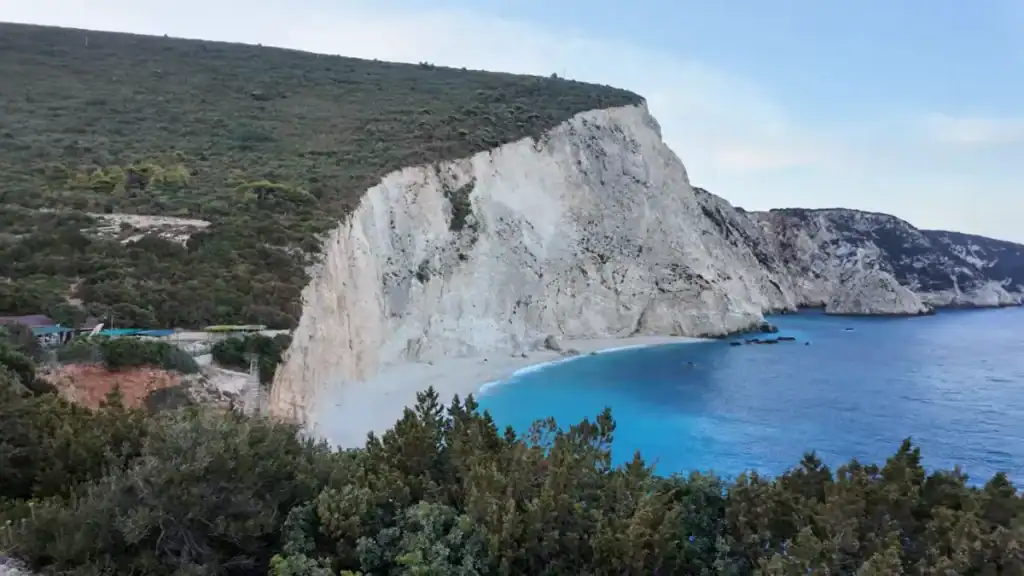
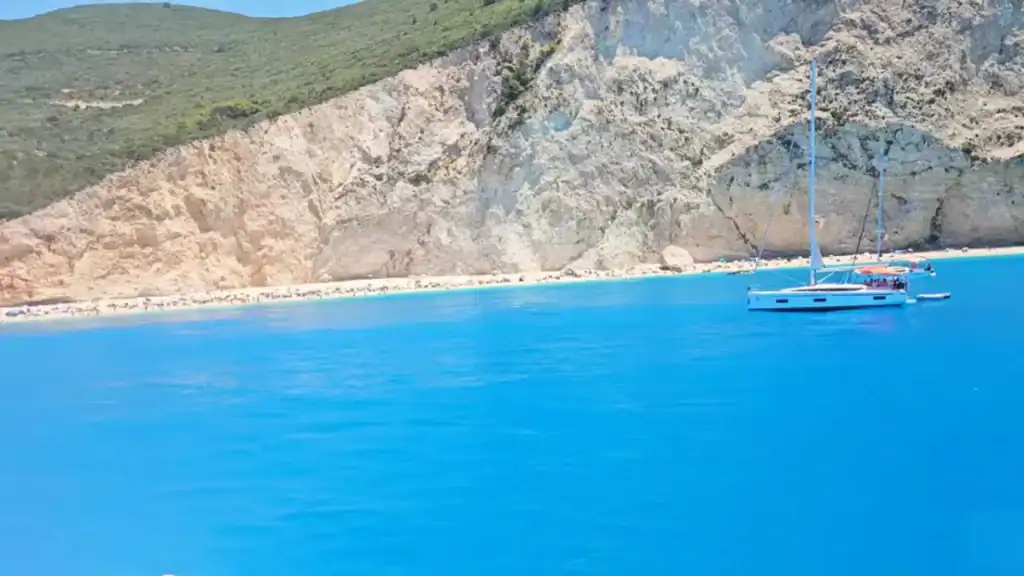
Looking north, the coastline unfolds as an almost continuous wall of white cliffs interrupted by famous beaches such as Porto Katsiki. From this angle, it’s easy to see how the island’s west coast forms one connected geological landscape rather than a series of separate destinations.
Turn south and the scene changes completely.
Beyond the cliffs lies nothing but open Ionian Sea, with Ithaca and Kefalonia emerging on clear days as distant silhouettes above the horizon.
| Direction | What you’ll see |
|---|---|
| 🧭 North | White limestone coastline and Porto Katsiki |
| 🌊 South | Open Ionian Sea stretching to the horizon |
| 🏝️ Southwest | Kefalonia on clear days |
| ⛰️ Southeast | Ithaca rising beyond the sea |
Unlike the sheltered harbours and resort villages elsewhere on Lefkada, this viewpoint emphasises the island’s isolation. It feels exposed, untamed and unmistakably connected to the wider Ionian rather than the Greek mainland.
🗺️ Fitting Cape Lefkatas Into Your Lefkada Itinerary
Cape Lefkatas isn’t somewhere you simply pass through.
Visiting it works best when it’s combined with other places in southern Lefkada rather than treated as a destination on its own.
The lighthouse, cliffs and viewpoints can comfortably be explored in under an hour, leaving plenty of time to continue the day elsewhere.
| Combine with… | 📌 Why it works |
|---|---|
| 🌊 Vasiliki Lefkada | Harbour lunch before or after visiting the cape |
| 🏖️ Porto Katsiki | Dramatic cliffs followed by Lefkada’s most famous beach |
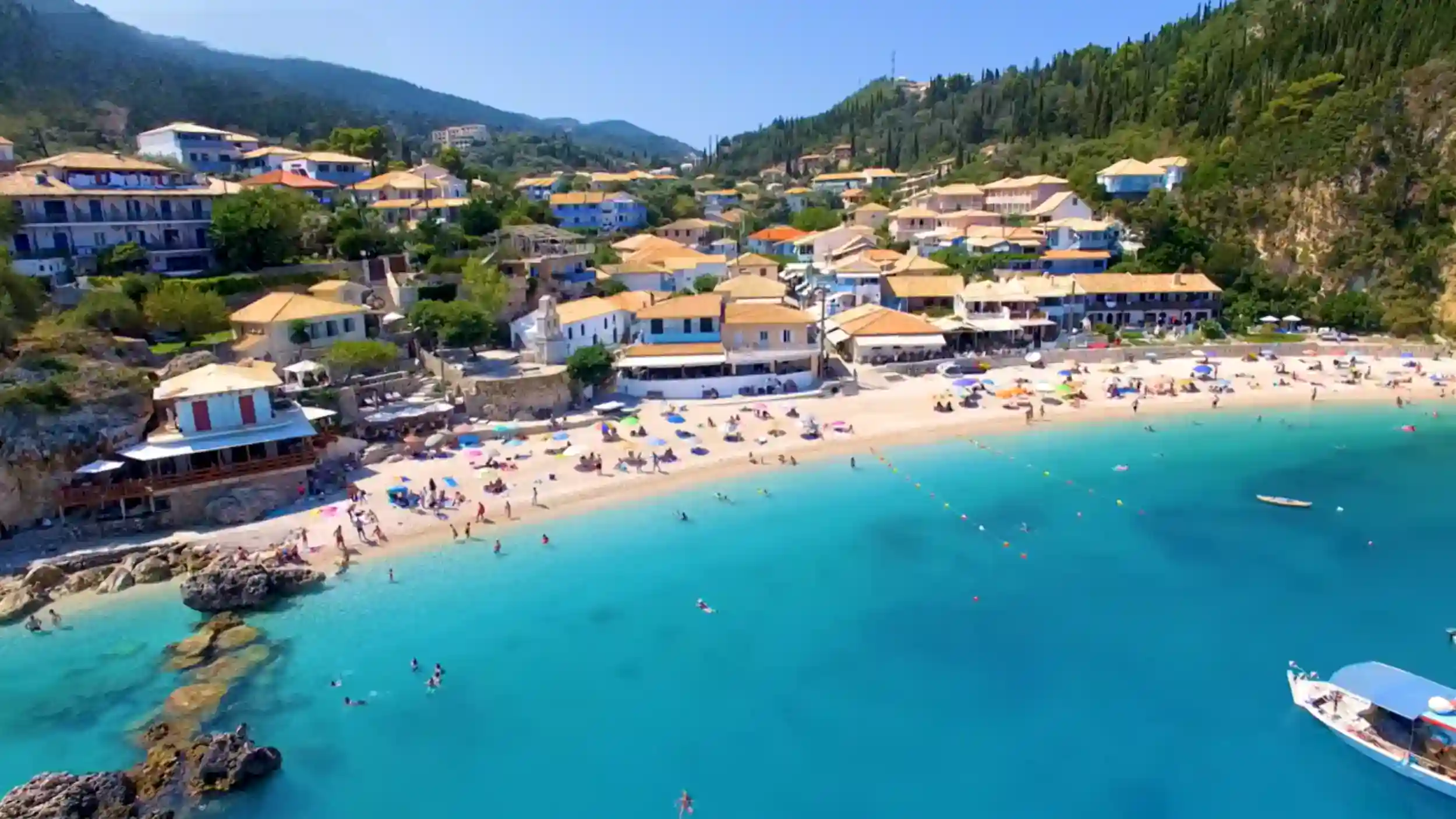
| 🤿 Agiofili Beach | Scenic viewpoint paired with one of the island’s best swimming spots |
A half-day route through southern Lefkada
Many visitors begin the morning in Vasiliki before driving south to the cape while the visibility is at its best. From there, it’s easy to continue to Porto Katsiki or spend the afternoon swimming at Agiofili, creating a day that combines some of the island’s finest scenery with two very different coastal experiences.
Unlike Lefkada’s beaches, the cape rewards reflection rather than relaxation. It’s a place to pause, absorb the landscape and understand how dramatically the island changes once you leave the resorts behind.