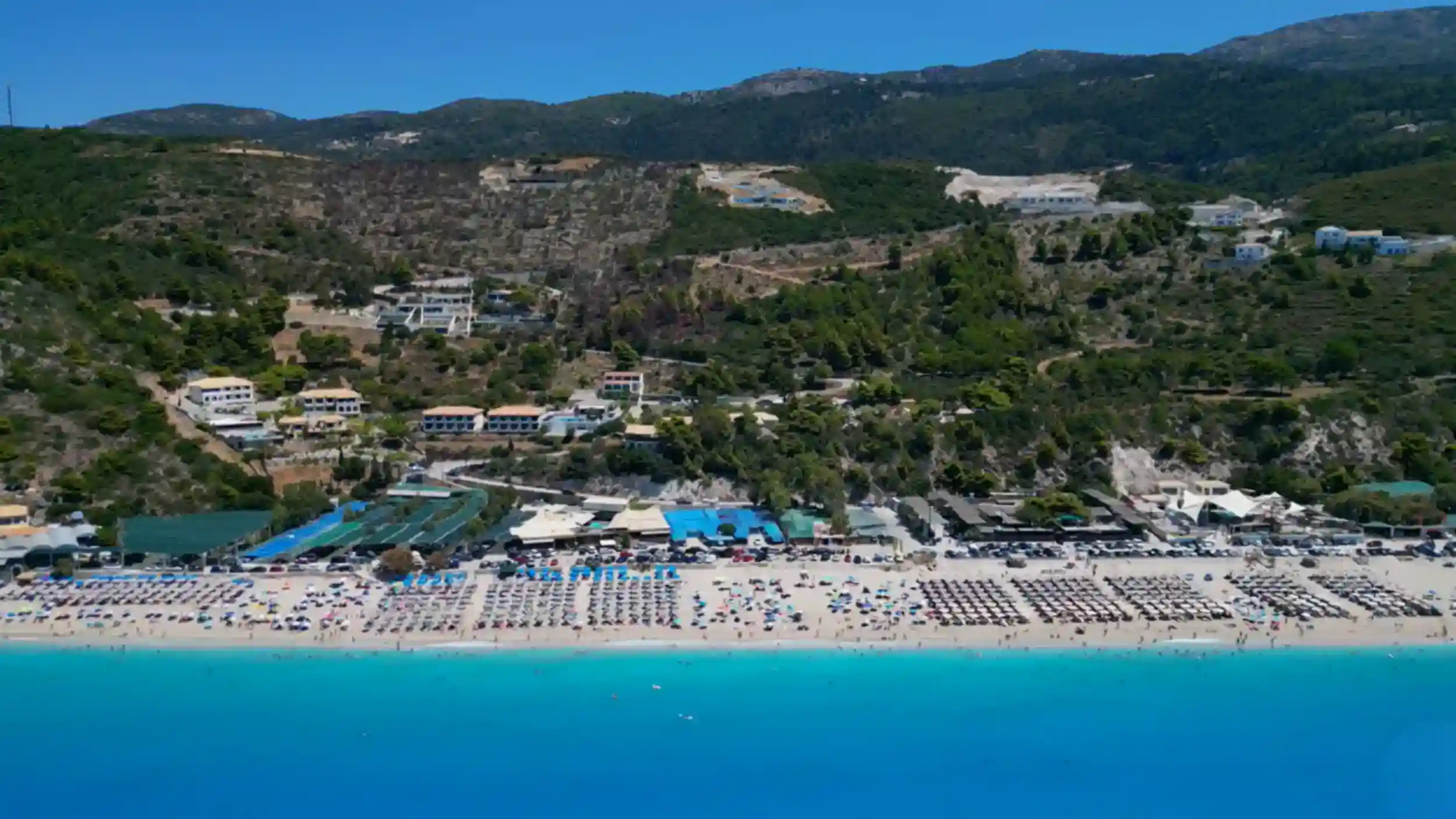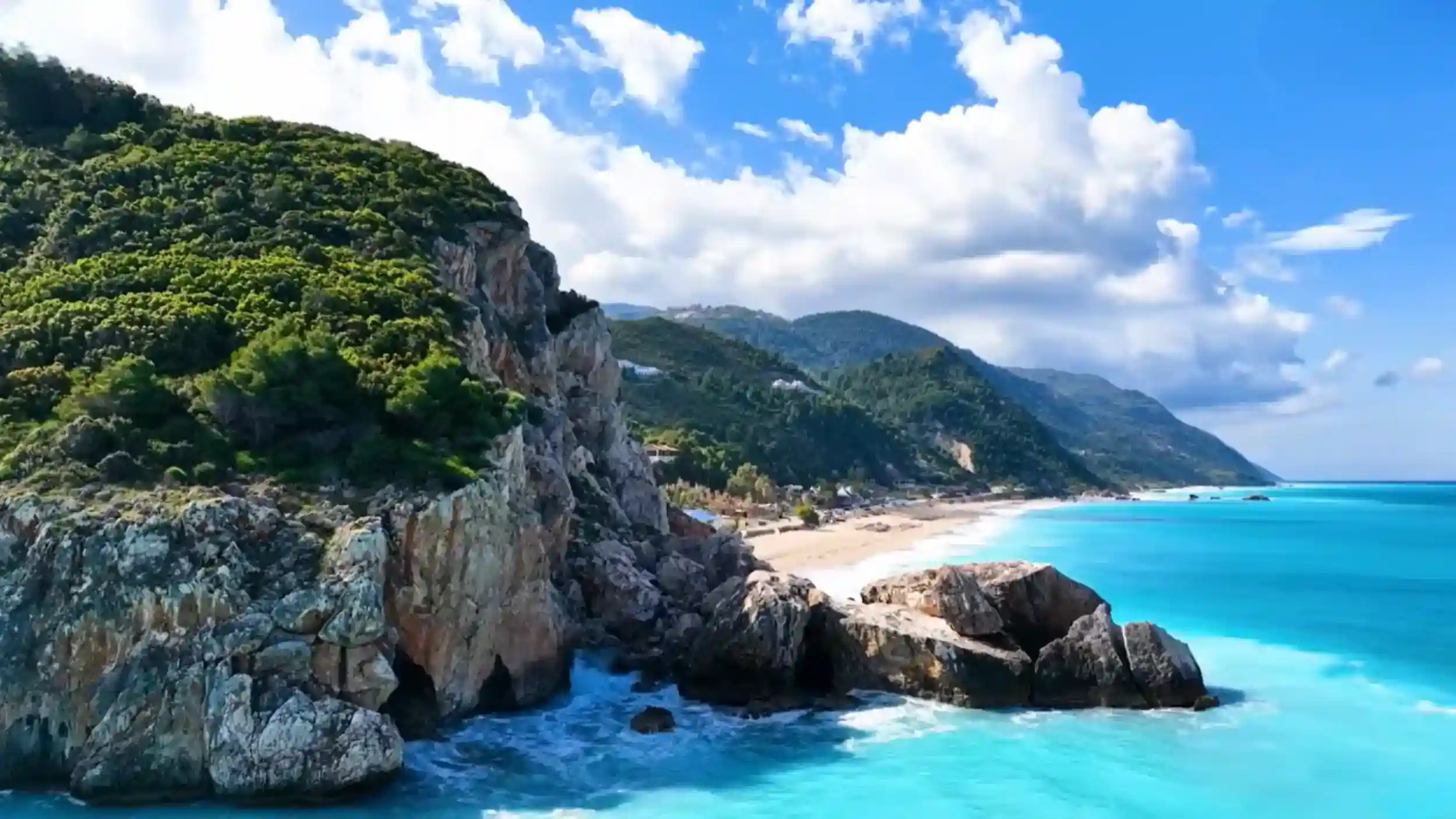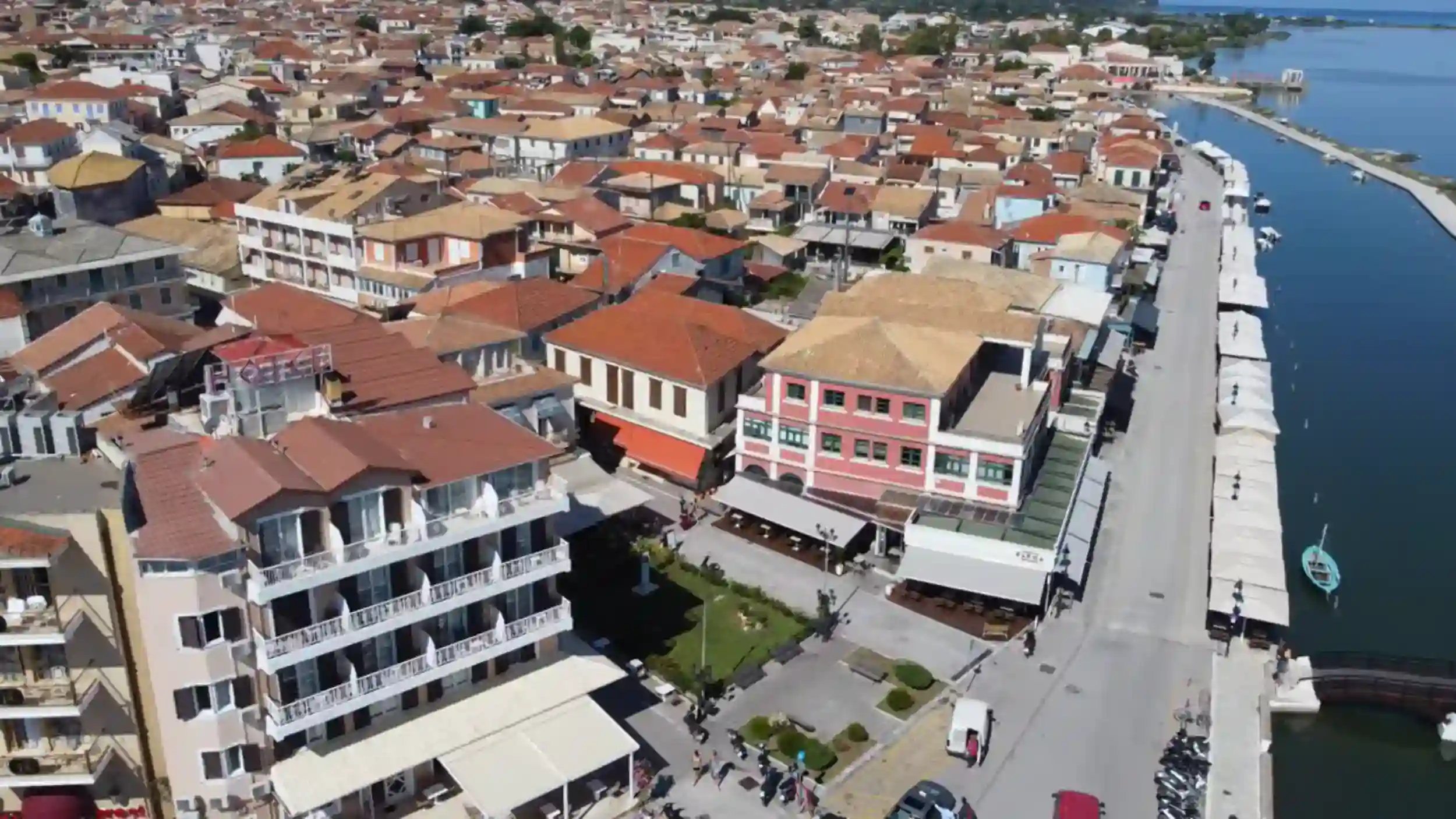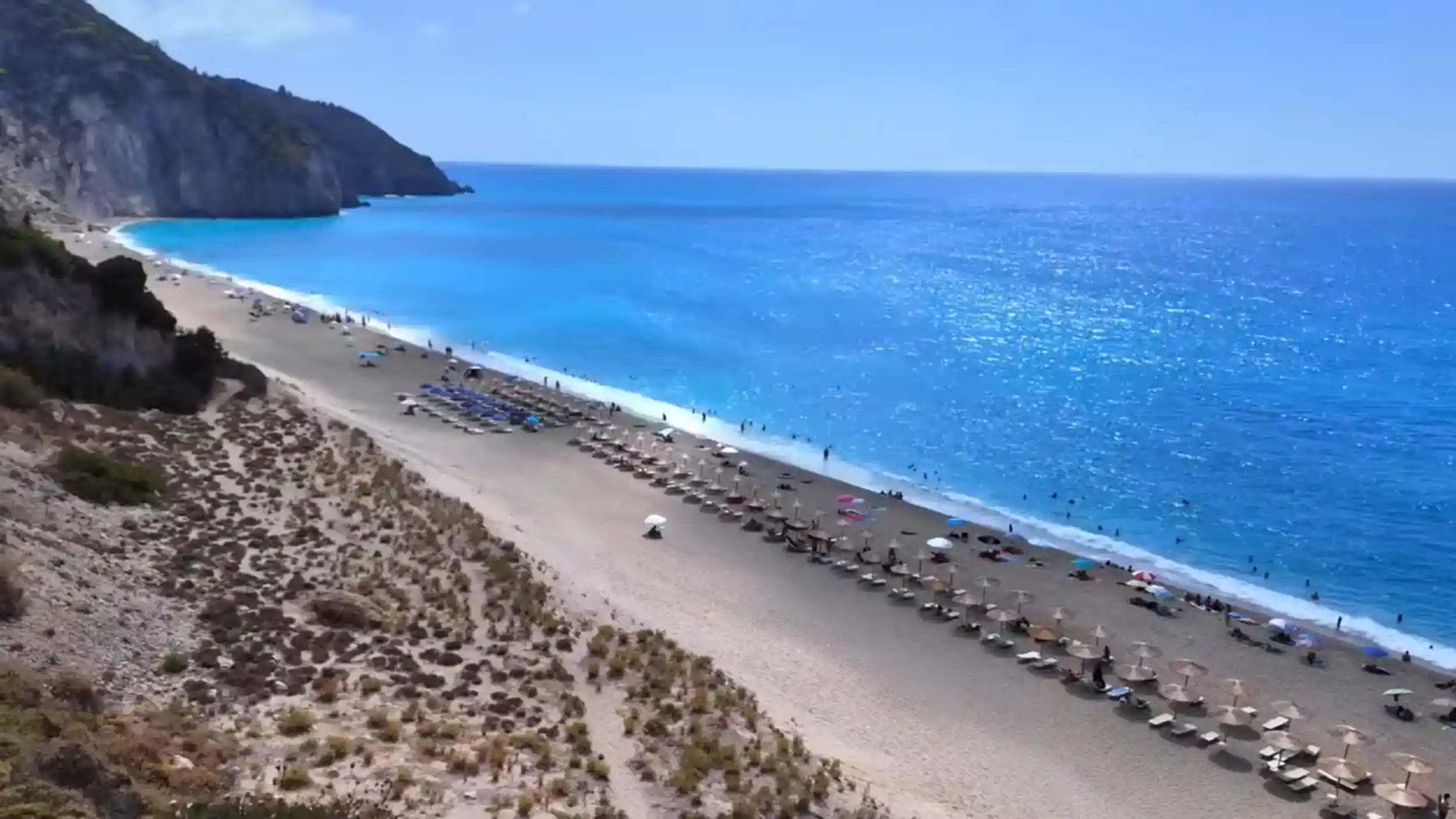
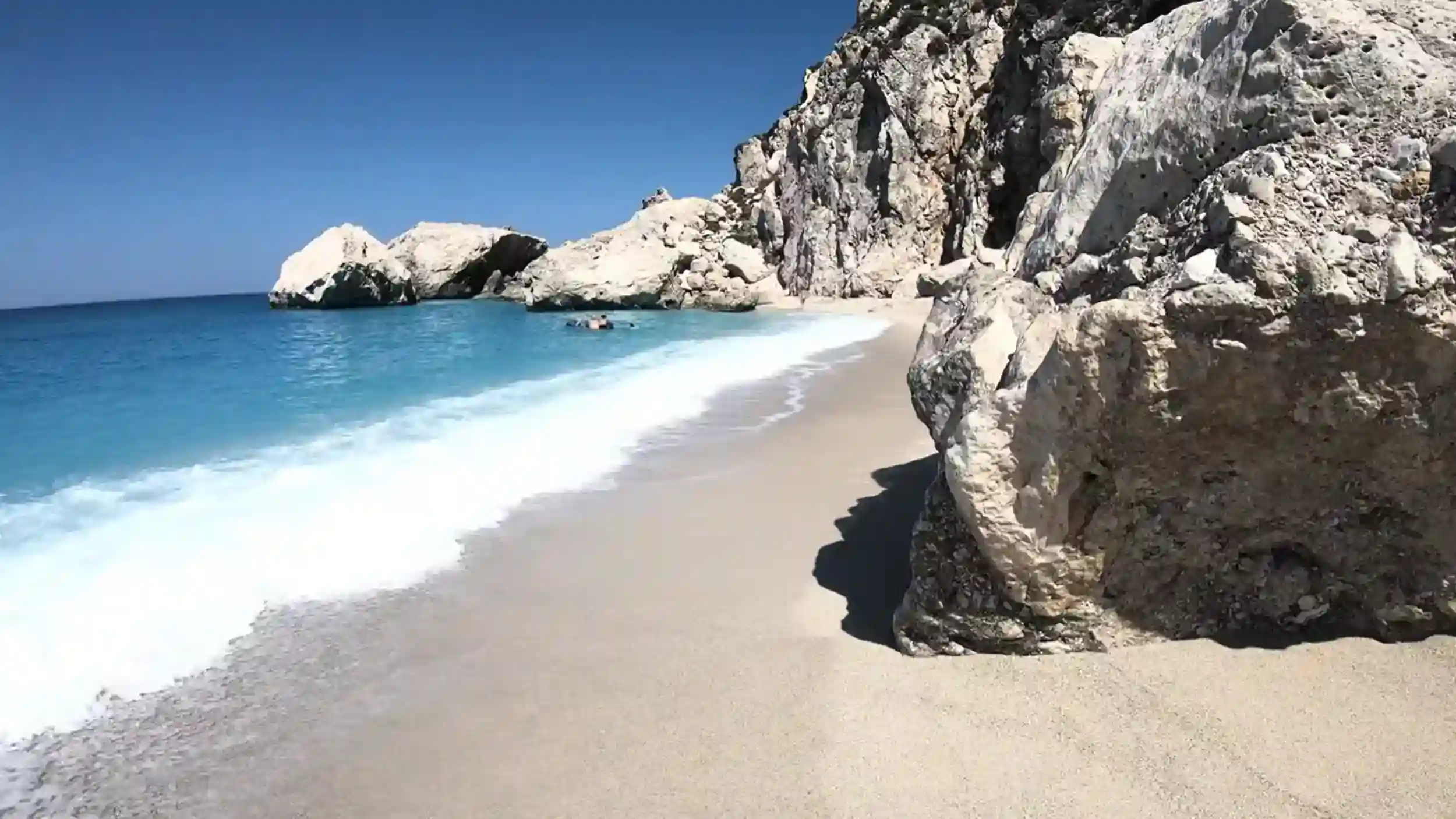
Lefkada in September combines warm sea temperatures with a noticeably more relaxed atmosphere than August. The beaches are quieter, almost every business is still open and travelling around the island becomes much easier, making September one of the best months to experience everything Lefkada has to offer.
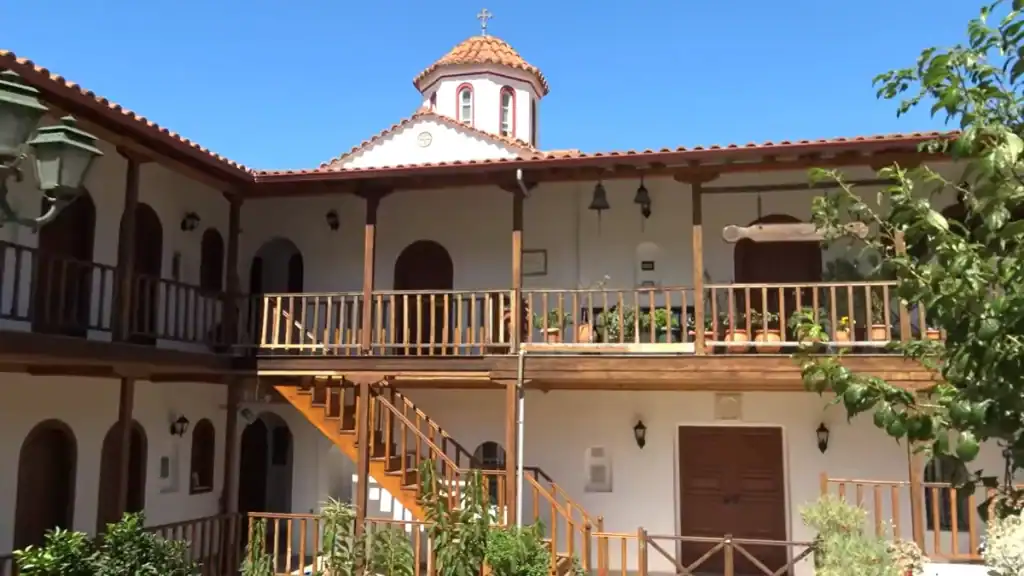
📅 Lefkada in September: Where It Sits in the Season
September doesn’t feel like the end of summer.
It feels like summer with the pressure removed.
The busiest weeks have passed, but the island hasn’t started winding down. Restaurants remain busy, boat trips continue to operate and beach facilities are still fully available. The biggest difference is simply that everything becomes easier to enjoy.
Arriving in Lefkada in September
Driving onto the island feels noticeably more relaxed than it does in August.
Traffic moves more freely across the causeway, parking around Lefkada Town is easier to find and the opening of the floating bridge becomes an interesting pause rather than an inconvenience.
| What changes after August? | What to expect |
|---|---|
| 🚗 Roads | Less traffic throughout the island |
| 🍽️ Restaurants | Still fully operating with shorter waits |
| ⛵ Boat trips | Regular departures continue |
| 🏖️ Beaches | More space without losing the summer atmosphere |
September sits comfortably between the intensity of August and the quieter feel of October. Visitors still enjoy a lively island, but without constantly planning around crowds, queues or full car parks. That balance is one of the main reasons so many returning visitors consider it the ideal month to explore Lefkada.
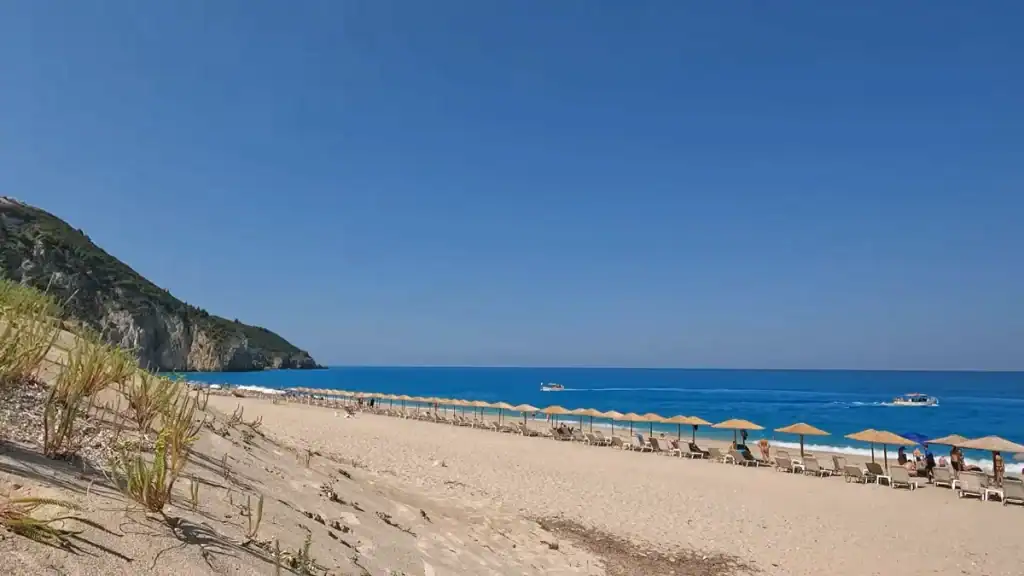
🌊 The Sea in September
For many visitors, the sea is September’s biggest advantage.
After warming throughout the summer, the Ionian reaches its most comfortable temperatures of the year, making swimming feel completely different from spring.
Lefkada in September is ideal for travellers who plan to spend long periods in the water rather than simply cooling off between sunbathing.
Swimming in Lefkada in September
The warmer sea changes the rhythm of a beach day.
Instead of quick dips followed by warming up on the shore, many visitors spend far longer swimming, snorkelling or floating in the calm water.
| Sea conditions | What to expect |
|---|---|
| 🌡️ Water temperature | Warmest of the year |
| 🏊 Swimming | Comfortable for extended periods |
| 🤿 Snorkelling | Excellent visibility on calm days |
| ☀️ Beach days | Longer time in the water and less time warming up |
That warmer water also makes the effort of reaching more remote beaches feel even more worthwhile. Whether you’re descending to Egremni Beach or walking across the headland to Milos Beach, the reward at the end feels noticeably greater than it does earlier in the season.
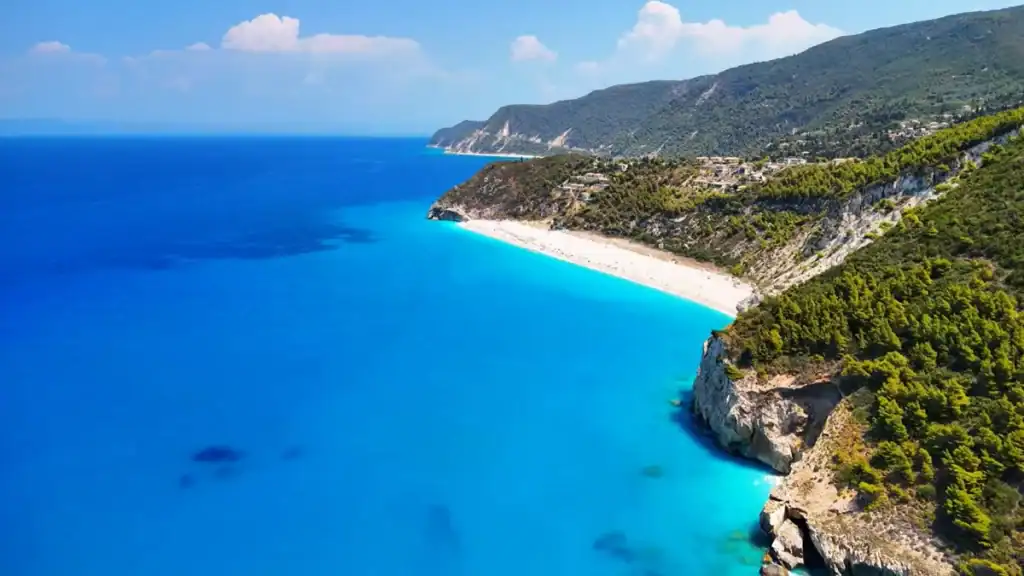
🏖️ West Coast Beaches in Lefkada in September
The west coast is the reason many people visit Lefkada.
September simply lets you experience it under better conditions.
The famous beaches remain every bit as spectacular as they are in August, but parking is easier, access roads are quieter and there’s far more room to enjoy the scenery without feeling surrounded by other visitors.
Choosing west coast beaches in September
Each beach offers something slightly different, yet all benefit from the calmer pace of early autumn.
| Beach | 📌 Why September works so well |
|---|---|
| 🏝️ Porto Katsiki | Easier parking and a more relaxed atmosphere |
| 🌊 Egremni Beach | Cooler conditions make the staircase more comfortable |
| 🚗 Kathisma Beach | Full facilities without August’s crowds |
| 🌿 Agios Nikitas | A quieter village atmosphere and easy access to nearby beaches |
Rather than racing between beaches to secure parking or avoid the busiest times of day, September gives you the freedom to explore at your own pace. That slower rhythm often becomes one of the most memorable parts of a west coast road trip.
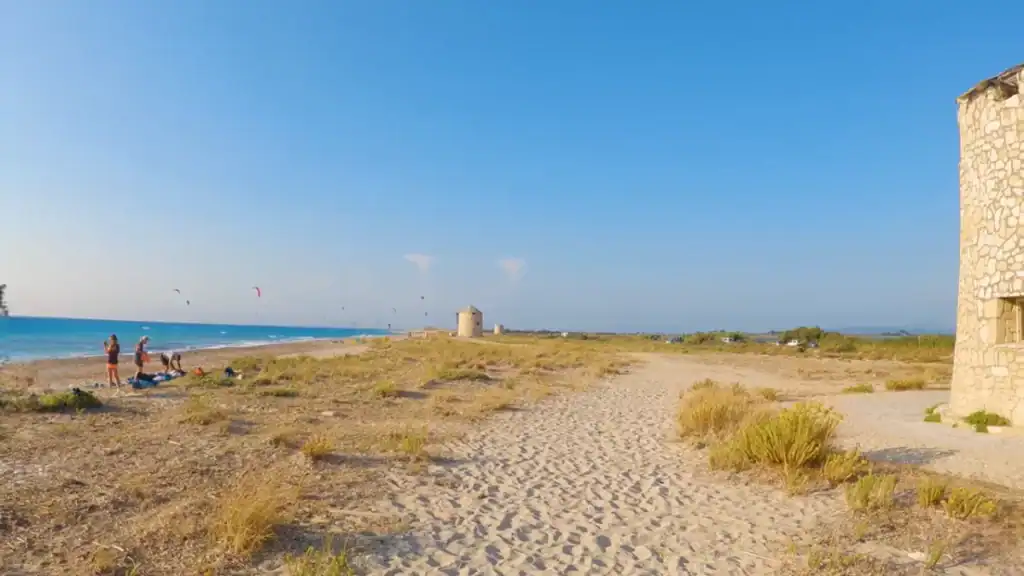
💨 The North Coast and the Wind Beaches
The north coast offers a completely different experience from the west.
Instead of towering limestone cliffs and sheltered coves, you’ll find wide open beaches exposed to the prevailing breeze, making this the island’s centre for wind-based watersports.
Lefkada in September is an excellent time to experience this coastline because the conditions remain reliable while the beaches themselves feel far less crowded than they do during the peak summer weeks.
Windsports during Lefkada in September
The steady afternoon wind creates ideal conditions for both beginners and experienced riders.
| North coast highlight | Why visit? |
|---|---|
| 🌬️ Agios Ioannis Beach | Reliable windsurfing and kitesurfing conditions |
| 🌊 Wide sandy shoreline | Plenty of space even on busier days |
| 🏛️ Historic windmills | One of Lefkada’s most distinctive coastal landmarks |
| 🌅 Evening walks | Open views across the mainland and Ionian Sea |
Unlike the dramatic west coast, the attraction here is the combination of space, wind and uninterrupted sea views. Even if watersports aren’t your priority, the coastline provides a refreshing contrast to the island’s famous cliff-backed beaches and is well worth including during a September itinerary.
🧭 How September Changes the Way the Island Works
The attractions don’t change in September.
The way you experience them does.
Lefkada in September feels less like a destination you have to manage and more like one you can explore naturally. Roads are quieter, parking is easier and moving between different parts of the island becomes far less stressful than during the height of summer.
Planning days in Lefkada in September
Greater flexibility is one of the month’s biggest advantages.
| What changes | Why it matters |
|---|---|
| 🚗 Easier driving | Less time spent in traffic |
| 🅿️ Simpler parking | More freedom to stop at viewpoints |
| ⛵ Relaxed boat trips | More comfortable excursions with fewer passengers |
| 🏖️ Flexible beach days | No need to arrive early to secure space |
That extra freedom makes it much easier to combine different experiences in a single day. You might spend the morning exploring the west coast, enjoy lunch in Nidri, then continue into the mountains or along quieter coastal roads without feeling rushed.
If you’re deciding between the shoulder seasons, Lefkada in May offers greener landscapes and cooler temperatures, while September rewards visitors with warmer sea conditions and a more settled late-summer atmosphere.