
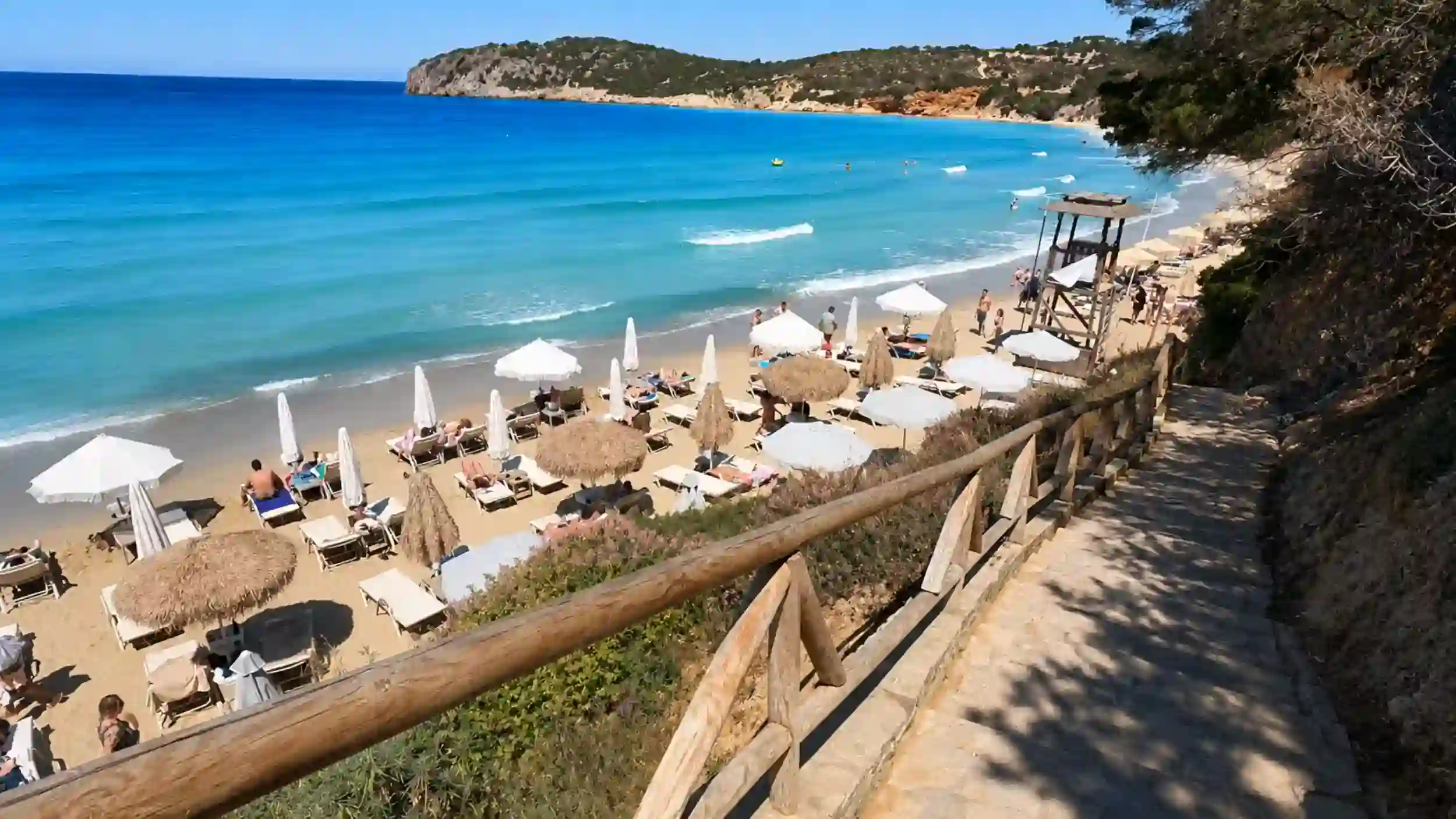
The Best Beaches in East Crete are one of the main reasons people choose this side of the island.
That is not a fashionable Crete opinion, because most first-time visitors stay west and repeat the same names. But once you drive beyond Agios Nikolaos and keep going into Lasithi’s thinner, drier coastline, the beaches start changing. They become less built, less crowded, and often far more varied within short driving distance.
This is also not one single beach zone. East Crete stretches across the northeast and southeast corners of the island, and the best swimming spots are scattered. Some are easy half-day stops. Others require a proper detour and commitment.
What matters is knowing which ones are genuinely worth the miles.
Voulisma Beach Is the Easy Classic Near Agios Nikolaos
If you are staying around Agios Nikolaos, Elounda or even arriving from Heraklion, Voulisma is the easiest obvious win.
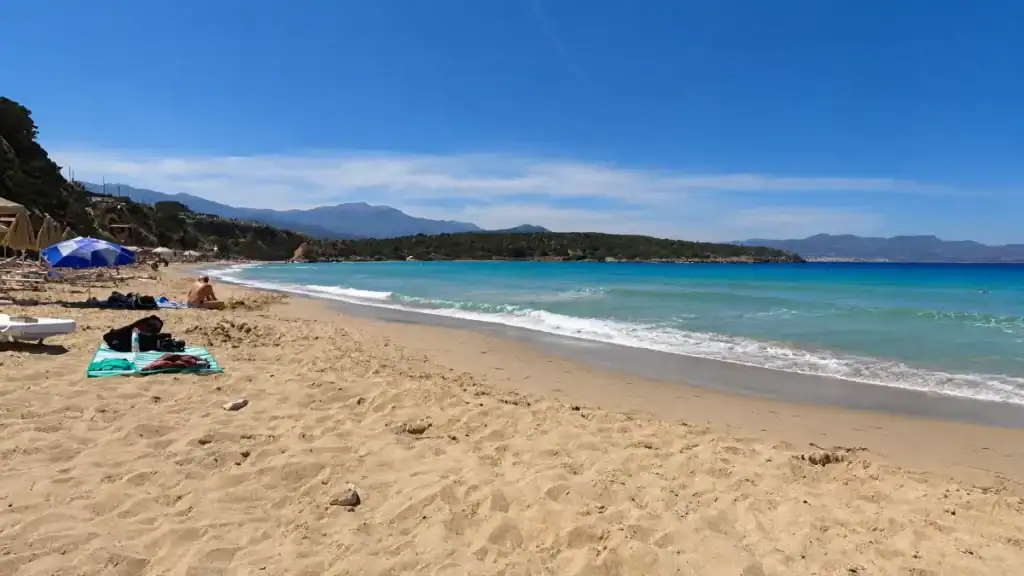
This is the bright half-moon bay most people picture when they think of Crete turning tropical. The sand is pale, the water shifts from light blue to clear turquoise, and the bay stays relatively calm because of its curved shape. You can walk in comfortably, and for families or weaker swimmers it is straightforward.
There are facilities here, organized sunbeds, parking, and enough infrastructure that nobody needs to plan hard.
That convenience is both the strength and the weakness.
Voulisma is not a wild discovery. In summer it fills quickly, and by late morning much of the front line is taken. It works best as an early swim or a shoulder-season stop, not as some secret East Crete beach revelation. Still, if you want one beautiful, accessible beach without driving deep into the island, it does the job very well, and it sits comfortably inside the wider Mirabello Bay run east of Agios Nikolaos.
Vai Beach Has the Famous Setting but It Is Not the Best Swim
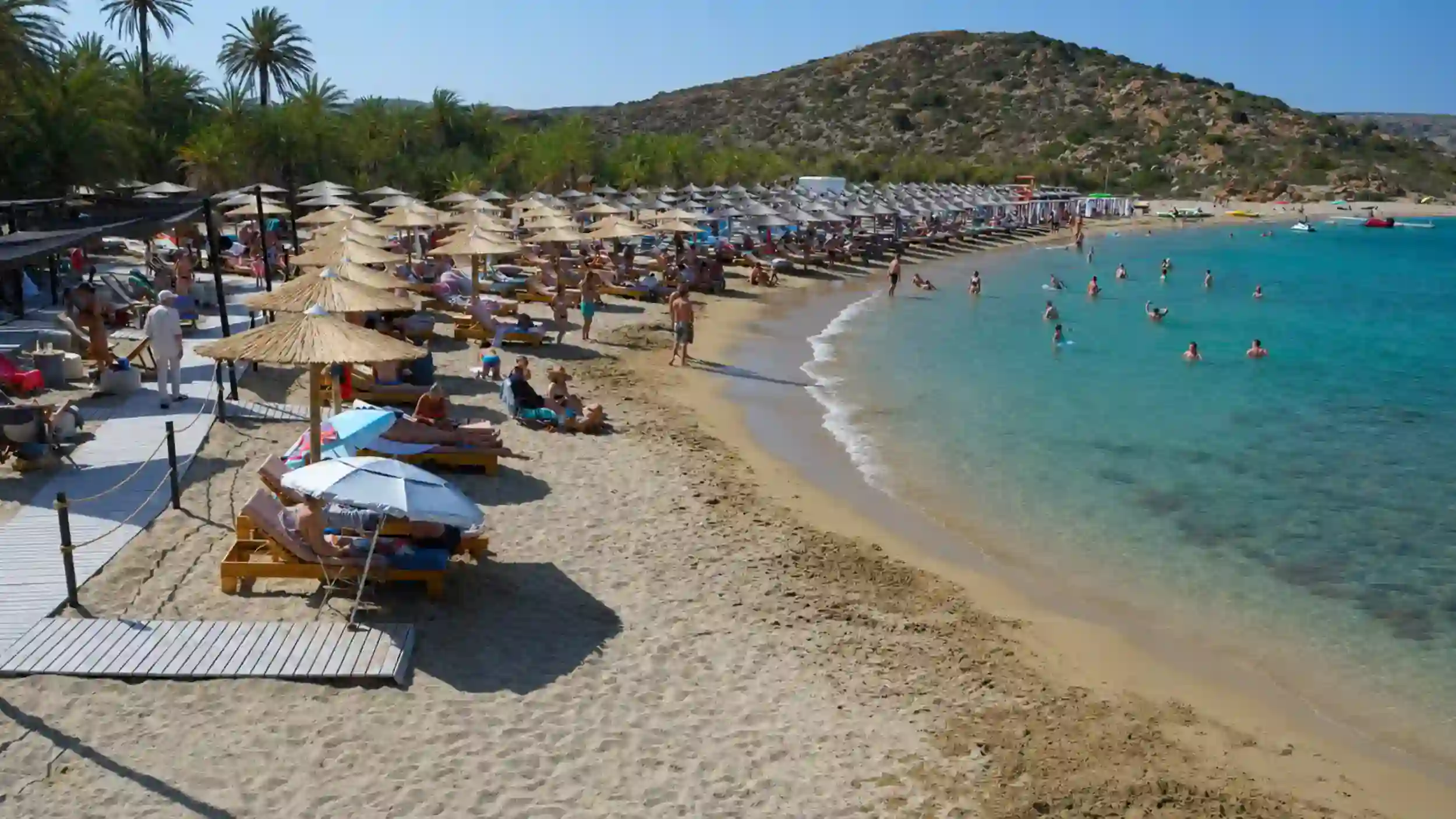
Vai gets marketed heavily because of the palm forest behind it, and visually the arrival is impressive.
You come through dry eastern terrain, park, then suddenly walk down into one of Europe’s largest natural palm groves with the beach opening below it. From above, it looks dramatic. Dense palms behind. Bright sand ahead. Clean blue water in front.
So yes, it is worth seeing.
But Vai is one of those beaches where the image often beats the actual beach day.
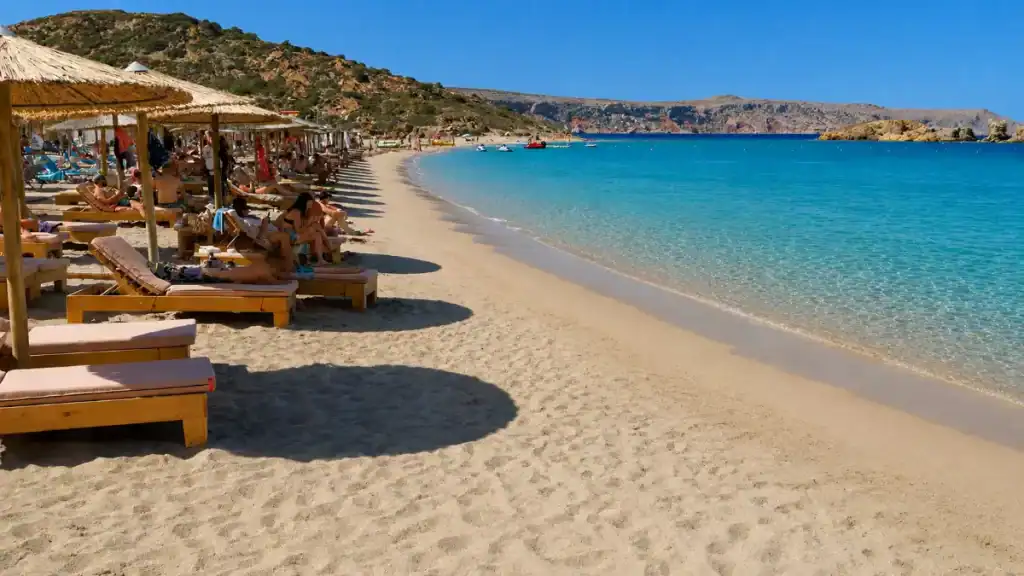
Large sections are heavily organized. Rows of umbrellas cover much of the sand. There are crowds, excursion traffic, and a slightly processed feeling that you do not get at East Crete’s quieter coves. It is comfortable, easy, and photogenic, but it does not feel particularly untouched once you are on it.
I would still go, especially if you have never seen it, but I would not give it your entire beach day if time is tight. If you are already in this corner of the island, the smaller cluster of swims around Vai itself gives you better water for less effort.
See Vai. Swim. Stay a couple of hours. Then move on.
Itanos Beach Is Better Than Vai for Water and Space
Around ten minutes north of Vai, Itanos is where East Crete starts correcting itself.
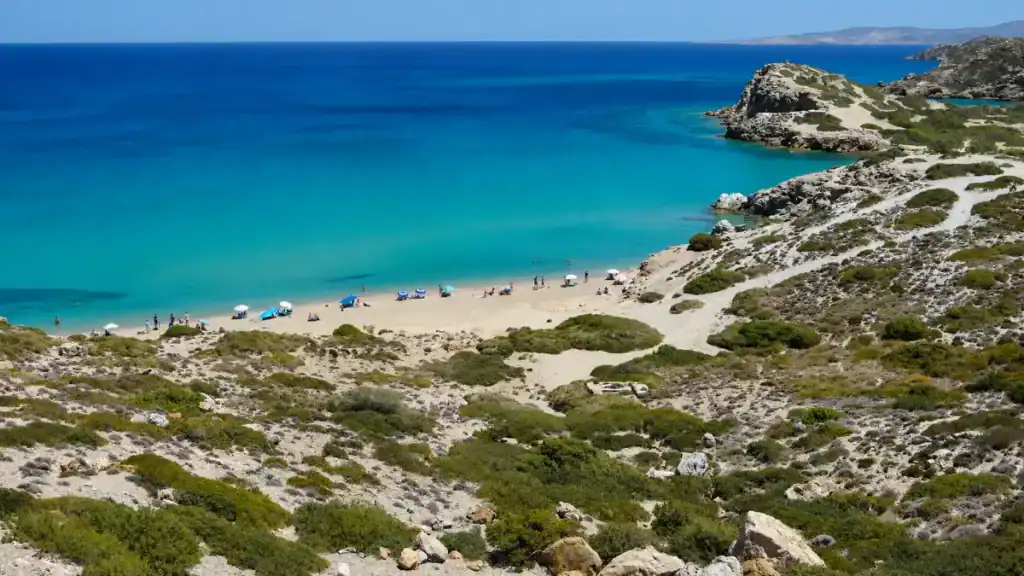
You park by the archaeological site, walk a short path, and the coastline opens into broad clear bays with much less human clutter. There are usually fewer people, less organized furniture, and more room to spread out without feeling boxed in by paid sunbeds.
The water here is often clearer than Vai.
The colours are sharper too because there is less visual interruption. Just low scrub hills, pale shoreline, exposed sea and scattered rocky edges. On calmer days the swimming is excellent, and if you bring goggles there is enough rock and underwater interest to make snorkeling worthwhile.
This is one of the beaches that still feels physically eastern Crete: dry, open, slightly wind-brushed, not manicured.
I would choose Itanos over Vai every time for the actual beach experience.
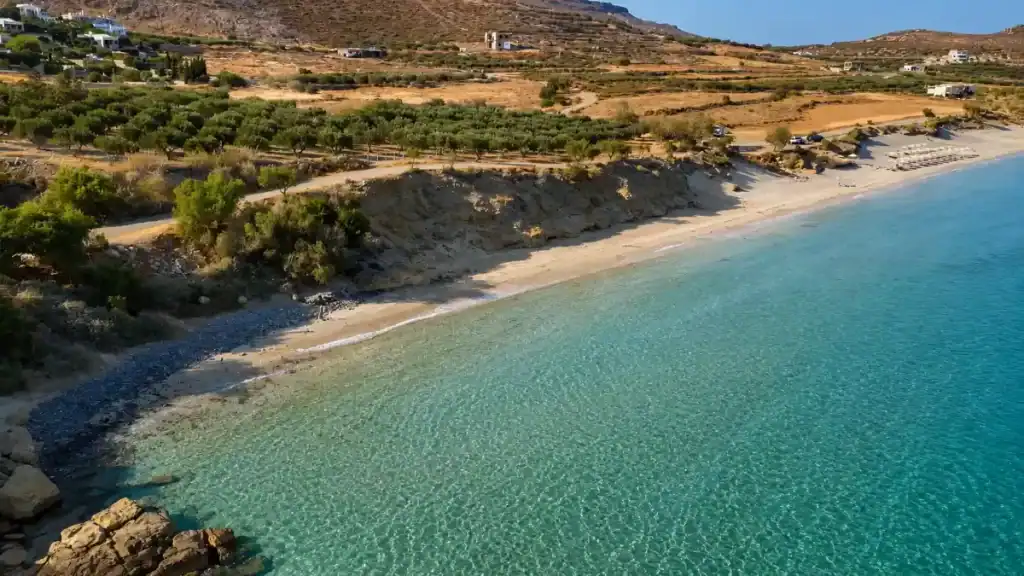
Xerokampos Is the Standout Beach Region in East Crete
If you only do one serious beach drive in East Crete, make it Xerokampos.
This is not one beach but a loose chain of beaches spread around a remote southeastern bay, and the whole area feels detached from the rest of Crete. The road in matters. You climb through barren inland folds, descend long bends, and then the sea starts appearing in flashes below. It feels like you are driving to the edge of the island.
Once down there, the coastline opens into multiple choices.
Mazida Ammos is the main long sandy stretch, with broad pale sand and shallow Caribbean-looking water. Nearby are smaller coves, clay beaches, pebble pockets and rocky snorkeling sections. You can move between them depending on wind and mood.
That flexibility is what makes Xerokampos superior to a single headline beach.
If one bay is busy, move 500 metres. If one section is windy, drive to the next. If you want soft sand, you have it. If you want rawer coves, you have those too.
There is very little urban interruption. No resort frontage. No heavy commercial strip. Just scattered tavernas, small accommodation, and long quiet sea.
This is the beach zone in East Crete that feels worth the dedicated journey, not just worth a stop.
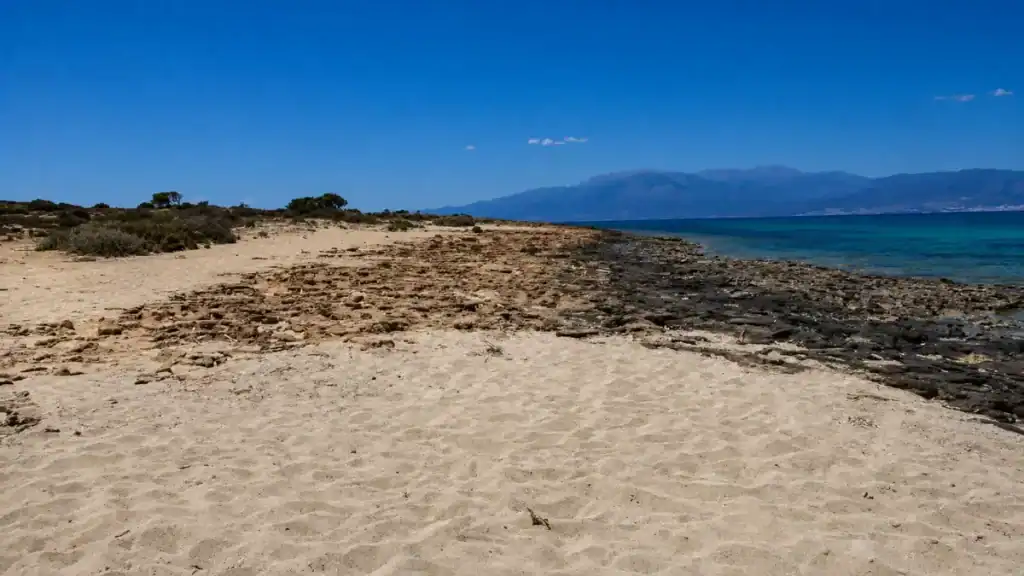
Chrissi Island Has the Best Water but Requires More Effort
Chrissi is the outlier because it is not mainland East Crete at all. You access it by boat from Ierapetra when excursion boats are operating, usually from the seafront ticket area by the harbour.
If boats are running, and conditions allow, this is the closest East Crete gets to genuinely exotic water.
The sea around Chrissi is absurdly clear. White sand, transparent shallows, bright aquamarine bands and almost no visual development. It has that detached island colour that mainland beaches struggle to match.
But this is not a casual two-hour beach stop.
You need ferry timing, parking in Ierapetra, weather cooperation, and a full chunk of day. Depending on environmental restrictions, access can also vary seasonally.
So Chrissi belongs in a different category.
It is one of the most beautiful beach experiences connected to East Crete, but not the easiest. I would reserve it for travellers spending several days in the region, not someone trying to assemble beaches on a driving loop.
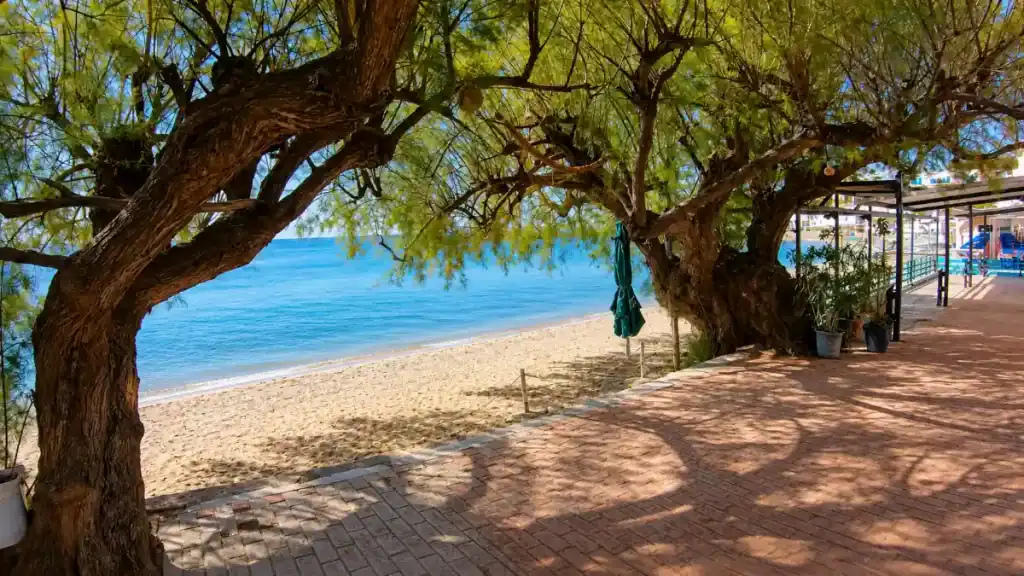
Makry Gialos Beaches Are the Best Practical All-Rounders
Makry Gialos does not usually dominate Instagram lists, but for an actual beach holiday base it makes more practical sense than many prettier one-hit beaches.
The main town beach is long, sandy, shallow, and unusually usable. Part of it is organized, but large stretches remain open. You can park directly behind it, walk to tavernas in seconds, and the sea stays calm enough for children and long relaxed swims.
More importantly, Makry Gialos is not just one beach.
Within minutes you have:
smaller coves toward Diaskari resort-front sands little harbour swimming pockets quieter edges beyond the main municipal section
That means you can stay in one area and not repeat exactly the same beach day. The whole south coast strip from Myrtos through Diaskari is built around this kind of layered beach access.
This is less dramatic than Xerokampos, less famous than Vai, but more livable for consecutive days. If I were choosing a southeastern East Crete base built around swimming, this would be the practical choice.
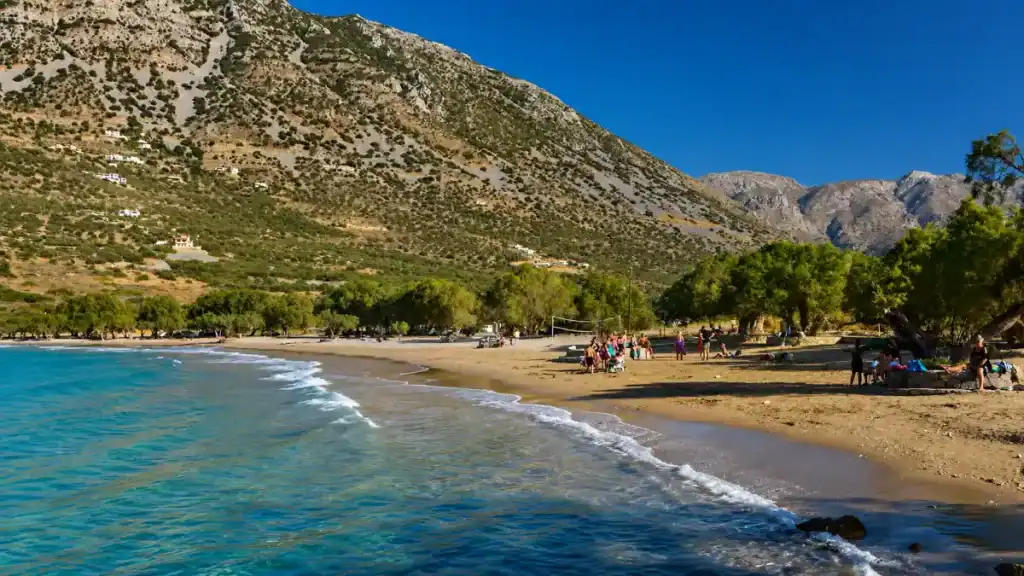
Tholos Is Quiet, Raw and Easily Skipped by Most Visitors
Tholos sits on the northern side of East Crete and gets ignored because it is not attached to a major tourist route.
That helps it.
This is a quieter beach with a more stripped-back setting: pebbles, some sand patches, olive groves behind, tamarisk shade, and usually a much thinner crowd. It does not have the instant wow colour of Voulisma or Xerokampos, but it feels calm in a way the headline beaches often do not.
You hear more wind here. More water movement. Fewer beach bars.
There can be cooler currents feeding into the sea in places, which you notice once swimming out. The whole setting feels less polished and more local.
I would not drive across East Crete solely for Tholos.
But if you are exploring the Kavousi and Mochlos side of the island, which the old eastward coast road covers in detail, it is exactly the kind of unshowy beach that makes a slow afternoon work.
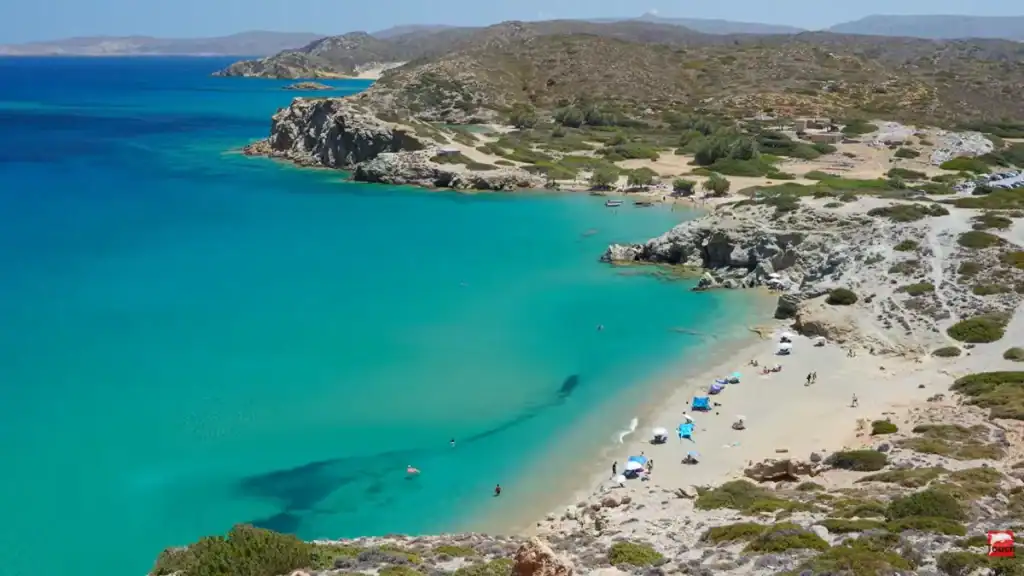
Which East Crete Beaches Are Actually Worth Prioritising?
If you want the short version:
Best overall beach region for a full day Xerokampos
Best easy-access classic beach Voulisma
Best beach near Vai that is actually better for swimming Itanos
Best special excursion Chrissi Island
Best multi-day practical beach base Makry Gialos
Best quiet low-key northern stop Tholos
Vai still deserves a visit, but mainly because it is Vai. Not because it is the strongest pure beach day in East Crete.
The main thing East Crete rewards is driving beyond the obvious. The farther you move from the heavily signposted names, the more the coastline starts giving you space, cleaner water, and beaches that feel less processed. That broader regional shape is something the main travel guide to the region covers more fully if you are still working out where to base.
That is where this side of Crete becomes much harder to beat.