
The lighthouse remains. The Venetian harbour walls, the minarets, the low-slung buildings in faded ochre and terracotta – they persist through the calendar. What changes is everything around them. The human layer, the noise, the sense that the city is performing. In December, Chania stops performing.
18 Degrees, Overcast, and Something Else
Most visitors expect winter. What they find is something harder to categorise. Temperatures hover around 18 or 19 degrees. Mild until the sun drops behind cloud and wind sweeps in off the sea. Then it becomes insistent, the sort of weather that quietly demands attention without raising its voice. Rain arrives too, more than in summer but rarely all day. Morning can be clear, luminous. Afternoon can close in. Layers become a necessity and a tool for noticing subtle shifts.
Light falls differently in December. Lower in the sky, directional, slicing across old town facades so ordinary streets look deliberate. Photographers know this. The harbor in August is washed out. In December it gains depth, shadow, and quiet that high season rarely allows.
The Harbour Without the Crowd
Stand at the lighthouse entrance on a weekday. You might be alone. The wall stretches back toward the harbour mouth. Old town rooftops rise behind. The sea argues its usual indifferent case. In July there are queues. Now there is wind and occasional company and nothing else requiring attention.
Restaurants close for maintenance. Shops pull their shutters. Tavernas near the waterfront may not reopen until spring. This is not disappointment; it is a reconfiguration. The places that stay open operate without depending on crowds, their presence almost deliberate. Walking east toward the sailing club reveals a Chania few summer visitors find. The wall continues, quiet, with views across water, almost nobody using the path. Bring a coffee. Bring something to read. The lighthouse is less a destination than a place to arrive slowly.
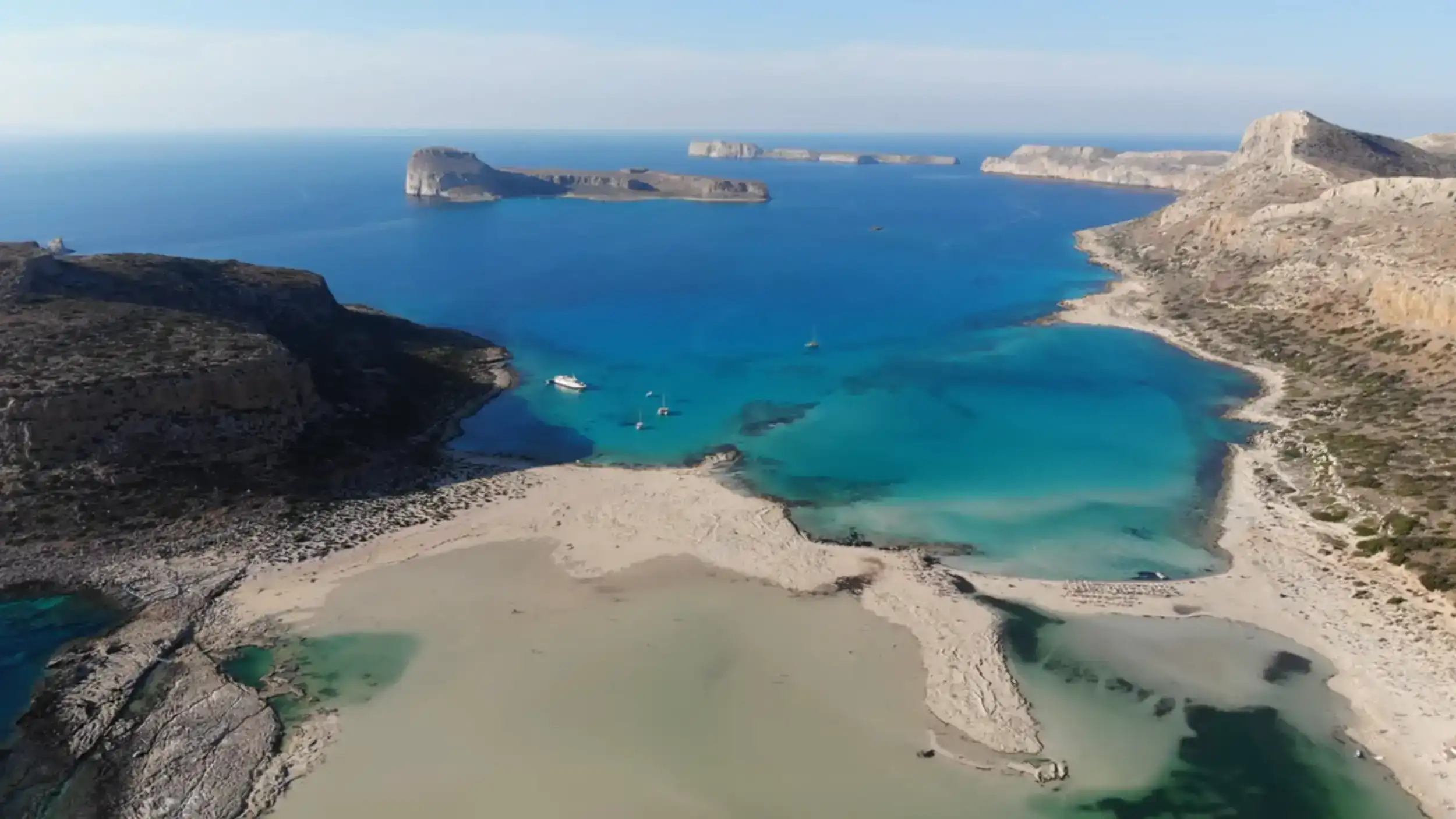
Renting a car costs a fraction of summer rates. Roads to Balos, Elafonisi, and the western coast toward Falasarna – beaches that require planning and early starts in peak season – become straightforward. Beaches are nearly empty. Colours remain improbable blue-green. What diminishes is the infrastructure. Facilities may be closed or reduced. Planning is different. In summer, movement is managed around other people. In December, you plan around weather and daylight, which is a different challenge and often a more interesting one.
Daylight runs shorter. Sunset arrives earlier than northern European visitors expect. Coastal walks and gorges remain possible, but rain can make trails slippery, unexpected water crossings appear, and paths that are technically open may be treacherous on certain days. The landscape is emptier, more dramatic, but preparation must respect the season.
Agios Apostoli and the Rhythm of Local Life
Ten minutes from the city centre, accessible by car or bus, Agios Apostoli offers a stretch of beach that behaves differently in December. In summer, it is family-dominated and vibrant. In winter, it is contemplative. Joggers pass along the park, dog walkers appear in measured intervals, older residents follow familiar circuits. Beach bars remain open, some with reliable Wi-Fi, which makes the space functional for anyone with a loose agenda. Water is shallow enough for children to wade far safely. The tourism infrastructure exists alongside something older, more durable, quietly defining the town’s rhythm without spectacle.
Indoor Days and Parallel Possibilities
Not all December days are mild. Grey skies, persistent rain, darker seas. Planning for perfect weather is a trap. The city offers alternatives. The Maritime Museum covers Cretan naval history in depth beyond its modest exterior. Cinema and bowling appear for afternoons that just need filling. Cooking classes built around traditional recipes run regularly. Social events organised through expat and digital nomad networks take place quietly. These are not backup options; they run regardless of weather, often revealing the city in ways the coastline cannot.
December transforms Chania into something neither better nor worse, just different. Noise and density retreat. What arrives is quieter, harder to name, more subtle. Markets continue. Locals go about routines that predate tourism. Christmas decorations appear modestly, European, quietly Venetian and Ottoman, layered into the fabric of the town. The city exists largely for itself.
Winter is unhurried. Observation reveals detail absent in high season. Visitors can experience a version of Chania many never reach: streets and beaches reclaimed by routine, subtle light, and the persistence of the town beyond its performance – which is precisely what its hidden corners have always contained.
Practicalities
Flights from European cities continue through December, often at significantly reduced prices. Car rental is cheaper and more flexible. Some accommodation closes for the winter, so booking ahead remains wise. The city is quiet, manageable, and rewards attention. The experience is less about checking boxes and more about noticing shifts: light, weather, human patterns, and the town’s rhythm when it is allowed to be itself.